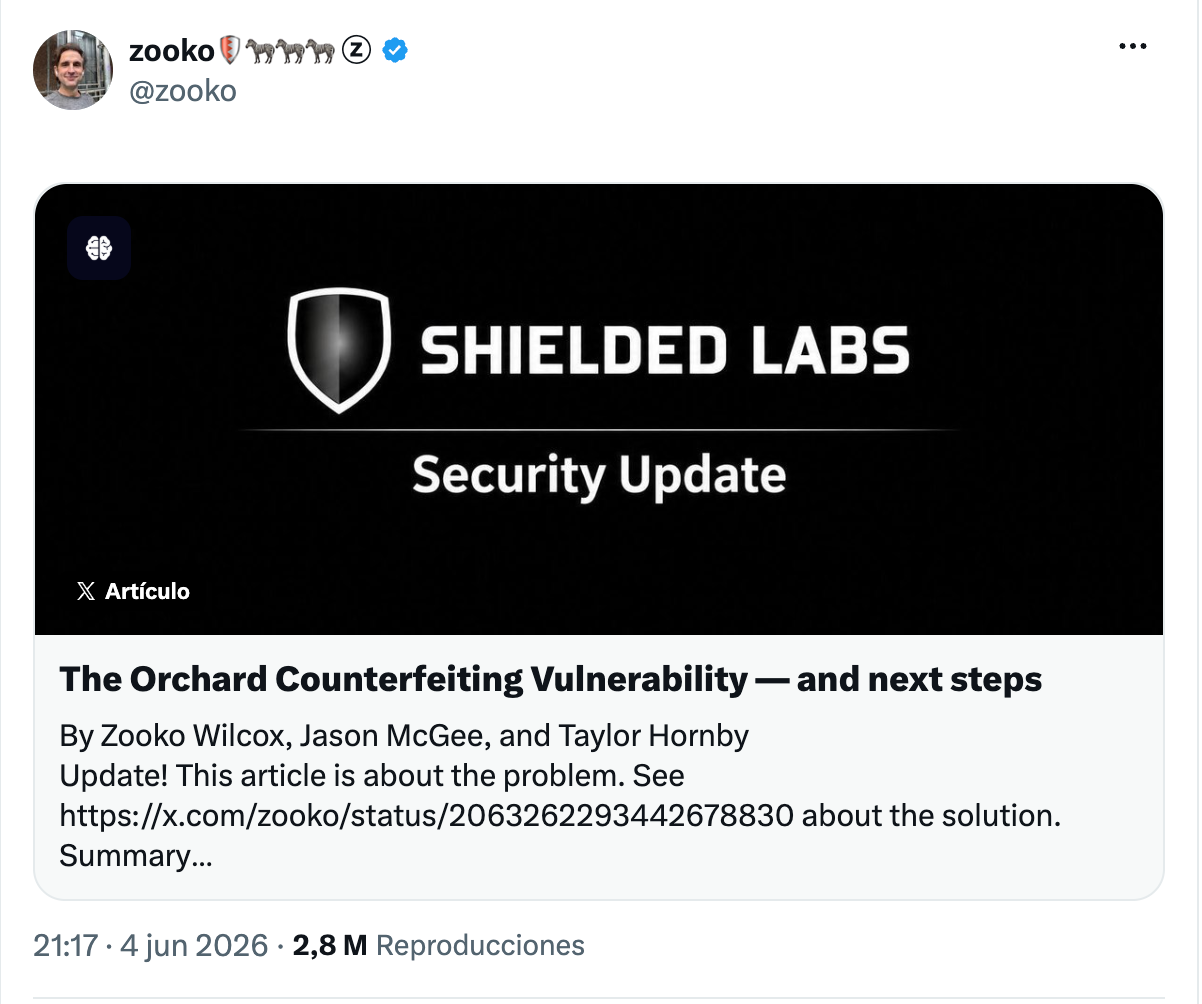
Zcash (ZEC) has dropped by 30% in the past week after the project’s founder revealed an exploit that allowed unauthorized parties to mint an unlimited amount of tokens.
The news put an end to Zcash’s latest rally and plunged the token from around $645 to $250 at some point.
Trading volumes spiked to nearly 60% of the asset’s circulating market cap at some point, but have progressively dropped as the selling pressure eased.
ZEC has recovered from that low to around $440 recently, as a group of investors seems to think that this huge drop was a news-driven event that should not affect the project’s prospects or long-term performance.
However, one of the project’s most prominent backers, Arthur Hayes, exited his position in Zcash right after Zooko Wilcox disclosed the exploit, alleging that it “violated my narrative mental map”.
“The 30% dump, made me rethink, and I had to take profit on the entire position,” Hayes further stated.
Even though he acknowledged that he might be wrong in his decision to dump his ZEC holdings, the timing of his sale adds more wood to a fire that is already burning high.

Zcash’s Orchard Pool Experiences $200M Withdrawal
The project’s credibility has definitely been undermined by this technical weakness, and, in the midst of a raging bear market, one can’t ignore the impact that this could have in the token’s long-term performance.
As a privacy solution, Zcash’s technical capabilities are not in question. However, this weakness existed for a long time, and the founding team’s role of overseeing the blockchain’s integrity and its fair tokenomics proved to be insufficient.
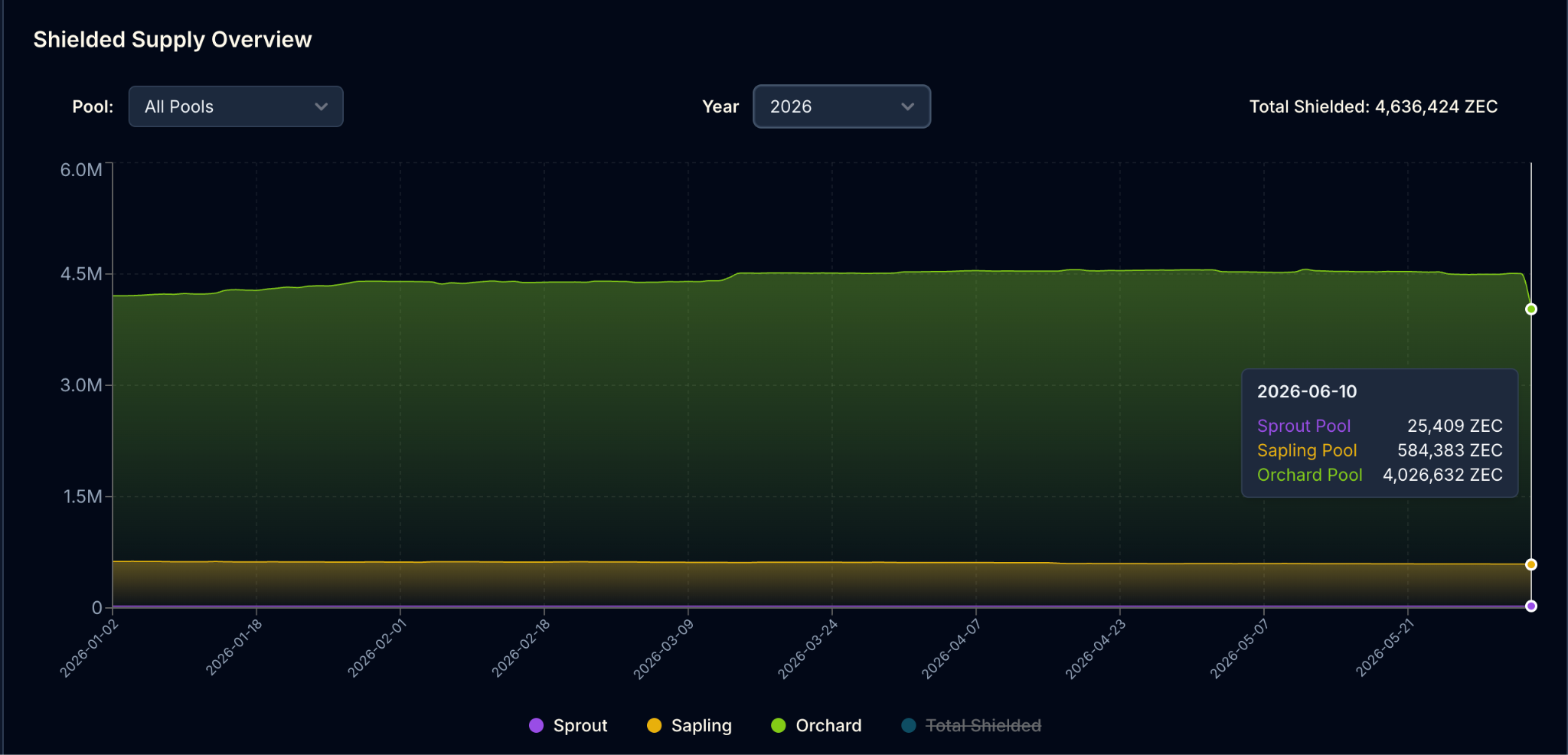
Interestingly, on-chain data from ZecHub shows the total supply of ZEC within the Orchard pool experienced a strong drop recently of around 500,000 tokens.
This translates into a withdrawal of over $200 million worth of tokens from the project’s largest pool. The timing is quite interesting.
The precipitous decline seen in the graph could reflect the immediate market and user reaction following the public disclosure of Zcash’s vulnerability on May 29 and the subsequent execution of emergency protocols.
Users and bots may have moved funds out of the affected pool, and the temporary disabling of Orchard transactions meant no new funds could enter the Orchard pool during the freeze, causing the total shielded balance to plummet as assets were moved to transparent addresses or other safer environments.
This reflects the negative consequences that this disclosure had on Zcash’s credibility. Whether this will have a long-lasting impact is yet to be seen, but we believe that, paired with disadvantageous market conditions, it will negatively affect the performance of ZEC down the road.
As Headwinds Pile Up, ZEC Could Soon Revisit $300 Despite This Recent Bounce
Heading to the daily chart, we can see the ZEC managed to climb above its 200-day exponential moving average (EMA) on the same day that the price dropped to $250.
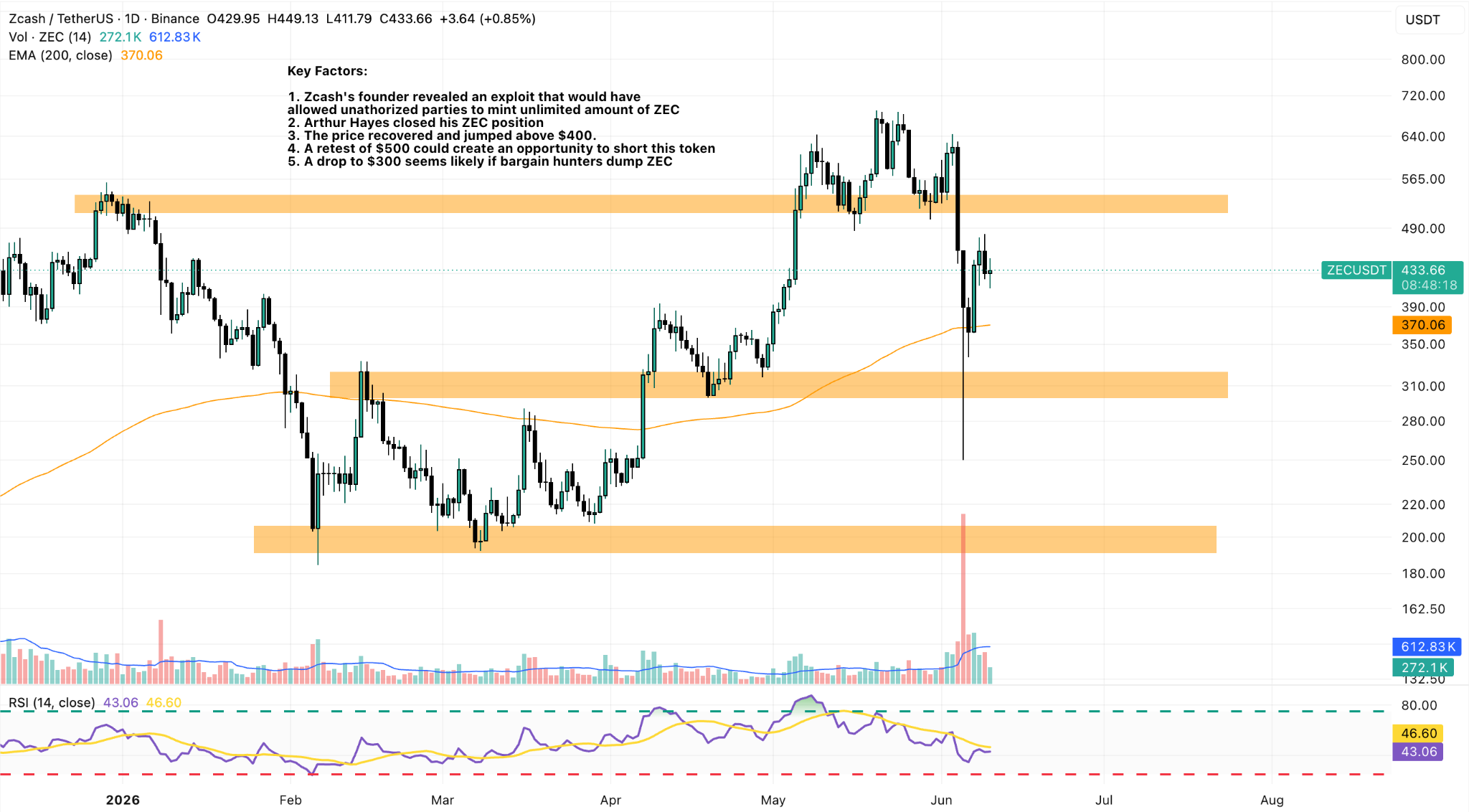
This reflects strong buying pressure at these levels, possibly as a result of a significant volume of buy orders that were sitting at that particular level.
The token could either rise to $500 as a result of this persistent wave of floor-level buying, or it could dip below the 200-day EMA and resume its downtrend. We see a retest of that $500 threshold as an opportunity to short ZEC at a point when project-specific and macro headwinds are piling up.
Meanwhile, a break below that 200-day EMA may also be interpreted as a sell signal, especially if those bargain hunters start to dump ZEC to cash out on their long positions.