On Friday, the German economy was under the spotlight. Finalized Q4 GDP numbers drew investor interest.

German Economy Contracts
The German economy contracted by 0.3% quarter-on-quarter in Q4, unchanged from preliminary estimates. In Q3, the German economy stalled.
According to Destatis,
- Household final consumption expenditure increased by 0.2% quarter-on-quarter.
- The German services sector contributed positively, with government final consumption expenditure rising.
- However, fixed capital formation in construction (-1.7%) and gross capital formation in machinery and equipment (-3.5%) impacted the economy.
- Trade terms also contributed negatively. In Q4, exports of goods and services declined by 1.6% quarter-on-quarter.
- Despite the gloomy report, the production of motor vehicles, trailers, and semi-trailers increased, bucking the broader trend across the manufacturing sectors.
Year-on-year, the German economy contracted by 0.2% in Q4 after contracting by 0.3% in the previous quarter.
Implications to ECB Monetary Policy
The German economy remains a focal point for the ECB. However, recent private sector PMI numbers likely eased immediate fear of the German economy dragging the Eurozone economy into a recession. Nonetheless, the threat of a technical German recession could pressure the ECB to begin discussing interest rate cuts.
US Dollar Index Price Forecast
Every new US Dollar Index analysis as it publishes, today's technical signal and key levels, live price — on one page.
See all US Dollar Index forecastsEUR/USD Reaction to German Economic Data
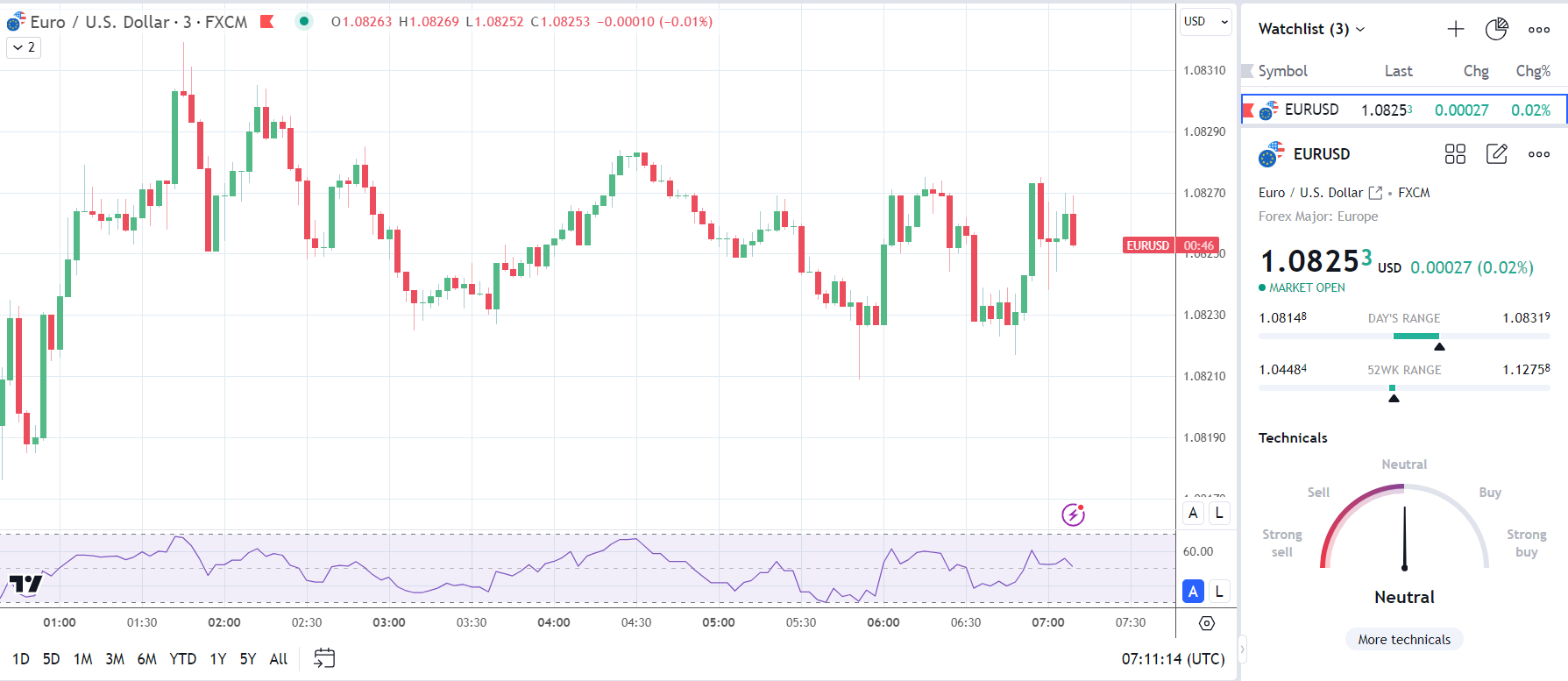
Before the German GDP numbers, the EUR/USD fell to a low of $1.08148 before rising to a high of $1.08319.
However, in response to the GDP numbers, the EUR/USD fell to a low of $1.08238 before climbing to $1.08270.
On Friday, the EUR/USD was up 0.02% to $1.08253.
What’s Ahead
German business sentiment, consumer inflation expectations, and ECB commentary will be in focus.
Economists forecast the Ifo German Business Climate Index to increase from 85.2 to 85.5 in February. Better-than-expected figures could signal a shift in momentum in the German economy. However, the ECB Consumer Inflation Expectations Survey could have more influence on the ECB. Wage growth and inflation remain the focal points for the ECB.
With Germany and inflation in focus, ECB commentary needs consideration. ECB President Christine Lagarde and Executive Board member Isabel Schnabel are on the calendar to speak.