



On Thursday, June 20, German producer prices attracted investor attention amidst shifting investor expectations of a Q3 2024 ECB rate cut.
German Producer Prices: A Mixed Bag
In May, German producer prices presented a conundrum for investors and policymakers alike. After a modest 0.2% increase in April, prices stalled, raising questions about the underlying demand dynamics. Year-on-year, producer prices declined by 2.2%, an improvement from the 3.3% drop in April, but still a cause for concern.
According to Destatis:
- Energy prices were the main contributor to the decline in producer prices, falling 6.4% compared with May 2023.
- Conversely, mineral oil product prices were up 3.3% compared with May 2023.
- Producer prices excluding energy were flat compared with May 2023.
ECB Rate Cut in Jeopardy?
The less marked decline in producer prices year-on-year and their potential impact on inflation are likely to influence the ECB’s interest rate decisions.
With the Eurozone annual inflation rate inching up from 2.4% to 2.6% in May, the chances of a Q3 2024 rate cut are diminishing.
EUR/USD Price Forecast
Every new EUR/USD analysis as it publishes, today's technical signal and key levels, live price — on one page.
See all EUR/USD forecastsECB President Christine Lagarde’s recent comments underscored the ongoing battle against inflation:
“We’re not declaring victory on inflation yet. Our destination is 2%, and we know there will be bumps on the road there.”
Nevertheless, the month-on-month figure may attract more immediate attention.
EUR/USD Reaction to German Producer Prices
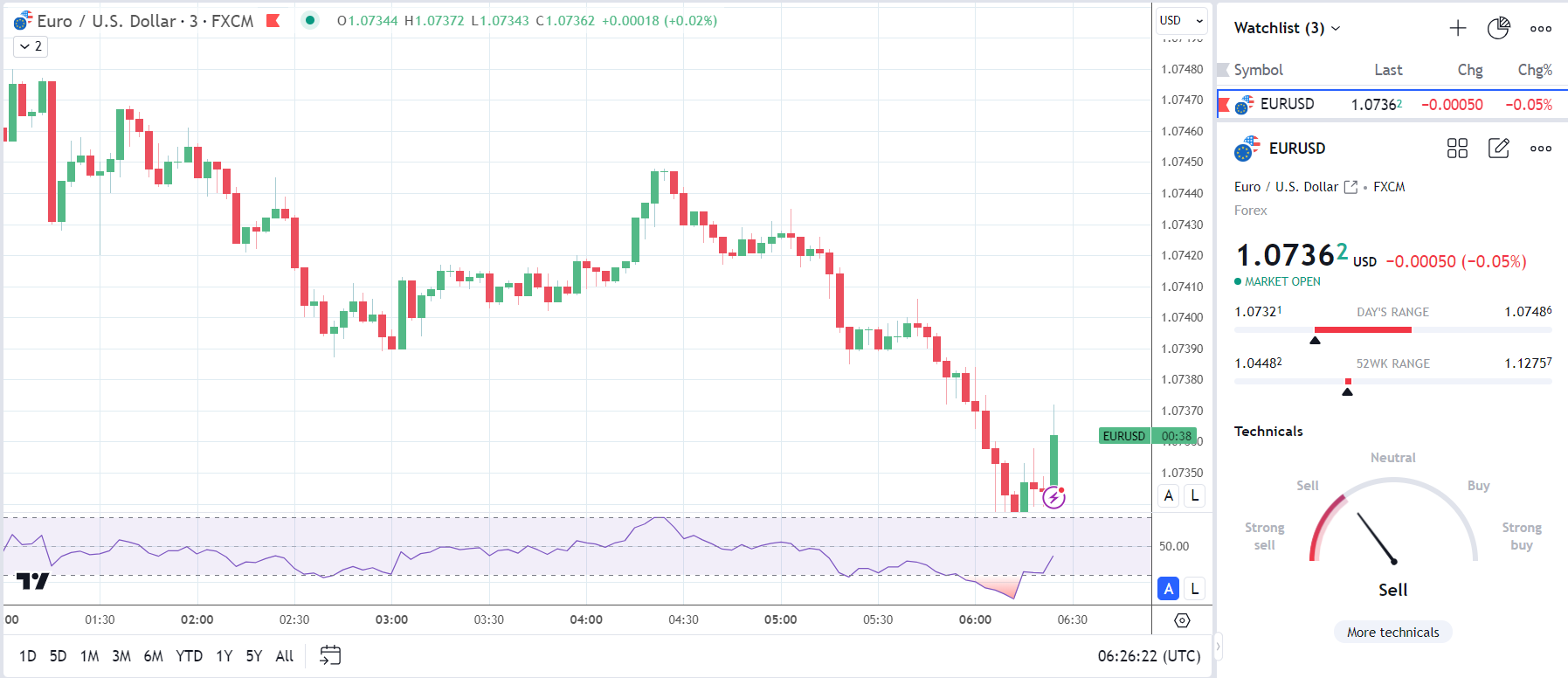
Before the producer price figures, the EUR/USD fell to a low of $1.07383 before climbing to a high of $1.07486.
However, in response to the producer price report, the EUR/USD rose to a high of $1.07384 before falling to a low of $1.07354.
On Thursday, June 20, the EUR/USD was down 0.05% to $1.07362.
Up Next
The EUR/USD saw minor fluctuations following the producer price report, reflecting market uncertainty. As investors turn their attention to upcoming Eurozone consumer confidence data, the focus will be on whether consumer sentiment can provide a clearer direction for the ECB’s monetary policy.
Economists forecast the Eurozone Consumer Confidence Index to increase from -14.3 to -13.6. A modest increase may limit the influence of the numbers on the EUR/USD and the ECB interest rate trajectory.
While German consumer sentiment improved in June, consumers remained unwilling to spend. Similar trends for the Eurozone could enable the ECB to begin discussing another interest rate cut.