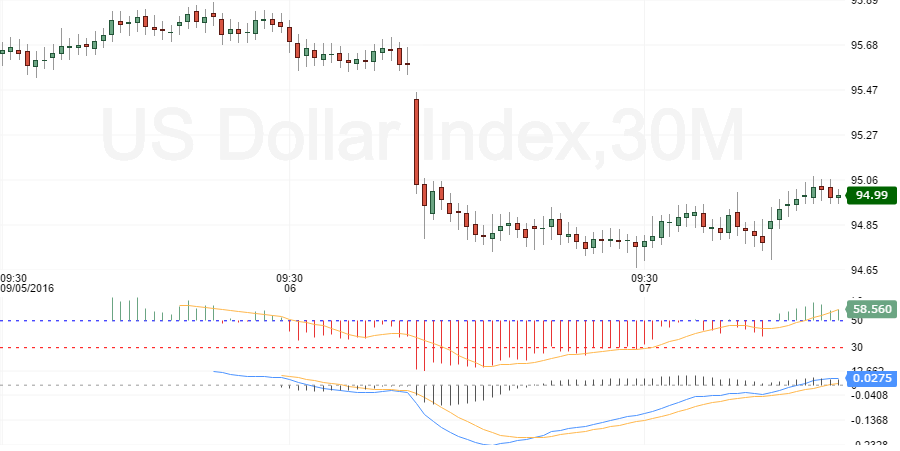
Earlier this week traders decided that the weak print on Non-manufacturing PMI would force the Feds to back off a rate increase in September. The US dollar fell almost 100 points immediately after the release while gold soared almost $30. The Institute for Supply Management says its services index fell to 51.4 last month from 55.5 in July. The August reading was the lowest since February 2010.
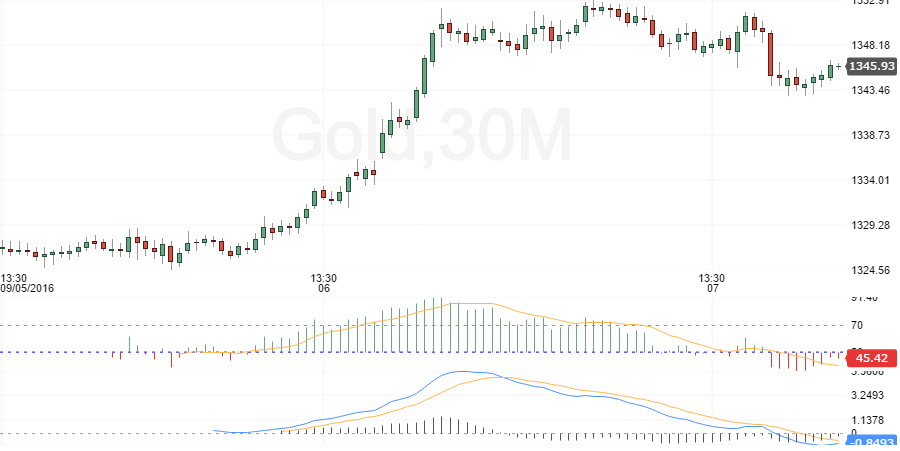
That was much weaker than expected, said Jim O’Sullivan, chief U.S. economist at High Frequency Economics. Still, anything above 50 signals growth, and services firms have now expanded for 79 straight months. Gold held on to gains on Wednesday as traders booked a bit of profits, while gold held at 1348.35 down over $5 for the session. Silver tumbled 265 points to 19.873 and the US dollar gained 15 points to 94.95.
It seems that even the smartest investment analysts from JP Morgan Chase, Goldman Sachs, and Citi can’t seem to get a handle on the Fed. Goldman Sachs economists stepped back from their bold call for a Fed rate hike this month after a surprisingly weak report on the service sector and a lack of clear signals from Fed officials.
The economists lowered the odds Wednesday for a September rate hike to 40 percent. On Friday, they gave 55 percent odds even after the tepid August jobs report convinced many that the Fed was not likely to move soon.
Goldman Sachs economists had said they believed Fed officials were intentionally sending a strong signal about raising interest rates in September during their recent meeting at Jackson Hole, Wyoming.
San Francisco Fed President John Williams said at an event in Nevada on Tuesday night his call for gradual interest rate hikes. Raising U.S. interest rates makes sense now that the economy is at full employment and “within sight” of the central bank’s 2-percent inflation goal, a top Federal Reserve official said on Tuesday.
“An increase is on the table” at the Fed’s next meeting, on Sept 20-21, San Francisco Fed President John Williams told reporters after a speech in Reno, Nevada in which he said he prefers a rate hike “sooner than later.”
Still, he said, he will not necessarily advocate for a rate hike at the coming meeting.
Two other Fed presidents — Richmond Fed President Jeffrey Lacker and Kansas City Fed President Esther George — give testimony about on Capitol Hill on Wednesday. Federal Reserve Bank of Richmond President Jeffrey Lacker is set to tell a congressional panel Wednesday the U.S. central bank’s structure is effective, and that he is reluctant to see it altered in any major way.
In an interview with The Wall Street Journal, Lacker said the U.S. central bank—with its Washington-based board of governors and 12 quasiprivate, quasigovernmental regional banks across the country—“works well.”
The U.S. economy appears strong enough to warrant significantly higher interest rates, Richmond Federal Reserve Bank President Jeffrey Lacker said on Friday.
Lacker, who is not a voting member of the U.S. central bank’s rate-setting committee this year, said he still favors raising rates sooner than later and that the Fed’s last policy meeting in July would have been a “good time” to tighten policy.
US Dollar Index Price Forecast
Every new US Dollar Index analysis as it publishes, today's technical signal and key levels, live price — on one page.
See all US Dollar Index forecastsEsther George, a voting member on the central bank’s policymaking panel, told CNBC it’s time to increase interest rates. In the interview that aired on Thursday, George said any tightening should be gradual. “I do think it is time to move that rate. It doesn’t mean I favor high rates. It doesn’t mean I think it needs to happen rapidly.”
The Fed has not acted yet, according to George, because some recent economic data have given policymakers pause.

“San Francisco John Williams advocated for raising rates ‘sooner rather than later,'” the economists wrote in a note Wednesday. But Williams “did not stress the need to hike at the September FOMC meeting specifically,” they wrote.