It was a relatively busy start to the day for the UK market. Following this week’s employment and inflation figures, retail sales were the area of market attention this morning.
Following the better-than-expected employment figures, inflation numbers sent the Pound into a deep dive before yesterday’s dollar sell-off.
This morning’s figures provided some comfort, with retail sales beating forecasts despite record inflation.

April Retail Sales Figures Provide Early Pound Support
In April, retail sales volumes increased by 1.4% in April, reversing a 1.2% decline in March. Economists forecast a 0.2% decline.
According to the Office for National Statistics,
- Food store sales rose by 2.8%, driven by higher spending on alcohol and tobacco.
- Non-store retailing sales rose by 3.7%, led by stronger clothing sales.
- Automotive fuel sales increased by 1.4%, partially reversing a 4.2% slide in March.
- Compared with April 2021, sales were down 4.9% versus a forecasted 7.2% slide.
- In the three months to April 2022, sales volumes fell by 0.3% compared with the previous three months.
- Compared with pre-coronavirus February 2020, sales were up 4.1%.
Market Impact
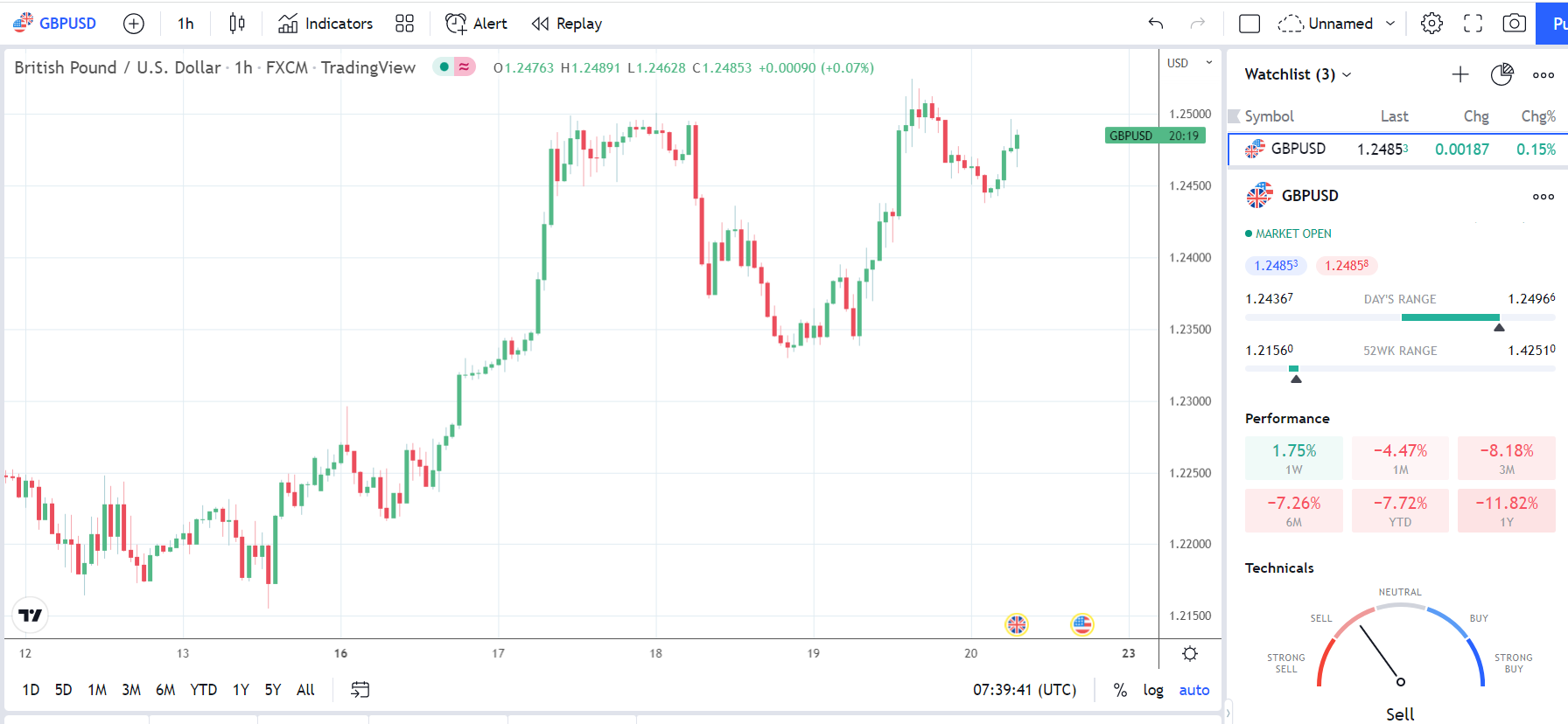
Ahead of today’s retail sales figures, the Pound fell to a pre-stat and current day low of $1.24367 before making a move.
In response to the numbers, the Pound rallied to a post-stat and a current day high of $1.24966 before easing back.
At the time of writing, the Pound was up 0.15% to $1.24853.
Looking at the equity markets, the FTSE100 was up 1.64% to 7,422.84, with the DAX and CAC seeing early gains of 0.90% and 0.47%, respectively.
UK bank and mining stocks were on the move this morning, delivering FTSE support.
Anglo American (+2.97%), Antofagasta (+2.14%), Glencore (+2.58%), and Rio Tinto (+2.29%) all found strong support, with Barclays (+2.02%), HSBC (+2.01%) close behind.
Standard Chartered bucked the trend with a 0.22% loss.