
Binance’s DEX platform, Aster (ASTER), has declined sharply since its debut, down about 70% from its market top near $1.50.
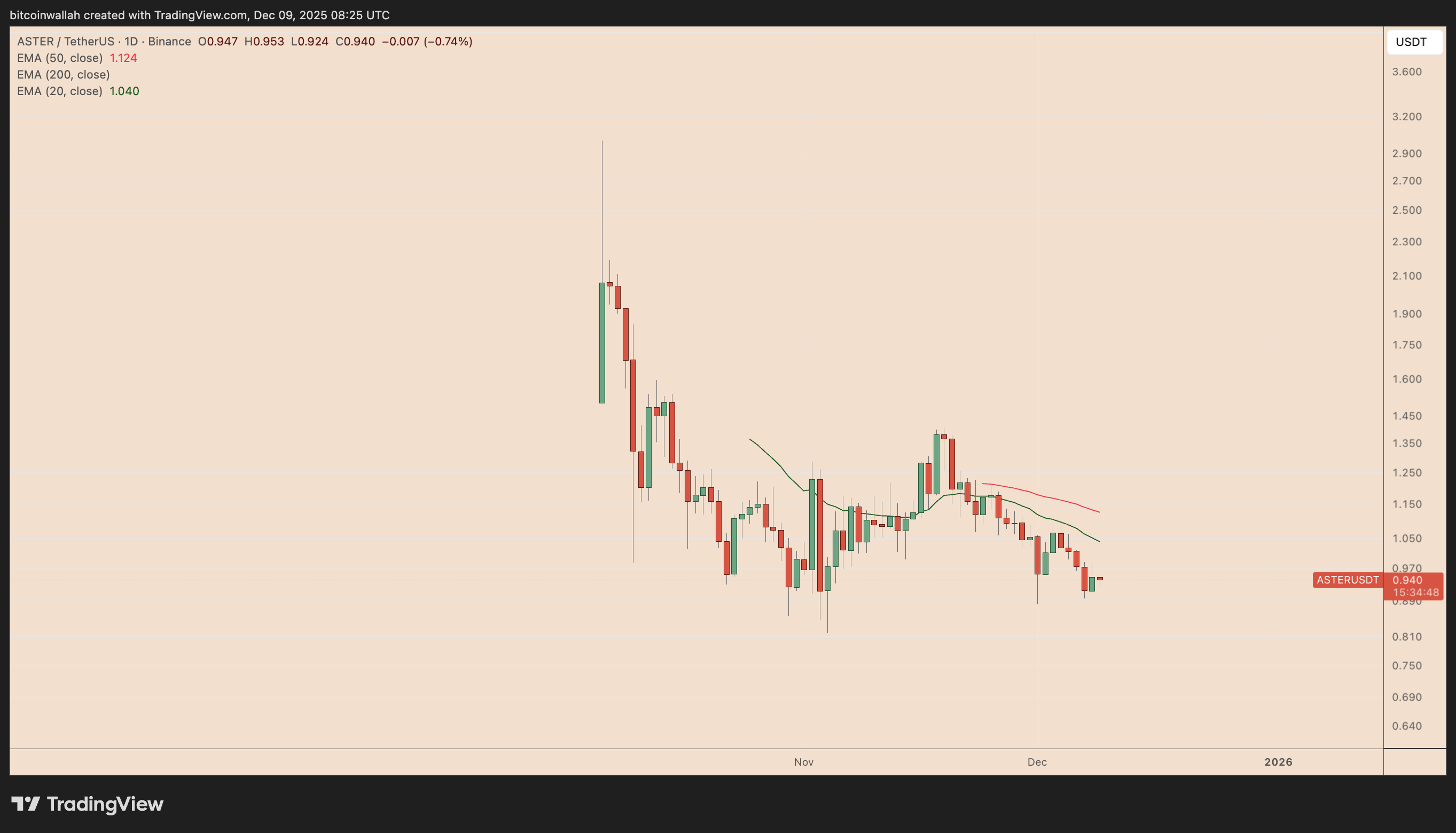
Will it sustain its declines in the coming weeks? Let’s examine.

ASTER Technical Analysis: V-Top Reversal Hints at 12.45% Decline in December
ASTER’s 4-hour chart shows a clean inverse V-top reversal forming near the $1.40 level, where the rally ended abruptly, and sellers immediately regained control.
The steep vertical rise followed by an equally sharp decline reflects a classic exhaustion top, leaving no consolidation base and trapping late buyers at the peak.
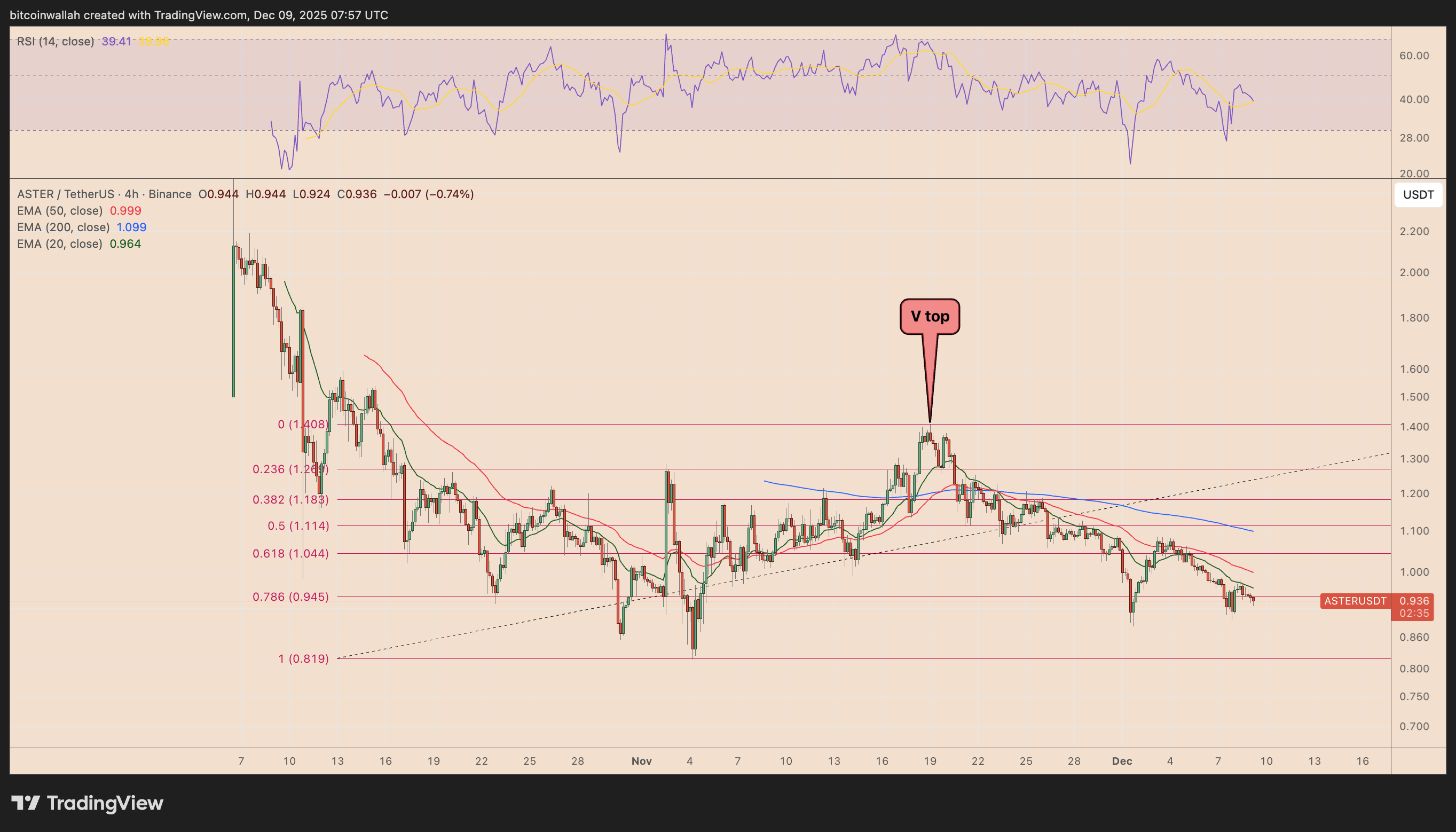
Since then, ASTER’s price has remained below its 20-, 50-, and 200-EMA stack, confirming a sustained downtrend and validating the V-top’s bearish continuation bias.
Using the V-top measured-move method, the neckline sits around $1.04–$1.05, where breakdown acceleration first occurred. A continued sell-off below the support zone risks sending the ASTER price further down toward $0.82, aligning with the 1.0 Fib extension level.
ASTER Traders Lean Bullish Despite Back-to-Back Liquidations
ASTER’s perpetual futures market continues to show a structurally weak backdrop as leveraged traders position themselves on the wrong side of the trend.
The chart below, shared by analyst Ardi, illustrates a steady two-month downtrend, with every bounce forming lower highs before sellers resume control.
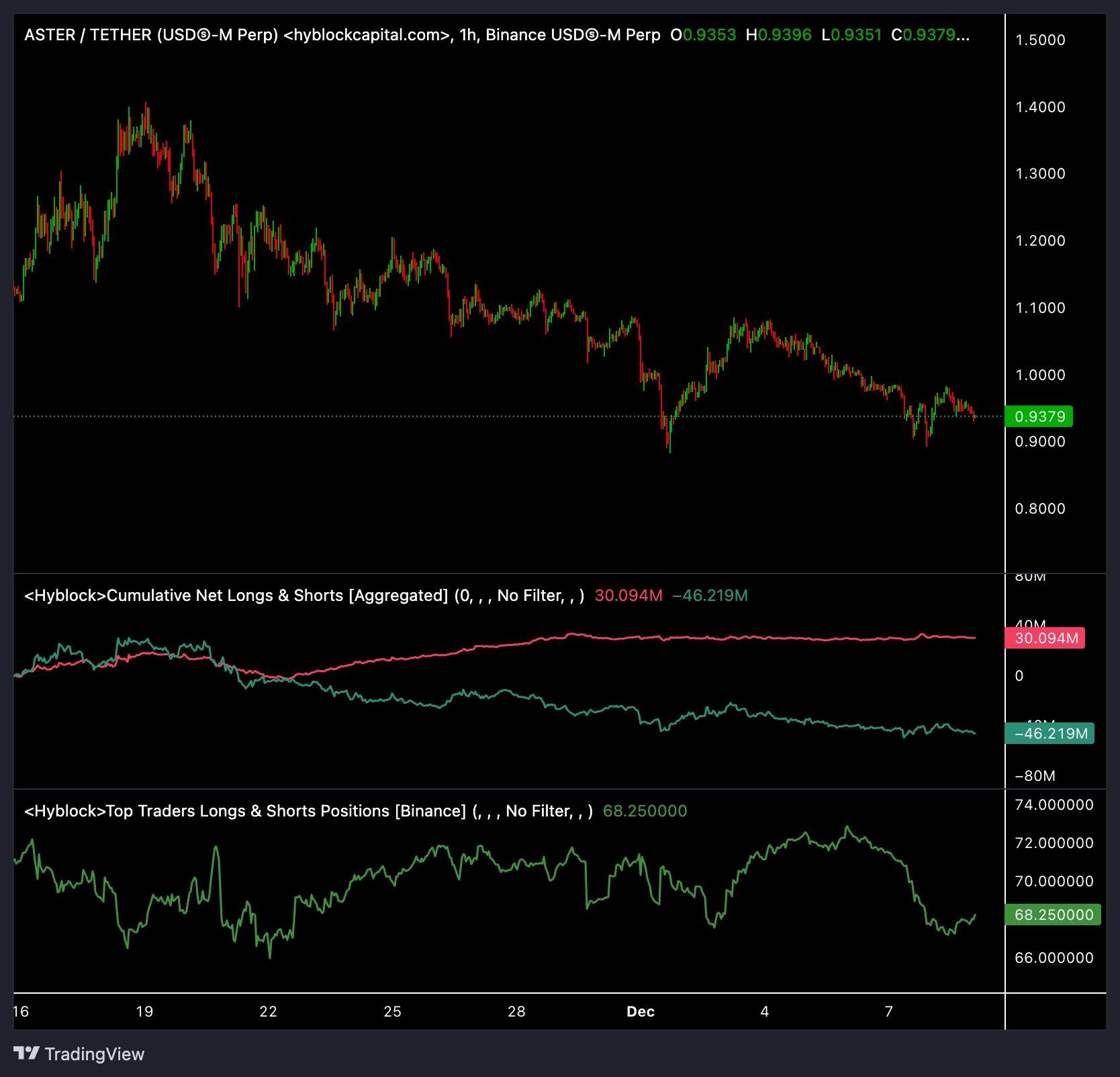
Yet, despite this clear structure, the bottom panel shows that 68% of Binance Perp traders still hold longs, effectively fighting momentum. Such positioning often accelerates downside pressure, as trapped bulls become forced sellers during periods of volatility.
The middle panel reinforces the same dynamic. The cumulative net longs (cyan) continue to decline rapidly, signaling ongoing long liquidation.
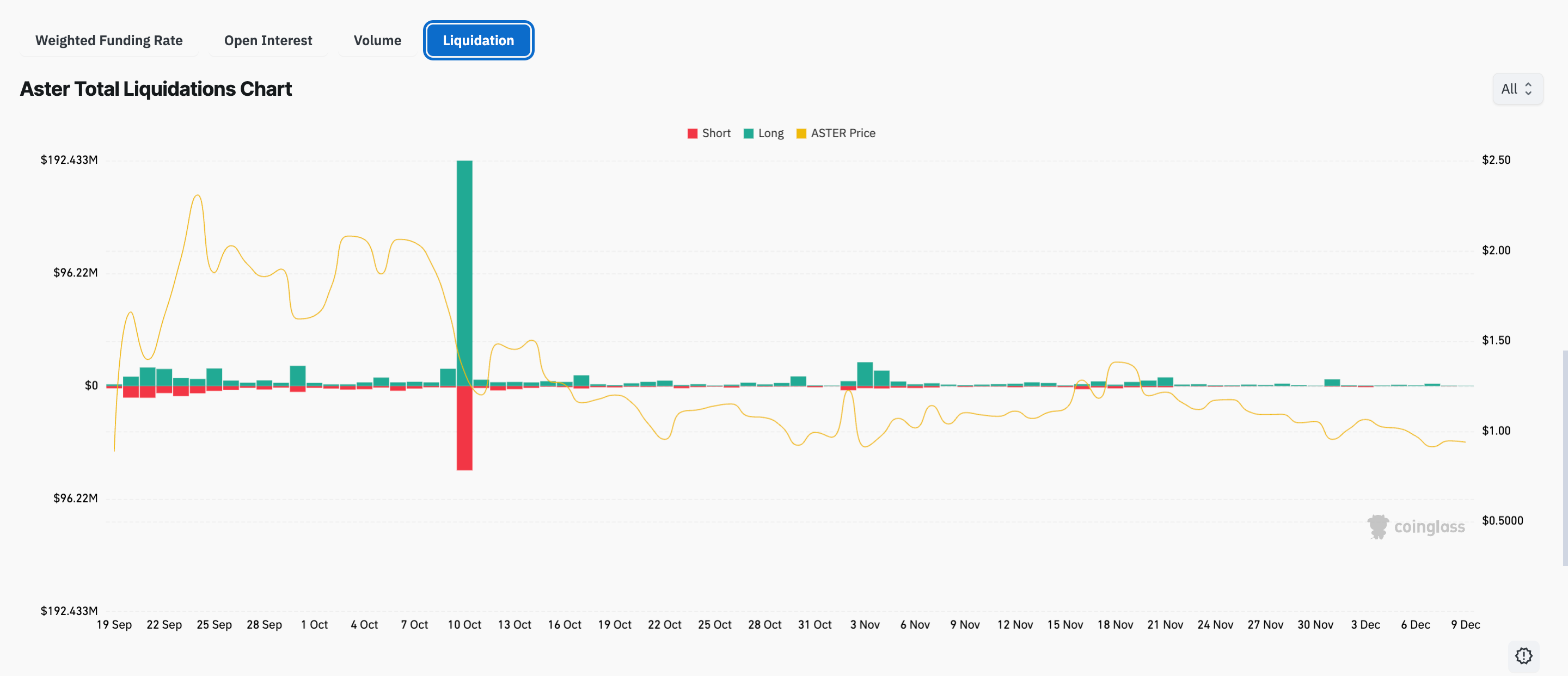
For ASTER, this imbalance suggests that further downside risk remains elevated, indicating that rallies may continue to serve as exit liquidity rather than signaling a trend reversal.
What Could Change This Bearish ASTER Viewpoint?
Starting Dec. 8, Aster’s perp DEX began accelerating its Stage 4 buyback program, routing roughly 60–90% of the previous day’s fee revenue into daily onchain purchases estimated at around $4 million.
With a 24-hour perp volume of nearly $5.8 billion and fees exceeding $1.3 million, the protocol is now recycling a significant share of real revenue back into ASTER, creating dense buy-side liquidity during a period of heavy long liquidation.
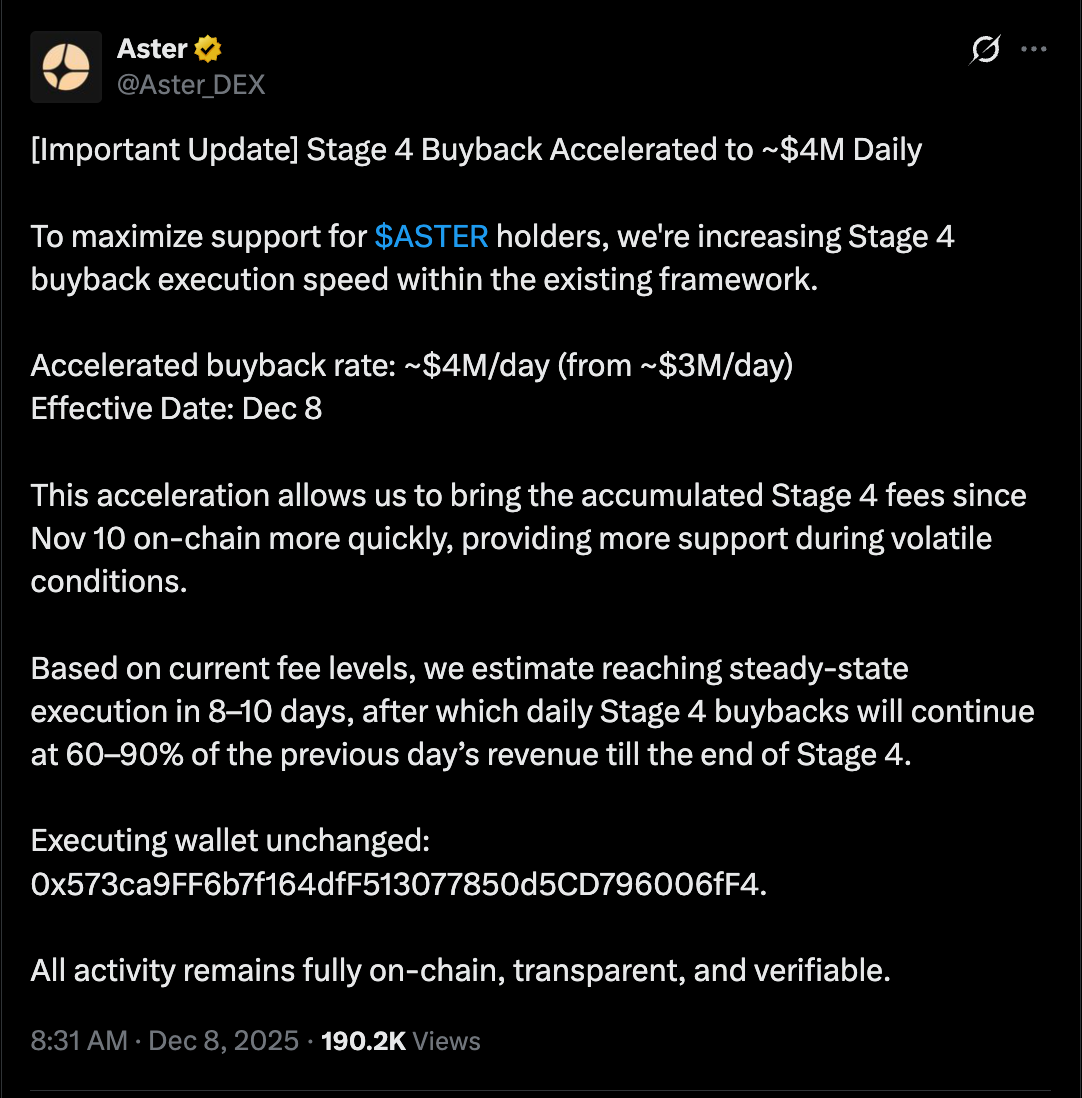
This isn’t happening in isolation. Aster recently burned approximately 78 million ASTER from its S3 program and transferred an equal amount into a locked airdrop wallet, reinforcing a deflationary narrative surrounding upcoming distributions.
Additionally, the H1 2026 roadmap includes a layer-1 chain, staking, governance, and broader ecosystem upgrades, positioning ASTER as more than a single-product perpetual token.
ASTER Shows Silver Lining in Potential Double Bottom Pattern
Despite its broader downtrend, ASTER is now carving out a potential double bottom near the $0.91 support zone, a level that has already produced one rebound.
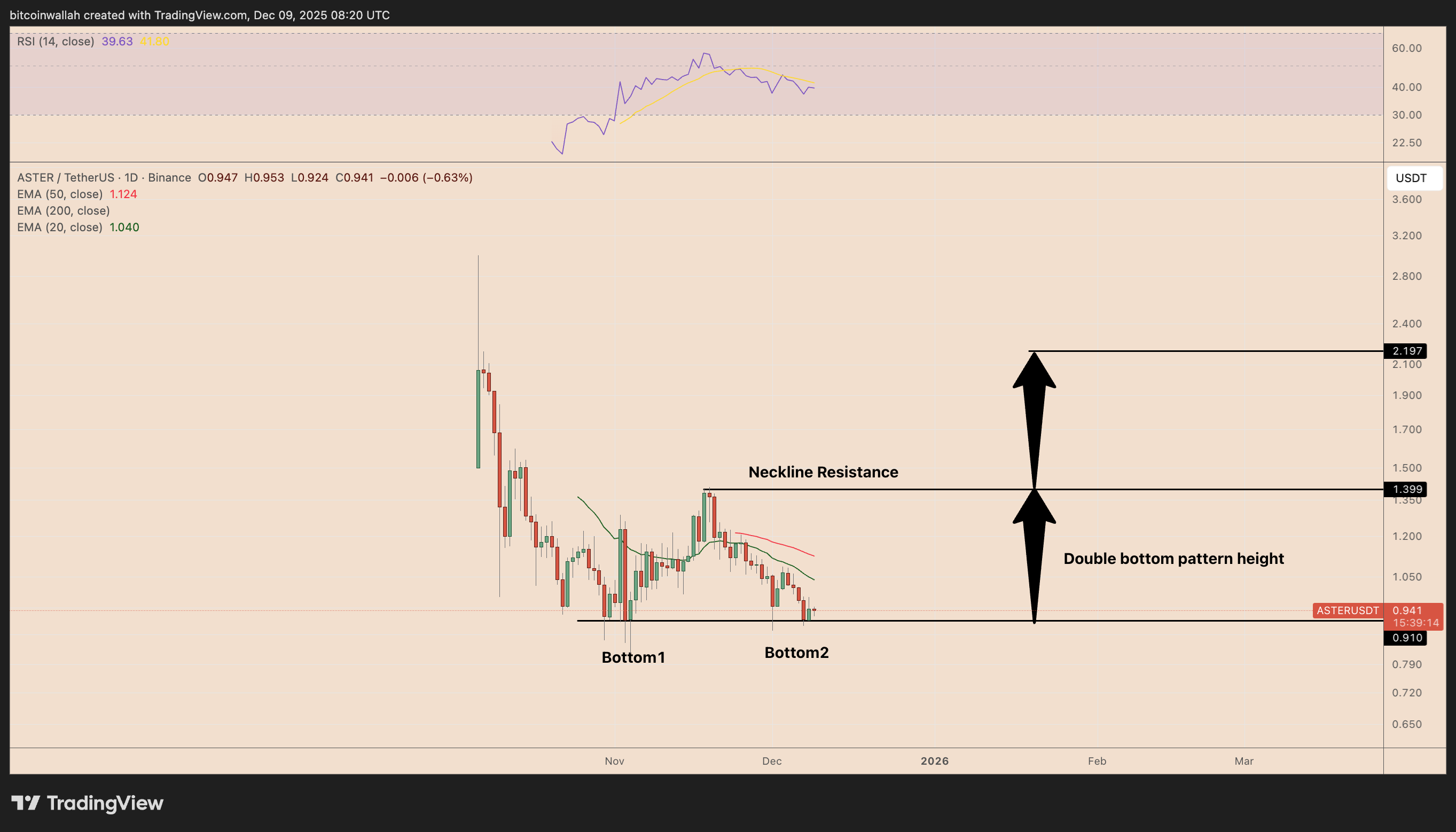
If buyers defend this floor again, the structure could evolve into a classic bullish reversal setup. The neckline sits around $1.39, and a decisive breakout above it would activate a measured move toward $2.19, mirroring the pattern’s height.
While confirmation is still lacking, this is the first technically constructive formation ASTER has shown in weeks, hinting that, if momentum shifts, a medium-term recovery may finally be possible.