
The S&P/ASX 200 Index finished Friday with another choppy session and was slightly lower after a tough week for Australian equities. The index dropped 0.14% to 8,617.1 points, continuing the cautious mood that has prevailed in global markets. Investors tried to force the market higher in the session, but selling pressure came back in before the close.
Weak sentiment from the United States also weighed on local markets following sharp declines in Wall Street. The ongoing geopolitical tensions and oil disruption are increasing uncertainty in the Australian stock market which indicate continued decline in the sessions ahead.

Mixed Sector Performance Across the Market
The losses in the Australian stock market were led by Gold stocks, with the All Ordinaries Gold Index falling 6.19% as investors offloaded stocks in the sector. Broader mining shares were also in trouble.
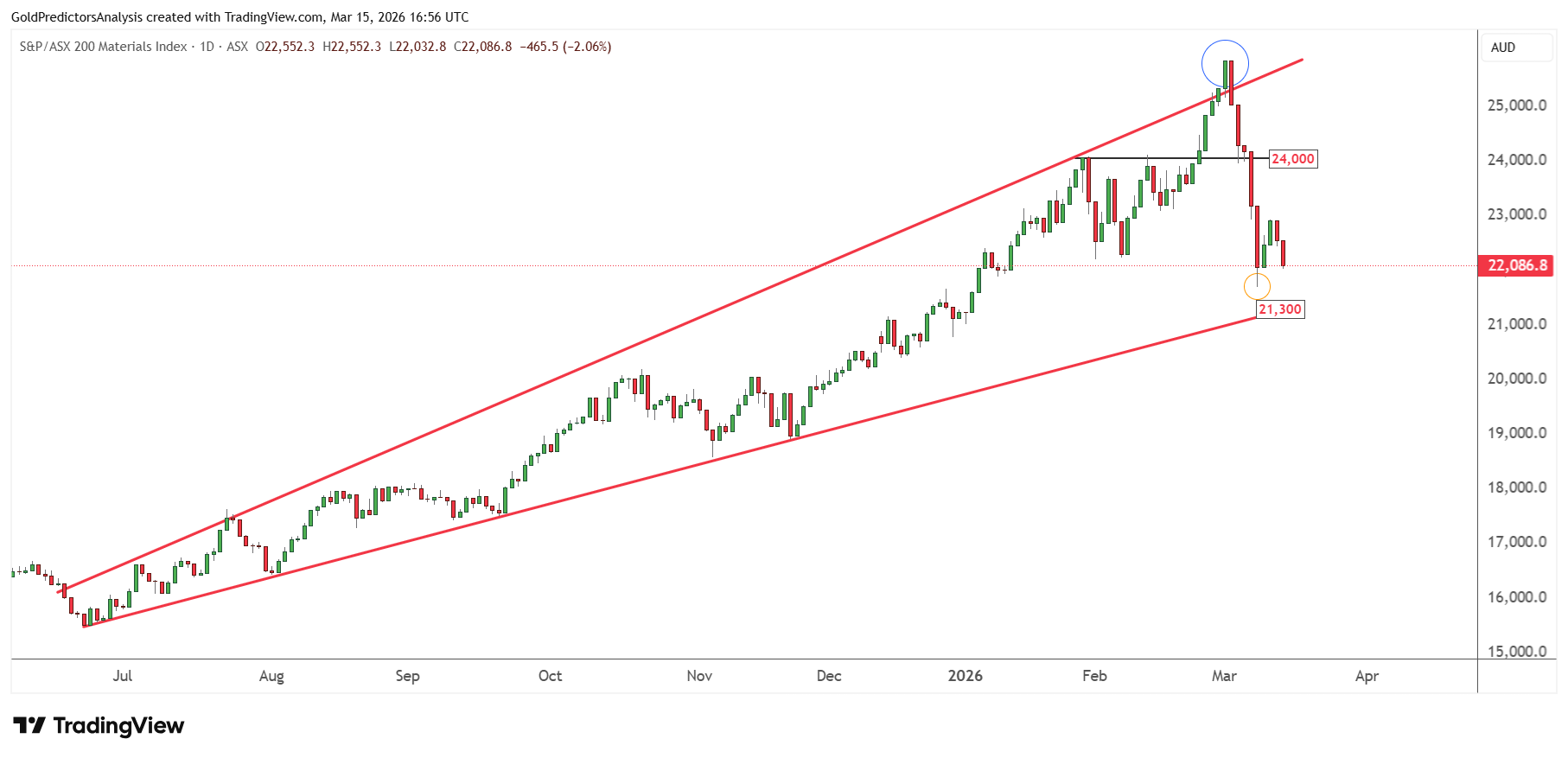
The ASX 200 Materials Index dropped 2.06% along with lower demand for stocks linked to commodities. The chart below shows that a break below 21,300 in Materials Index will break the ascending broadening wedge pattern and result in a huge drop in the ASX 200.
Healthcare, consumer staples and industrial companies also moved lower during the session which suggests that the selling pressure was spreading across several defensive and cyclical sectors.
However, there were several areas of the market that were able to post gains despite the general decline. Financial stocks took the lead in the upside with the ASX 200 Financials Index gaining 1.03% as investors rotated into banks and large financial companies.
Technology shares also did well with the Information Technology Index rising 0.8%. Communication services, energy companies, utilities and consumer discretionary stocks also ended the day in positive territory with selective buying interest despite weakness in broader market.
China’s Weak Manufacturing Data Adds Pressure
Economic data from China also helped to fuel the cautious mood in markets. China’s official NBS Manufacturing PMI declined to 49.0 in February, down from 49.3 in January. This is the second month in a row that factory activity has contracted.
The number was slightly lower than markets had hoped and the weakest since October. Weak external demand played a major role in the slowdown as new export orders dropped sharply.
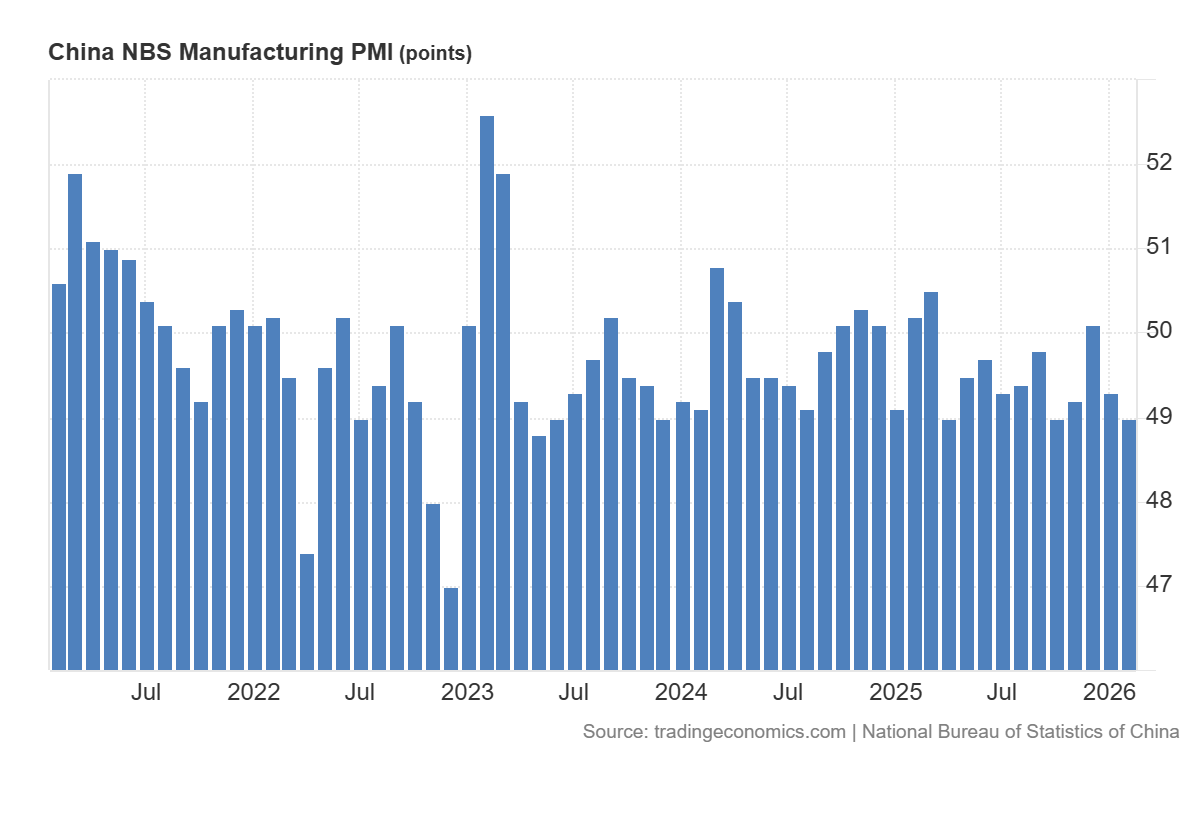
Other indicators also indicated softer industrial activity. New orders decreased further, and purchasing activity slowed overall across the factories. This slowdown in China’s manufacturing sector could weigh on the ASX 200 on mining and materials stocks. The weaker Chinese demand reduces the outlook for Australian commodity exports.
ASX 200 Technical Analysis – Bearish Pressure Builds Below 8,700
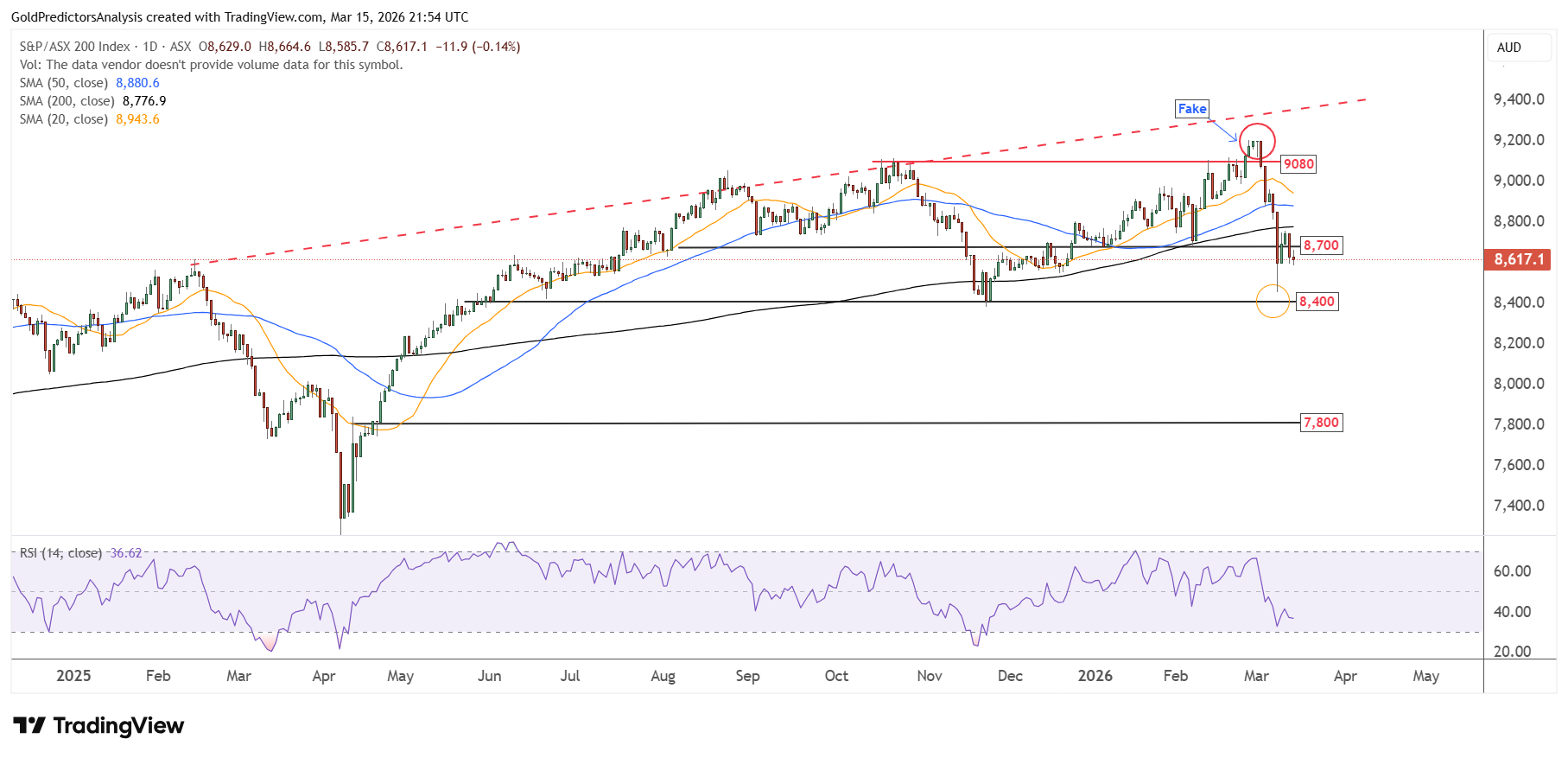
The chart below shows that the ASX 200 is building negative price action in the short term. The index is trading below the 200-day SMA and has broken the 8,700 level. This breakout indicates that the index may continue to trade lower towards 8,400 this week. A break below 8,400 will indicate a further drop towards 7,800. The RSI is also hovering at lower levels and indicates further downside in the short term.
Bottom Line
The ASX 200 starts the new week under pressure after volatile and negative week of trading. The global sentiment and Chinese economic condition will likely remain key drivers in the short term.
Weak manufacturing data out of China may continue to have influence on mining and materials stocks. On the other hand, shifts in US markets may affect risk appetite. However, strength in financial and technology shares indicates that investors may rotate into selective sectors rather than leaving the market altogether.
As long as the ASX 200 remains below 8,700, the possibility of a further drop to 8,400 is likely. A break below 8,400 will signal bearish pressure to continue towards 7,800.