Fed Holds Rates Steady as Technical Breakdown Continues
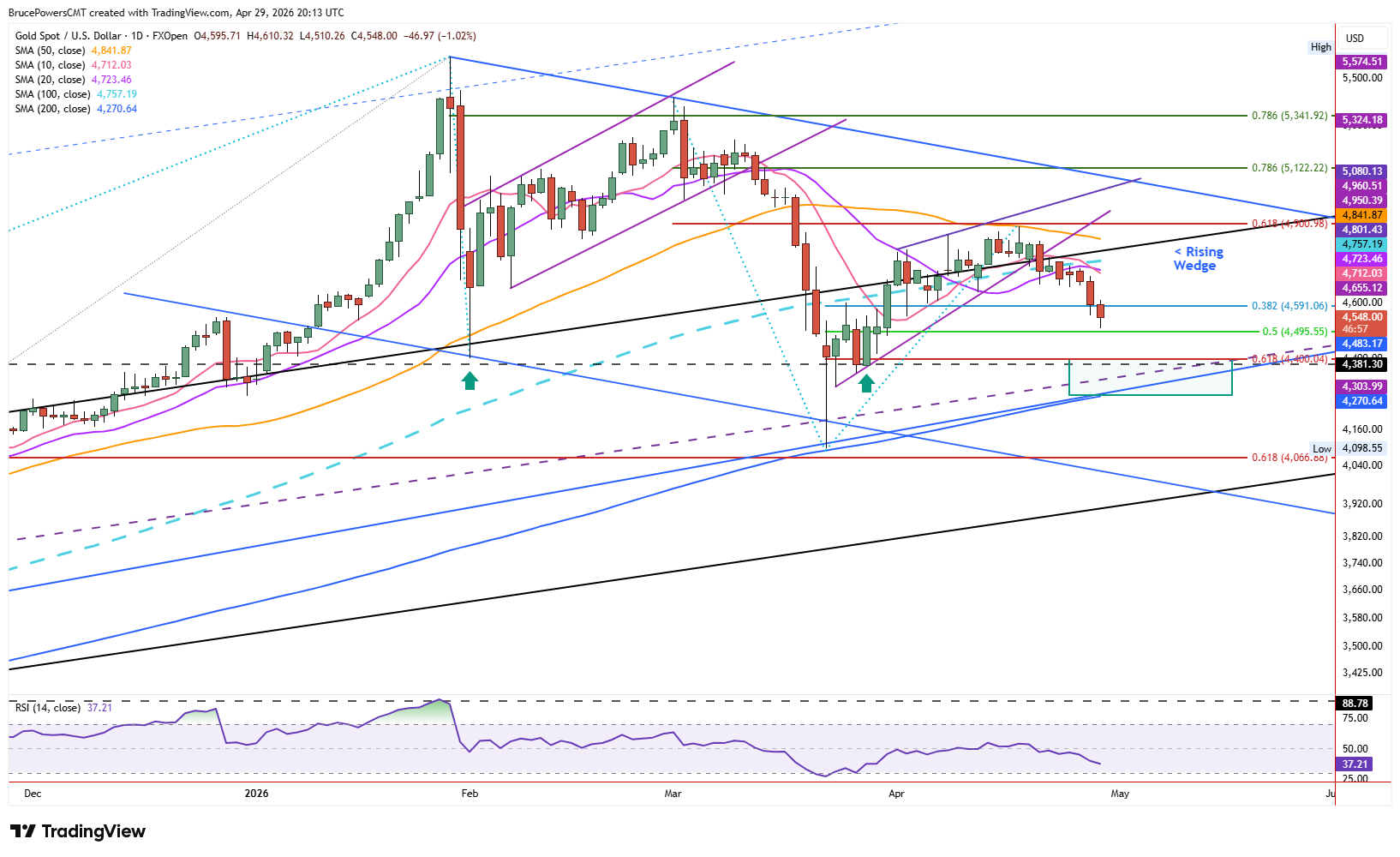
Following the Fed’s decision to leave interest rates unchanged, gold remained bearish after breaking down from a rising wedge pattern on April 21. Gold hit a low of $4,510 on Wednesday and is approaching a 50% retracement of the prior advance near $4,496. A lower daily high and lower low, along with a daily close below Tuesday’s low of $4,555, suggest that downward pressure may remain until lower potential targets are tested. This continued weakness reinforces the bearish implications of the wedge breakdown and keeps focus on deeper support zones.

Key Support Zones and Fibonacci Structure
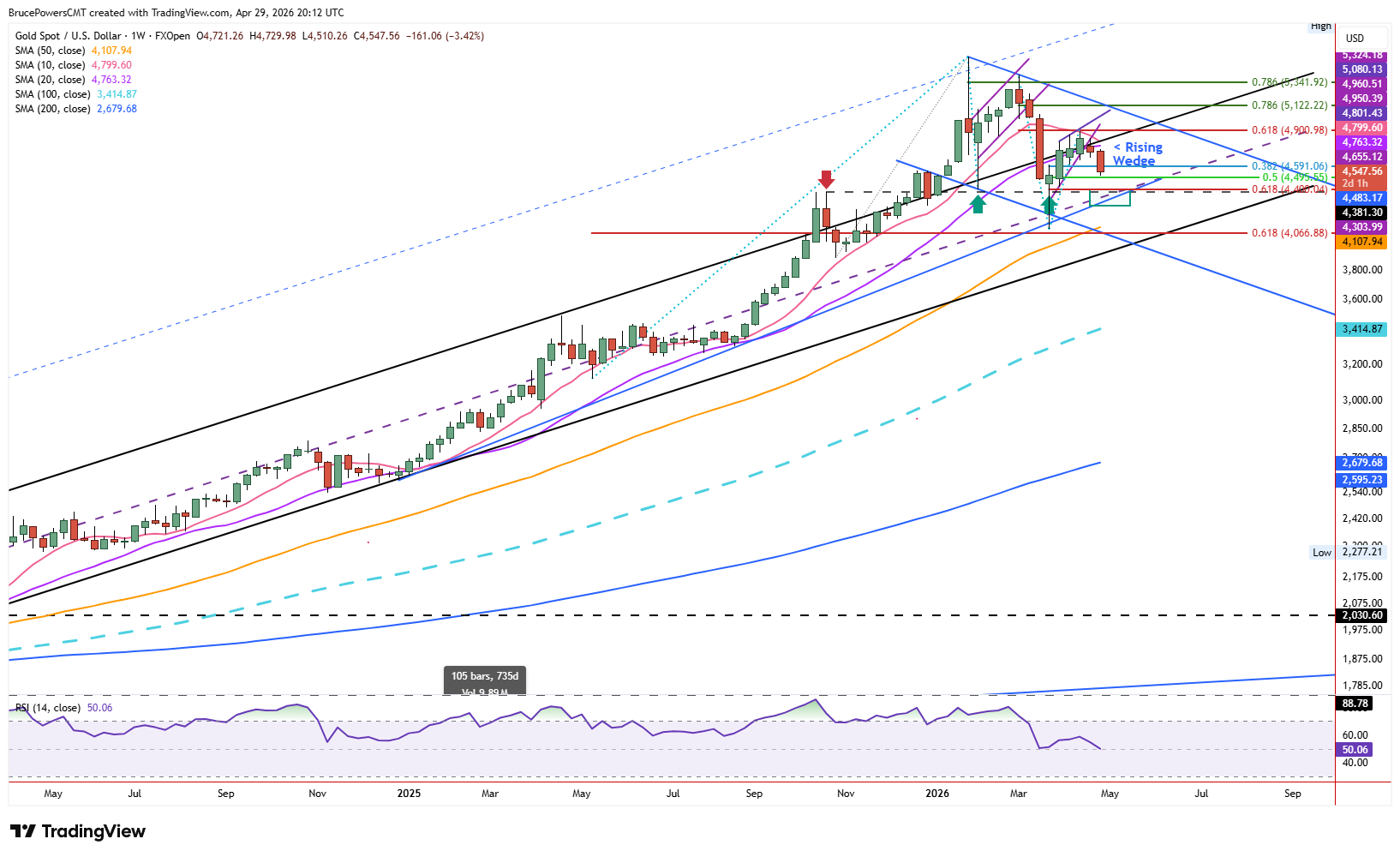
The key price zone for support starts around the spike low of $4,402 from early February and the 61.8% Fibonacci retracement of the prior advance at $4,400. The starting point of the rising wedge is at $4,305, which marks a potential target from the pattern. Key long-term dynamic trend support, however, is near the 200-day moving average, at $4,271 currently and aligned with an internal uptrend line within the channel.
Long-Term Trend Support Framework
The 200-day average represents the low end of the target range. This is because strong support was seen near the average during the March spike low and that it aligns with the large rising channel formation. The rising midline of the channel represents a harmonic relationship to the boundaries of the formation, and the 200-day line is not far from this midline, with both converging eventually.
Bearish Confirmation Across Indicators
In addition to the bearish wedge signal that triggered recently, the decline has broken back below all major moving averages after a short recovery attempt. It has also pushed gold back below the top boundary of the trend channel. The combination of bearish signals strongly suggests that lower levels may be tested before the decline finds sustained support. This suggests interim rallies are likely to encounter resistance when testing prior support zones. The 20-day moving average at $4,773 presents a key resistance zone on a bounce as it has clearly been recognized as both support and resistance recently.
If you’d like to know more about how to trade gold and silver, please visit our educational area.