Natural Gas Remains Under Pressure
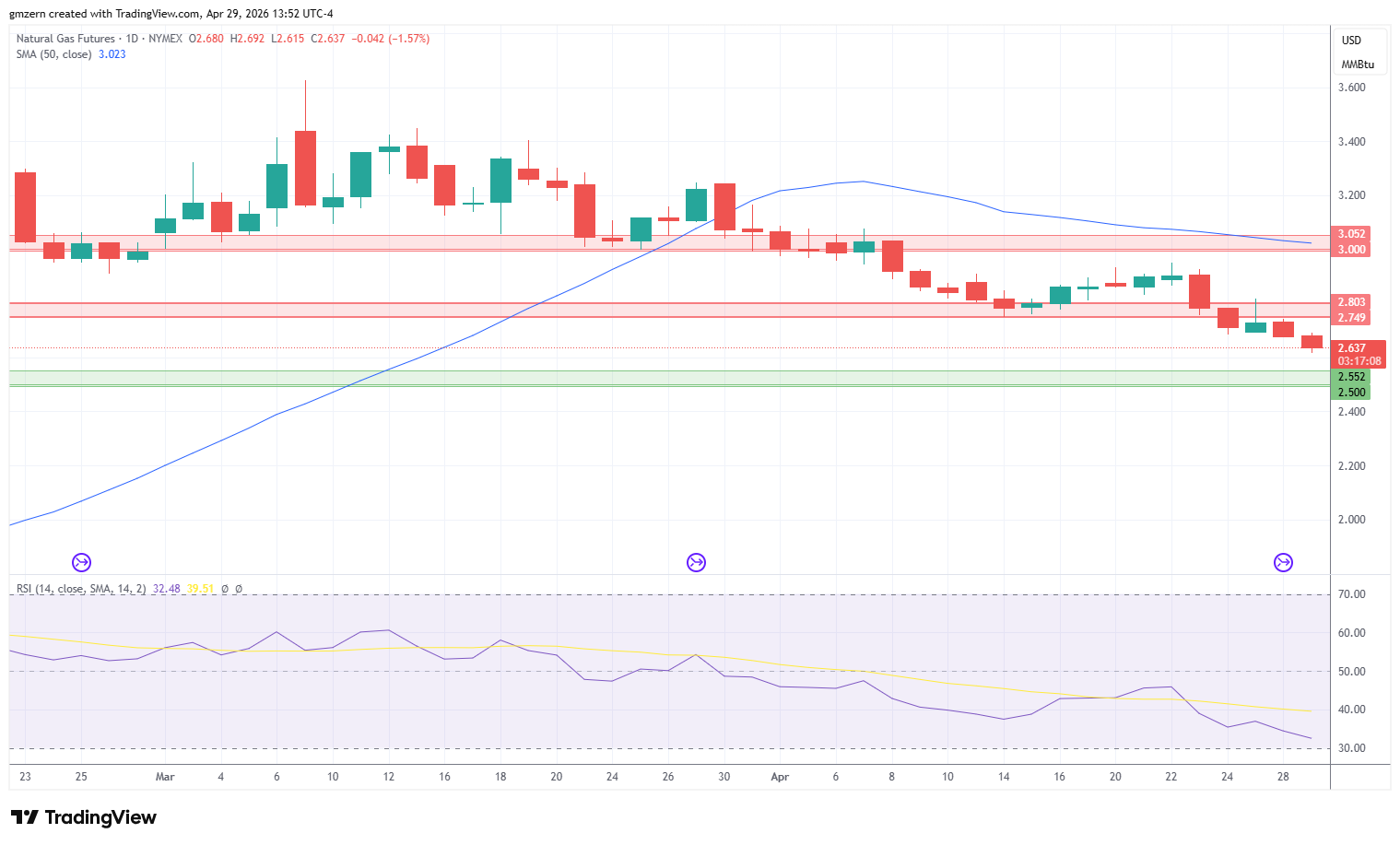
Natural gas is losing ground as traders prepare for the EIA report, which will be released tomorrow. Analysts expect that working gas in storage increased by +83 Bcf from the previous week. In case the actual report exceeds this estimate, natural gas will find itself under more pressure.
Natural gas settled below the $2.70 level and is trying to settle below $2.65. In case this attempt is successful, natural gas will move towards the support at $2.50 – $2.55. RSI is close to the oversold territory, but there is enough room to gain additional downside momentum in case the right catalysts emerge.

WTI Oil Tests New Highs
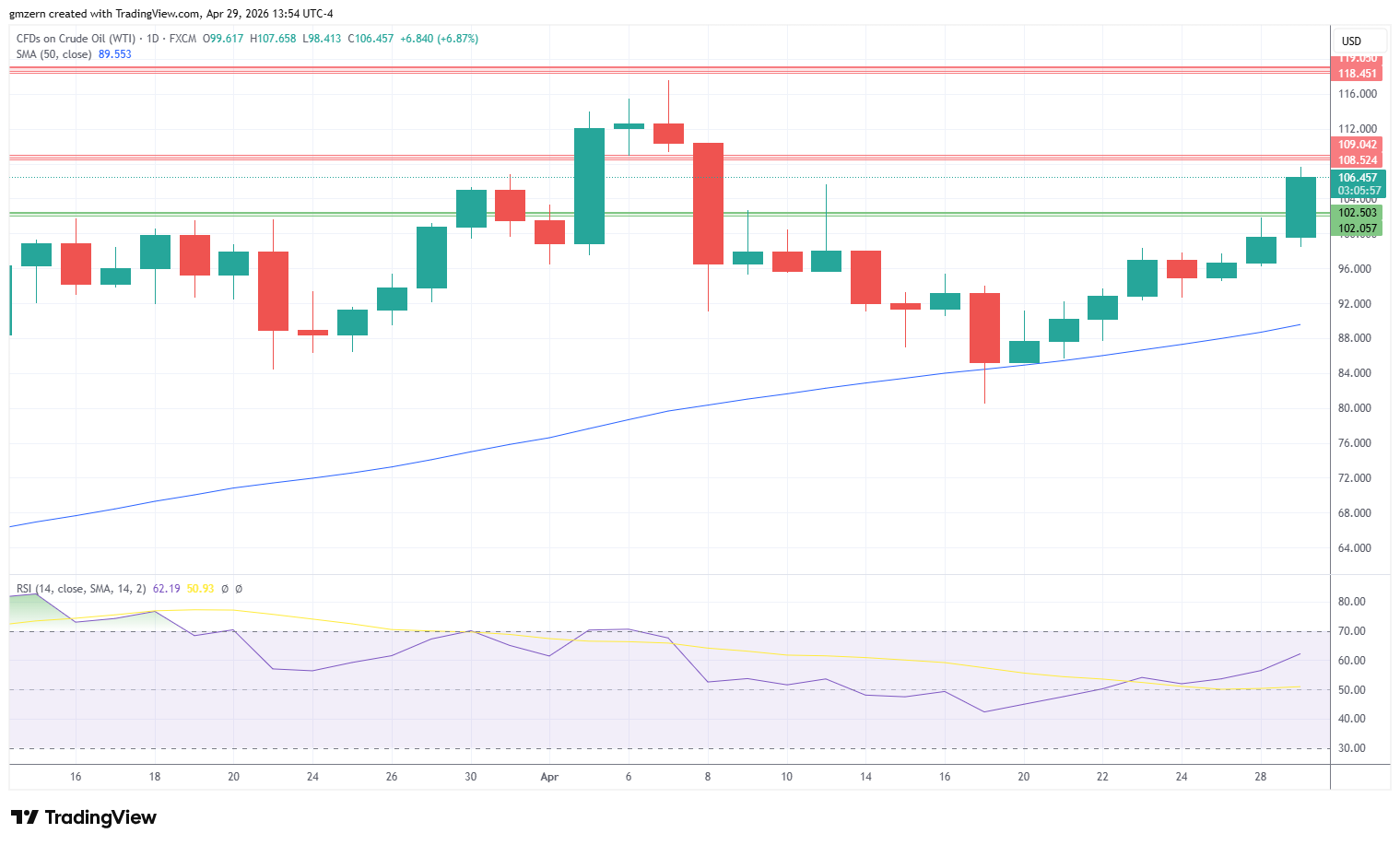
WTI oil rallied as U.S. President Trump rejected Iran’s proposal. Iran proposed to open the Strait of Hormuz and lift the U.S. blockade. The country wanted to talk about its nuclear program at a later stage.
Trump told Axios that Iran should not have a nuclear weapon. He added that the blockade was more effective than the bombing. Iran’s nuclear program is the key reason for the war in the Middle East, so it’s not surprising to see that U.S. does not want to delay discussions about the fate of this program.
Traders worry that negotiations will not restart in the near term, so the Strait of Hormuz would remain blocked. The risks of additional escalation in the Middle East are rising day by day.
Today, traders also had a chance to take a look at the EIA Weekly Petroleum Status Report. The report indicated that crude inventories declined by -6.2 million barrels from the previous week, compared to analyst forecast of -0.2 milion barrels. At current levels, crude inventories are about 1% above the five-year average for this time of the year.
Total motor gasoline inventories decreased by -6.1 million barrels, compared to analyst consensus of -2.1 million barrels. Distillate fuel inventories declined by -4.5 million barrels from the previous week.
U.S. crude oil imports declined by -329,000 bpd, averaging 5.8 million bpd. Over the past four weeks, crude oil imports averaged 5.9 million bpd.
Strategic Petroleum Reserve decreased from 405 million barrels to 397.9 million barrels as U.S. continued to sell oil from reserves. These sales did not put any pressure on prices.
Domestic oil production increased from 13.585 million bpd to 13.586 million bpd. From a big picture point of view, domestic oil production stabilized near current levels.
WTI oil climbed above the previous resistrance at $102.00 – $102.50 and is moving towards the next resistance at $108.50 – $109.00. A move above the $109.00 level will push WTI oil towards the resistance at $118.50 – $119.00.
Natural Gas Price Forecast
Every new Natural Gas analysis as it publishes, today's technical signal and key levels, live price — on one page.
See all Natural Gas forecastsBrent Oil Tests Resistance At $118.50 – $119.00
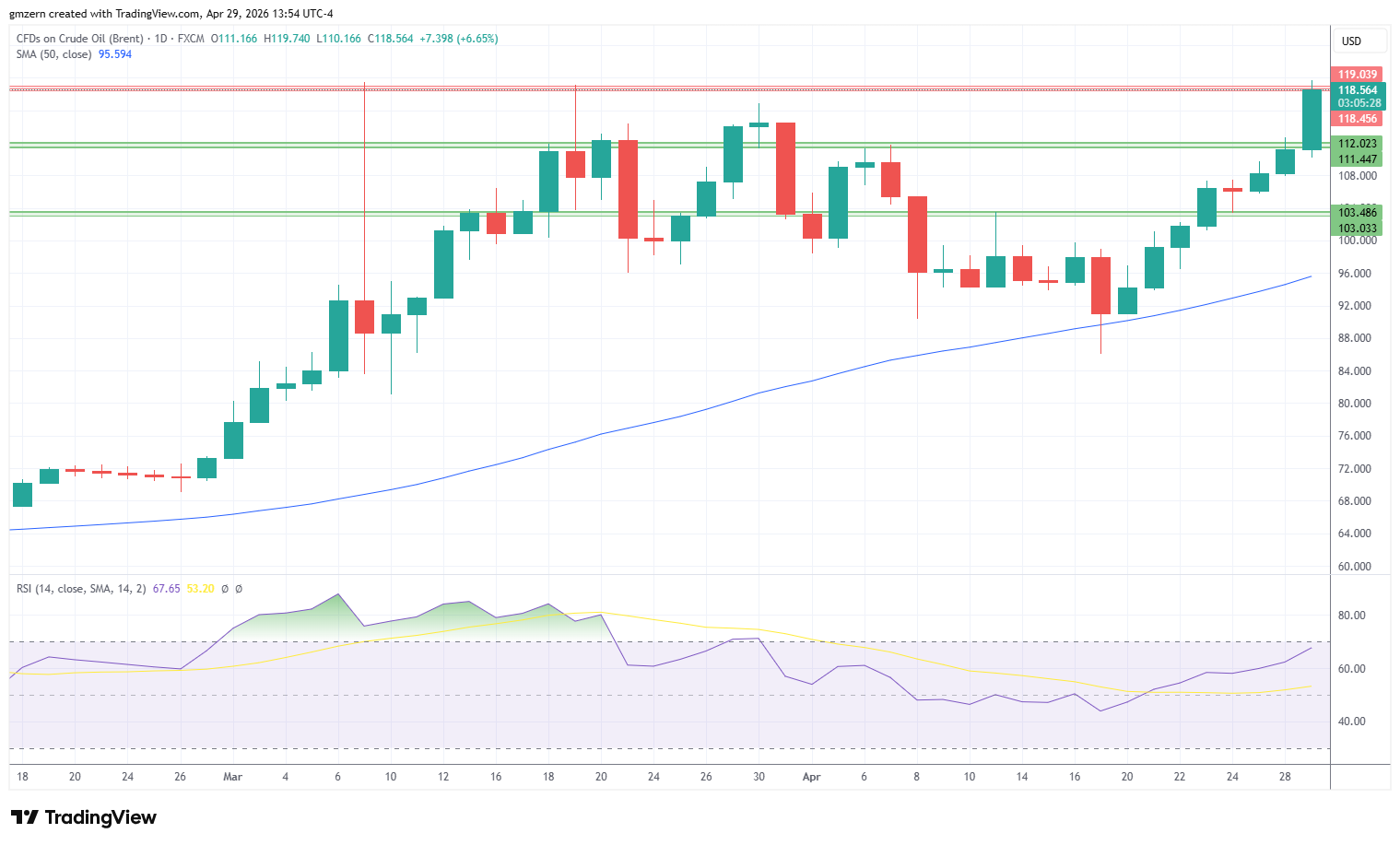
Brent oil rallied as traders focused on recent developments in the Middle East and bet on additional escalation.
Currently, Brent oil is trying to settle above the resistance at $118.50 – $119.00. In case this attempt is successful, Brent oil will gain additional upside momentum and move towards the $125.00 level.
It should be noted that a successful test of the resistance at $118.50 – $119.00 will likely attract speculative players, so traders should be prepared for fast moves.
If you’d like to know more about how commodity markets work, please visit our educational area.