



Bitcoin (BTC) traders are watching the US dollar hover at a level that previously aligned with two of its biggest cycle rallies.
Bitcoin Could Hit $150K If This Dollar Fractal Plays Out
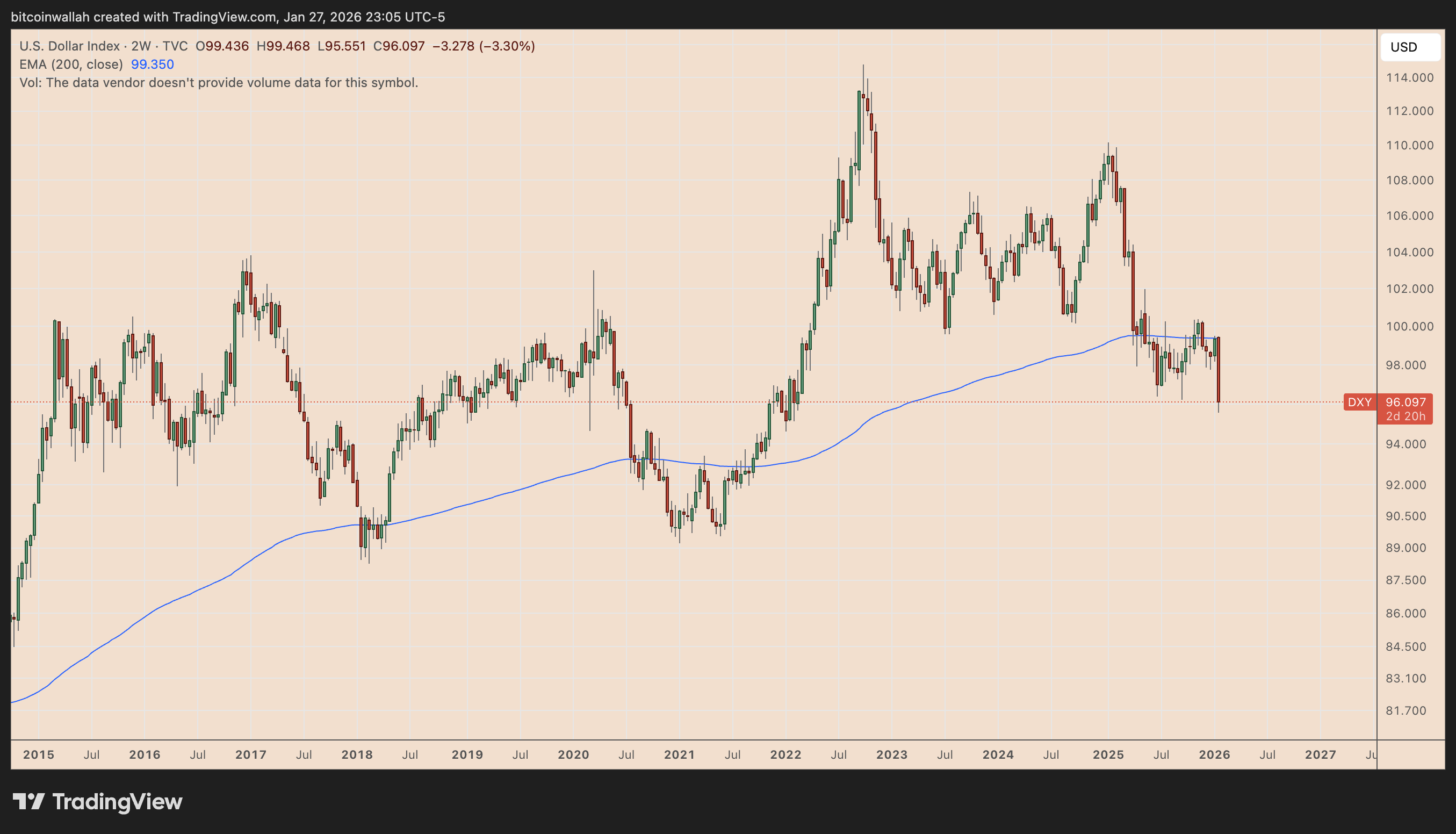
The US Dollar Index (DXY) trades near 96.3, extending a broader downtrend that has accelerated during bouts of macro stress. Traders have linked the softness to shifting global flows as markets reassess tariff risks, growth expectations, and cross-asset positioning tied to Japan.
A stronger yen and periodic “yen carry trade unwind” dynamics can tighten global risk conditions and force position cleanups across FX and equities, moves that often spill into the dollar market.
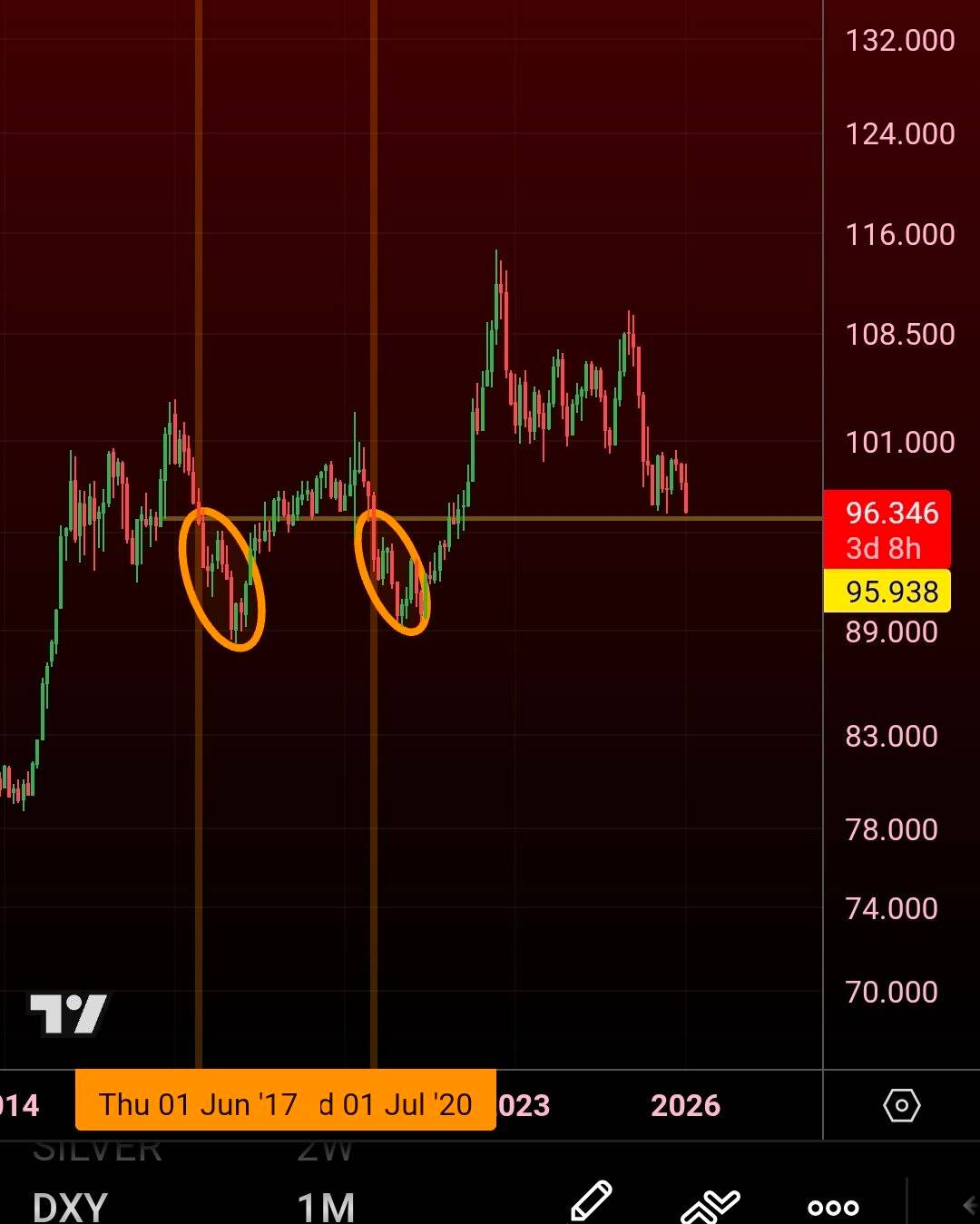
Against that backdrop, DXY now sits within striking distance of 96, a level that acted as a major inflection point in prior cycles.
When DXY last broke below 96, Bitcoin surged from roughly $2,000 to $20,000 within six months in 2017. In 2020, a similar dollar breakdown preceded BTC’s run from about $10,000 to $64,000 over nine months, an upside move of about 540%.
In 2020, near-zero interest rates, massive quantitative easing, and huge fiscal stimulus pushed real yields down and revived the “fiat debasement” trade, lifting BTC alongside broader risk assets.
In comparison, the current macro backdrop is tighter. Rates and real yields are higher, and yen carry unwind/tariff shocks can turn markets risk-off.
Still, ETFs and institutional demand for BTC may offset some of that if the Federal Reserve policy expectations pivot toward easing. That could trigger capital flows toward the Bitcoin market, raising its odds of hitting $150,000 in 2026, as our special annual outlook on BTC suggested.
Bitcoin Price Forecast
Every new Bitcoin analysis as it publishes, today's technical signal and key levels, live price — on one page.
See all Bitcoin forecastsBitcoin’s Gold Signal Adds a Second Bullish Read
Traders are also tracking Bitcoin’s performance against gold, a ratio some view as a cleaner long-term cycle gauge than BTC/USD.
When priced in gold, the BTC/XAU ratio has historically gravitated back to its 200-2W moving average about once every four years.
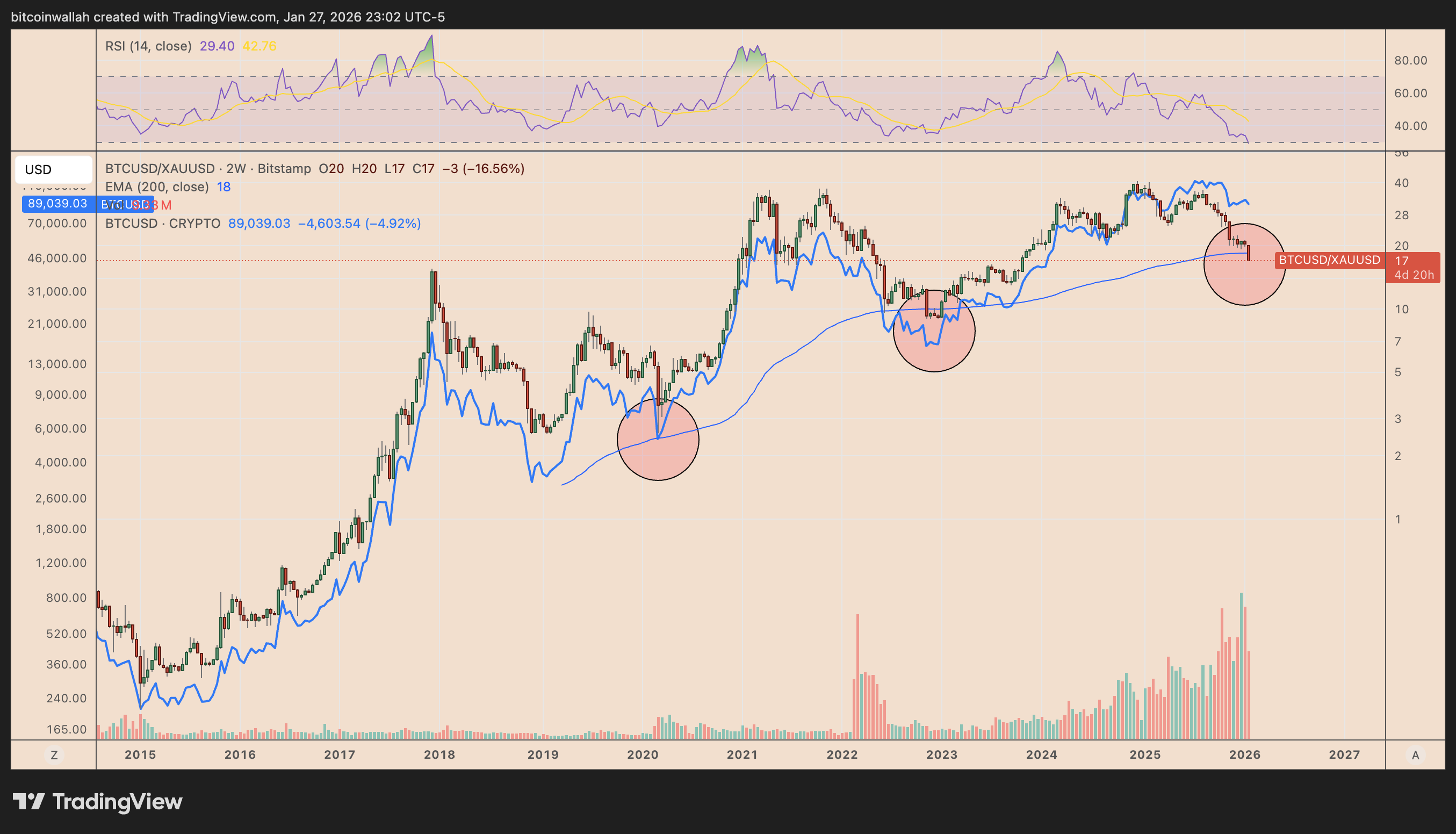
In my view, market participants typically treat a test of the 200-2W average as a confirmation-heavy zone rather than an immediate buy signal, since the ratio can remain depressed for extended periods.
Still, the repeated timing of the revisits has kept the level on traders’ radar as a potential macro pivot.