
Bitcoin (BTC) is trading near $92,000 as markets digest a wave of institutional validation, including fresh Bitcoin-linked ETF filings from Morgan Stanley and MSCI’s decision to retain crypto-exposed companies in its flagship indexes.
In my view, this backdrop sets the stage for a renewed upside push toward $150,000 during 2026.
In this article, I’ll outline the macro backdrop, key levels, and the core scenarios shaping Bitcoin’s outlook for the year ahead.

Key Points
- Institutional ETFs and corporate treasuries are absorbing Bitcoin supply, weakening the traditional four-year cycle.
- Dovish Fed expectations and rising U.S. debt reinforce Bitcoin’s macro store-of-value narrative.
- Technical structure points to a breakout toward $112,000, with $150,000 as a follow-through target.
- Risks include slower ETF inflows, tighter monetary policy, or failure to clear key resistance levels.
Macro Drivers Behind the Bullish Bitcoin Outlook For 2026
Among the top arguments favoring a Bitcoin bull market in 2026 include the end of “four-year halving cycle,” US debt crises, favorable regulations, and a growing institutional adoption.
Bitcoin Four-Year Halving Cycle is Over
For most of Bitcoin’s history, prices followed a fairly predictable four-year rhythm tied to the halving, an event that cuts new BTC supply in half roughly every four years.
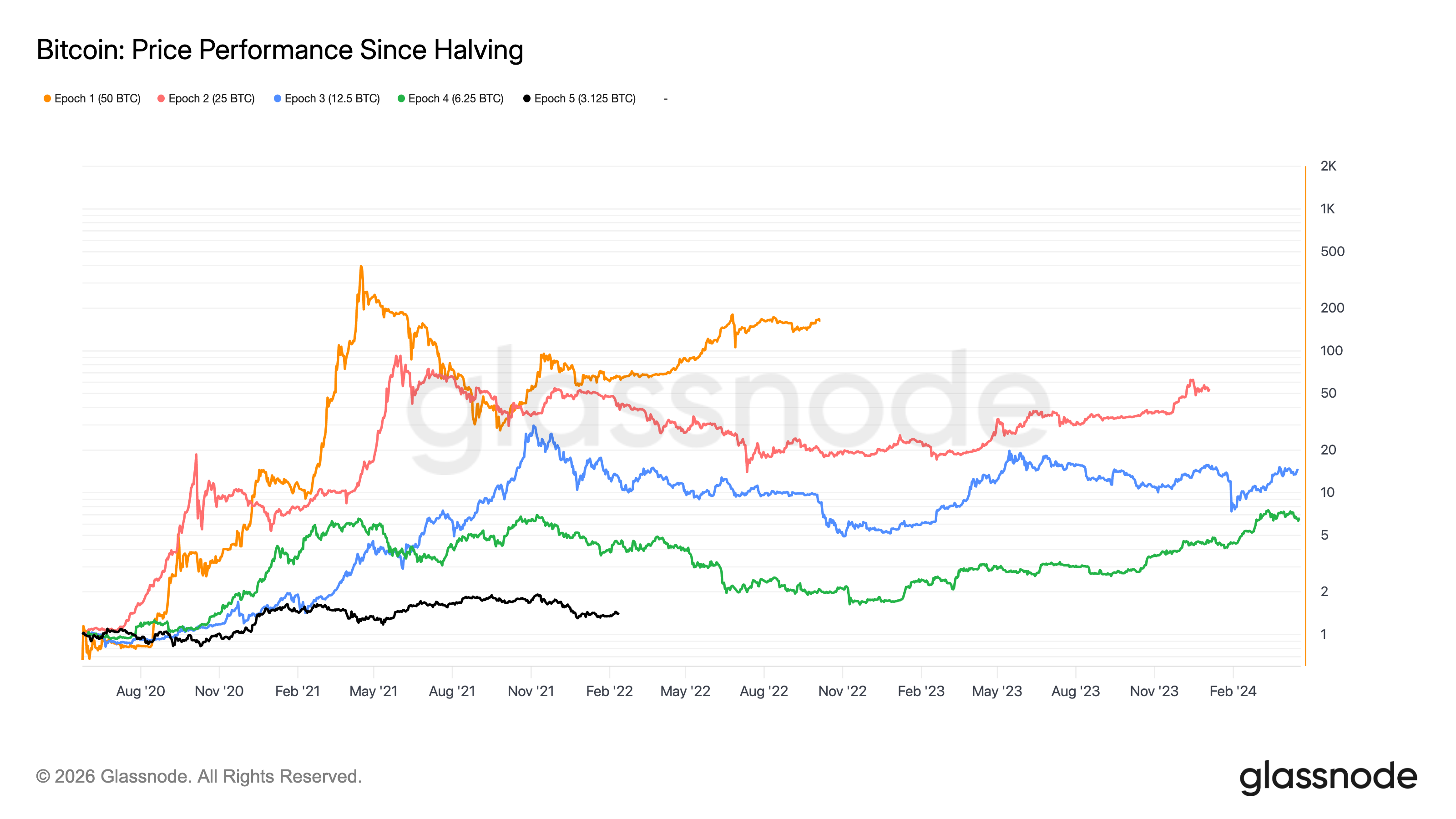
The April 2024 halving has followed a similar script so far.
Bitcoin Price Forecast
Every new Bitcoin analysis as it publishes, today's technical signal and key levels, live price — on one page.
See all Bitcoin forecastsBitcoin experienced a post-cycle blow-off and subsequent correction, reinforcing the idea that the price may decline to as low as $40,000 if the four-year cycle model plays out as intended.
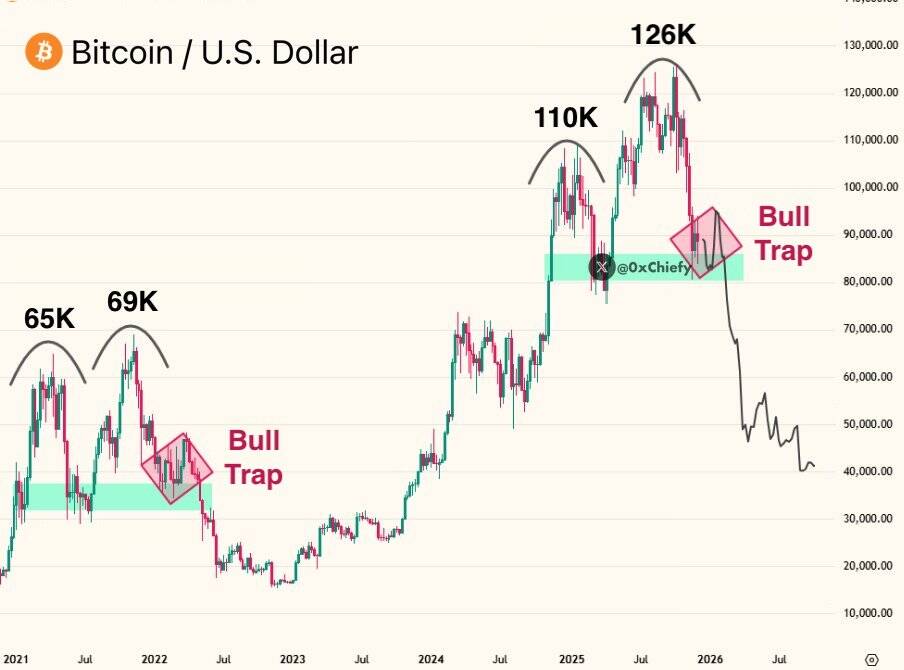
Nonetheless, such bearish setups have discounted positive fundamentals such as the ongoing BTC supply absorption by digital asset treasurys (DATS) and exchange-traded funds (ETF).
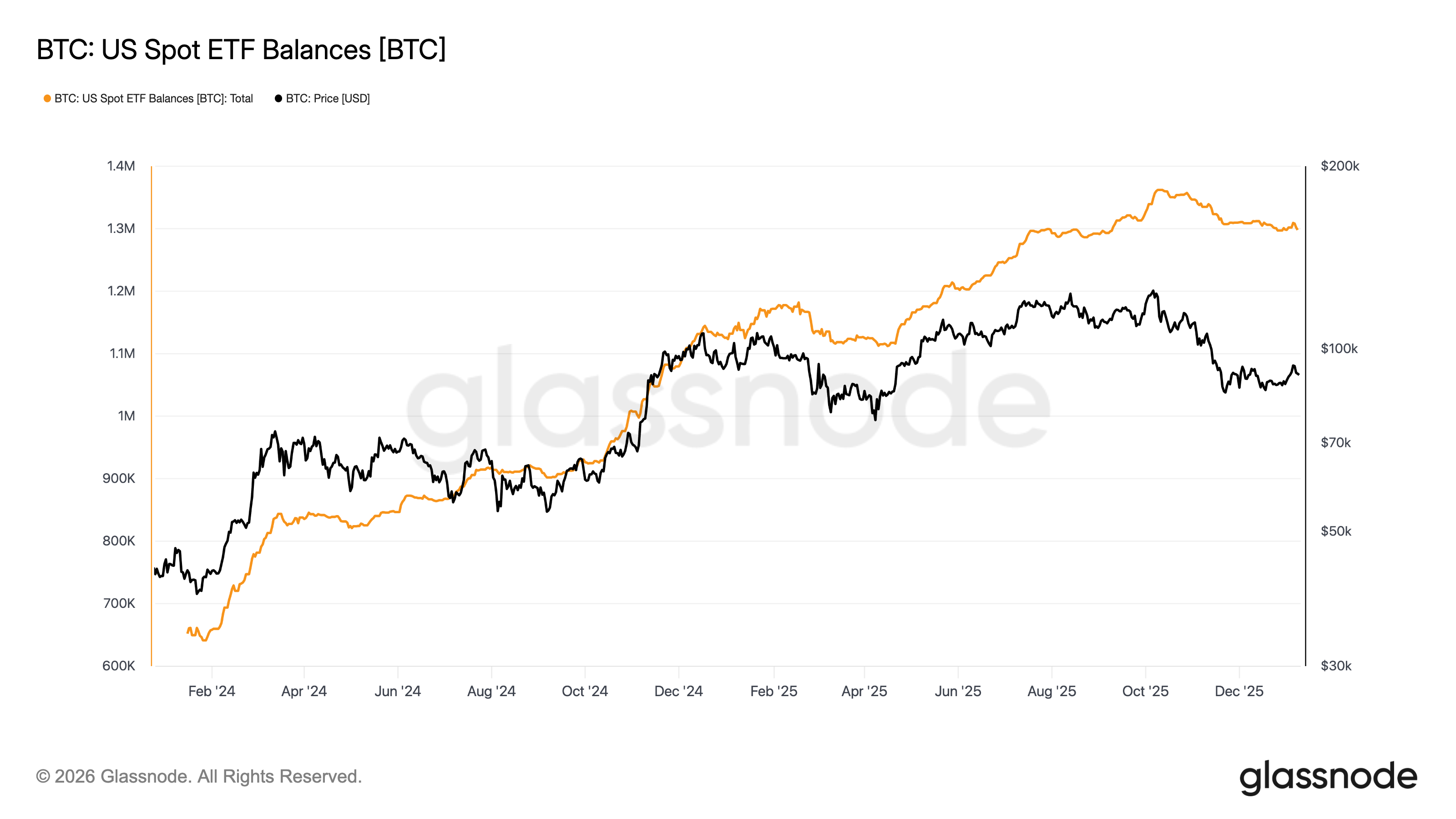
Here’s some statistics to shed light on the matter. As of January 2026, all the US-based spot Bitcoin ETFs were collectively managing nearly 1.3 million BTC worth $117.86 billion, almost double since their debut two years ago.
At the same time, DATS have amassed over 1.09 million BTC (~$109.72 billion as of the time of writing) in the past five years. That includes accumulation even during BTC’s price dips, hinting at a long-term bullish scenario shared by these public firms.
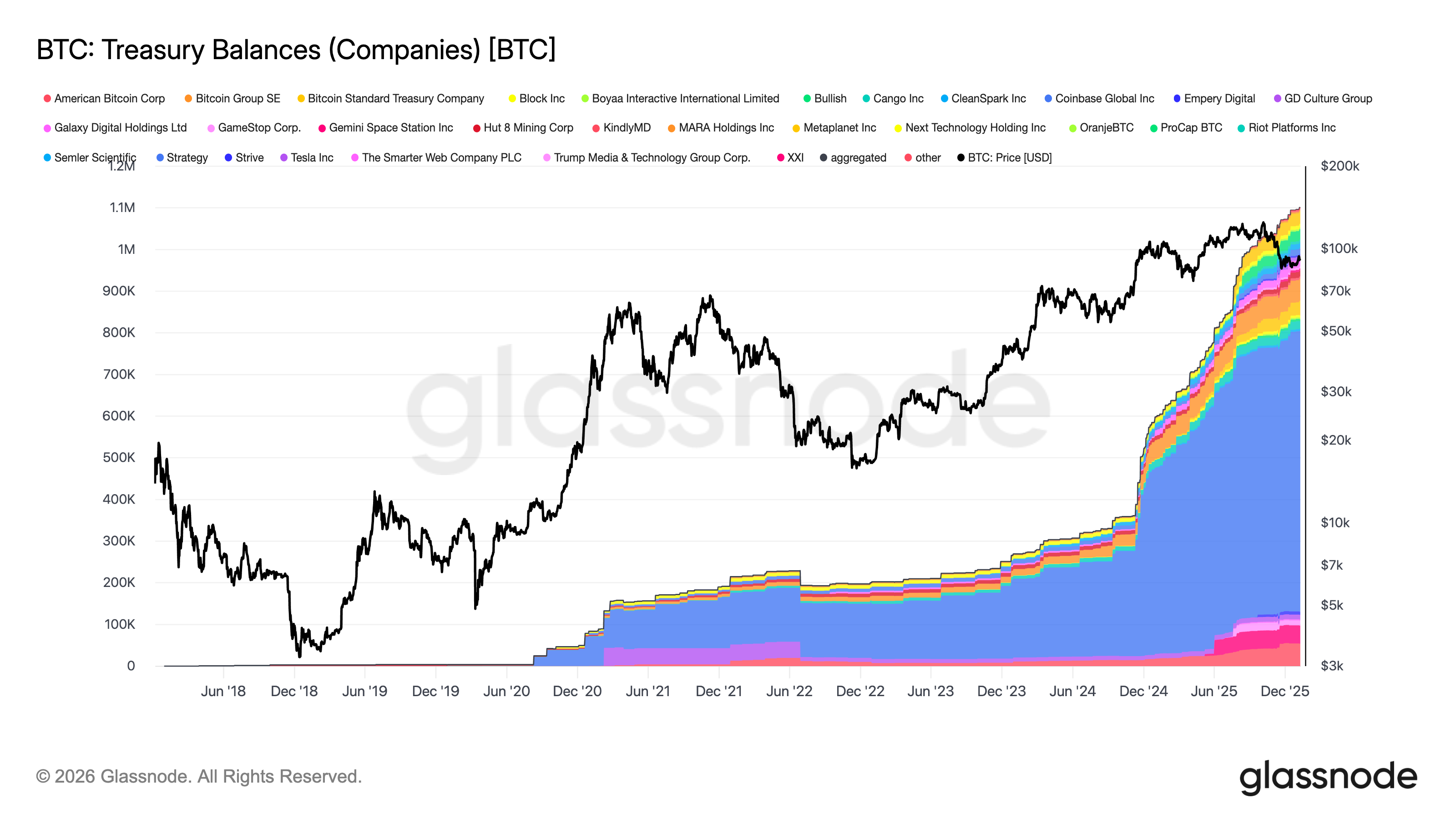
Such a strong demand for Bitcoin didn’t exist during the previous four-year cycles. And it won’t pare back in 2026, as well, justifying a sustained uptrend toward the $150,000 price target by the year’s end.
Fed Rate Policy
US. monetary policy has turned notably more dovish than at prior Bitcoin cycle peaks.
The Federal Reserve delivered three interest-rate cuts in 2025, and CME FedWatch data shows bond traders pricing in up to two additional cuts in 2026.
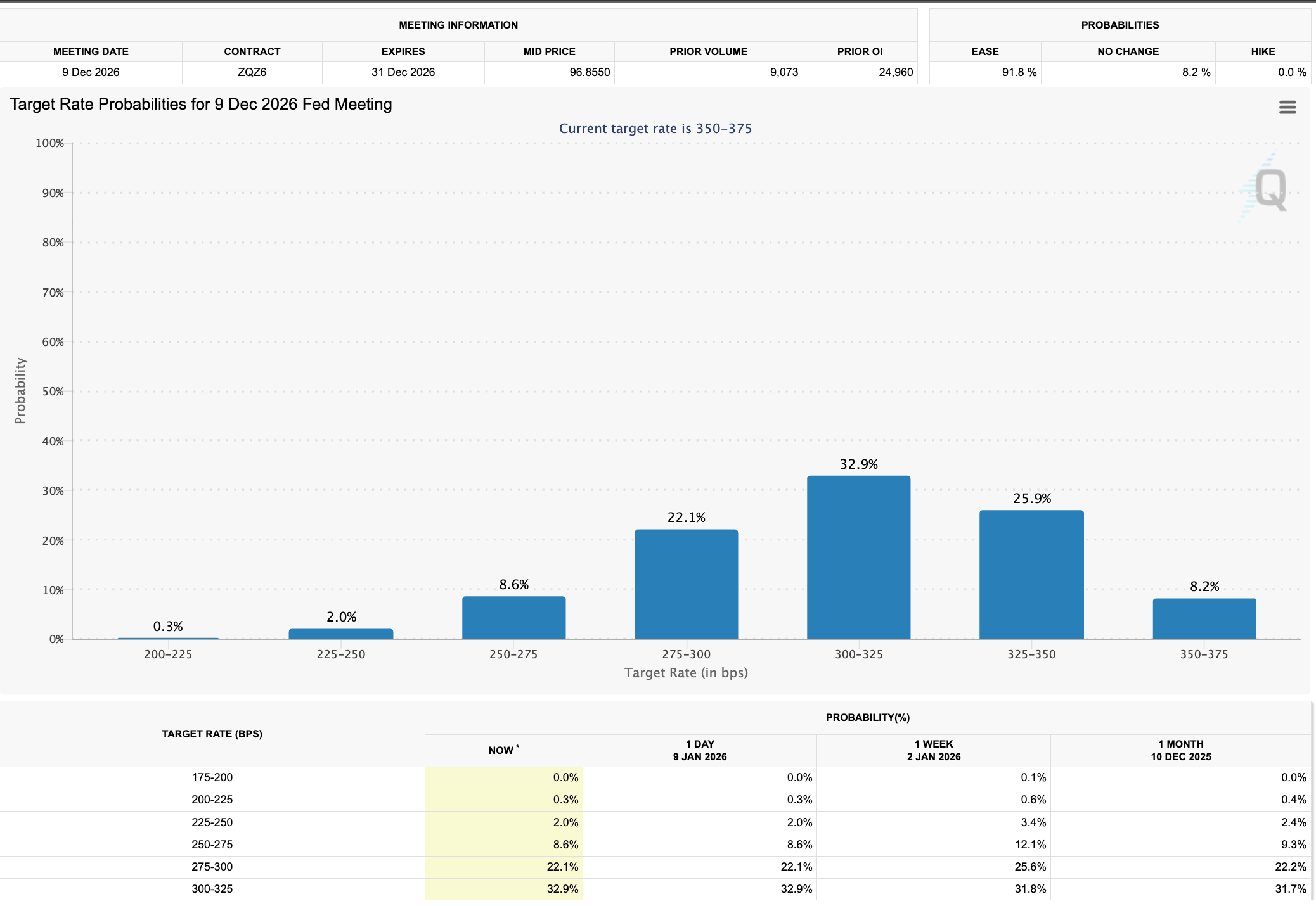
Rates rose substantially in 2018 and 2022 bear cycles, hurting prices. The 2026 2026 Fed rate outlook contrasts with previous crypto bull-market tops, suggesting sufficient liquidity to pump riskier assets like Bitcoin.
US Debt Crisis and Dollar Debasement Fears
In 2026, Bitcoin’s “store-of-value” narrative is being reinforced by fiscal conditions, increasing the odds of BTC price hitting $200,000.
Elevated public debt and longer-term currency debasement risks are keeping investor attention on scarce assets, including Bitcoin, as alternative monetary hedges.
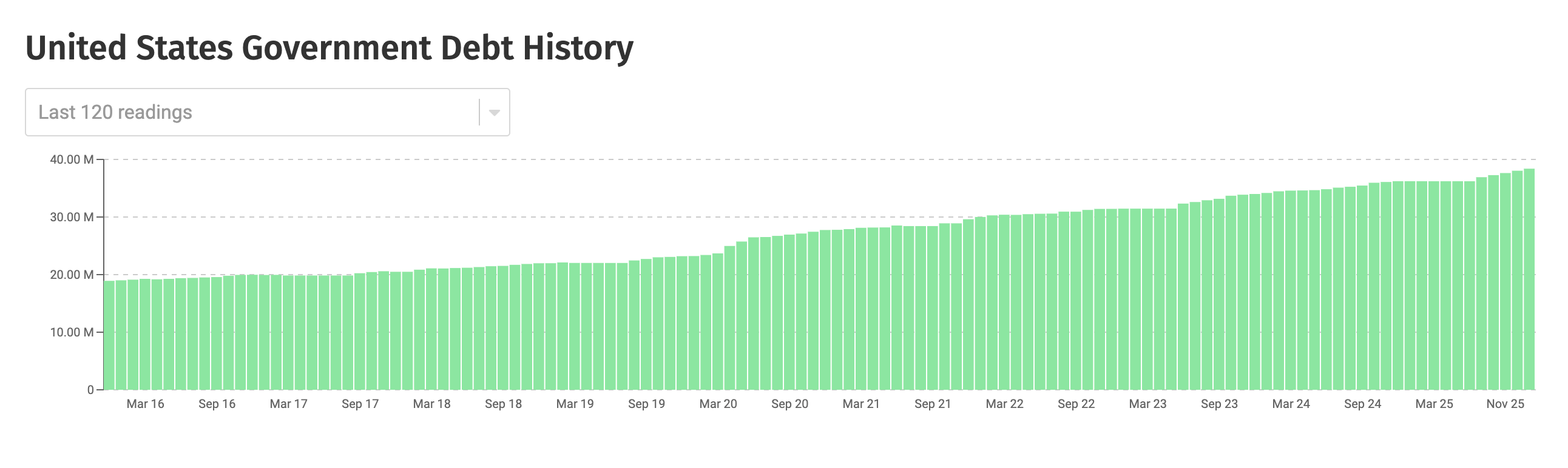
Rising debt increases pressure on policymakers to manage financing costs, often by keeping interest rates lower for longer, tolerating higher inflation, or relying on financial repression.
Over time, these policies tend to weaken the real purchasing power of fiat currencies. For instance, the US dollar index (DXY) closed 2025 at over a 9.50% loss under debt pressure, worsened further by Donald Trump’s seesaw economic policies.
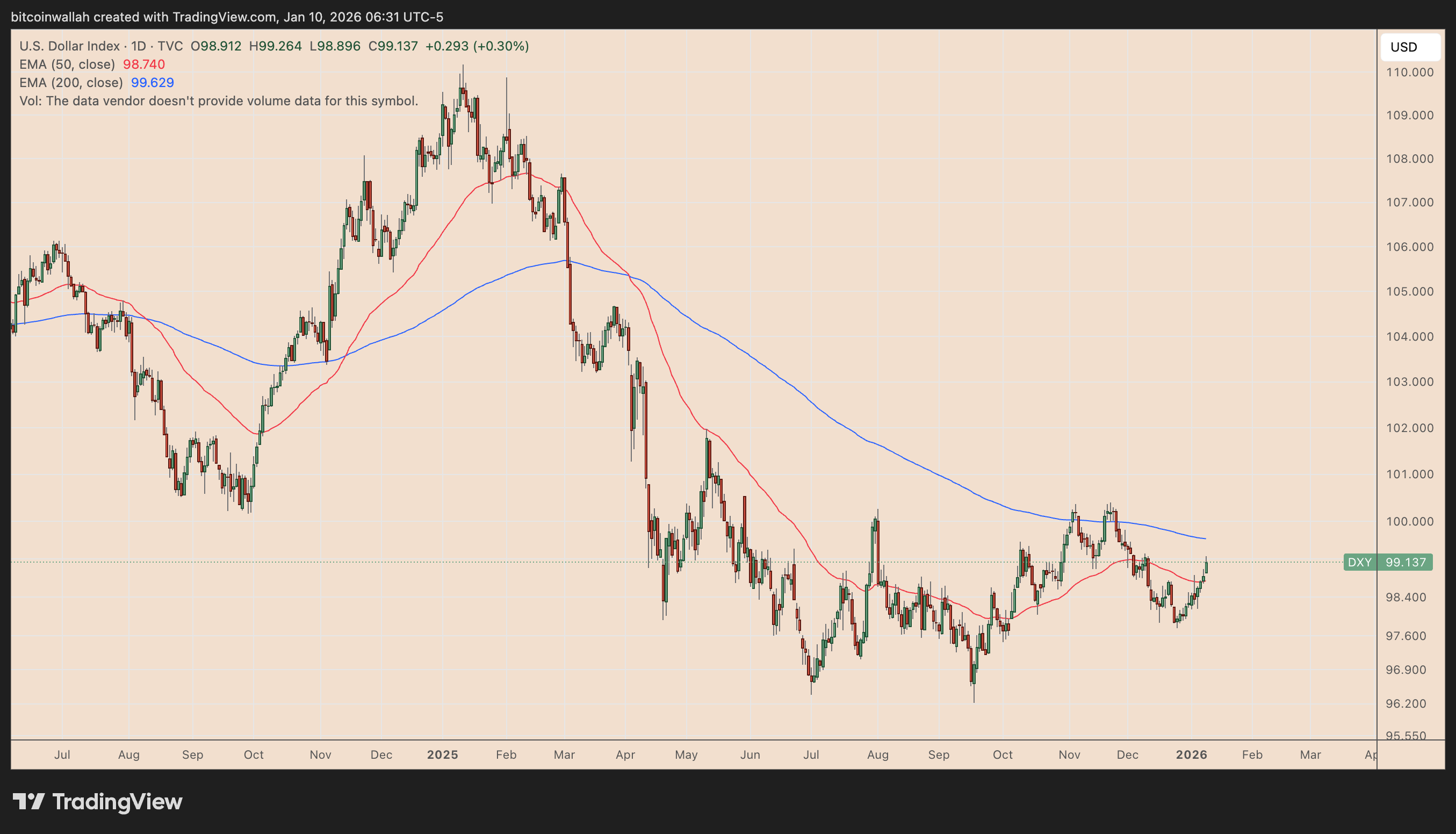
As confidence in fiscal discipline erodes, capital gradually moves toward scarce alternatives such as gold—and, increasingly, Bitcoin—particularly among institutions seeking long-duration protection instead of cyclical exposure.
Institutional Adoption Broadens
The regulatory path for Bitcoin and a broader crypto market has become clearer in the US. In my view, this further supports the case for a $150,000 BTC price by the year’s end.
Grayscale’s 2023 court win against the US Securities and Exchange Commission (SEC) helped open the door for regulated spot products. The US then approved spot Bitcoin ETFs in January 2024, followed by spot Ether products in 2024, giving institutions a straightforward ETF wrapper for exposure.
In 2025, Congress passed the GENIUS Act on stablecoins, while policymakers moved toward clearer, more standardized guidance for the sector.
That shift has resulted in institutional adoption, as discussed above with ETFs and DATS statistics.
Still, under 0.5% of US advised wealth is allocated to crypto, per Grayscale estimate, implying the adoption curve is still early.
In my view, institutional inflows will accelerate in 2026, further enabling the BTC price rally toward $150,000.
Bitcoin Technical Analysis: Ascending Triangle Breakout Toward $112,000
I see Bitcoin forming an ascending triangle pattern after the December correction, which raises the odds of BTC price undergoing a breakout toward $112,00 in the coming weeks.
An ascending triangle is defined by rising lows and a flat resistance level. In simple terms, sellers are defending a clear ceiling, but each pullback is being bought at higher prices. That behavior signals growing demand and shrinking selling pressure.
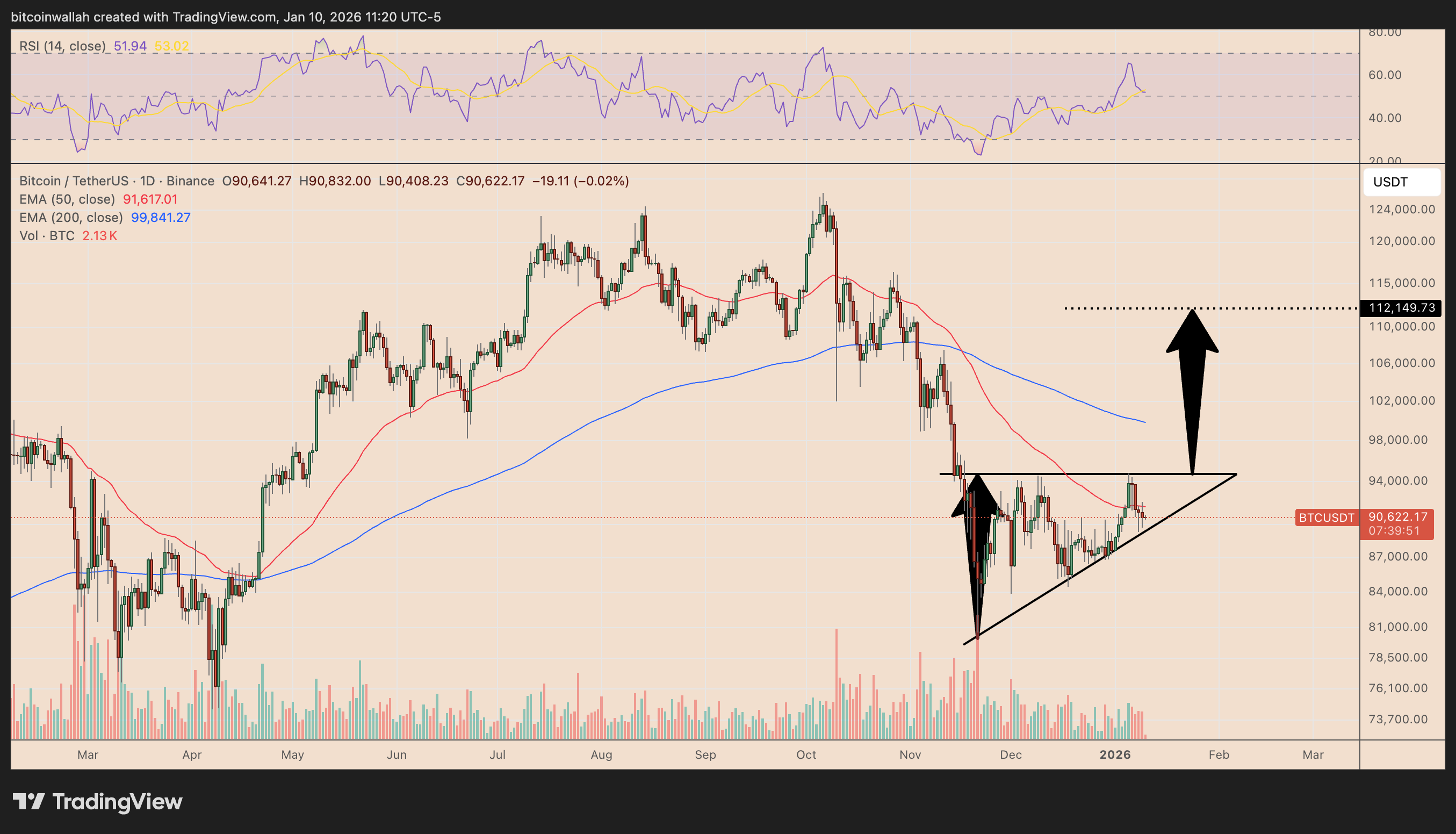
Applying the standard measured-move projection, the height of the triangle added to the breakout level, places a potential upside target near $112,000 in the months ahead, assuming broader market conditions remain supportive.
A similar bullish reversal pattern played out in April 2025, when Bitcoin formed a classic double-bottom setup that ultimately led to a 65–70% rally.
If the current ascending triangle resolves higher and BTC first claims the $112,000 measured target, the odds of a similar momentum expansion will be higher.
In that scenario, the breakout would open the door to an extended move toward the $150,000 area as trend acceleration and follow-through buying kick in.
Related Markets: BTC-Equity Correlation Adds Weight to Bull Outlook
Bitcoin’s 52-week rolling correlation with the Nasdaq Composite dipped to its most negative territory since March 2020. Historically, similar setups have led to sharp Bitcoin price reversals in the months afterward.
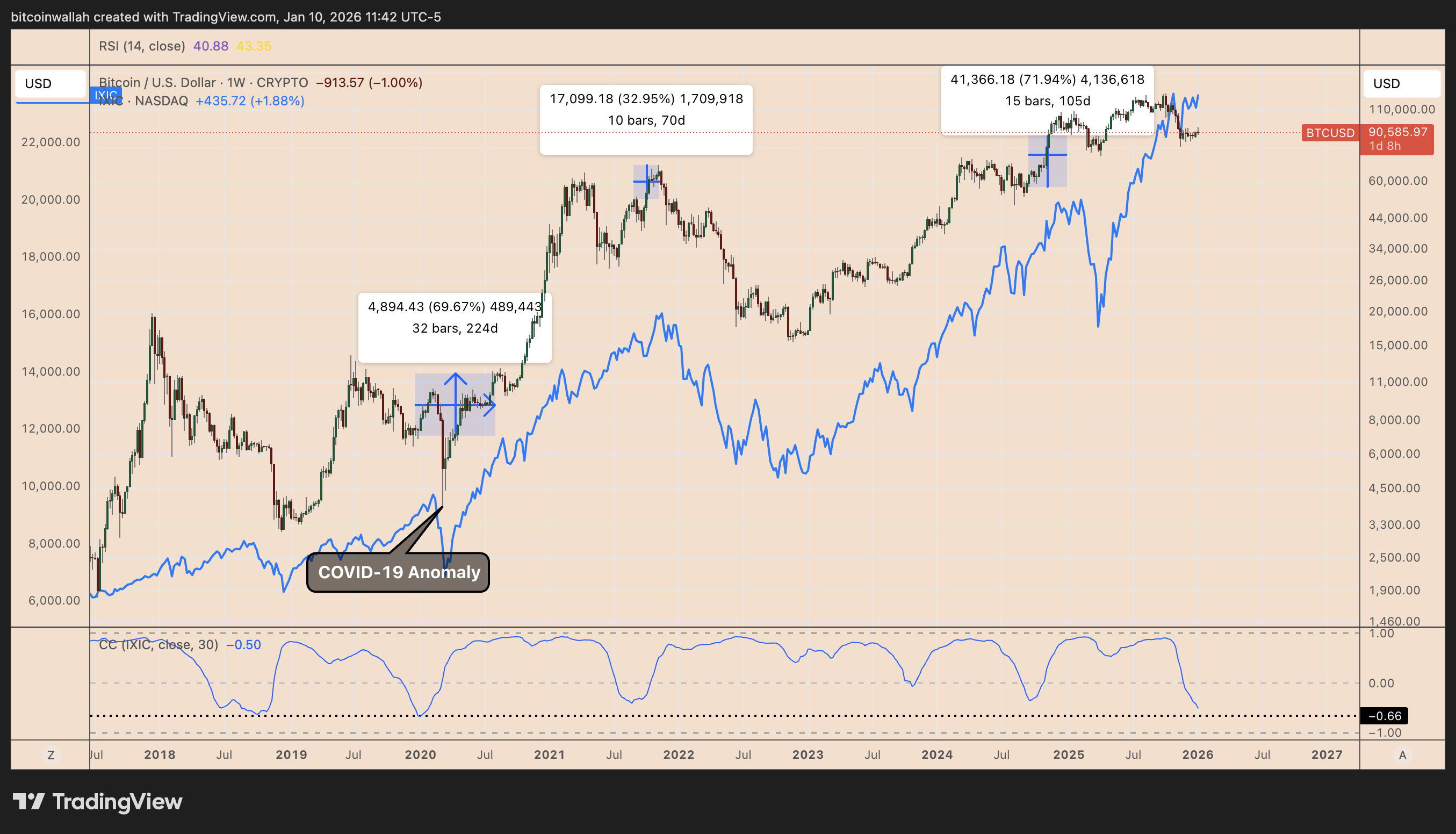
That includes a circa 70% rally in late 2019–2020, a 33% advance during the 2020 consolidation phase, and a 72% recovery following the 2022 bear-market bottom.
As Bitcoin decouples from equities, price swings typically narrow and selling pressure fades as longer-term investors step in. If the pattern holds, the current negative correlation suggests BTC may be forming a base that sets the stage for renewed upside momentum into 2026.
Risks to the Bitcoin Bullish Outlook
Bitcoin’s bullish 2026 outlook still faces key risks. A slowdown or reversal in spot ETF inflows could weaken price support, especially during broader risk-off periods.
Additionally, persistent inflation and healthy jobs data increase the odds of the Fed dialing back its dovish stance, thus removing liquidity required for the Bitcoin market toward $150,000 in 2026.
From a technical perspective, failure to break above resistance near $112,000 may lead to extended consolidation or a deeper pullback, delaying the upside thesis and reviving post-halving correction risks.
In Closing
Bitcoin enters 2026 with a structurally stronger setup than prior cycles, supported by institutional supply absorption, easing monetary expectations, and constructive technicals.
While risks remain, from shifting Fed policy to slower ETF inflows or technical setbacks, the broader balance of evidence favors consolidation over collapse, keeping the path open for a move toward the $150,000 region if key levels break.