
Bitcoin (BTC) reclaims $90,000 for the first time since December 12 as the BTC-spot ETF market snaps a two-week outflow streak.
Strong demand for BTC-spot ETFs in the reporting week ending January 2 boosted sentiment. Easing concerns about a yen carry trade unwind, lingering hopes for a March Fed rate cut, and crypto-related legislative developments boosted demand for BTC and BTC-linked products.
10-year Japanese Government Bond (JGB) yields eased back from the 1999 high of 2.1%, while USD/JPY revisited 157, fueling yen carry trades into risk assets. Notably, easing yields and the weaker yen boosted demand for Japanese-listed stocks, sending the Nikkei 225 0.87% higher in the week ending January 2. These trends underscored market sentiment toward US-Japan interest rate differentials.
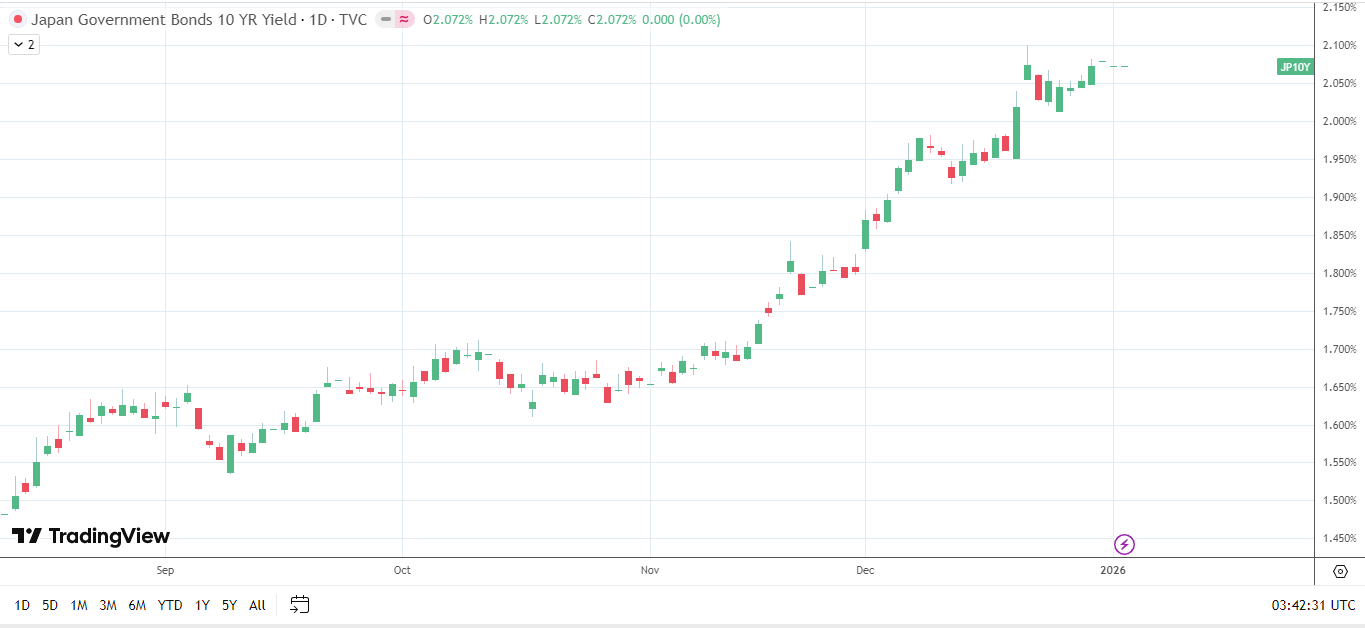
Weekly US-BTC-spot ETF inflows, alongside the shifting sentiment toward BoJ and Fed rate paths, support a bullish price outlook for BTC.
Below, I consider the key drivers behind recent price trends, the short-term outlook, the medium-term trajectory, and the key technical levels traders should watch.

US BTC-Spot ETF Market Snaps Outflow Streak
The US BTC-spot ETF market saw $459 million in net inflows in the reporting week ending January 2, ending a two-week outflow streak. According to Farside Investors, key flow trends for the week included:
- iShares Bitcoin Trust (IBIT) had net inflows of $324.4 million.
- Fidelity Wise Origin Bitcoin Fund (FBTC) reported net inflows of $105.8 million.
- In total, six of the 11 ETF issuers reported weekly inflows, three reported outflows, while the remaining two saw zero net flows for the week.
US BTC-spot ETF flow trends remain pivotal for the supply-demand balance. Inflows sent BTC up 4.06% for the current week ending January 4. Crucially, BTC climbed to a Sunday, January 4 high of $91,518, its highest level since December 12.
The shift in demand for BTC-spot ETFs supported the bullish short- to medium-term price outlook for BTC.
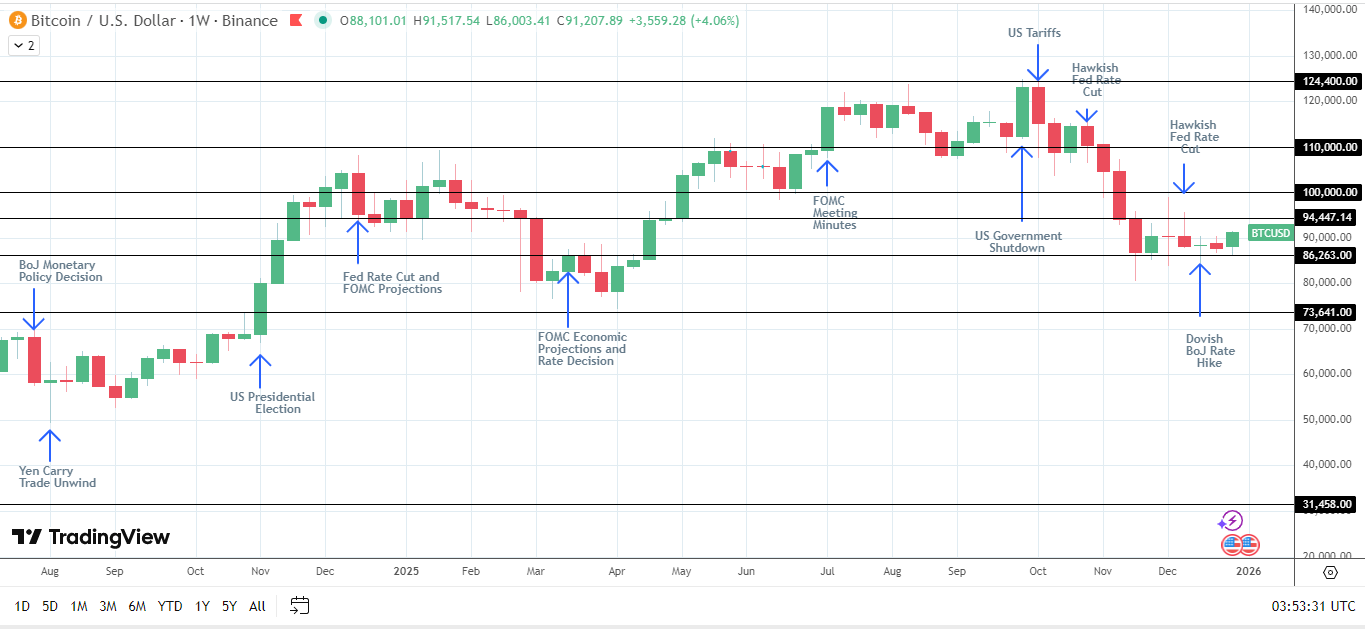
Several key price catalysts likely boosted demand for BTC-spot ETFs, including easing concerns about a yen carry trade unwind and crypto-related legislative developments on Capitol Hill.
Bitcoin Price Forecast
Every new Bitcoin analysis as it publishes, today's technical signal and key levels, live price — on one page.
See all Bitcoin forecasts10-Year JGB Yields Influence BTC Price Trends
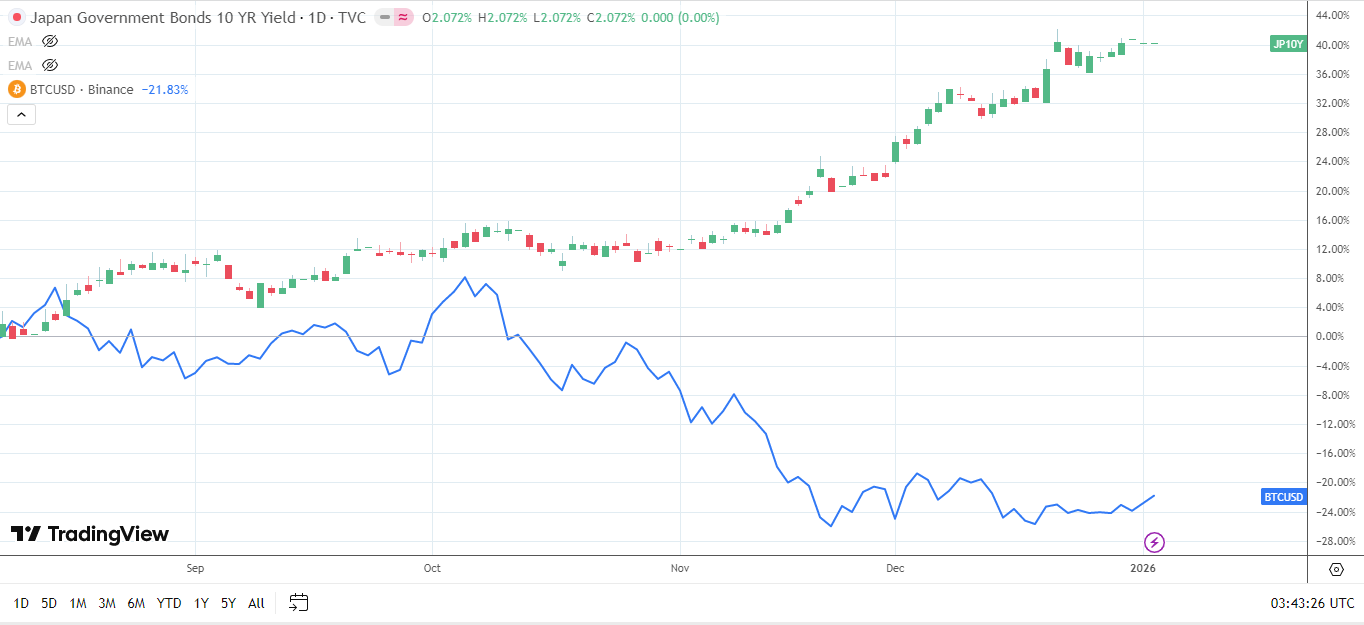
Notably, Bitcoin’s inverse correlation with 10-year JGBs yields remained firmly intact in the current week. Lower 10-year JGB yields weakened the yen and lifted the Nikkei, key indicators of increased yen carry trades into risk assets.
While the markets expect the BoJ to continue raising interest rates, the neutral rate remains key to investor sentiment. In December, the BoJ indicated that the neutral rate was in the range of 1% and 2.5%.
With an interest rate of 0.75%, a lower neutral rate, neither restrictive nor accommodative, would indicate a wider-than-expected US-Japan rate differential. Conversely, a higher neutral rate, potentially between 1.5% and 2.5%, would indicate aggressive rate hikes, suggesting a narrower-than-expected rate differential.
Typically, rate differentials indicate whether yen carry trades are profitable or unprofitable. The wider the rate differential, the more profitable the carry trade into risk assets. BTC’s inverse correlation with 10-year JGB yields underscored the significance of yen carry trades on market liquidity and demand for Bitcoin.
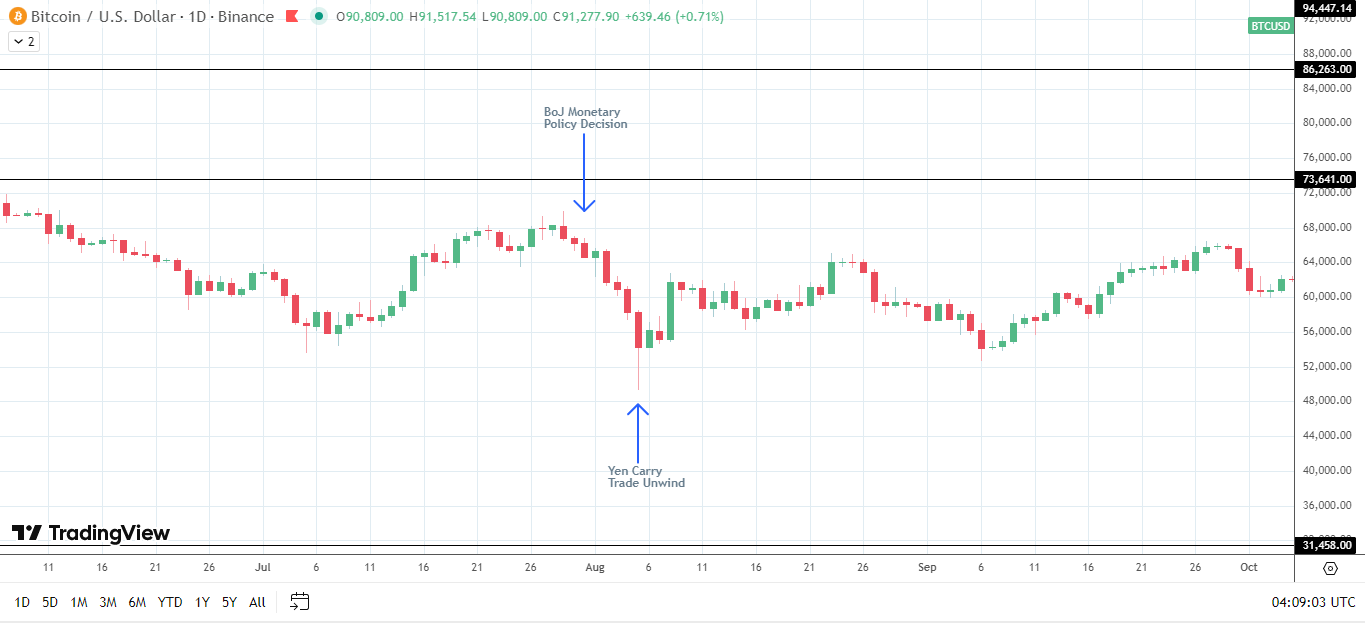
For context, BTC plunged 26% between July 31, 2024, and August 5, 2024. The BoJ cut JGB purchases and unexpectedly raised interest rates, triggering a yen carry trade unwind.
Market Structure Bill Takes Center Stage
Easing concerns about a yen carry trade coincided with reports of US lawmakers setting a date for the Market Structure Bill markup. The US Senate Banking Committee announced a January 15, 2026, Market Structure Bill markup, lifting sentiment.
Crypto-friendly regulations are likely to further legitimize BTC and the broader crypto market, expanding the investor base. A broader investor base is expected to tilt the supply-demand balance in BTC’s favor, reinforcing the constructive short- to medium-term bias.
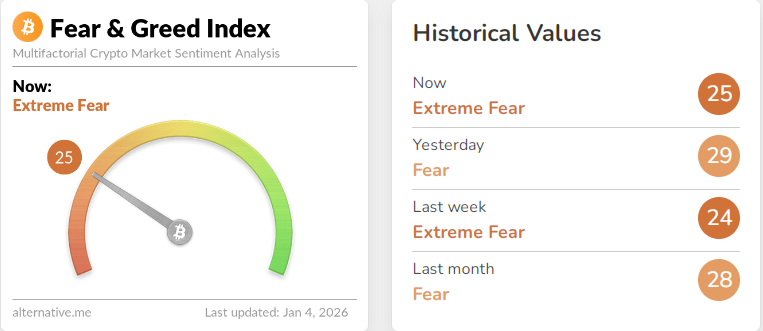
Bitcoin Fear & Greed Index in Extreme Fear
Despite reclaiming $91,000, the Bitcoin Fear & Greed Index sat in the Extreme Fear zone, indicating oversold conditions.
Notably, the Index fell from 29 on Saturday, January 3, to 25 on Sunday, January 4. The pullback into the Extreme Fear zone suggests a potential bullish trend reversal, given the oversold conditions.
Progress toward crypto-friendly legislation and inflows into BTC-spot ETFs would likely trigger a breakout, affirming the positive price outlook.
Downside Risks: Central Banks, US Data, Regulatory Headlines, and ETF Outflows
While fundamentals signal a bullish trend reversal, downside risks remain, including:
- The BoJ announces a higher neutral interest rate range of between 1.5% and 2.5%, triggering a yen carry trade unwind.
- The Fed and US data temper bets on a March rate cut.
- BTC-spot ETFs face outflows.
These events would likely send BTC toward the November 21 low of $80,523.
In summary, the short-term outlook remains bullish as fundamentals counter the technicals. The medium- to longer-term outlook is constructive.
Technical Analysis
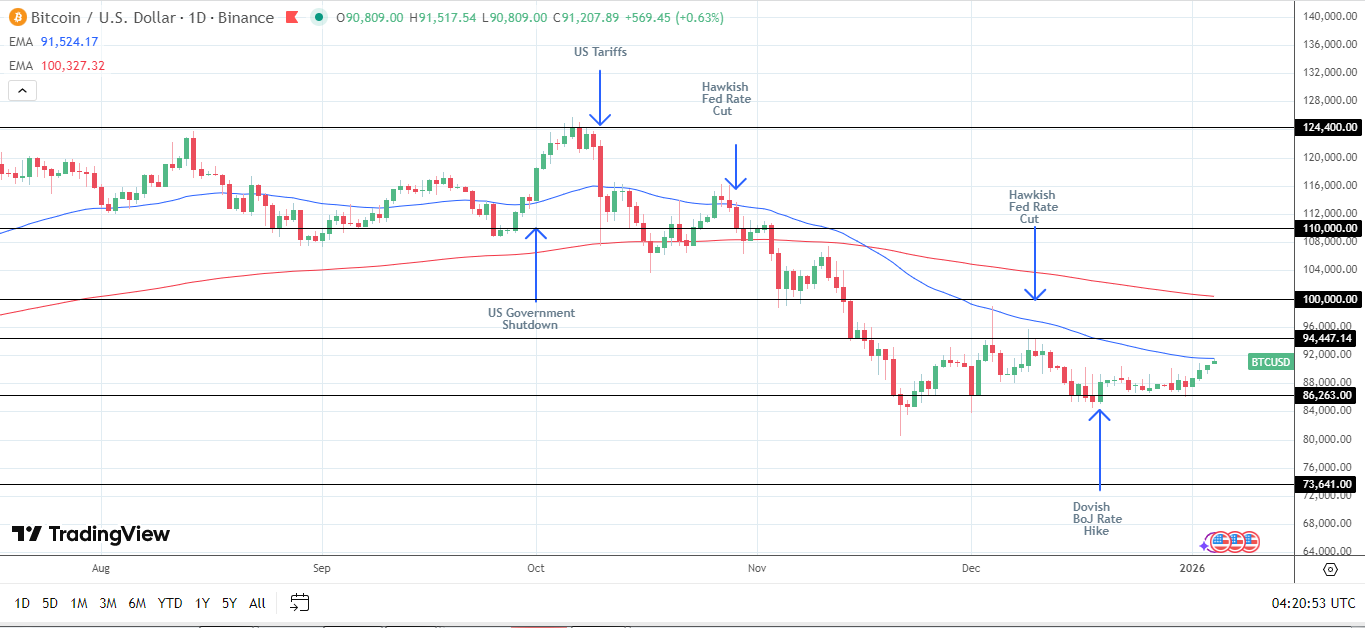
Despite the weekly gain, BTC remained below its 50-day and 200-day Exponential Moving Averages (EMAs), signaling a bearish bias. However, fundamentals are diverging from the technical indicators, indicating an upswing.
A breakout above the 50-day EMA would open the door to testing the $94,447 resistance level. Significantly, a sustained move through the 50-day EMA would indicate a near-term bullish trend reversal.
A near-term bullish trend reversal would bring the $100,000 psychological resistance level and the 200-day EMA into play. A break above the EMAs would reinforce the bullish short- to medium-term price outlook.
Bullish Structure Formation: What Happens if BTC Breaks $95,000?
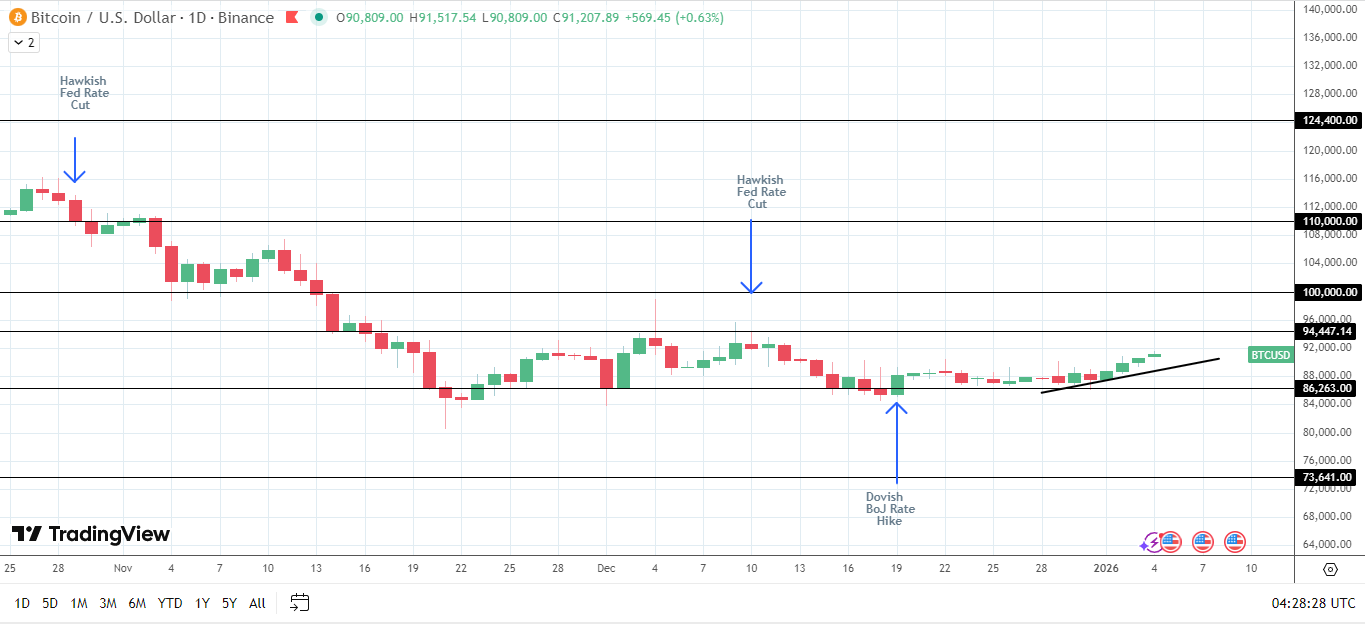
Avoiding a break below the $90,000 level would pave the way toward the $95,000 level, affirming the bullish short-term (1-4 weeks) target of $95,000 and the medium-term (4-8 weeks) target of $100,000.
However, a drop below the trendline would expose the November low of $80,523, invalidating the bullish structure.
Track BTC market trends with our real-time data and insights here.
Outlook: $90,000 Support Key to Bullish Outlook
US economic data, the Fed, the BoJ, and the US BTC-spot ETF market flows will influence sentiment in the week ahead.
US labor market data, private sector PMIs, and central bank chatter will be the events of the week. More dovish policy stances would likely boost demand for risk assets.
Considering the current market dynamics, the outlook remains bullish, with a 6-12 month price target of $150,000. The US Senate’s passing the Market Structure Bill would support the 6-12 month price target.
Stay informed on BTC trends by monitoring macroeconomic developments, ETF flows, and technical indicators here.