



BNB (BNB) appears set to end 2025 in positive territory, standing out from top-ranked peers Bitcoin (BTC) and Ether (ETH), which are losing momentum as the year draws to a close.
As of mid-December 2025, the Binance-linked token had risen by approximately 22% year-to-date, trading at just under $860. At its annual peak, however, BNB changed hands near $1,300, meaning prices have since corrected by more than 30%.
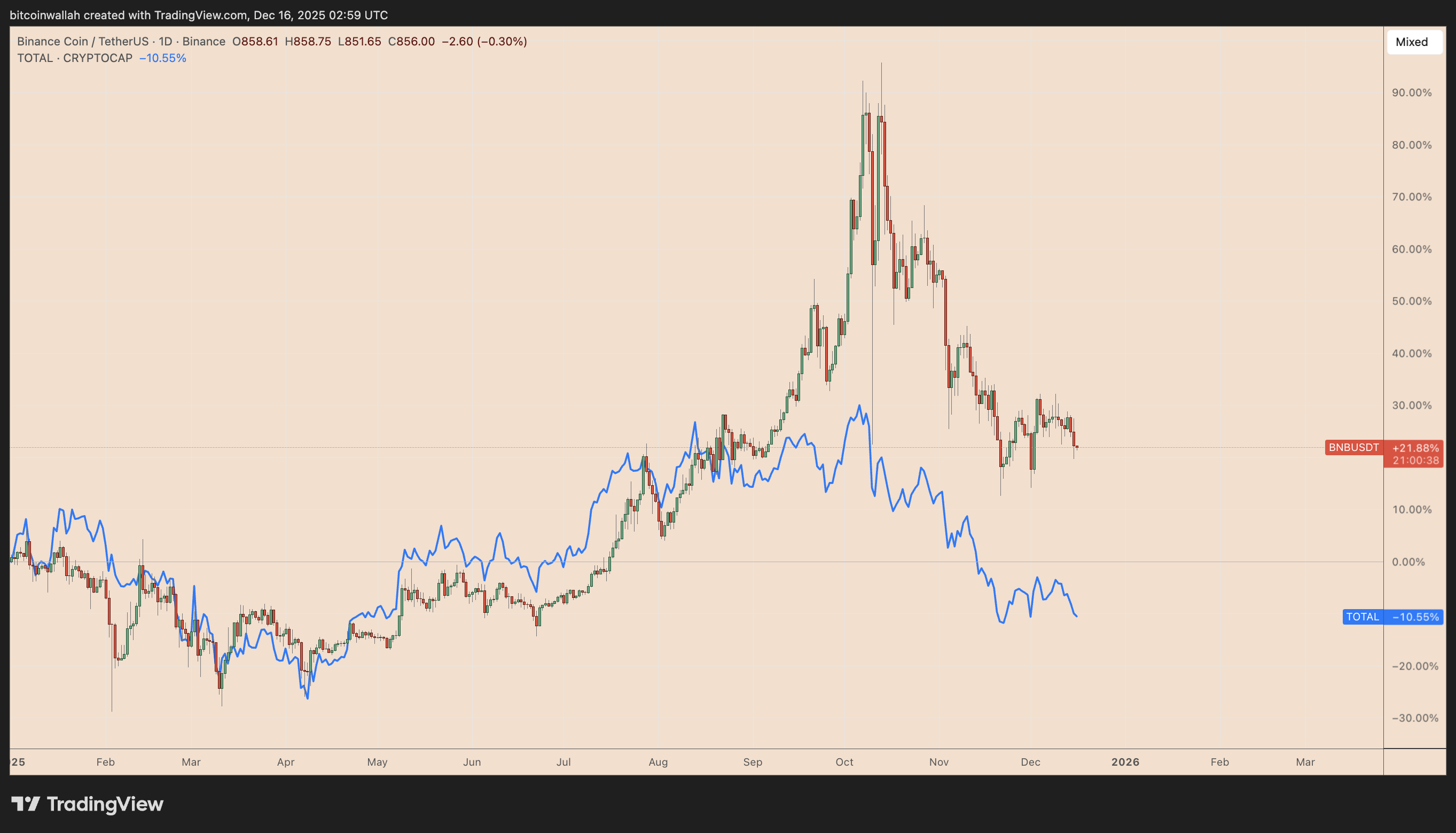
The pullback reflects fading risk appetite across crypto markets, driven by a deteriorating macro backdrop.
Persistent fears of an AI-led equity bubble, renewed interest-rate tightening in Japan, and diminishing expectations for near-term US Federal Reserve cuts have collectively pressured high-beta assets, including BNB.
Can 2026 mark a turning point for the Binance token? The analysis below examines that question through onchain data, fundamental developments, and technical signals.

BNB Technical Analysis 2026: Will Binance’s Coin Rise or Fall?
Elephant in the room: the next months look shaky for BNB. Let’s understand the bearish bias by focusing on both and short- and long-term charts.
BNB/USDT Daily Chart Analysis: A 45% Crash Setup in Focus
On the daily chart, BNB appears to be consolidating inside a classic bear pennant following its sharp rejection from the $1,300 peak in October.
The pattern consists of a steep flagpole decline, followed by a narrowing consolidation range marked by lower highs and slightly higher lows, typically a pause before trend continuation.
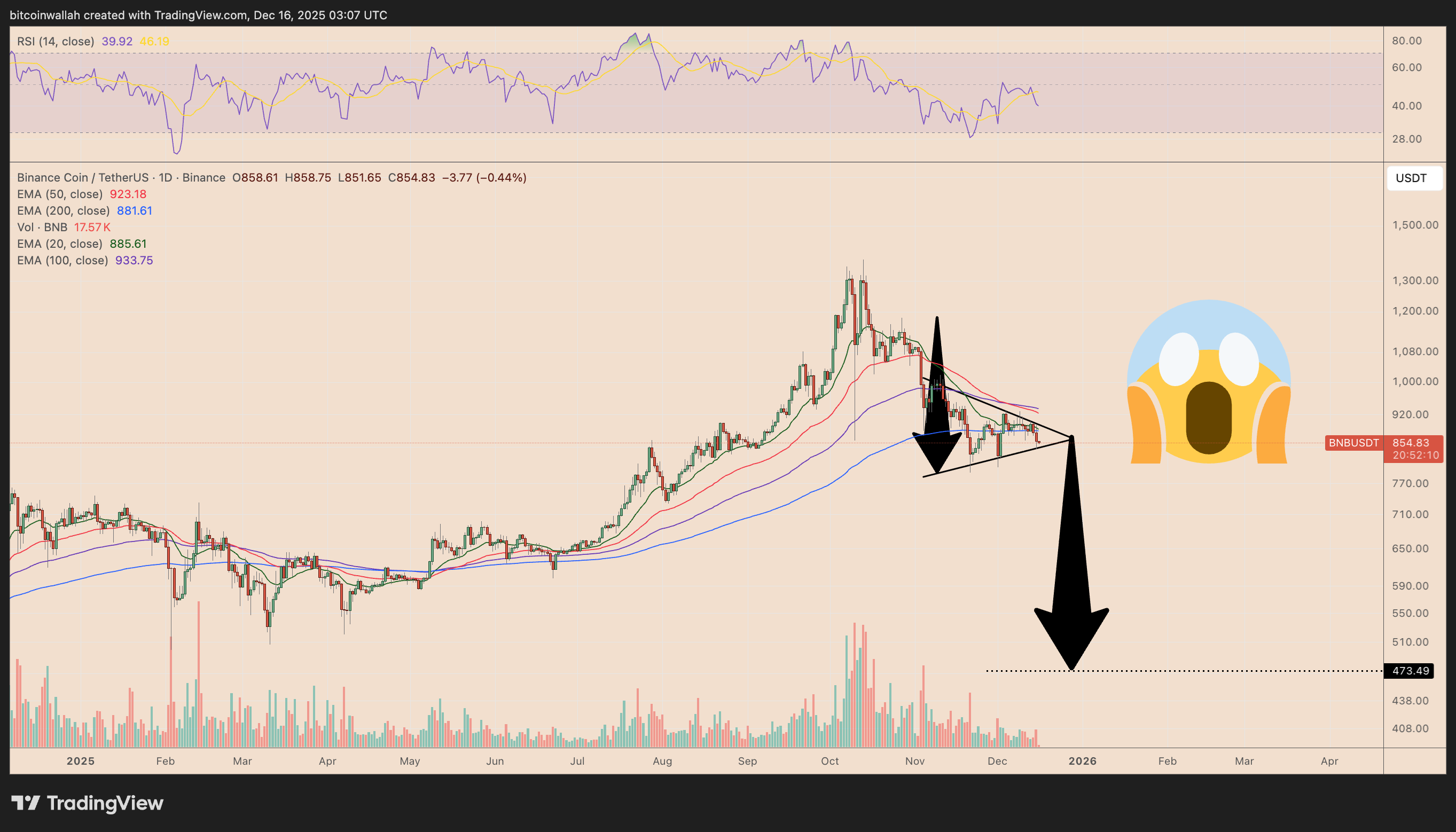
A confirmed breakdown below the pennant’s lower trendline would expose BNB to a measured-move decline toward the $470–$500 region by June 2026, aligning with prior volume support from mid-2024.
BNB/USDT Weekly Chart Analysis: There’s Bullish Hope During H1/2026
BNB’s weekly chart continues to track a repeatable fractal observed at prior cycle peaks. In both historical cases, BNB first printed a major top before entering a steep correction.
Crucially, the double-top structure formed only after the price rebounded aggressively from that initial sell-off, not during the first leg down.
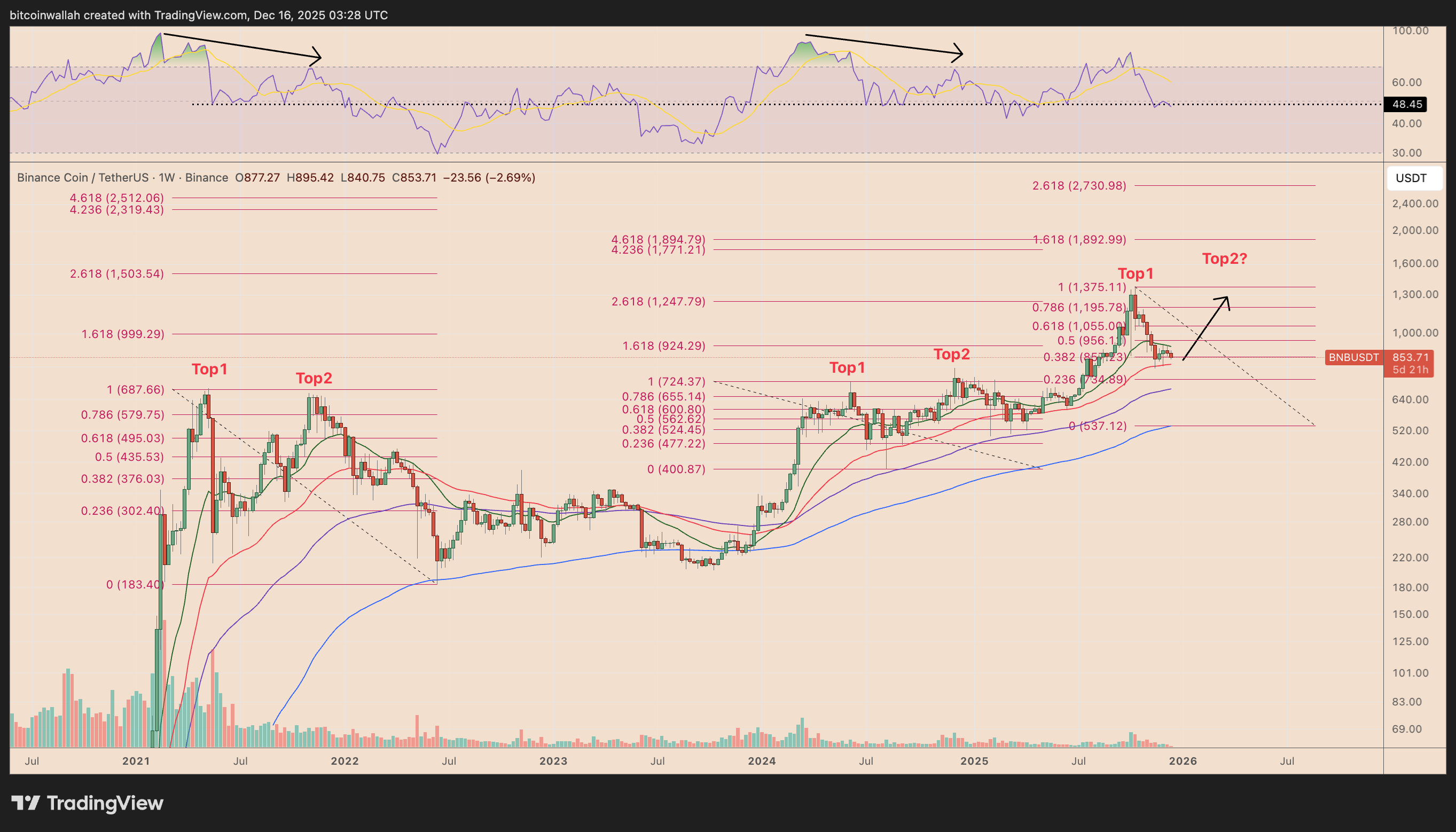
Fibonacci retracement data highlights the pattern. In previous cycles, rebound rallies consistently stalled within the 0.786–1.0 retracement zone, where sellers regained control and forced a broader mean reversion.
If the same structure repeats, BNB could revisit its $1,300 record high in early 2026 before rolling over toward the 0.0 Fibonacci level, currently aligned with the 200-week EMA near $550.
The weekly RSI is holding above its long-term mid-range support, around 48–50, which keeps the rebound scenario technically intact.
A decisive breakdown below that zone would invalidate the fractal and shift downside risk toward the bear-pennant continuation target, aligning with the 100-week EMA (purple) instead.
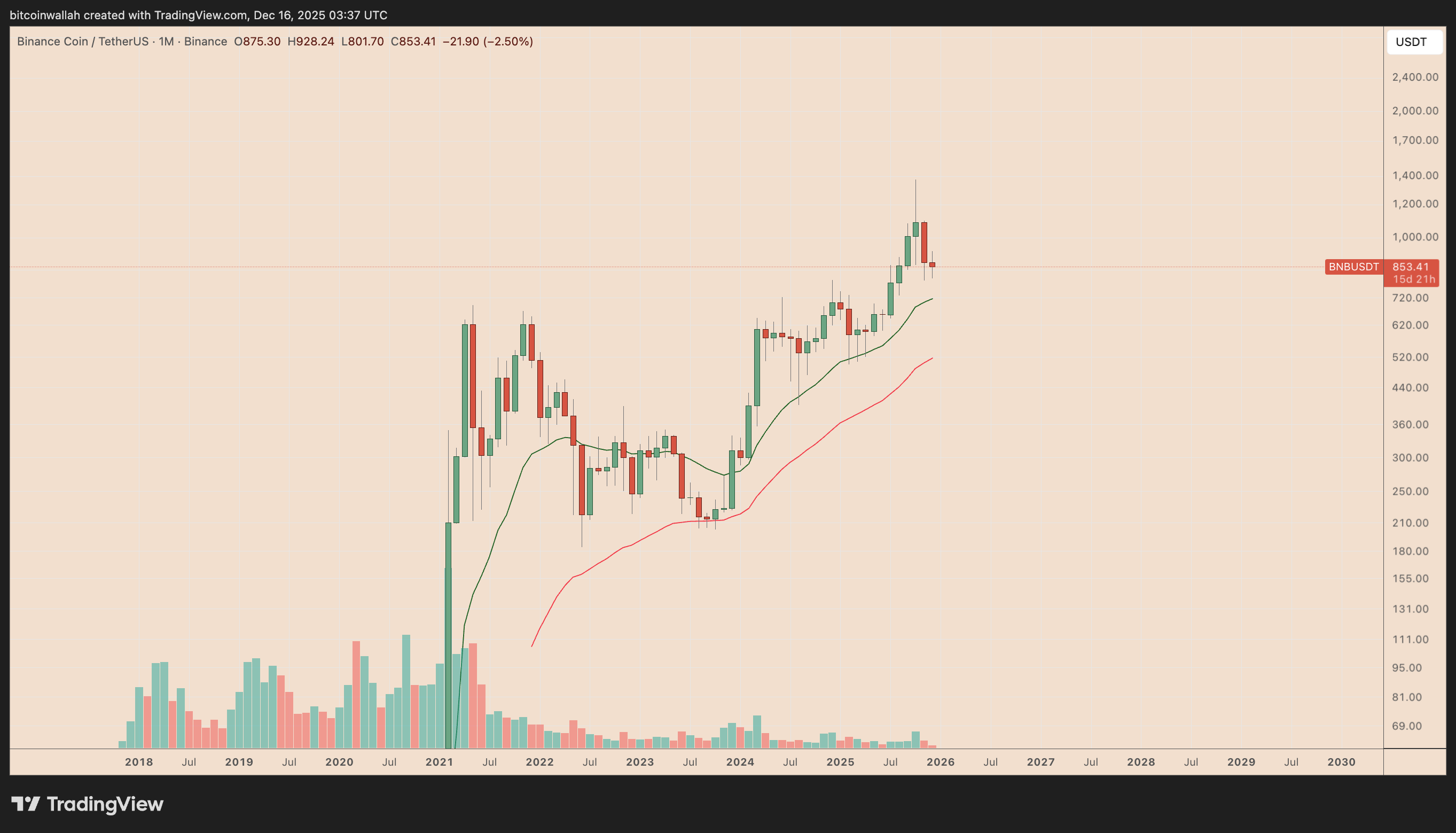
Bonus indicator: BNB’s monthly chart further points to a correction toward $700 or lower, a level aligning with its 20-period EMA (green).
BNB On-Chain Analysis: Cost-Basis, Whale Data Show Bias Conflict
BNB’s onchain positioning also looks vulnerable when viewed through its top-watched indicators.
MVRV Score Indicates Decline Toward $540 in 2026
MVRV Z-Score, a metric that measures how far the market price has deviated from the average price at which tokens last moved onchain. In simple terms, it helps identify when an asset is overvalued or undervalued relative to the holder’s cost basis.
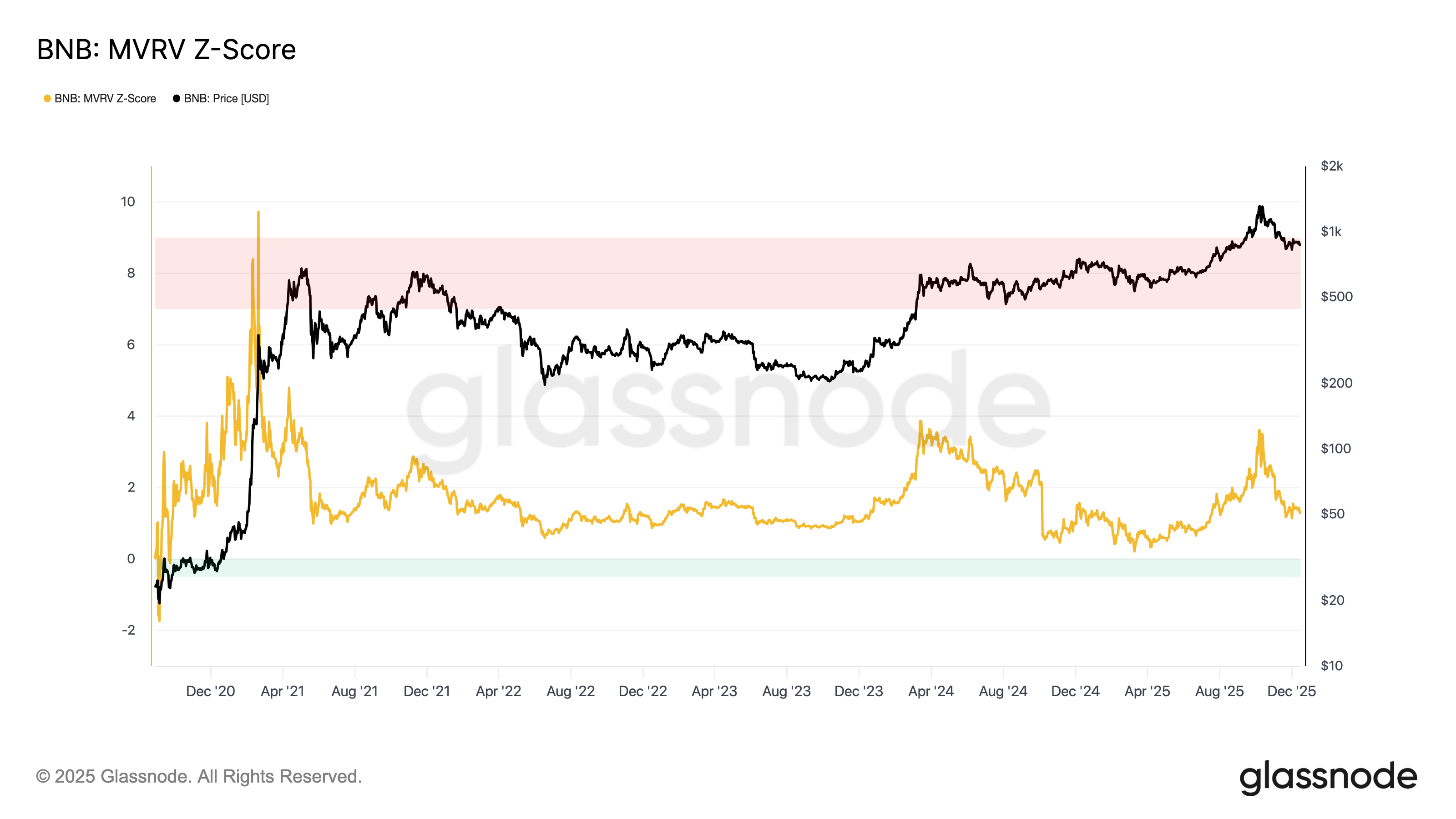
Historically, BNB price peaks have coincided with elevated MVRV Z-Score readings, followed by prolonged downtrends as unrealized profits unwind. Notably, the metric is now repeating its 2024-style decline, rolling over from local highs while remaining well above deep-value territory.
That behavior suggests profit-taking pressure may persist, leaving room for further price downside before long-term accumulation conditions re-emerge.
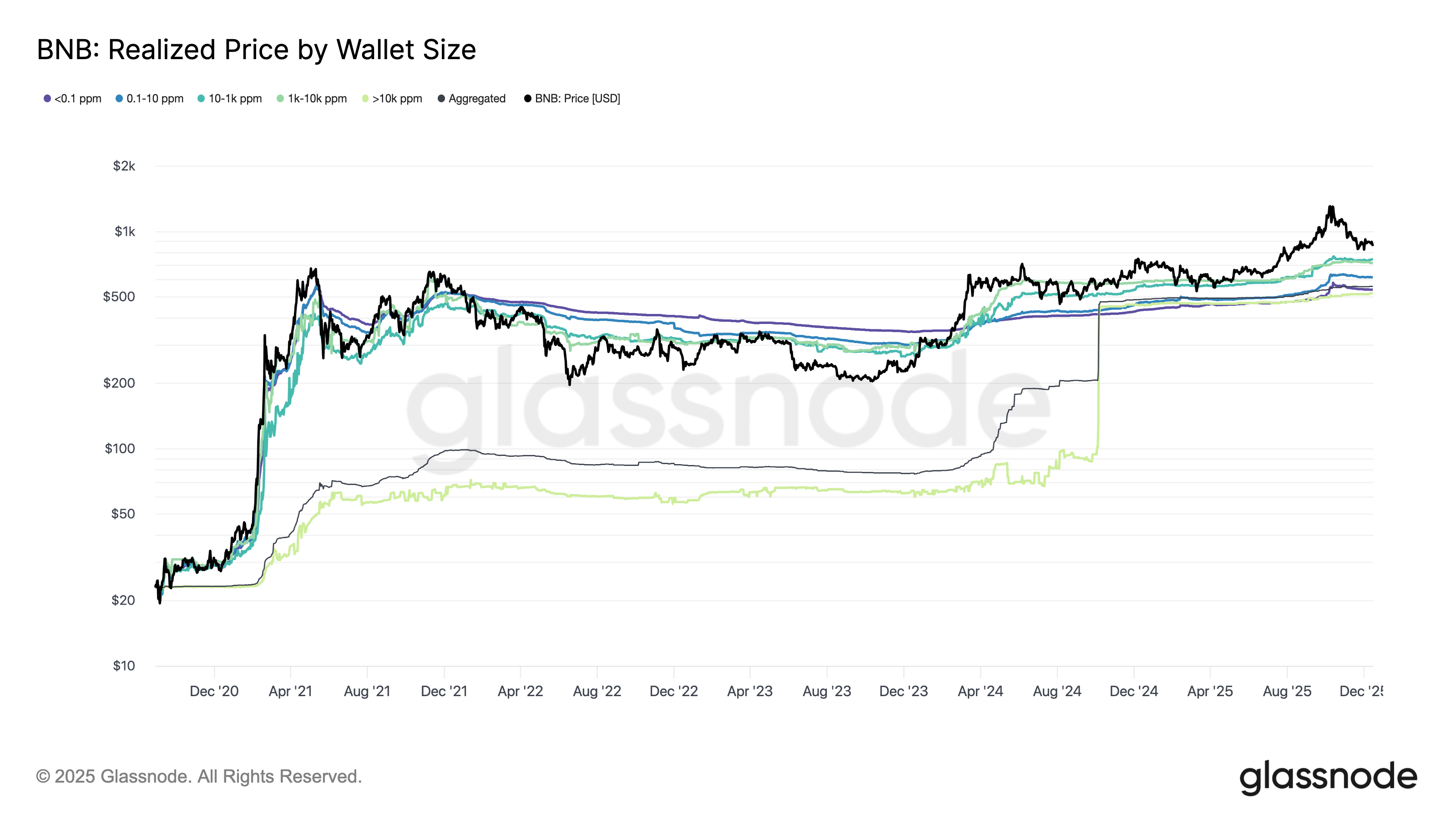
Bonus indicator: On-chain cost bases cluster near $740–$760 and $540–$560, marking key support zones if BNB’s correction deepens.
Silver Lining: BNB Whale Count is Solid
Another notable divergence emerges when tracking BNB addresses holding 10,000 tokens or more, a proxy for whale behavior.
In prior cycles, sustained declines in this cohort coincided with prolonged distribution phases and deeper price drawdowns. This time, however, the pullback in whale count remains shallow and contained within a broader, multi-year uptrend.
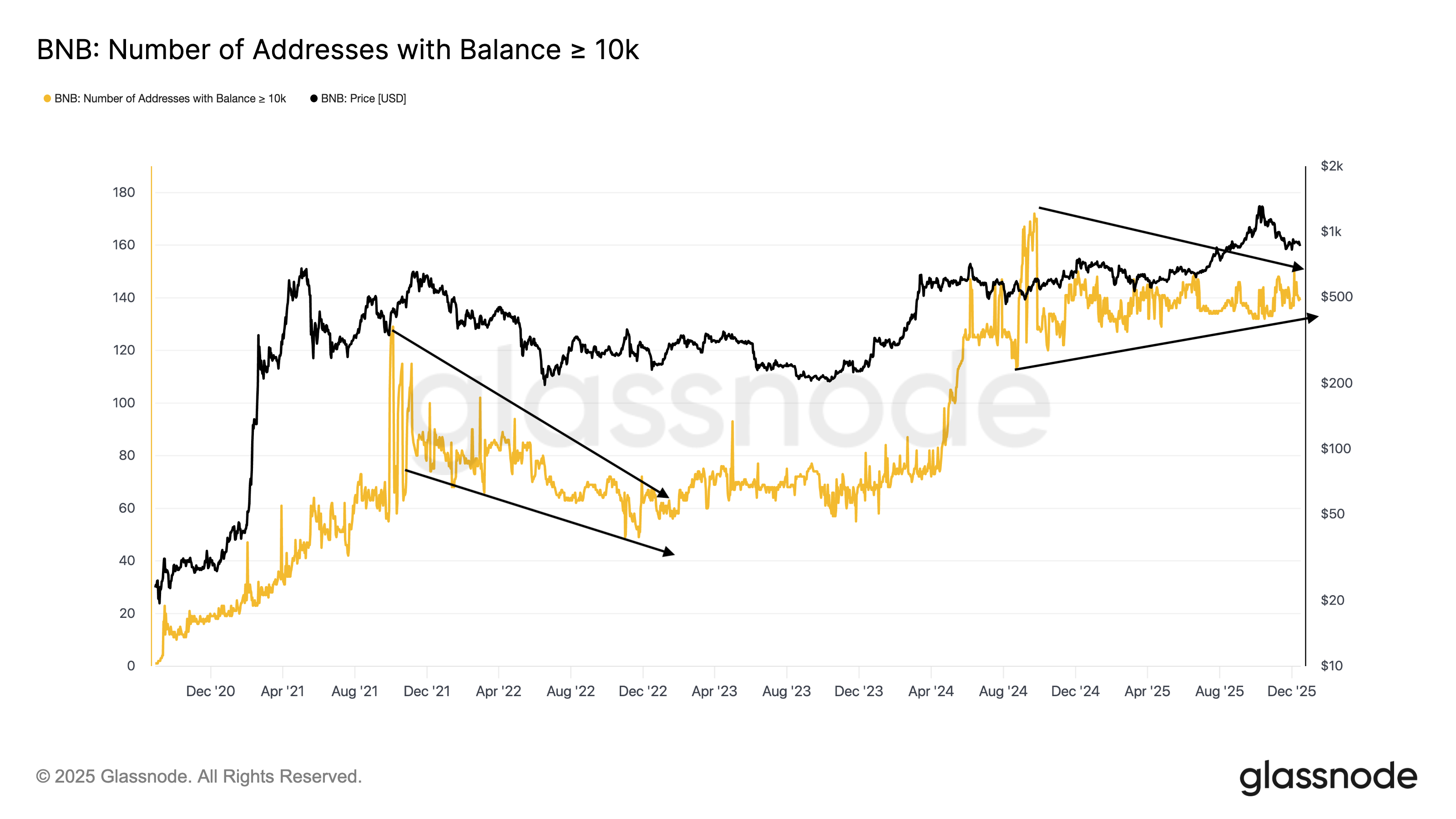
It suggests that large holders are consolidating rather than exiting, an onchain dynamic absent during previous corrective periods and one that softens the medium-term bearish outlook, despite near-term technical risks.
BNB Fundamentals 2026: Network Usage, Stablecoins, RWAs and Regulation
BNB’s 2026 fundamental outlook is increasingly shaped by measurable network activity rather than price momentum alone.
On the infrastructure front, BNB Chain entered late 2025 after rolling out performance upgrades focused on faster finality, improved execution efficiency, and lower failure rates.
Average transaction fees remain near $0.01, keeping BNB Chain among the lowest-cost, high-usage smart contract networks.
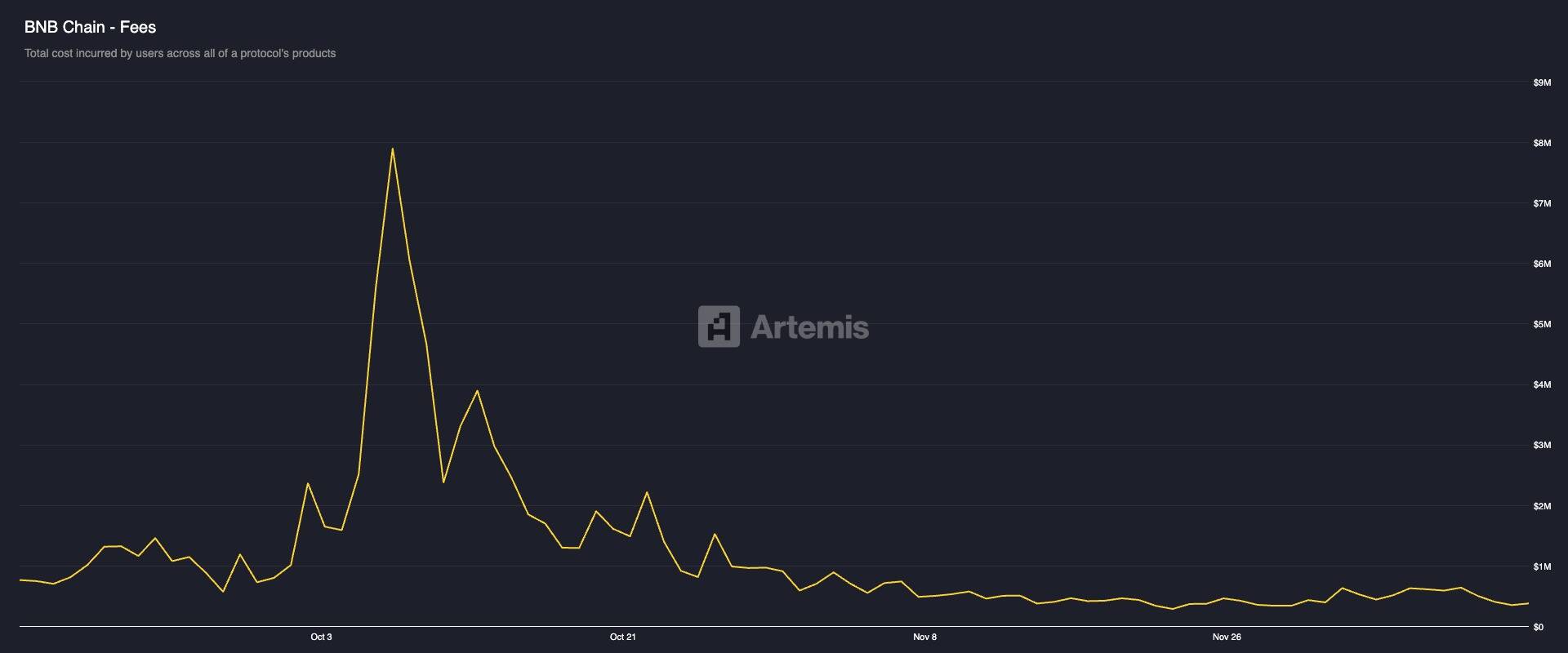
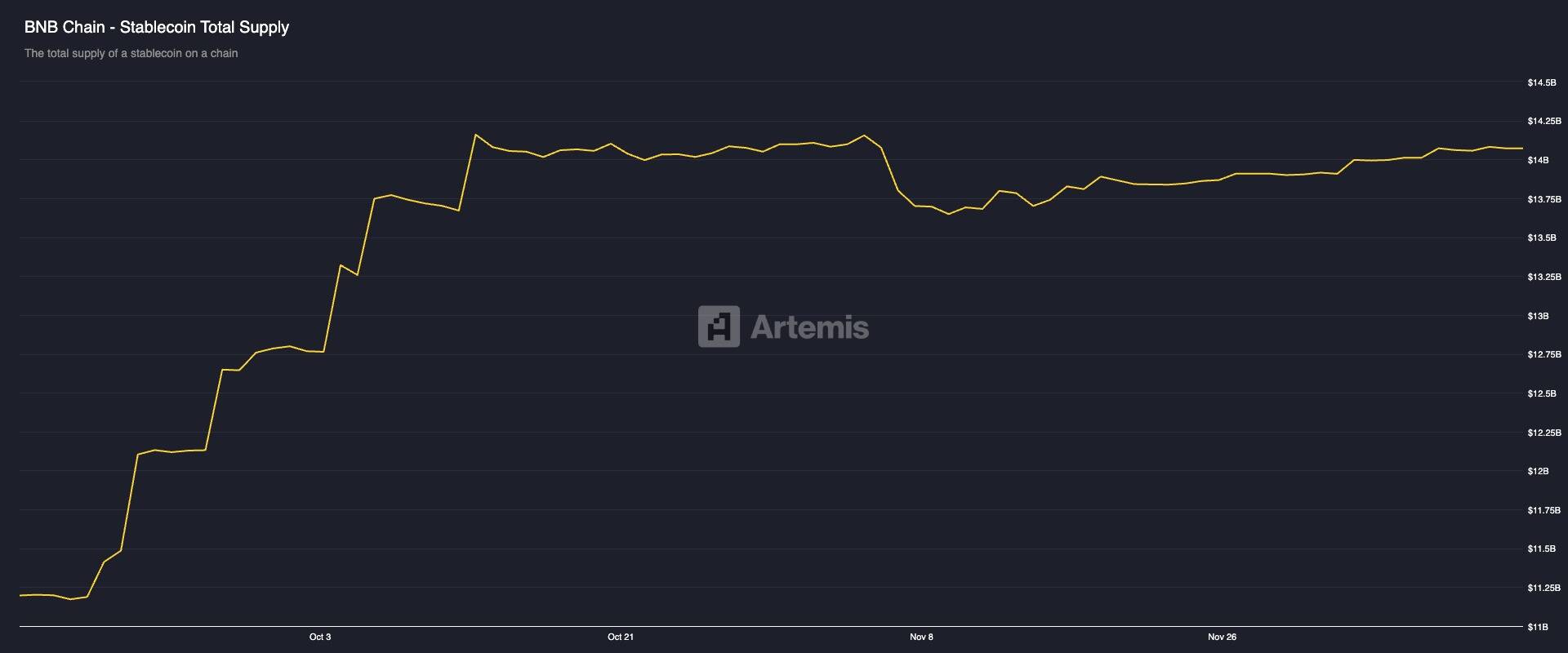
Fee-subsidy programs for stablecoin transfers throughout 2025 coincided with increases in transaction counts and active addresses, pointing to usage tied more to settlement and payments than speculative DeFi cycles.
Real-world asset (RWA) tokenization is also expanding. In 2025, BNB Chain was utilized for several institutional tokenization pilots, including the tokenization of money-market and yield-bearing instruments issued by Asia-based financial entities.
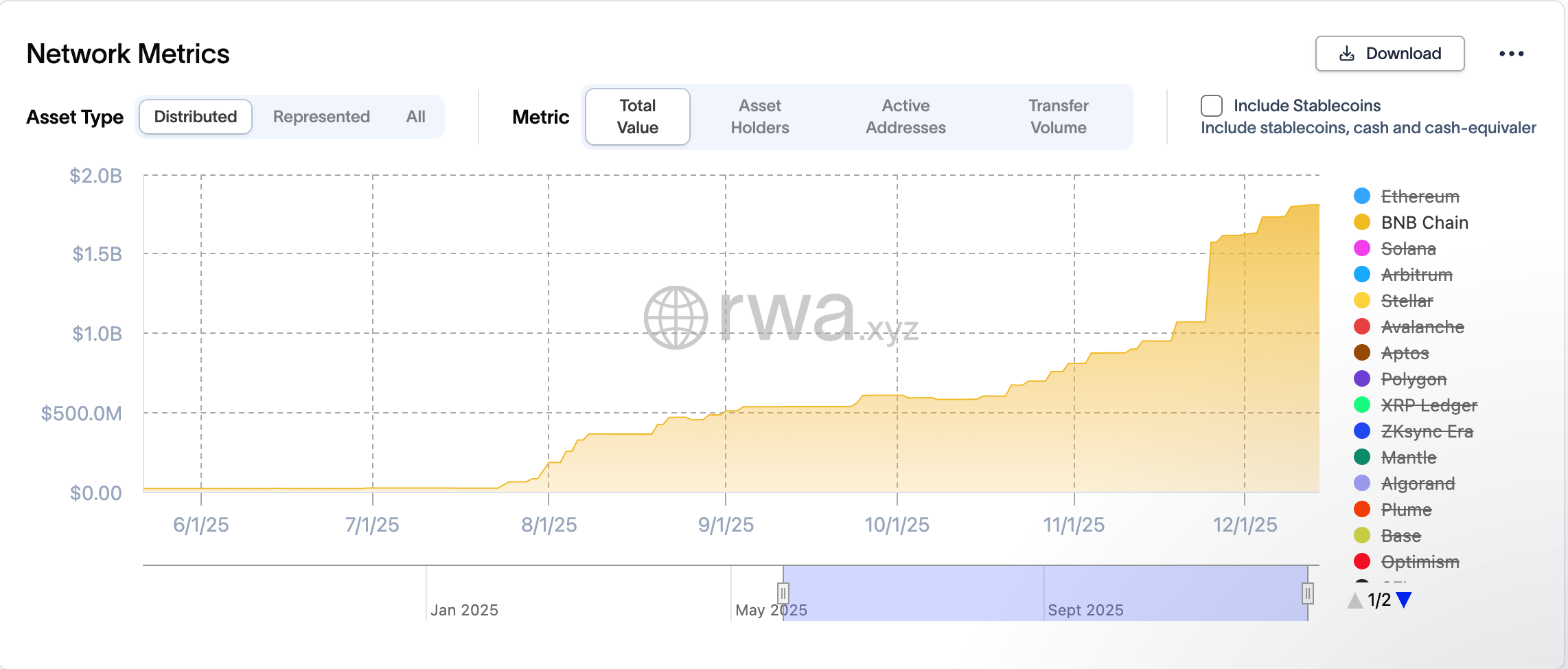
While still smaller in scale than Ethereum’s RWA footprint, the growth in notional value highlights BNB Chain’s positioning as a low-cost settlement layer.
Institutional optionality improved as BNB-linked ETF filings appeared in regulated markets. However, regulatory clarity around Binance remains the dominant swing factor, continuing to shape how institutional investors assess BNB exposure into 2026.


