



Copper (XCU) prices surged in 2025 as markets priced in strong long-term demand from electrification, AI infrastructure and power grid expansion. In my opinion, this strong rally is now at a delicate stage where increasing stocks and weaker seasonal demand could create some short-term volatility before bigger uptrend is resumed. This article presents the macro drivers, positioning shifts and key structural levels that are defining copper’s next move.
Macro Drivers Support Long-Term Demand With Near-Term Risks
The recent surge in copper prices to over $6 USD/Lbs reflected good long-term demand expectations. Markets were centered on electrification, power grid expansion and electricity consumption with AI. These themes have structural support for copper. However, the picture in the short term appears more fragile with inventories building and softening in key regions.
Visible stocks have increased dramatically at exchange hubs in the U.S. and China. This is an indication of ample near-term supply. At the same time, the softer demand on Lunar New Year in China has depressed physical buying interest. With Chinese markets closed for holidays price discovery is less robust and prevents fresh upside momentum.
Inventories Rise as China Demand Softens
Speculative positioning played a major role in recent surge in copper prices. Record-high open interest in base metals on Shanghai Futures Exchange indicates that retail and momentum driven flows have pushed prices higher. With positioning getting crowded, markets tend to overreact to any change in sentiment. Therefore, prices corrected sharply from the record highs as the long positions unwound.
China remains at the centre of short-term price formation in metals. Momentum and positioning are now more important factors in driving price swings than pure fundamentals. This shift makes copper more volatile and sensitive to short term signals of demand from China’s manufacturing and infrastructure sectors.
Copper Price Forecast
Every new Copper analysis as it publishes, today's technical signal and key levels, live price — on one page.
See all Copper forecastsLoose Conditions and Inflation Support Commodity Flows
Macro uncertainty in the United States is an additional source of pressure. The Supreme Court decision against President Trump’s tariff agenda establishes policy uncertainty and makes it difficult for companies to plan long term investments. Potential tariffs on refined copper also threaten to distort trade flows worldwide, which will lead to stockpiling in the U.S. and discourage demand in China due to already high prices.
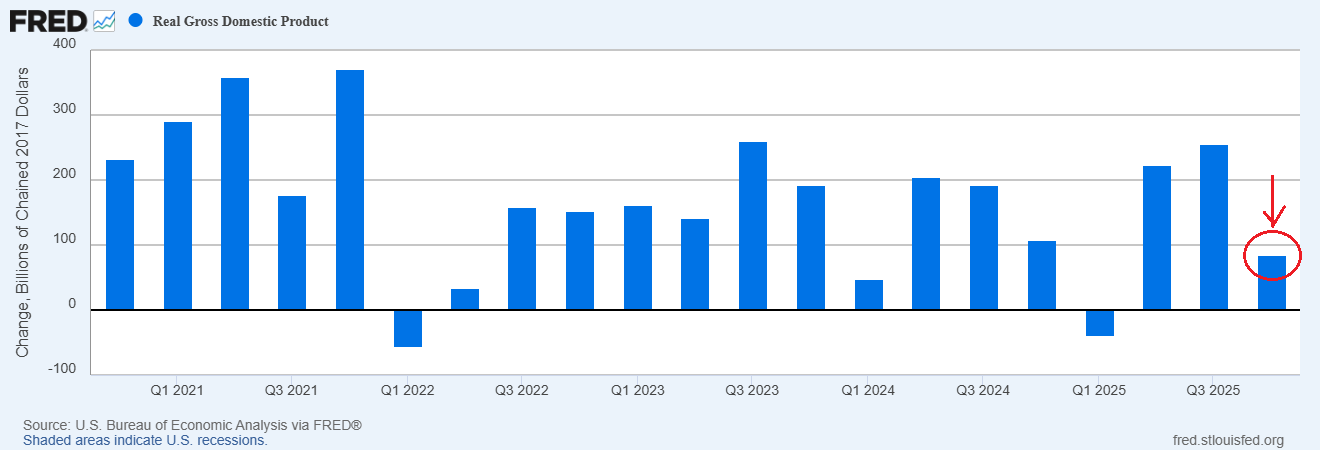
At the same time, the overall macro environment is mixed. According to the latest data, the U.S. GDP growth slowed in Q4 which signals reduced industrial momentum ahead.
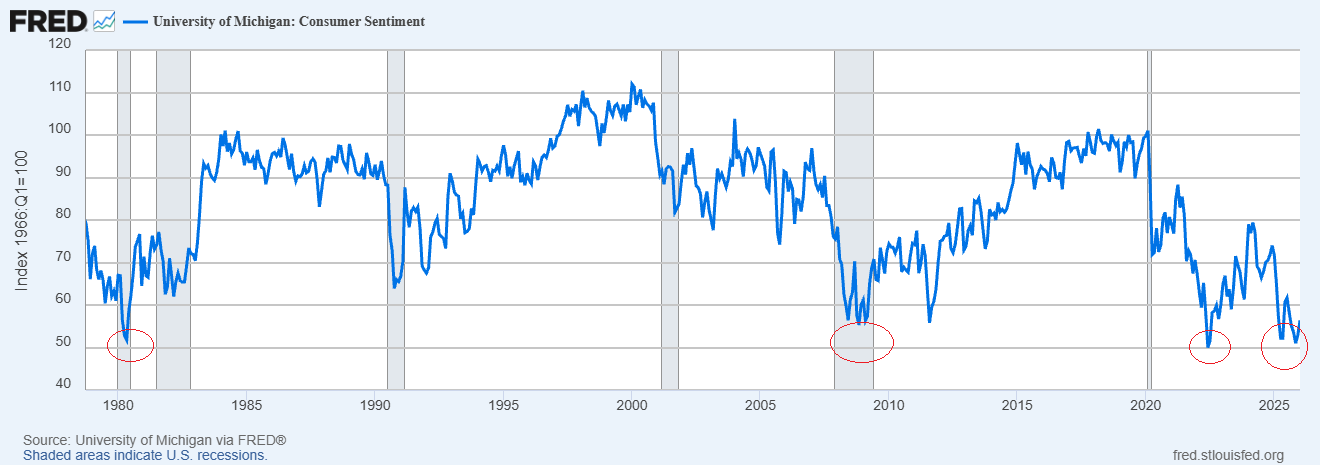
Moreover, consumer sentiment is near multi-decade lows, which will likely mean cautious spending and weaker demand for durable goods that require copper.
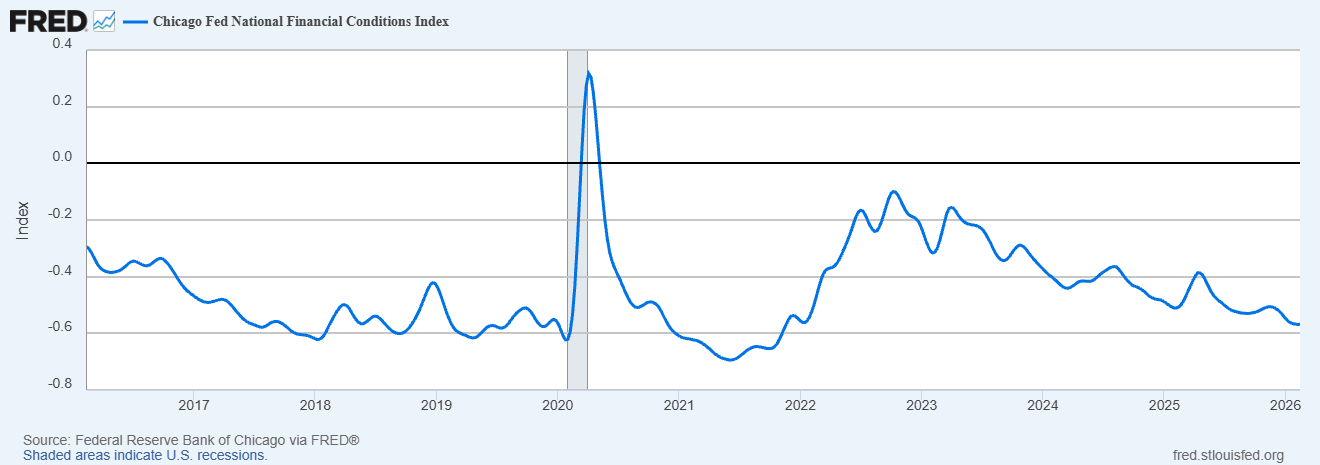
However, financial conditions remain loose as the Chicago Fed National Financial Conditions Index reached -0.568.
The chart below shows that the core PCE index jumped higher in December 2025 which warns of an upsurge in price pressures. Moreover, the annual growth in core PCE inflation index has increased to to 3.0% while the headline PCE index has increased to 2.9%.
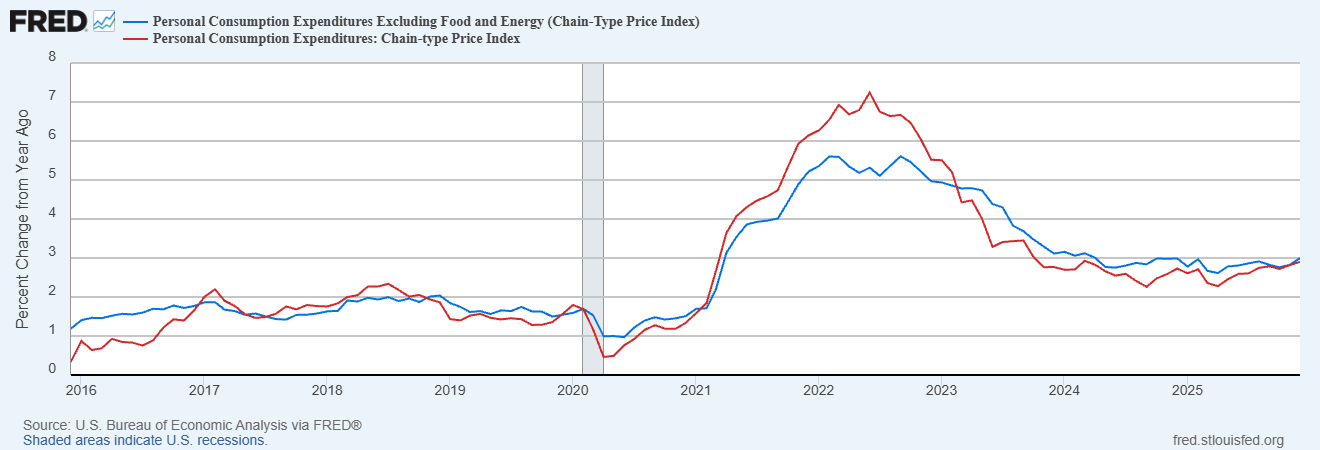
These loose financial conditions and persistent inflation ensure that investment flows in commodities are persistent which will limit any deeper correction. Therefore, any correction in copper prices will be considered a buying opportunity.
Technical Outlook: Bullish Structure Intact After $6.30 Target Hit
Copper prices have reached the target of $6.30, as shown on the monthly chart below. This target was discussed during the previous update when the prices were trading around $5. After hitting this target, the prices are now correcting lower to close the month of February below the resistance line of the ascending channel.
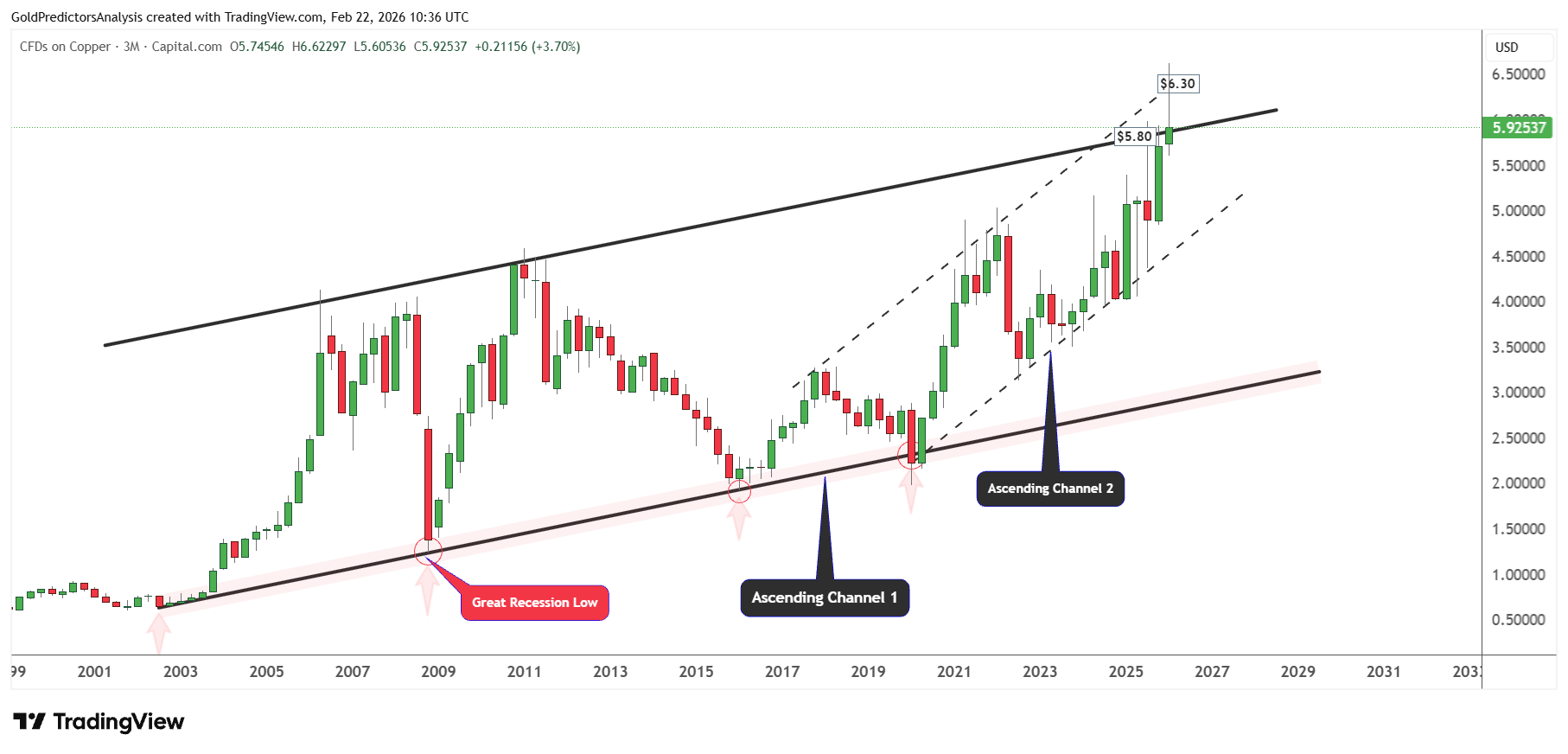
Overall, copper prices have been trading within ascending channel since the Great Recession low. However, the prices have been fluctuating within a strong trend. Despite this strong consolidation, the overall picture remains bullish.
The formation of a second ascending channel from the bottom of June 2020 indicates that copper prices are correcting back towards the support line after hitting the target.
However, if the prices successfully break the $5.80 resistance by closing the monthly candles above it, then the formation of new support above $5.80 will likely lead to a strong surge in copper prices during the next few quarters.
To further understand the bullish outlook, the monthly chart below clearly shows breakout from $5 in October 2025, which has hit the strong resistance of $6.50.
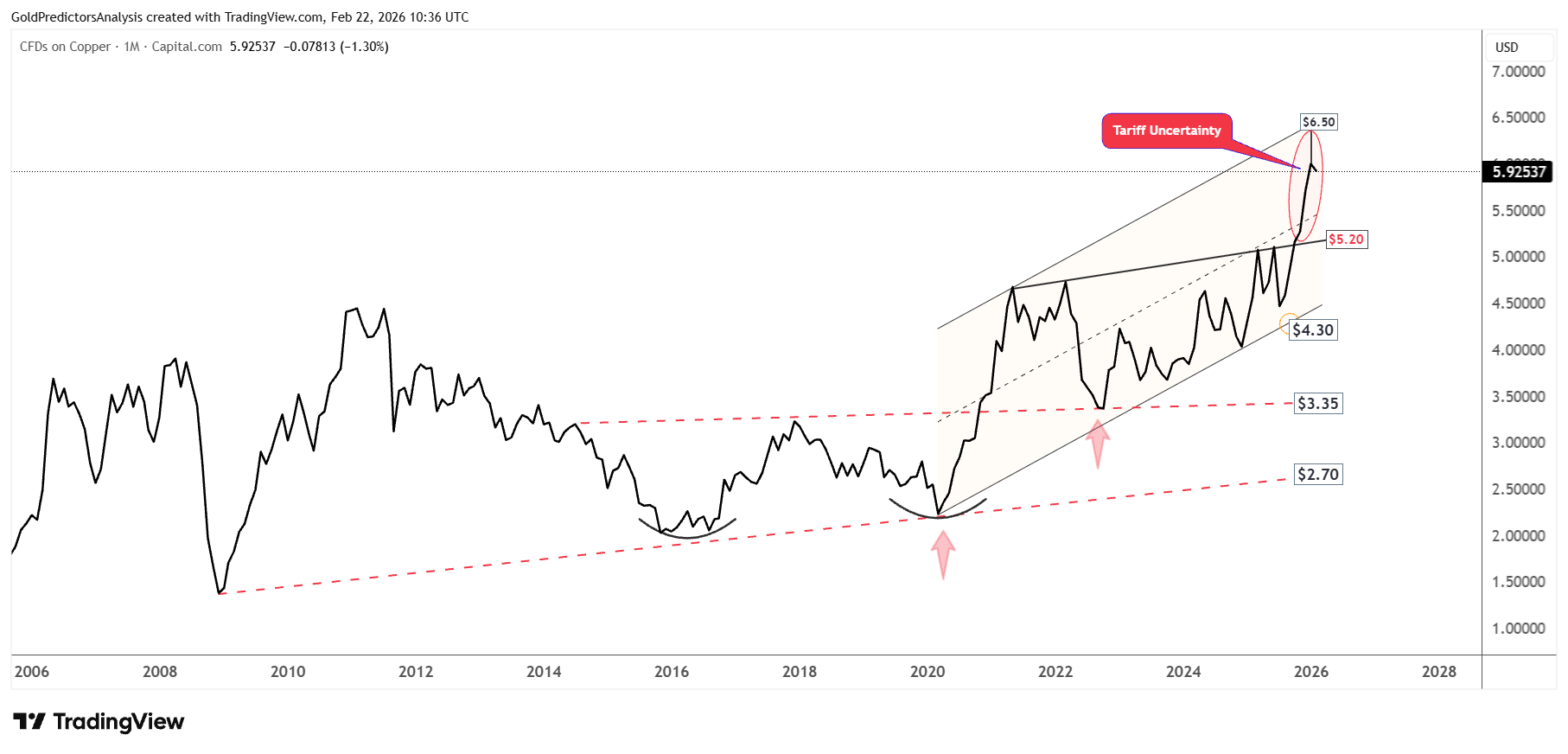
However, after hitting this resistance, the prices corrected lower. The strong support of this correction lies around $5.20. If the price successfully drops to this support zone, it will rebound sharply towards $7. The structural long-term supports remain at $4.30, $3.35 and $2.70.
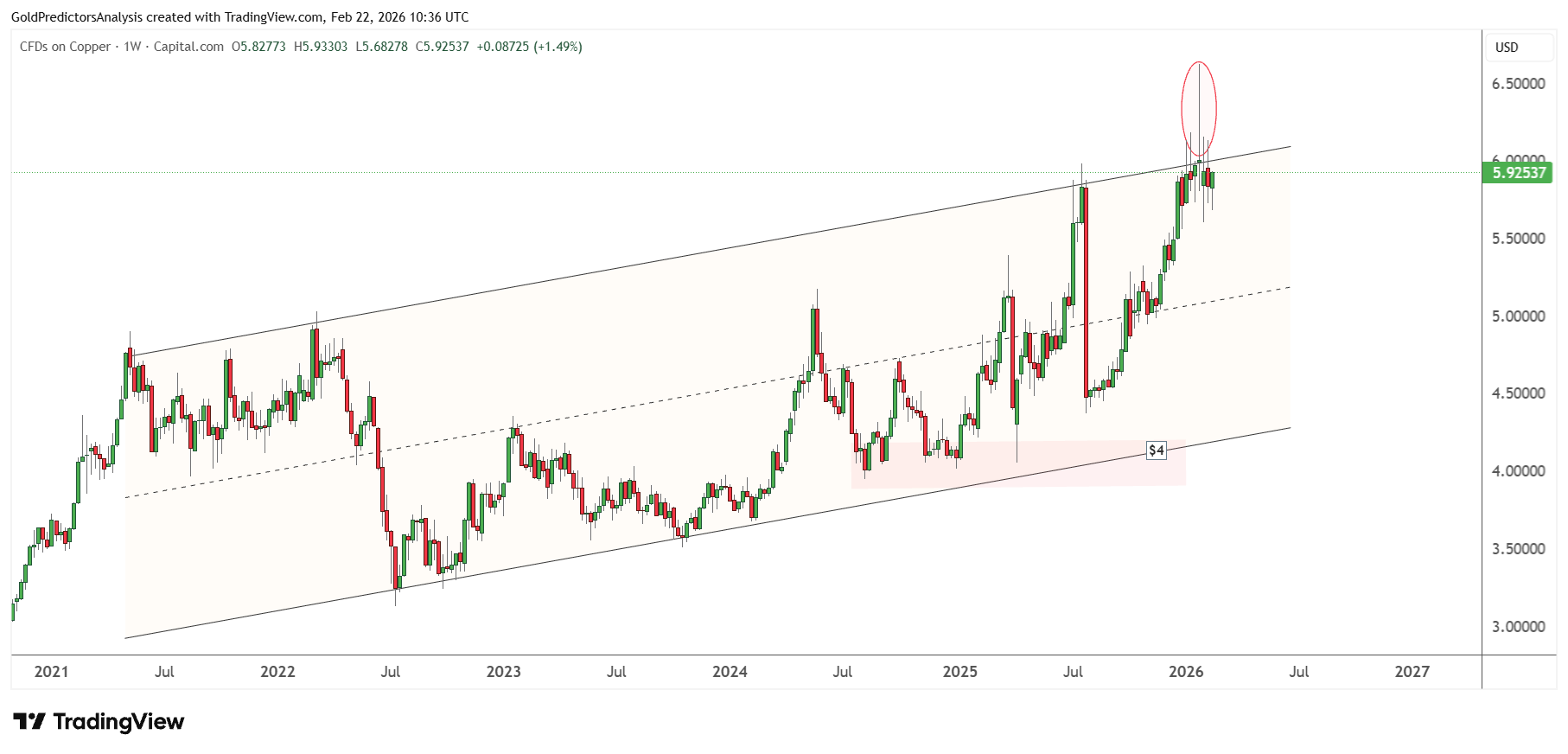
The strong structural correction in copper prices is also observed on the weekly chart, which shows that the prices are extremely volatile within the ascending channel pattern.
Cross-Market Signals: US Dollar and Gold Set the Tone for Copper
Inverse Link with the US Dollar Points to Continued Copper Strength
Copper tends to go in the opposite direction to the US dollar. A stronger dollar increases the cost of copper to global buyers and puts pressure on demand. A weaker dollar has the opposite effect and helps copper prices. This inverse relationship is clearly seen through the great dollar peaks and troughs. When the dollar tops, copper tends to find a base and start going up. When the dollar rallies hard, copper will often correct or consolidate. This relationship is important because copper is priced in dollars and is an expression of global expectations for growth.
This inverse correlation is observed using the chart below. It is found that when the US dollar peaked in February 2009 during the Great Recession crisis, the copper price produced a bottom and then surged higher for next few years.
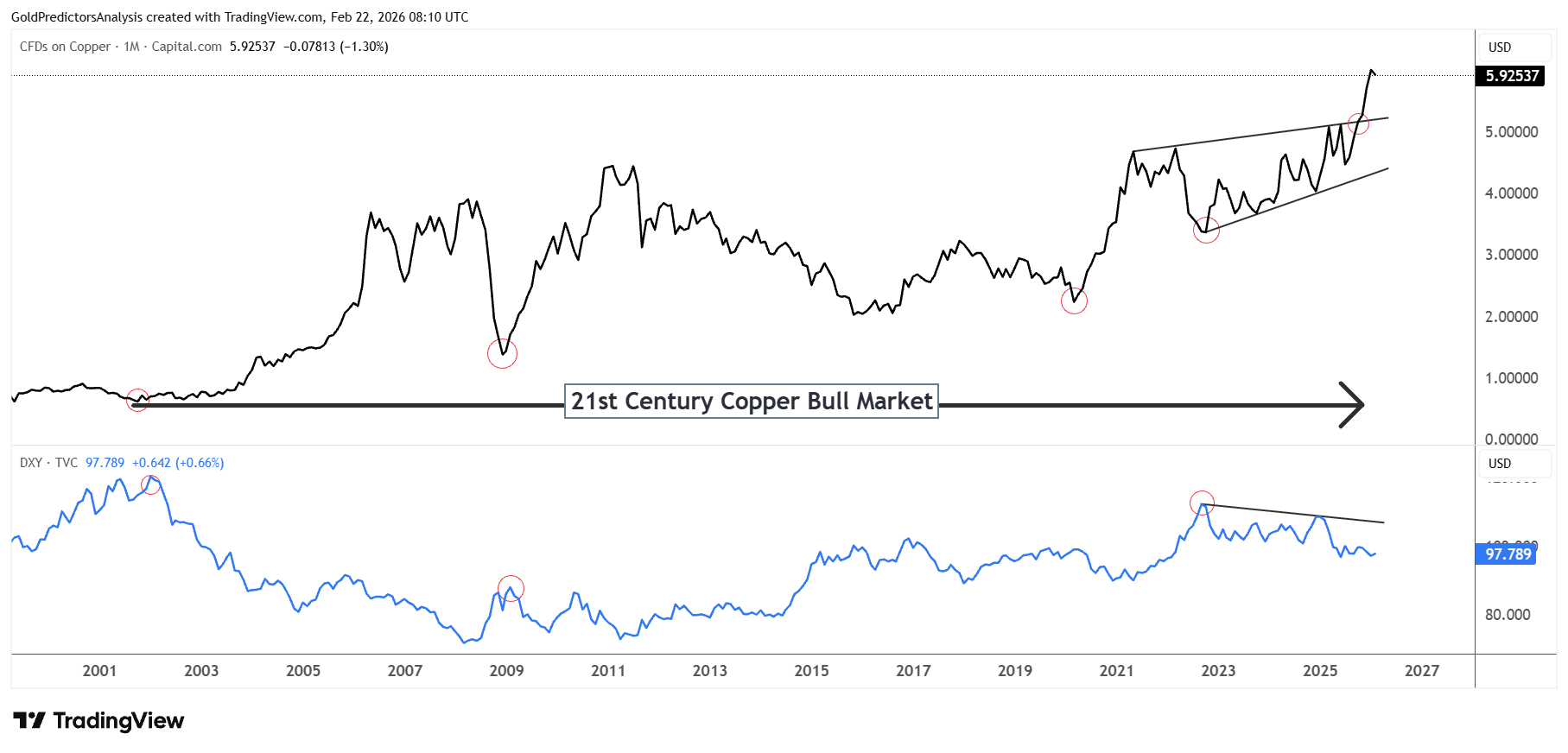
Similarly, when the US dollar index topped in September 2022, the copper prices bottomed at around $3 and continued to rise over the next few years. Now the US dollar index is trading below the descending trend line, and copper prices are trending higher and broken $5.20. This surge in copper prices indicates that the US dollar remains weaker.
Copper-to-Gold Ratio Signals Transition from Safe Haven to Growth Cycle
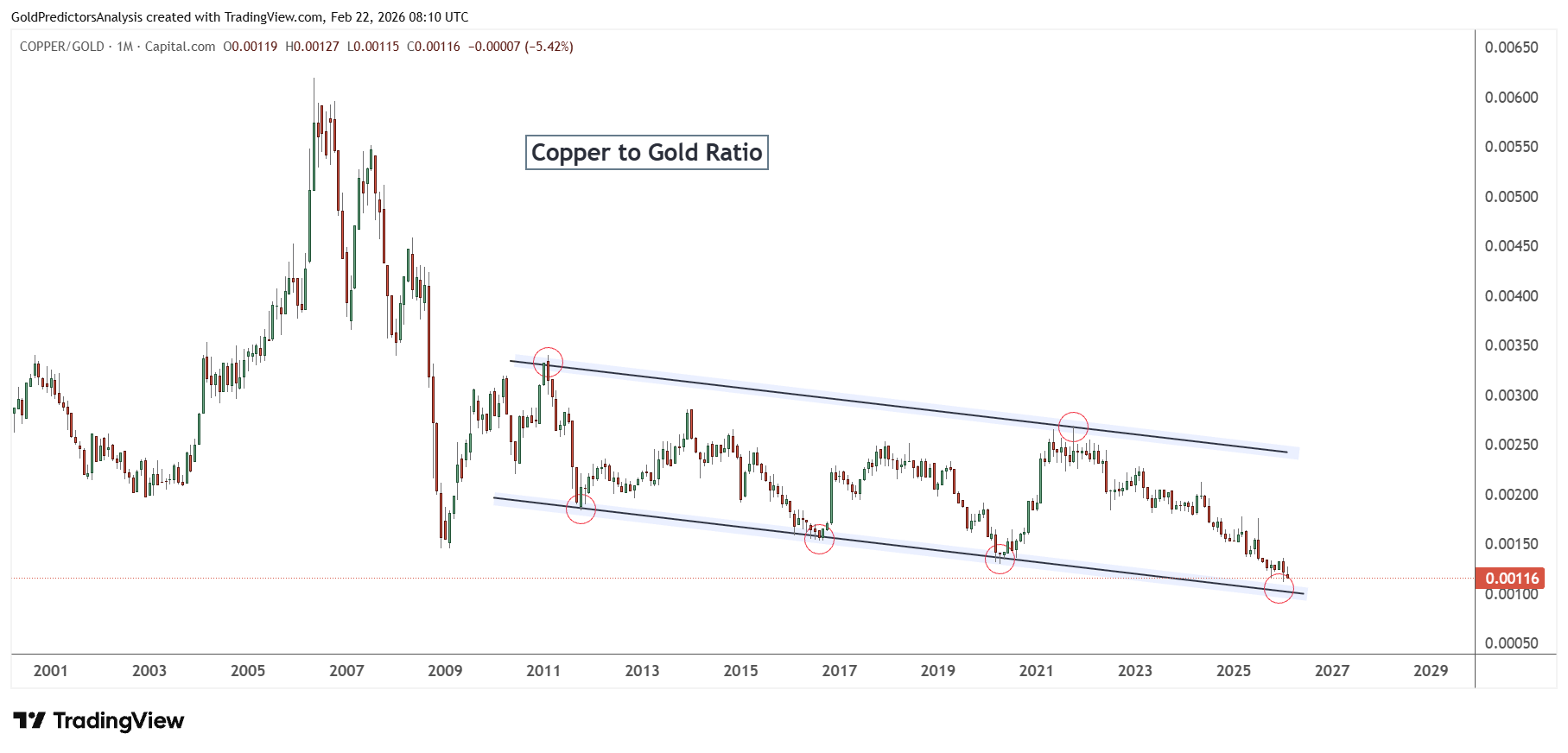
Copper and gold (XAU) tend to reflect different areas of the economic cycle. Gold serves as a safe haven in times of uncertainty, while copper is more growth and industrial demand driven. When gold surges on risk off sentiment, the copper to gold ratio usually falls. This is an indication of defensive positioning in markets.
When the outlook for growth improves, copper begins to perform and the ratio increases. In such phases seen, investors move from safety to cyclical assets. This is a dynamic of how gold leads in fear and copper leads in recovery.
The copper to gold ratio shows that the strong surge in gold prices in 2024 and 2025 has brought it to historically low levels. It is observed that the ratio has not approached the support of the descending channel pattern yet, which indicates that gold prices will further increase during the next few months and copper prices may show strong volatility. However, when the ratio hits the support of this descending channel at 0.0010, copper prices will likely start leading the gold market.
Final Words
Copper remains in strong long-term uptrend with electrification theme, AI expansion and global power infrastructure requirements. However, higher inventories and softer seasonal demand indicate a period of short-term volatility.
In my opinion, any correction to $5.20 to $4.45 would be more likely to be a consolidation within larger bullish structure. A confirmed breakout above $5.80 would confirm renewed upside momentum. However deeper drop towards structural supports at $4.30 would indicate longer digestion phase.
Overall, the bigger picture remains constructive with loose financial conditions, persistent inflation and weaker US dollar. These macro drivers support commodity flows whereby the long-term outlook for copper remains positive. Therefore, any correction in copper prices to $5.20 will be considered a strong buying opportunity for long term investors.