


The company has emerged as one of the biggest “pick-and-shovel” beneficiaries of the AI boom. Rather than competing directly in AI software, Dell supplies the servers, storage systems, and infrastructure required to power massive AI data centers and enterprise computing networks.
This positioning has become increasingly attractive to investors. As companies rush to expand AI capabilities, demand for the hardware supporting that expansion has surged sharply. Dell now sits at the center of that trend, helping fuel a remarkable rally in its share price. Over the past five years, Dell shares have risen more than 430%, while the stock has gained over 130% since the beginning of the year alone, including a jump of roughly 16% in a single session last Friday.
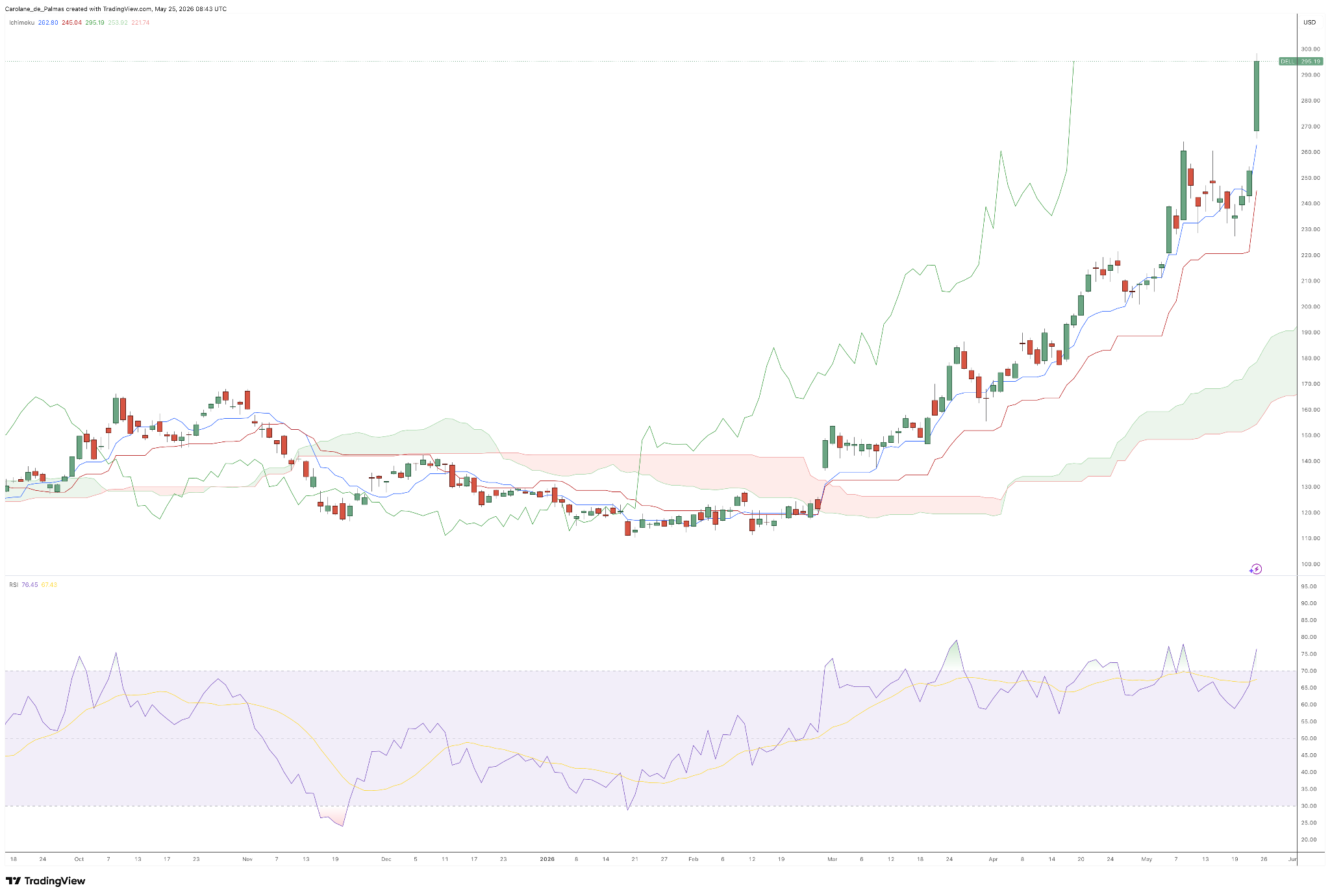
With the company preparing to release earnings results this week, investors and traders are now debating whether the rally can continue, whether expectations have become too optimistic, and how much of the AI opportunity is already priced into the stock.
How Did Dell Technologies Perform Last Quarter?
Dell Technologies recently delivered one of the strongest financial performances in its history, reinforcing its growing importance within the global AI infrastructure market. Full-year revenue reached a record $113.5 billion, up 19% year over year, while diluted earnings per share climbed 36% to a record $8.68. The company also generated a record $11.2 billion in operating cash flow, allowing management to increase its dividend by 20% and expand its share repurchase authorization by another $10 billion.
The strongest growth driver remained AI infrastructure. Dell secured more than $64 billion in AI-optimized server orders during the fiscal year and shipped over $25 billion worth of AI servers. Even more importantly, the company entered the new fiscal year with a record AI server backlog of $43 billion, highlighting the scale of demand from enterprises and cloud providers investing heavily in artificial intelligence capabilities.
Quarterly figures also exceeded analyst expectations. Dell reported adjusted earnings of $3.89 per share compared with forecasts near $3.53, while quarterly revenue reached $33.38 billion versus expectations of roughly $31.73 billion. Management also issued aggressive long-term guidance, forecasting fiscal 2027 revenue between $138 billion and $142 billion, well above broader market estimates. AI server revenue alone is expected to approach $50 billion in fiscal 2027.
Still, the company faces growing supply chain challenges. A global memory shortage linked to booming AI chip demand has pushed component prices significantly higher across the hardware industry. As manufacturers prioritize advanced memory used in AI systems from companies like NVIDIA and Google, supply constraints have started affecting traditional PC and enterprise hardware markets as well. Dell has already adjusted pricing to offset part of those higher costs, but continued shortages and longer lead times remain important risks for margins and future demand.
Why Are Analysts So Bullish on Dell Technologies?
Wall Street analysts remain largely optimistic on Dell’s outlook, mainly because the company is increasingly viewed as one of the most important infrastructure suppliers in the AI ecosystem. Analysts at Bank of America recently reiterated a “Buy” rating on the stock and raised their price target to $280, citing stronger AI server demand, resilient PC sales, and improving infrastructure revenue trends.
Much of that bullishness centers around Dell’s AI server business. Bank of America estimates Dell could generate as much as $60 billion in AI server revenue by fiscal 2027, above the company’s own target and ahead of broader market expectations. AI-related products already account for roughly 27% of Dell’s revenue mix, and some analysts believe that figure could eventually rise toward 40% if enterprise AI spending remains strong.
Dell’s close relationship with NVIDIA is also viewed as a major competitive advantage. Access to high-demand AI chips and strong supplier relationships give Dell an edge in an environment where many competitors still face supply shortages. Analysts also see rising demand from second-tier cloud providers and enterprises seeking on-premise AI infrastructure instead of relying exclusively on public cloud platforms.
However, not every signal is entirely positive. Dell’s traditional PC business, which still represents around 40% of total revenue, remains exposed to cyclical demand weakness. Analysts expect PC demand to soften later in the year as rising memory prices and higher hardware costs begin weighing on consumers and businesses.
There are also broader risks tied to the current AI enthusiasm. Elevated expectations now leave little room for disappointment. If enterprise AI spending slows, if supply chain constraints worsen, or if customers delay purchases because of higher component costs, Dell’s growth trajectory could cool faster than investors currently anticipate. There is also concern that some recent demand may have been accelerated artificially by customers rushing to secure inventory before prices rise further, potentially creating weaker demand later on.
Bottom Line
Dell Technologies has rapidly transformed itself from a traditional PC and enterprise hardware company into one of the most important infrastructure providers in the AI market. Its strong exposure to AI servers, strategic partnerships with suppliers like NVIDIA, expanding enterprise customer base, and record backlog continue supporting bullish expectations from Wall Street analysts. If AI infrastructure spending remains strong, Dell could continue benefiting from one of the largest technology investment cycles in years.
At the same time, risks are becoming increasingly important as the stock trades near record highs. Rising memory costs, supply chain disruptions, softer PC demand, and elevated market expectations could all increase volatility in the months ahead. Much of the bullish AI narrative is now reflected in the valuation, meaning future earnings reports will likely need to continue exceeding expectations in order to sustain the rally.
For traders, this week’s earnings release could become a major short-term catalyst. Markets will likely focus less on the headline earnings figures and more on AI server order growth, backlog expansion, margins, and management guidance for the second half of the year. Investors will also closely watch comments regarding memory shortages, component pricing, and enterprise demand trends.
Sources: Investor’s Business Daily, Barron’s, Investopedia, TradingView, CNBC, Yahoo Finance, Dell