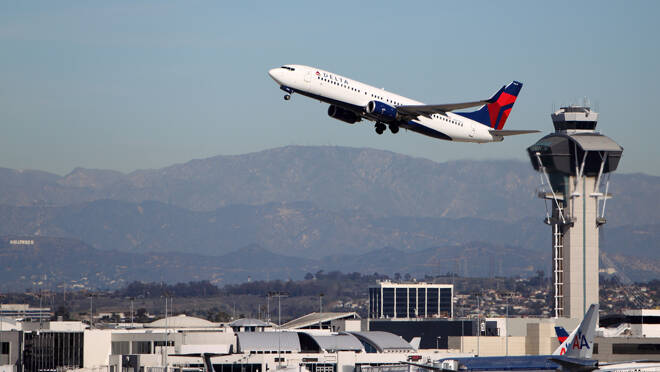
Delta Air Lines Inc. (DAL) kicks off second quarter earnings season in Wednesday’s pre-market, with analysts looking for a loss of $1.26 per-share on $8.95 billion in revenue. If met, the loss-per-share will contract by two-thirds compared to the red ink posted in the same quarter last year. Despite modest improvement, the failure to rebuild profitability after two years of pandemic struggles highlights continued headwinds in the commercial airline industry.

Refinery Easing Fuel Cost Pressure
The stock rallied 8.7% in mid-March after the carrier reiterated its Q1 forecast, noting that projected 83% capacity was in-line with estimates for 83% – 85%. The company expects positive free cash flow in the quarter, driven by strong spring and summer demand, with total revenue at about 78% of 2019 revenue, compared to an initial forecast between 72% and 76%. Despite this guidance, the expected loss weighed on sentiment, yielding no additional upside into mid-April.
Soaring fuel costs will hurt industry profits but Delta has an advantage over rivals because it owns Monroe Energy, which refines 185,000 crude oil barrels per day. The Philadelphia plant posted losses when crude oil plummeted in 2020 but now marks a major positive, allowing the carrier to control fuel costs over a longer period than hedging contracts. However, high fuel costs are translating into much higher fares throughout the sector, raising doubts about Delta’s projected 2022 passenger counts.
Wall Street and Technical Outlook
Wall Street consensus has brightened considerably in the last three months, lifting to an ‘Overweight’ rating based upon 17 ‘Buy’, 2 ‘Overweight’, and 5 ‘Hold’ recommendations. No analysts are recommending that shareholders close positions and move to the sidelines. Price targets currently range from a low of $39 to a Street-high $67 while the stock is set to open Monday’s session more than $2 below the low target. This dismal placement suggests little downside after this week’s confessional.
Delta Air Lines booked limp returns in the four years ahead of February 2020’s plunge to a 7-year low in the teens. The subsequent uptick stalled just below the .786 Fibonacci selloff retracement level in April 2021, giving way to a choppy downtick that hit a 14-month low in February 2022. The stock has failed five attempts to mount 200-day moving average resistance, including last week’s reversal and sell gap near 40. This bearish price action tells us the downtrend remains fully intact, despite Wall Street happy-talk.
Catch up on the latest price action with our new ETF performance breakdown.
Disclosure: the author held no positions in aforementioned securities at the time of publication.