US stock futures faced increased selling pressure during the Asian session on Tuesday, February 17. Lingering concerns about AI disruption, AI spending, and returns on investment weighed on sentiment.
Rising geopolitical risk contributed to the morning pullback, as traders considered the potential impact of US strikes on Iran’s strategic sites.
Later on Tuesday, US labor market data and manufacturing sector activity will influence expectations of a June Fed rate cut. Recent jobs and CPI reports have sent mixed signals, leaving US stock futures exposed to incoming inflation and labor market-related data.
Despite the morning pullback, ongoing expectations of an H1 2026 Fed rate cut continue to support a medium-term outlook for US stock futures.
Below, I’ll outline the key market drivers, the medium-term outlook, and the technical levels traders should watch.

US-Iran Talks Are Set to Resume Amid Heightened Uncertainty
The US and Iran will resume talks in Geneva on February 17, leaving traders in a cautious mood. Failed talks may lead to US military strikes on Iran’s strategic targets, which could broaden into a regional conflict.
Updates from Geneva are likely to influence market risk sentiment later in the Tuesday session.
Dow Jones Price Forecast
Every new Dow Jones analysis as it publishes, today's technical signal and key levels, live price — on one page.
See all Dow Jones forecastsUS Labor Market and Manufacturing in Focus
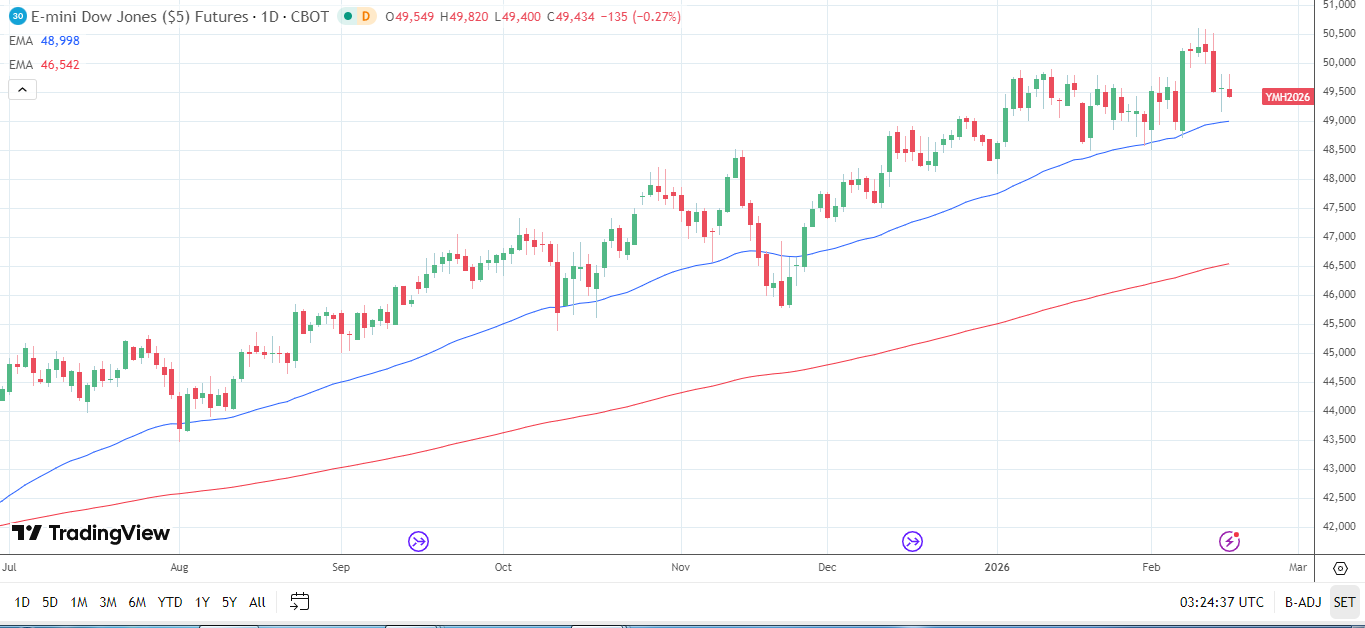
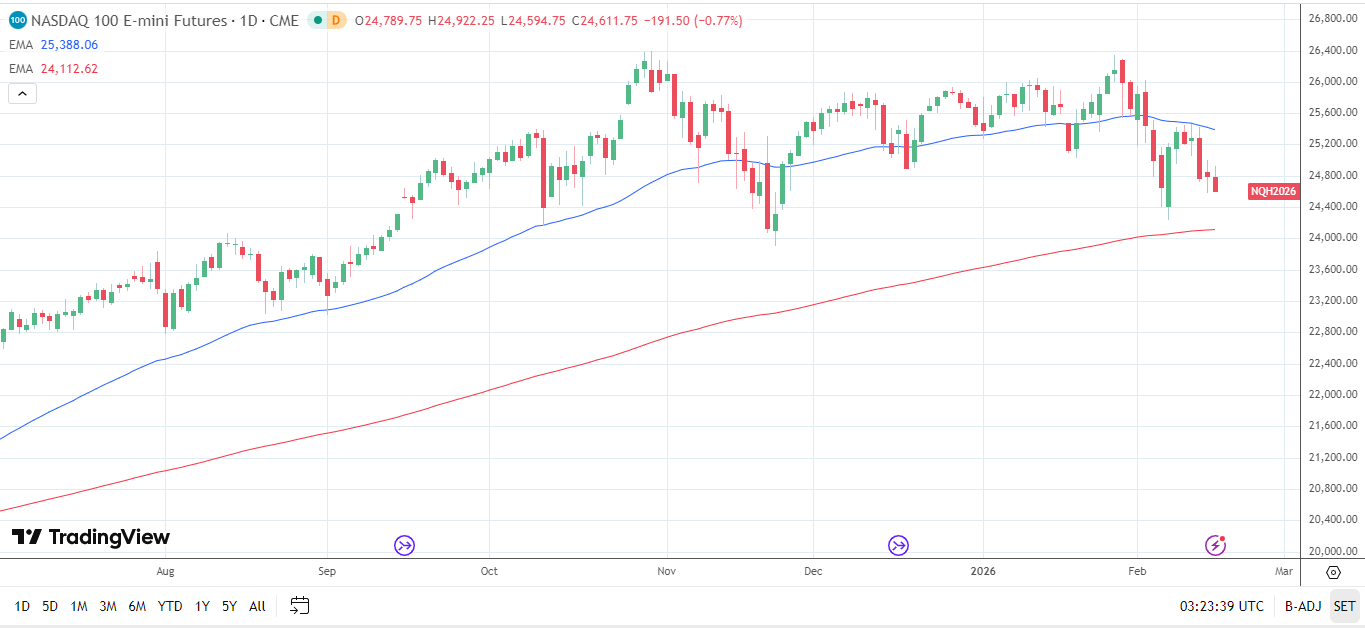
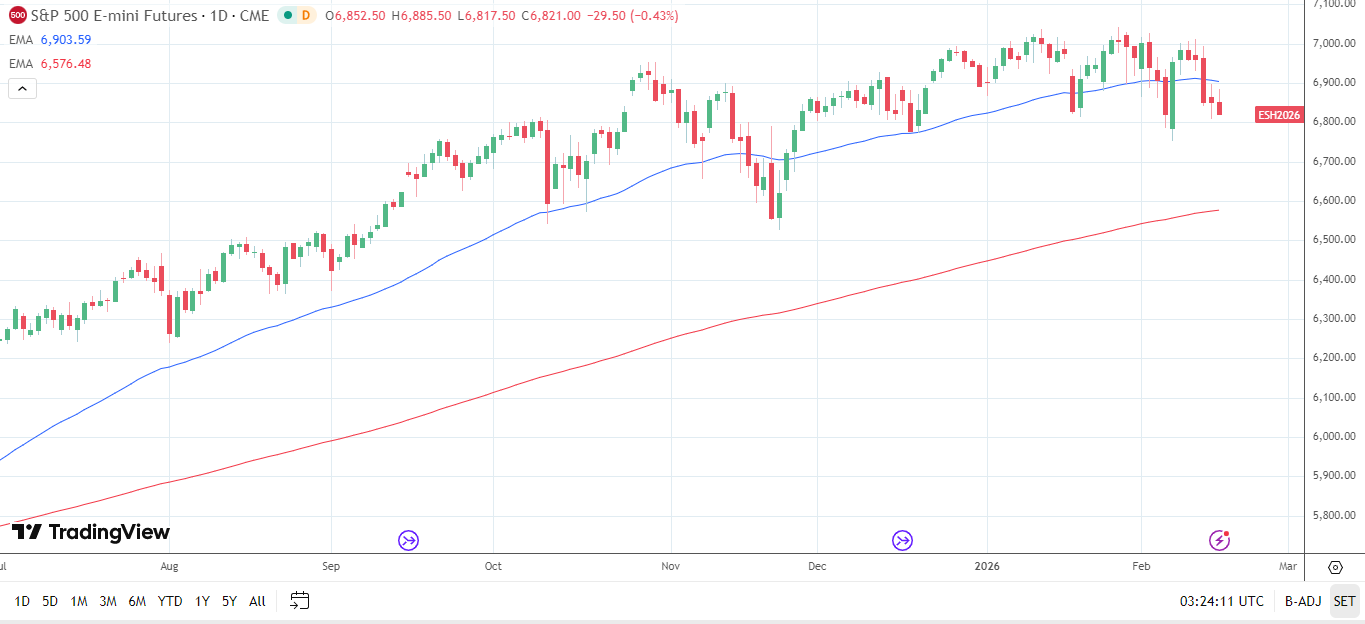
US futures retreated during the Asian session on February 17. The Dow Jones E-mini dropped 135 points, while the Nasdaq 100 E-mini and the S&P 500 E-mini declined 192 points and 30 points, respectively. Trading volumes were thinner because of the Chinese New Year and Asian market closures.
However, later in the session, ADP employment numbers and the NY Empire State Manufacturing Index will give insights into the US economy ahead of this week’s Q4 GDP numbers.

Weaker ADP employment figures and a lower-than-expected NY Empire State Manufacturing Index reading would bolster bets on a June Fed rate cut. A more dovish Fed rate path would lift sentiment.
Beyond the data, traders should closely monitor FOMC members’ speeches following the US jobs and CPI reports. Views on monetary policy will influence risk appetite.
According to the CME FedWatch Tool, the chances of a March Fed rate cut fell from 17.2% on February 9 to 9.8% on February 13. Meanwhile, the probability of a June cut declined from 72.8% to 69.4%. Market sentiment toward the Fed’s policy outlook remains a key driver for US stock futures.
However, market reaction to the data and Fed rhetoric will likely hinge on updates on US-Iran talks. An increased threat of a US military strike on Iran is likely to overshadow sentiment toward the Fed’s policy stance.
Key Technical Levels for Dow Jones, Nasdaq 100, and S&P 500
Following Tuesday morning’s losses, the Nasdaq 100 E-mini and the S&P 500 E-mini remained below their 50-day EMAs, while holding above their 200-day EMAs. The EMA positions signaled a bearish near-term but bullish longer-term outlook. Meanwhile, the Dow Jones E-mini held above its 50-day and 200-day EMAs, indicating a bullish bias that aligns with positive fundamentals.
Near-term trends will hinge on US economic data, central bank chatter, and geopolitical tensions. Key levels to monitor include:
Dow Jones
- Resistance: 50,000, the February 10 record high of 50,611, and then 51,000.
- Support: the 50-day EMA (48,998), and then 48,500.
Nasdaq 100
- Resistance: 25,000, the 50-day EMA (25,388), and then the October 30 record high of 26,399.
- Support: 24,500 and then the 200-day EMA (24,113).
S&P 500
- Resistance: the 50-day EMA (6,904) and then the January 13 high of 7,036.
- Support: 6,750 and then the 200-day EMA (6,577).
Outlook: Fed Rate Cut Bets Maintain Bullish Sentiment
In my opinion, the short-term price outlook remains cautiously bullish. Furthermore, expectations of an H1 2026 Fed rate cut reaffirm the bullish medium-term outlook. These favorable fundamentals align with longer-term technicals for US stock futures.
However, several events would derail the bullish medium-term outlook, including:
- A US military strike on Iran.
- The Bank of Japan declares a higher-than-expected neutral interest rate (hawkish: potentially 1.5%-2.5%). Narrowing rate differentials could trigger a yen carry trade unwind as seen in mid-2024. Reduced liquidity would weigh on US risk assets. Such an event would invalidate the cautiously bullish short-term outlook.
- US economic indicators temper Fed rate cut bets.
Conclusion: Bullish Bias Remains Intact
In summary, ongoing bets on multiple Fed rate cuts and a cautiously hawkish BoJ reinforce the medium-term outlook for US index futures. A surprise hawkish shift would likely weigh on demand for risk assets. Meanwhile, multiple Fed rate cut bets hinge on lower rates in H1 2026. This week’s Personal Income and Outlays Report, Q4 GDP data, and the Services PMI will be key for market trends.
Despite the lingering risk of yen carry trade unwinds, US stock futures are likely to target new highs if the Fed boosts bets on a rate cut, countering any liquidity issues from a yen carry trade unwind, and if tensions do not escalate into a broader regional conflict.
Follow our live coverage and consult the economic calendar for real-time market updates.