


Last week: Risk-off Dominates
Tensions in the Middle East escalated notably last week, with Brent crude reaching highs just above US$100 and global bond yields rising across the curve, giving the USD a lift into the close. Equities finished the week lower, pressured by elevated energy prices and disappointing tech earnings.
The conflict that President Trump said would likely last four to five weeks has entered its fifth month, with the US and Iran exchanging blows for 13 consecutive days. At this point, it remains a guessing game about how this will play out and how long it will last.
And just when you thought Trump’s tariff push would have been shelved ahead of the US midterms, last week saw a fresh wave of import levies hit. On Monday, 50% duties were imposed on a range of Canadian goods, and on Tuesday, 100% duties were announced for drug manufacturers if they did not move their operations to the US. On Wednesday, 25% tariffs on Brazilian imports were announced, and on Thursday came the rollout of 10-12.5% tariffs on 60 nations.
This Morning: Tentative Relief Rally
Over the weekend, tensions eased in the Middle East as the US paused its strikes on Iran late Friday, after 13 consecutive days of attacks. Iran signalled it would suspend retaliatory assaults if the US pause in strikes holds, triggering a relief rally this morning.
It is unclear why the US paused, raising a bold question mark over Trump’s next move and whether the two sides will sit around the table. One major concern here is that we are not seeing vessels transiting the Strait of Hormuz. Throw in the issue with Yemen’s Houthis and the Red Sea, and this remains a highly uncertain environment.
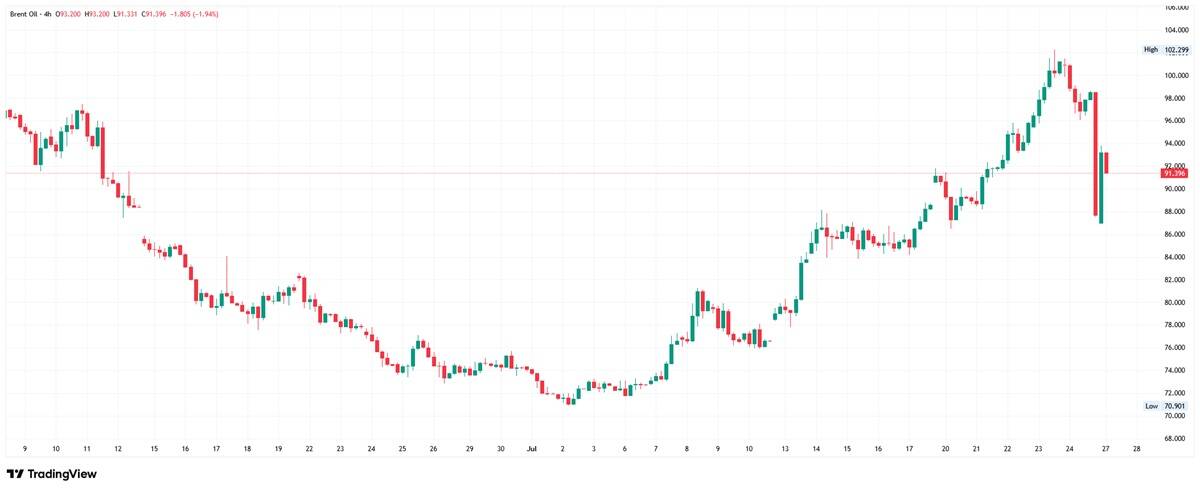
Oil benchmarks fell at the open: Brent is down more than 11% – fading US$100/barrel – and WTI is down around 6% at the time of writing. Bond yields also fell, with US Treasury yields lower across the curve this morning – the 10-year yield down about 5 bps to 4.63%. Unsurprisingly, demand for the USD also decreased as haven longs unwound, sending the USD index down 0.2%.
In equities, Asia-Pacific stocks saw a modest bid overnight, with the MSCI Asia Pacific share index on the front foot. European and US indexes are set for a positive start today, with DAX futures up about 1% and S&P 500 futures up 0.8%.
AUD/USD Price Forecast
Every new AUD/USD analysis as it publishes, today's technical signal and key levels, live price — on one page.
See all AUD/USD forecastsThe Week Ahead: Key Central Bank Announcements on Deck
Today and tomorrow’s data slate is thin. Wednesday kicks off with the June Australian CPI inflation figures at 1:30 pm GMT, followed by the Fed rate announcement at 6 pm and the press conference at 6:30 pm. Thursday includes an update from the BoE at 12 pm, then the Q2 26 US advance GDP and the June US PCE price index at 12:30 pm. Friday focusses on the BoJ policy decision at approximately 4 am, the July eurozone inflation rate at 9 am, and the May Canadian GDP data at 12:30 pm.
Beyond the macro calendar, this is also the busiest stretch of the earnings season, with four of the ‘Magnificent Seven’ reporting within a 48-hour window. Microsoft and Meta report on Wednesday after the US close, followed by Apple and Amazon on Thursday. Last week’s tech-led selloff means the market will closely monitor for signs that heavy AI spending is starting to pay off.
Written by FP Markets Chief Market Analyst, Aaron Hill