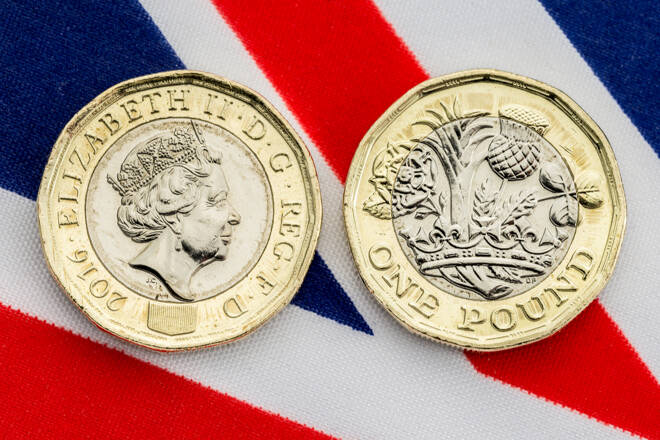
$1.36427
The GBP to USD pairing is in for another choppy week. While Fed minutes and US retail sales will influence, the UK economic calendar will be the focal point.
It is another big week for the GBP/USD, with a busy UK economic calendar for investors to navigate.
On Tuesday, wage growth, claimant counts, and the UK unemployment rate will move the dial. Wage growth remains a bugbear for the Bank of England. A pickup in wage growth and a steady unemployment rate would fuel hawkish BoE policy bets.
However, UK inflation numbers on Wednesday and Retail sales figures on Friday have to support hawkish bets for the GBP to USD to avoid a tumble.
With the economic calendar on the busy side, investors should track BoE chatter throughout the week. No MPC members are on the calendar to speak, leaving BoE chatter with the media to influence.
After hotter-than-expected GDP numbers last week, sticky inflation, a pickup in wage growth, and a jump in consumption would fuel hawkish BoE bets.
It is another tricky week ahead for the US Dollar. On Tuesday, retail sales figures will affect sentiment toward the US economy and the September Fed interest rate decision.
After the softer-than-expected, but sticky, consumer inflation numbers, weak retail sales figures could close the door on a September hike. However, investors will slice and dice the FOMC meeting minutes on Wednesday to understand the influence of the latest stats on the Fed.
On Thursday, the US jobless claims will need to creep higher to support a more dovish FED outlook.
Other stats include NY State manufacturing and housing sector-related numbers that should have a limited impact.
Last week, the GBP to USD fell by 0.35% to wrap up the week at $1.26920. US consumer price inflation and producer price index figures overshadowed the UK GDP numbers for the second quarter, leaving the GBP/USD in the red.
The Daily Chart showed the GBP to USD sat below the $1.2785 – $1.2862 resistance band. Looking at the EMAs, the GBP to USD sat below the 50-day EMA ($1.27381) while holding above the 200-day EMA ($1.24567), sending bearish near-term but bullish longer-term price signals.
Notably, the 50-day EMA narrowed to the 200-day EMA, signaling further price losses.
Looking at the 14-Daily RSI, the 42.32 reading sends bearish price signals. The RSI signals a fall to sub-$1.2650 to bring the $1.2520 – $1.2440 support band and the 200-day EMA ($1.24567) into view. However, a GBP to USD move through the 50-day EMA ($1.27381) would support a breakout from the $1.2785 – $1.2862 resistance band to target $1.30.
A pickup in wage growth and hotter-than-expected inflation numbers would fuel bets on a more hawkish BoE and bring $1.30 into view.
Looking at the 4-Hourly Chart, the GBP to USD hovers below the $1.2785 – $1.2862 resistance band. The GBP to USD also sits below the 50-day ($1.27440) and 200-day ($1.27775) EMAs, sending bearish near and longer-term price signals.
Significantly, the 50-day EMA fell back from the 200-day EMA, a bearish price signal. However, a GBP to USD move through the EMAs would support a breakout from the $1.2785 – $1.2862 resistance band to give the bulls a look at $1.30. Failure to move through the 50-day EMA would leave sub-$1.2650 and the $1.2520 – $1.2440 support band in play.
The 14-4H RSI reading of 43.76 sends bearish signals, with selling pressure outweighing buying pressure. Significantly, the RSI signals a fall to sub-$1.2650 to bring the $1.2520 – $1.2440 support band into play.
Weaker UK wage growth, a rise in the UK employment rate, and softer inflation numbers would leave the GBP/USD on the defensive.
With over 28 years of experience in the financial industry, Bob has worked with various global rating agencies and multinational banks. Currently he is covering currencies, commodities, alternative asset classes and global equities, focusing mostly on European and Asian markets.