
Yields Take Control, Stocks Lose Ground
Wall Street is losing momentum Tuesday as the 10-Year U.S. Treasury yield climbed to 4.6653%, its highest level since January 2025. The S&P 500 and Nasdaq are both down for a third straight session. Stocks were mounting a recovery from their lows shortly after mid-session but the bond market is running this tape right now and equities are following its lead.

Nasdaq Composite (IXIC) Technical Analysis
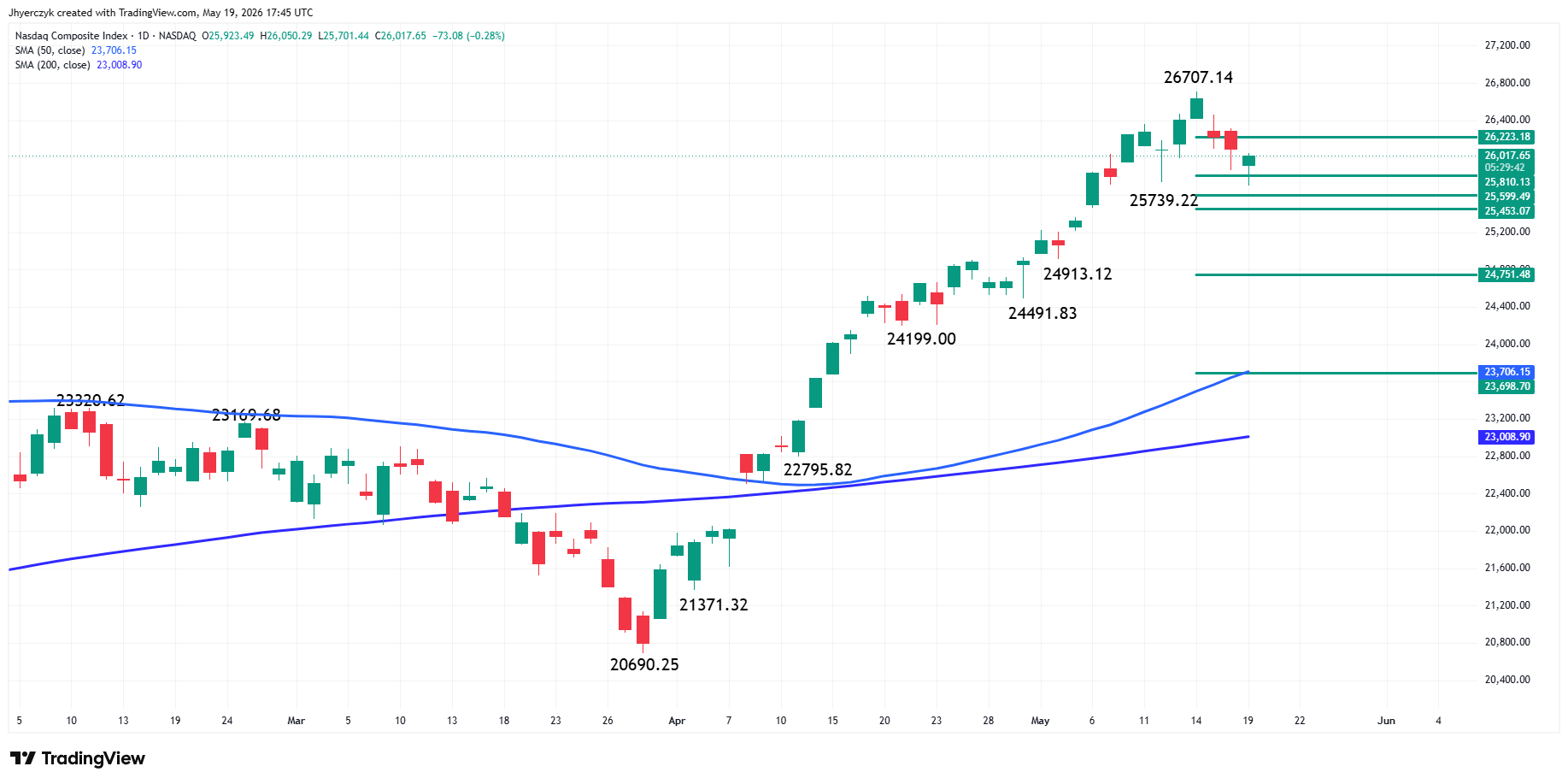
The Nasdaq Composite is lower on Tuesday, but a bounce from the intraday low at 25701.44 suggests traders bought the dip after sellers took out a minor bottom at 25739.22.
The new minor range is 26707.14 to 25701.44. This creates a 50% level at 26204.29. Trader reaction to this level will set the tone this week. Taking it out will indicate strong buyers have returned and a new record high is probable. If sellers come in at the pivot then a secondary lower top could form, indicating renewed selling pressure.
Potential downside targets include pivots at 25599.49 and 25453.07. Once again, we could see technical bounces since the main trend is still up. However, if 25453.07 is taken out with conviction then look out to the downside because there is no major support until 24751.48.
In summary, watch for a bounce to 26204.29 then either a breakout to the upside or the formation of a secondary lower top, followed by renewed selling pressure.
Buyers could keep coming in on intraday dips, but heavy selling through 25453.07 could mean an acceleration into 24751.48.
NASDAQ 100 Price Forecast
Every new NASDAQ 100 analysis as it publishes, today's technical signal and key levels, live price — on one page.
See all NASDAQ 100 forecasts4.5% Was the Line. We Are Above It.
The 10-Year U.S. Treasury yield breaking above 4.5% is what changed the mood in this market. That level has created discomfort before and traders remember it. Once yields pushed through and kept going to 4.6653%, investors who had been buying growth names started reducing exposure fast. Higher yields raise the discount rate on future earnings and growth stocks are the most exposed because their value is built on profits years out, not next quarter. The case for holding growth stocks gets harder to make every time the 10-Year U.S. Treasury yield makes a new high.
Oil Above $110 Keeps Inflation Alive
Spot Brent crude slipped 1.1% on Tuesday but it is still above $110 a barrel. Trump said the planned military strike against Iran was delayed while negotiations continue and that pulled some premium out. The decline does not matter as much as where prices are sitting. Energy costs feeding into inflation expectations at these levels keeps the Federal Reserve from getting comfortable. I’m watching that connection closely because it is the one keeping yields elevated and yields are what’s driving equity selling right now.
Breadth Was Worse Than the Headlines
The Dow Jones Industrial Average fell 0.26%. The S&P 500 dropped 0.20%. The Nasdaq Composite lost 0.29%. Those numbers do not tell the full story. Declining stocks outnumbered advancing stocks by a wide margin on both the NYSE and Nasdaq. The Nasdaq logged significantly more new lows than new highs. When breadth breaks down that far below the surface while indexes are only off a fraction of a percent, the selling is broader than the headline moves suggest.
Where the Money Went
Consumer discretionary took the hardest hit Tuesday, down 1.31%. Communication services and materials followed it lower. Healthcare was the one area that actually attracted buyers, climbing more than 1% while everything rate-sensitive was getting sold. Utilities and energy both moved higher as well.
The pattern is not complicated. When the 10-Year U.S. Treasury yield is running to multi-month highs and oil is holding above $110, investors do not abandon the market. They move toward sectors that generate cash now rather than sectors priced on what they might earn years from now. Software names had a stretch of gains earlier in the session on the back of strong recent performance and gave most of it back by the close. The bid under growth did not hold and that tells you where sentiment is sitting right now.
Stocks in the News
Akamai Technologies got hit after announcing a $2.6 billion convertible bond offering and the reaction was immediate. That kind of deal lands and traders sell first. Dilution concerns do not need time to develop.
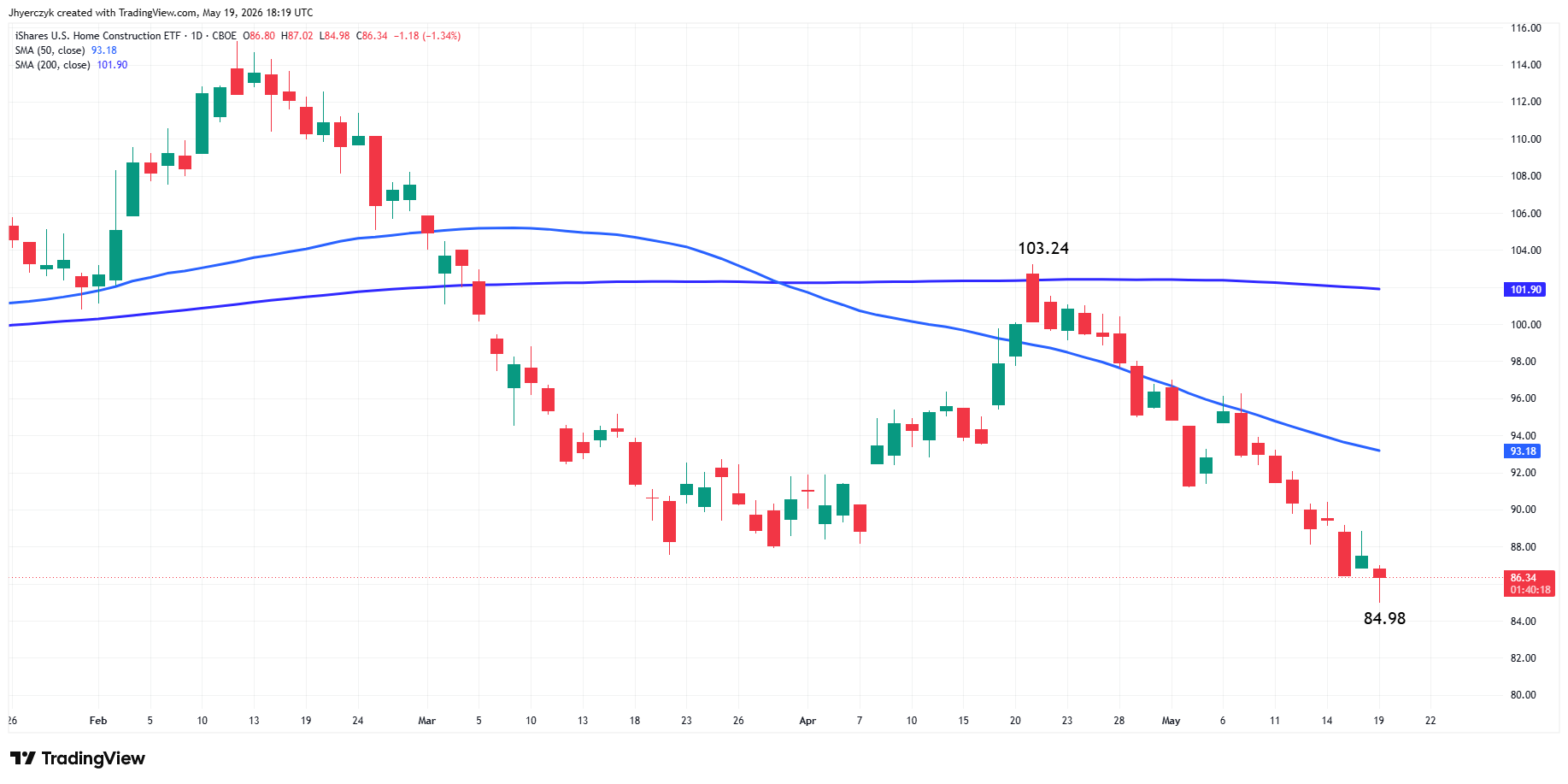
D.R. Horton, Lennar, and Toll Brothers all dropped and the iShares U.S. Home Construction ETF went with them. Rising Treasury yields feeding into mortgage rate fears is the direct transmission and homebuilders are sitting right in the middle of it.
Micron was the flip side. Several straight sessions of losses and the stock finally found some footing Tuesday as memory names stabilized. Marvell jumped after Evercore ISI raised its price target. The artificial intelligence connectivity angle is what analysts are pointing to and the market bought it.
Home Depot beat on earnings and revenue and held its gains. Amer Sports had a strong quarter and moved higher. Shake Shack saw insider buying and traders took that as a read on where management thinks the stock is headed.
What to Watch
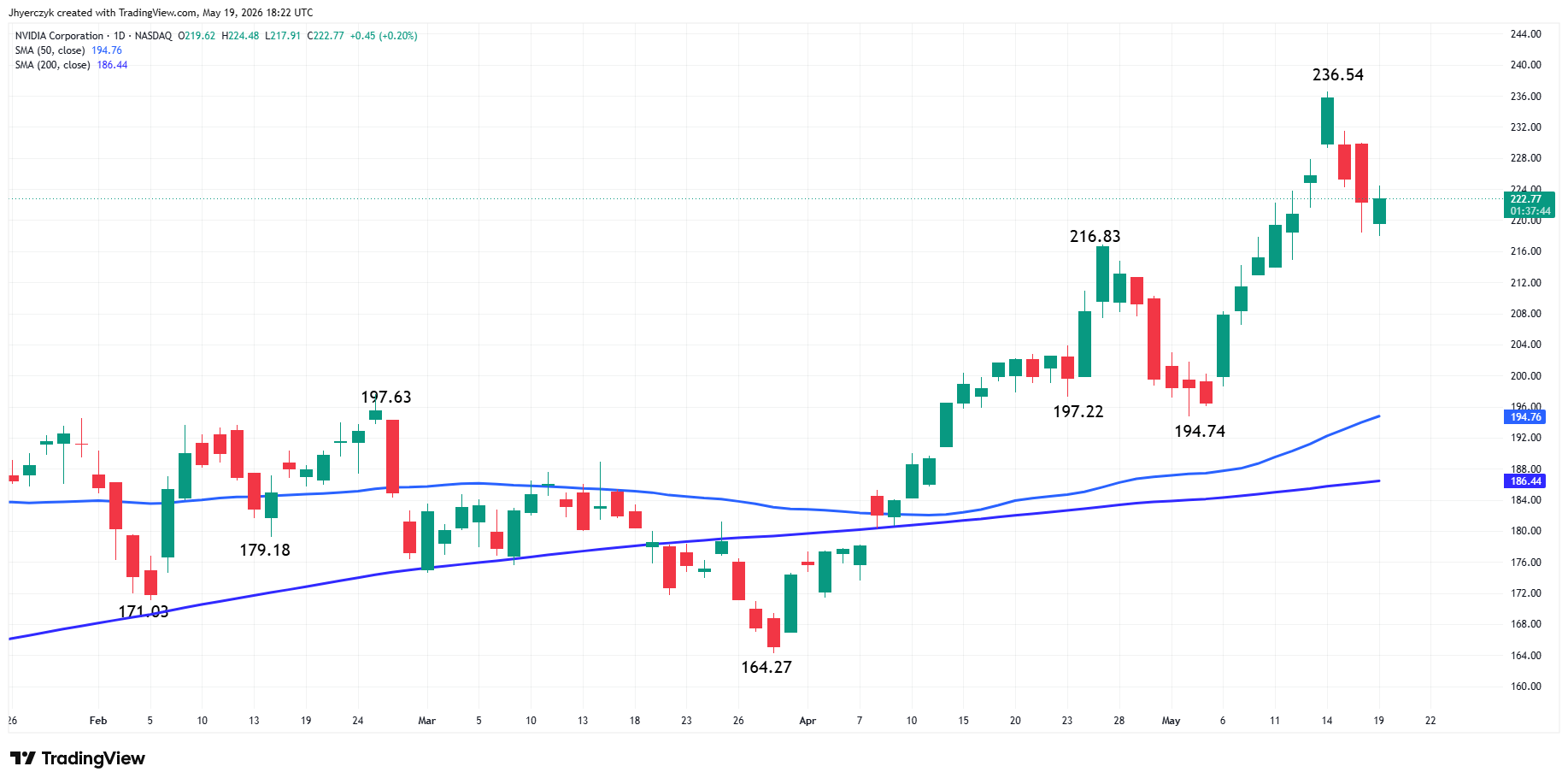
Federal Reserve minutes are next and Nvidia earnings are right behind them.
The minutes matter because traders need to know if the recent inflation data actually changed anything at the Fed or just introduced noise. There is a difference between policymakers introducing caution and policymakers changing direction and the language in those minutes is where that distinction lives.
Nvidia is the other one. In my opinion the entire artificial intelligence trade is partly built on the assumption that infrastructure spending is not slowing. Weak guidance from Nvidia does not stay contained to one stock. It goes straight into the narrative holding up semiconductor valuations across the sector.
The 10-Year U.S. Treasury yield is what this market is trading around right now and that does not change until inflation data gives it a reason to. Yields cooling off gives growth stocks room to breathe. Yields pushing higher keeps the rotation into defensives going and keeps technology under pressure.
The Nasdaq Composite pivot at 26204.29 is the first level that tells you which way this is breaking. A hold there and the recovery attempt is real. A failure there and the selling has more room to run toward 25453.07.
More Information in our Economic Calendar.