Global markets show extreme volatility as geopolitical tensions and trade policy uncertainty collide simultaneously. Escalating conflict between the United States, Israel and Iran has driven investors to safety with disruption in key energy trade routes.
At the same time, aftereffects of trade disputes and policies worldwide influence economic expectations. These forces are affecting the flows of capital across currencies, commodities, bonds and equities. Investors reevaluate where to put their capital in an increasingly uncertain environment.
Middle East Conflict Disrupts Global Energy and Trade Routes
The biggest catalyst for markets this week has been the growth of the conflict in the Middle East. The strikes on Iran by the United States and Israel have raised fears of a wider regional war. The situation got even worse after closure of the Strait of Hormuz which is one of the most important corridors of energy in the world.
The disruption has already put major stress on global supply chains. Nearly 200 oil tankers are still stranded due to shipping companies avoiding the area because of security concerns.
Manufacturing economies such as Taiwan and South Korea are heavily dependent on Middle Eastern energy imports. They have started organizing with regional partners to make other arrangements. The crisis has also caused governments to make quick adjustments to trade and energy policies to avoid shortages.
Oil Supply Shock Reshapes Energy and Commodity Markets
Energy markets responded immediately to the supply risks that were created by the conflict. Brent crude oil (BCO) passed above $90 as traders priced in the possibility of long supply disruptions. Markets tend to price the risk for instability in the Strait of Hormuz early. Physical shortages appear later in official data.
Brent Oil Price Forecast
Every new Brent Oil analysis as it publishes, today's technical signal and key levels, live price — on one page.
See all Brent Oil forecastsGovernments have also begun to manipulate policies to stabilize the market. The United States had temporarily eased certain restrictions on Russian oil shipments to India. Policymakers took this move to ease supply pressure in global markets.
At the same time, China ordered some refineries to cut back exports of refined fuel products. This move could cause further tightening of global supply.
The Dollar Emerges as the Primary Safe Haven
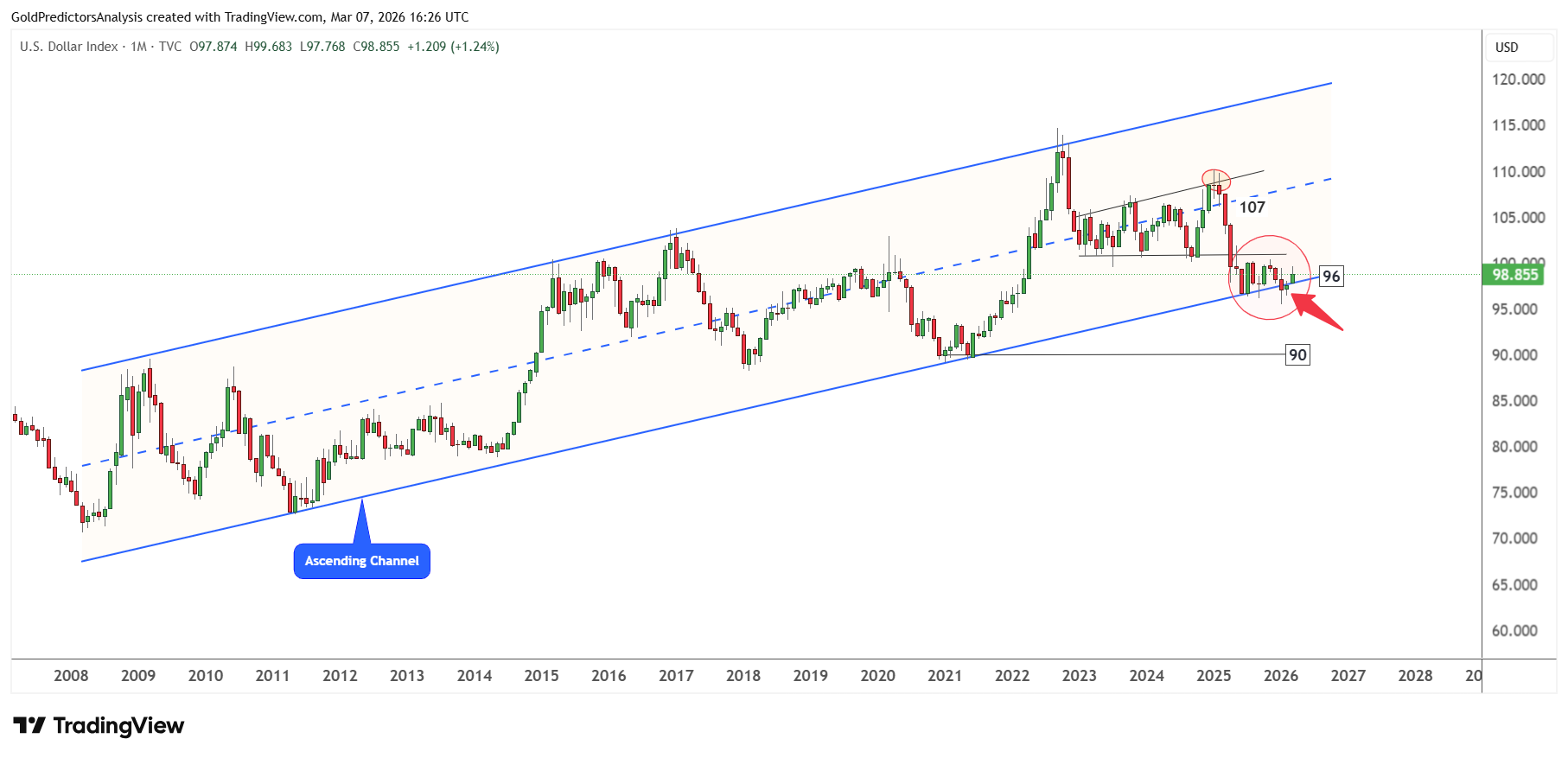
The U.S. dollar increased significantly as investors fled to liquid and widely accepted assets. Despite the uncertainty surrounding tariffs and fiscal policy, the US dollar managed to gain 1.24% this week. It outperformed some of traditional safe-haven currencies.
This move underlines the special role the dollar plays in the world financial system. During times of uncertainty, investors tend to favor dollar liquidity because most world trade and financial transactions take place using the US currency. The United States also enjoys the fact that it is major energy exporter which can help the currency during periods of geopolitical crisis when oil prices are high.
Despite the surge in the US dollar, the overall picture for US dollar remains uncertain as long as the index remains below 100.50. The chart below confirms a strong sideways market between 100.50 and 96.50 since July 2025. A break of this range will define the next move in the US dollar index.
Dollar Strength Pushes USD/CHF Higher
The USD/CHF pair moved higher as the dollar was gaining against the Swiss franc. The franc is traditionally viewed as one of the safest currencies during world crises. However, this time the dollar became more in demand as investors were more interested in liquidity than in traditional defensive currencies.
Another factor that limits the strength of the franc is the position of the Swiss National Bank (SNB). Swiss authorities have long been stepping in to curb excessive appreciation of the franc owing to the negative impacts that a stronger currency may have on Swiss exports. The potential for intervention tends to diminish the upside potential for the franc during global risk off periods, which enables the dollar to perform.
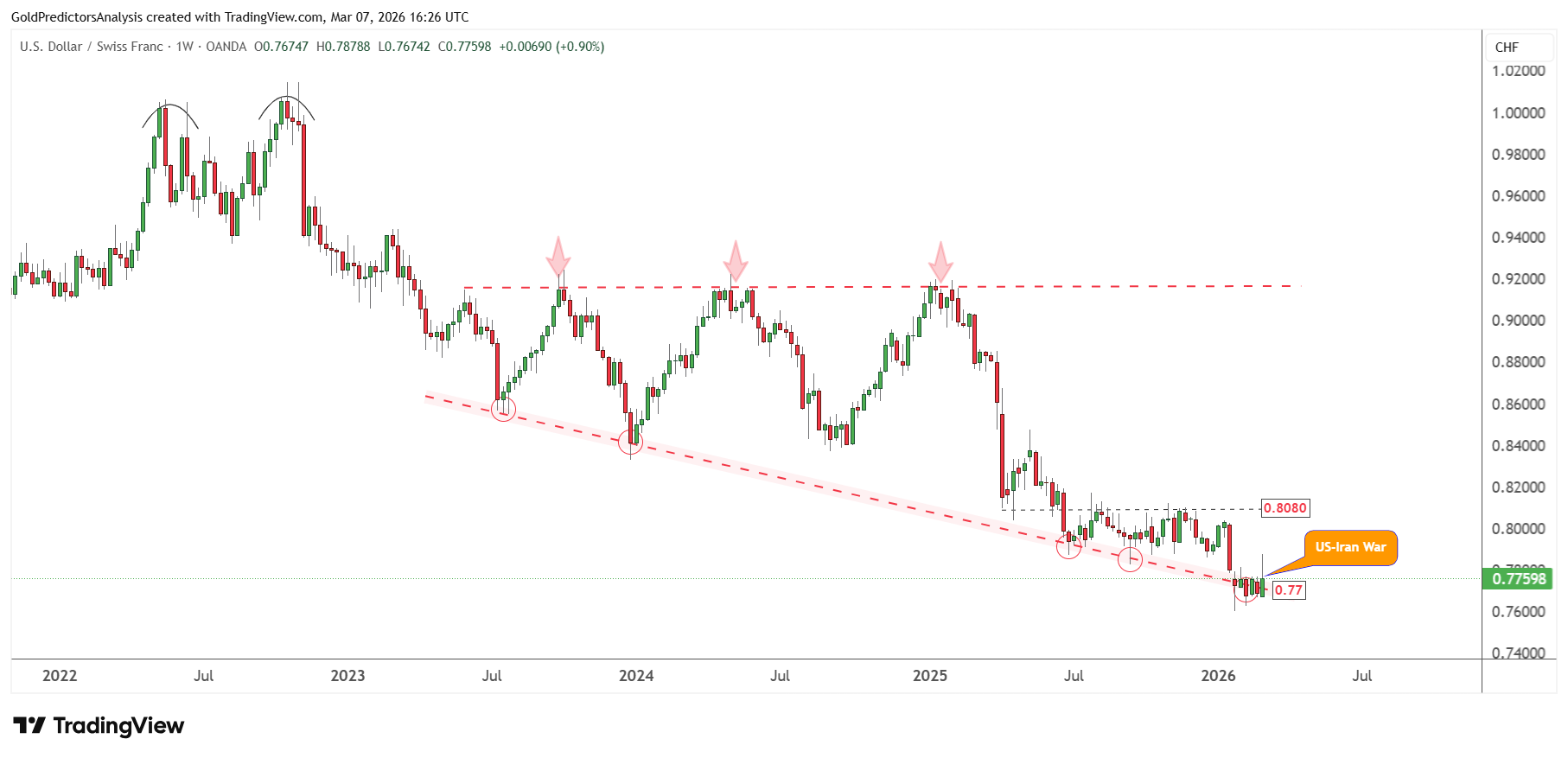
The chart below shows a strong rebound from the long term support of 0.76, which was discussed as the key support. Despite this strong rebound in the pair, the weekly candle produced a sharp shadow which indicates the uncertainty in the pair for the current week.
This shadow on the weekly candle of USD/CHF emerged after the US dollar weakness on Friday following the release of US employment data. A break below 0.76 will indicate safe-haven demand for the Swiss franc and target the pair to 0.74. However, recovery above 0.79 will open the door towards 0.8080.
USD/JPY Reflects Changing Safe-Haven Dynamics
The USD/JPY pair was also a reflection of changing dynamics in the safe haven space of currency. The Japanese yen has long been considered a defensive currency due to the large external assets of Japan and stable financial system. However, the yen lost its status against the dollar in the recent market stress.
One reason is the ambiguity of the monetary policy outlook for Japan. Political debate in Japan about future interest rate increases has led to some doubt that the Bank of Japan may tighten policy rapidly. This uncertainty has kept the demand for yen low and the dollar strong over the crisis.
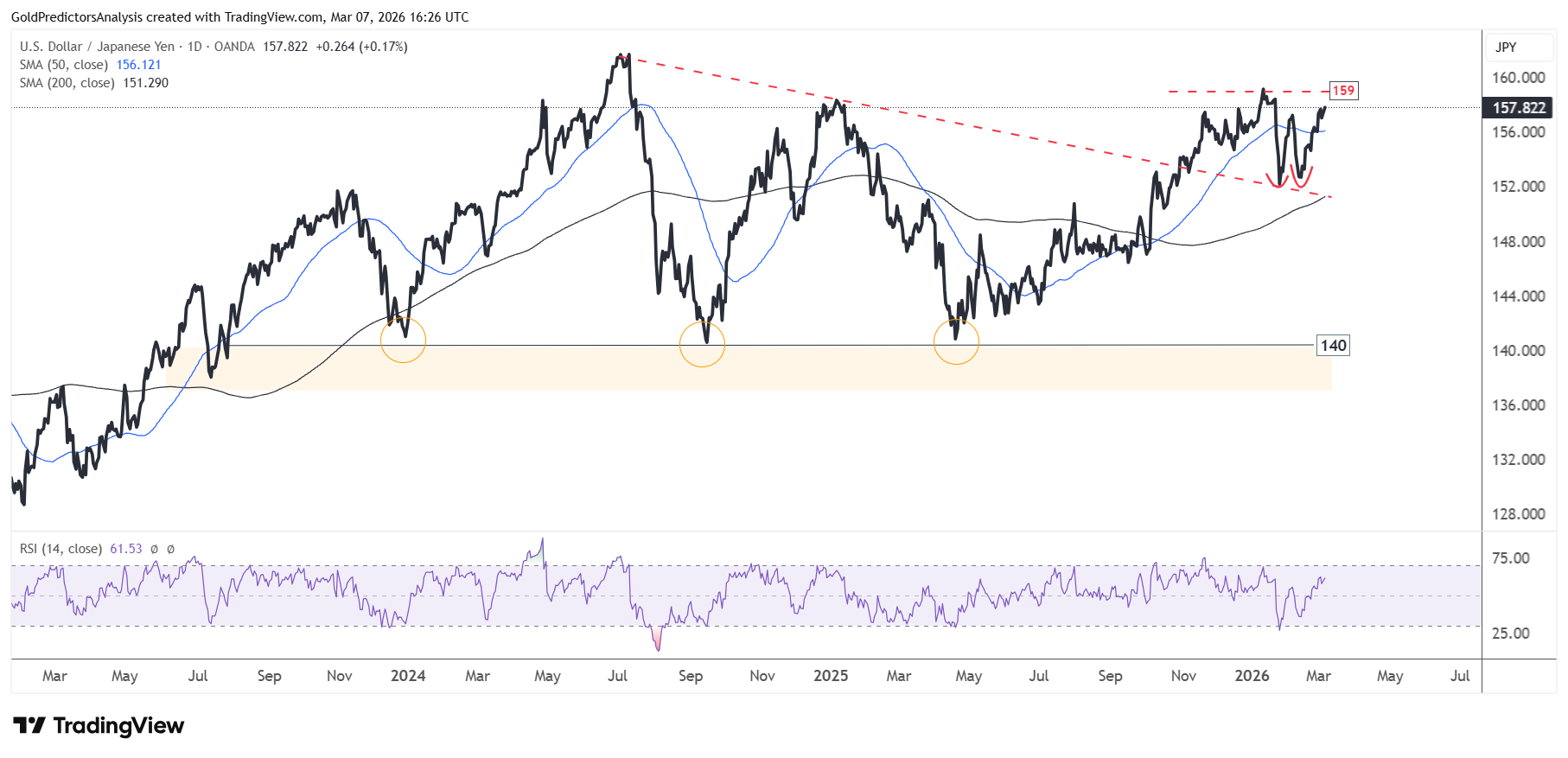
The daily chart for USD/JPY shows the formation of a double bottom at 152. A break above 159 will indicate strong surge in the pair. However, a break below 200 day SMA at 151 will indicate a correction to 140.
Dollar Liquidity Remains the Key Driver
The recent currency movements indicate that liquidity has taken over as main driver of safe haven flows. In case of geopolitical uncertainty, investors may be more focused on having access to cash and globally accepted assets than on long term investments.
As a result, investors have concentrated demand in short term dollar holdings rather than in long-dated US assets such as government bonds. This behaviour reflects a defensive market environment where investors don’t have much clarity on geopolitical developments.
Rising Tariffs Add Another Layer of Market Uncertainty
The global trade was already under pressure due to escalating tariffs by Trump’s administration. The emergence of the Middle East crisis further created market uncertainty in global trade. The trade policies affect inflation, hiring and business investment throughout the global economy.
Before Donald Trump came to office, the average effective tariff rate in the United States was just 2.4%, according to estimates from the Yale Budget Lab. By the end of 2025, the rate had jumped over 16% in what was one of the most aggressive shifts in US trade policy in decades. At one-point, tariffs on Chinese goods surged to 145% and sent costs to importers and global supply chains soaring.
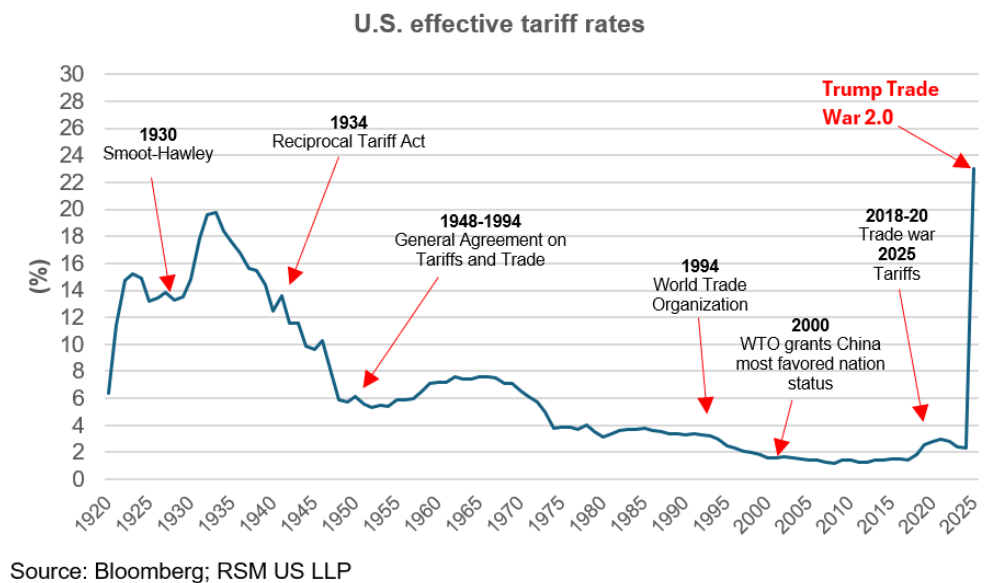
Even after the Supreme Court invalidated some tariff measures, the overall tariff burden is not expected to come down much this year. The administration still has other legal tools for imposing replacement tariffs. This means that trade barriers will probably remain high. As a result, global supply chains are adapting and companies are still reviewing sourcing strategies and pricing models.
Imported Goods Face Rising Price Pressure
Higher tariffs are beginning to show up in areas of consumer inflation. While overall price increases are still moderate for the time being, some goods that are highly dependent on imports have seen sharper price changes. Products with thin profit margins cannot absorb the costs of tariffs and companies transfer the costs directly to consumers.
This pattern can be seen in case of coffee and tomatoes. Tomatoes experienced some of the most dramatic price hikes since the tariffs were implemented. The chart below shows that inflation jumped rapidly in 2021 and 2022 and reached above 8%. This rally was due to the surge in energy prices and high consumer demand. Since then, inflation has slowly abated and is currently around 2.4% which is much closer to the Federal Reserve’s long-term target.
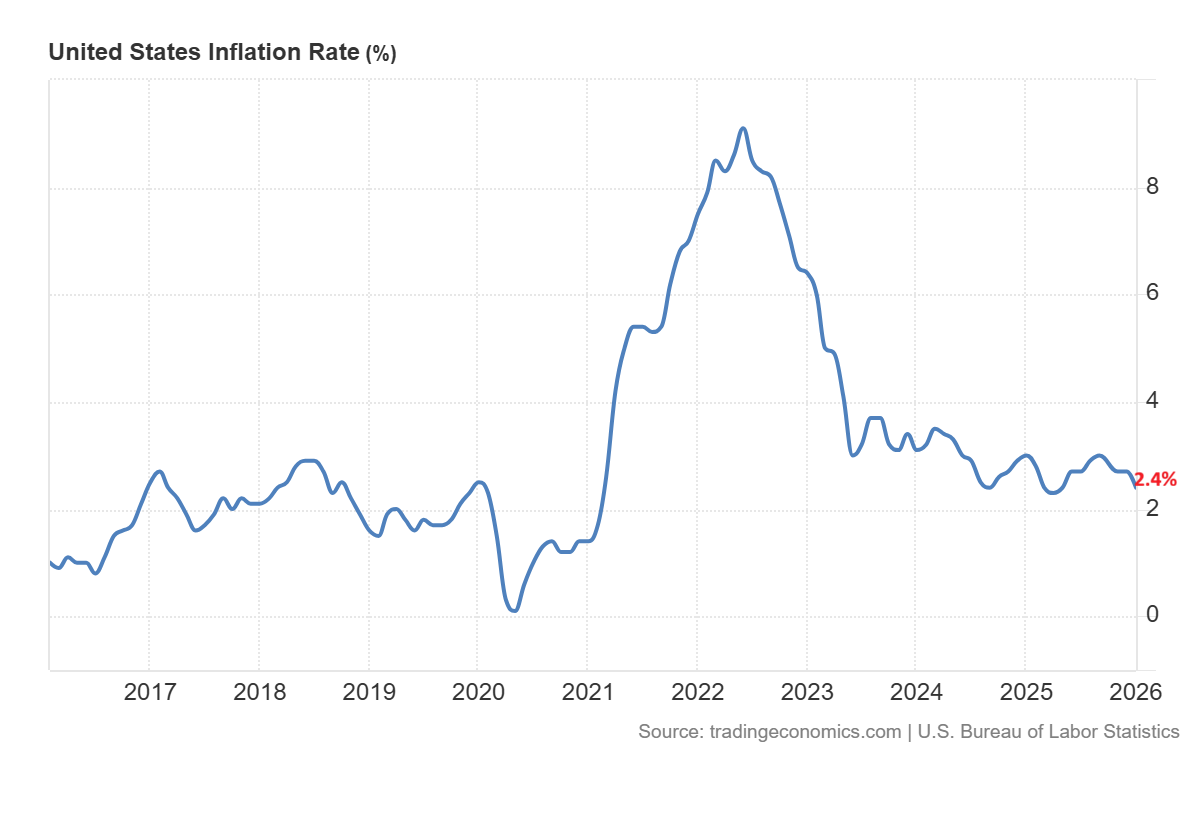
However the drop in inflation does not indicate that price pressures have been eliminated. Higher tariffs, shifting supply chains and ongoing geopolitical tensions continue to affect cost of imported goods. Therefore, some categories of consumer goods are sensitive to changes in global supply conditions.
Labour Market Feels the Impact of Trade Uncertainty
The uncertainty regarding tariff policy impacted the labour market. The rise in tariffs affects rate of unemployment. This is because businesses have difficult time predicting the costs that are involved when trade rules change rapidly. This difficulty has caused many companies to hold off hiring.
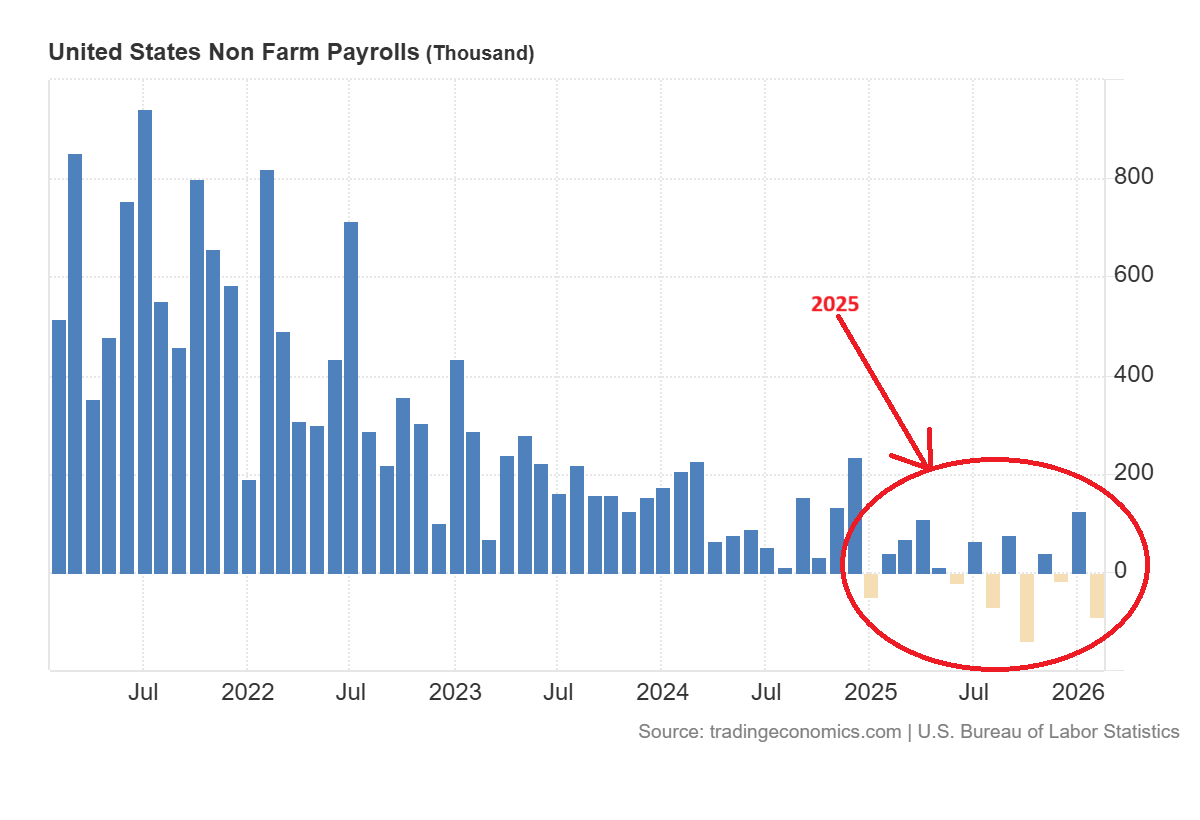
The increase in tariffs leads to poor hiring as companies wait for clear signals in policy. Over the last year, many businesses have put recruitment on hold to reduce workforce growth. As a result, last year was one of the darkest years for jobseekers in decades outside of recessions, as shown in the chart below. This situation points to the indirect economic cost of long term trade uncertainty.
Technology and Automation Amplify the Hiring Slowdown
Another factor that brings pressure to the labour market is technological change. Advances in artificial intelligence and automation have enabled companies to run efficiently with fewer employees. This change makes businesses even more reluctant to make hiring decisions.
Companies did not increase their workforce in uncertain times and invested in technology. That is why growth has been uneven despite little growth in some sectors of economy.
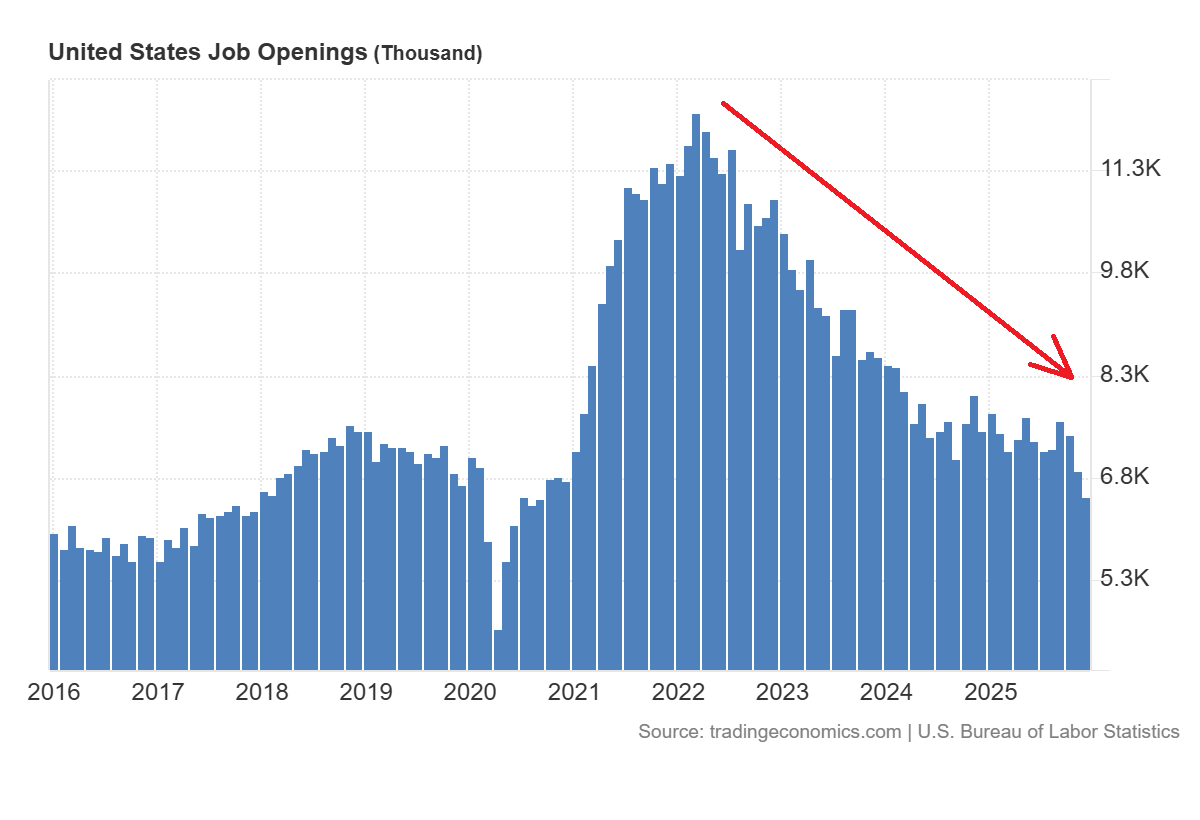
This is confirmed using the chart below which shows a strong decline in US job openings. According to the data, the job openings in the US have shown a strong decline since the March 2022 peak. The latest data shows a strong drop to 6.542 million in December 2025 which is the lowest since September 2020 and below market expectations.
Tariff Revenue Surges as Refund Battles Begin
Tariffs have also been a major source of government revenue in recent years. Higher import duties have been helpful in generating significant income for federal government and partially reducing budget deficit. However, the legal situations are complicating the picture surrounding those revenues.
Courts later found many of the tariffs that earned large revenues last year were illegal. As a result businesses are now taking legal action to recover those payments.
Thousands of cases involving a refund are currently passing through the U.S. Court of International Trade and the process could take years to be resolved. The uncertainty about these repayments is an additional layer of complexity to financial markets.
Gold Maintains Its Strategic Safe-Haven Role
Gold (XAU) continues to enjoy its long-term safe-haven reputation despite short term volatility. The metal saw sharp swings for a short while as investors were forced to sell profitable positions to cover losses in other markets. These moves are common in the early stages of stress on the market when liquidity becomes priority for large investors.
However, the overall structural outlook for gold is still bullish. Persistent geopolitical tensions, inflation risks and increasing global debt levels continue to support long term demand. Portfolio allocations to gold are still quite low relative to historical norms, so there is still space for institutional investors to increase their exposure.
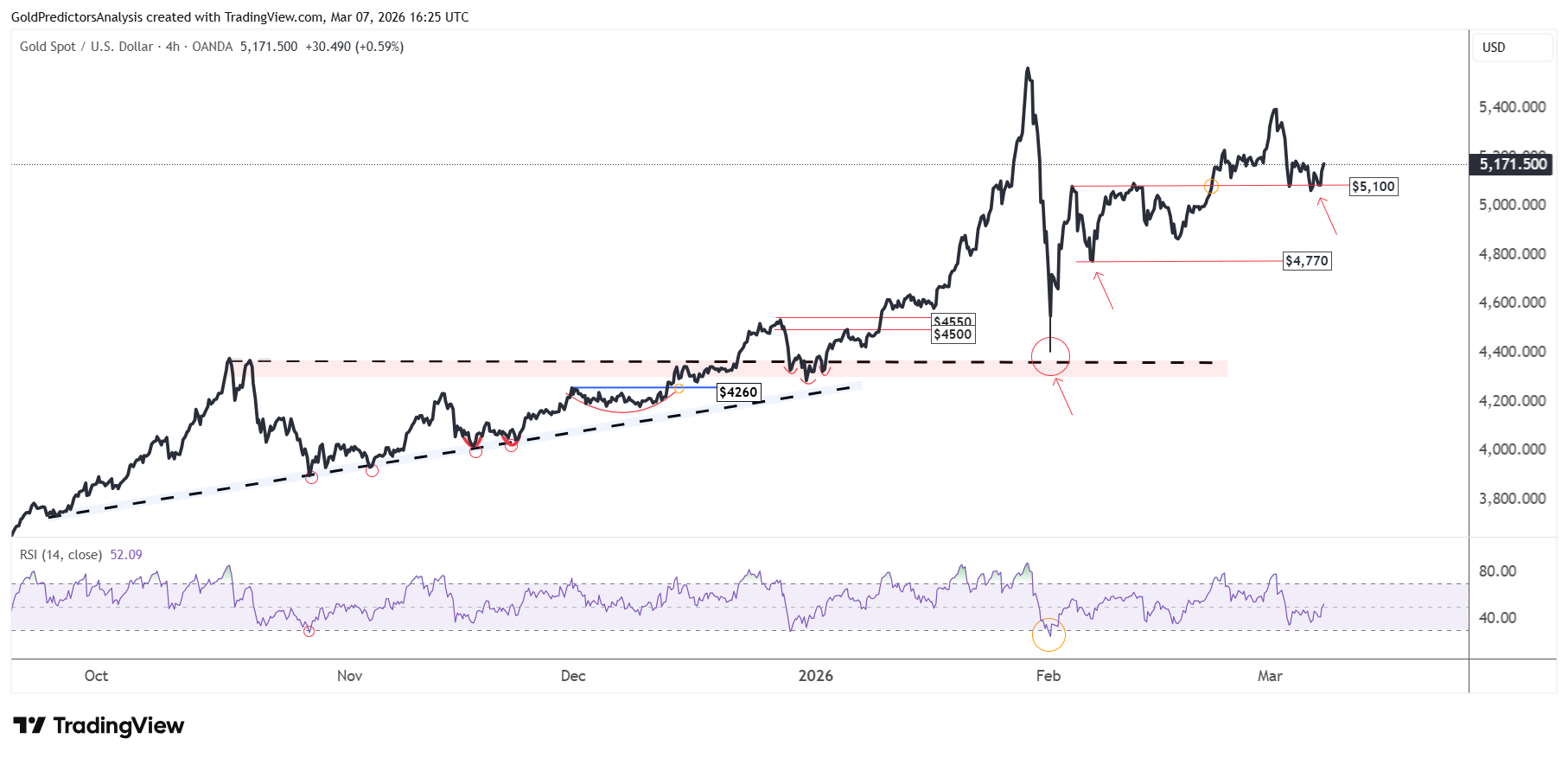
The short-term structure also points to a strong bullish trend for the gold price. The price is consolidating above $5,000 and looks set to surge higher. However, any correction below $5,000 will show strong buying interest at $4,700-$4,800.
The Bigger Market Picture
Financial markets are likely to remain sensitive in the context of geopolitical tensions and trade policy uncertainty this week. The conflict in the Middle East has demonstrated the speed with which global supply chains and energy markets can be disrupted.
Rising oil prices, changing trade routes and policy responses from government are already shaping investor sentiment across commodities, currencies and equities. These developments suggest that volatility could continue to be a dominant theme in the near term.
In this environment, liquidity and flexibility have become the most precious assets for investors. The U.S. dollar has returned to prominence as a source of world liquidity and gold remains in its strategic position as a long term store of value.
Despite the strong rally in the US dollar, the overall picture remains bearish until the index remains below 100.50. On the other hand, the USD/CHF also remains within the negative trend until 0.8080 is clearly broken. Similarly, USD/JPY is fluctuating below 159 and requires a break higher to gain upside momentum.
Oil remains the biggest beneficially of the current crisis and looks ready to surge to $150 in a matter of days. The surge in energy prices will drive inflation in the economy, which will fuel a gold rally to $6,000. As long as geopolitical tensions remain unresolved and trade barriers remain high, markets will continue to quickly react to new developments.