


Gold (XAU) prices have shown strong volatility during the US-Iran war. The price first surged to $5400 and then dropped back below $5100 and consolidated in ranges. However, prices remain above $5,000, which keeps the bullish trend alive. The market is now waiting for the non-farm payrolls data which may drive the next move in the gold market.
Strong U.S. Dollar and Profit-Taking Weigh on Gold
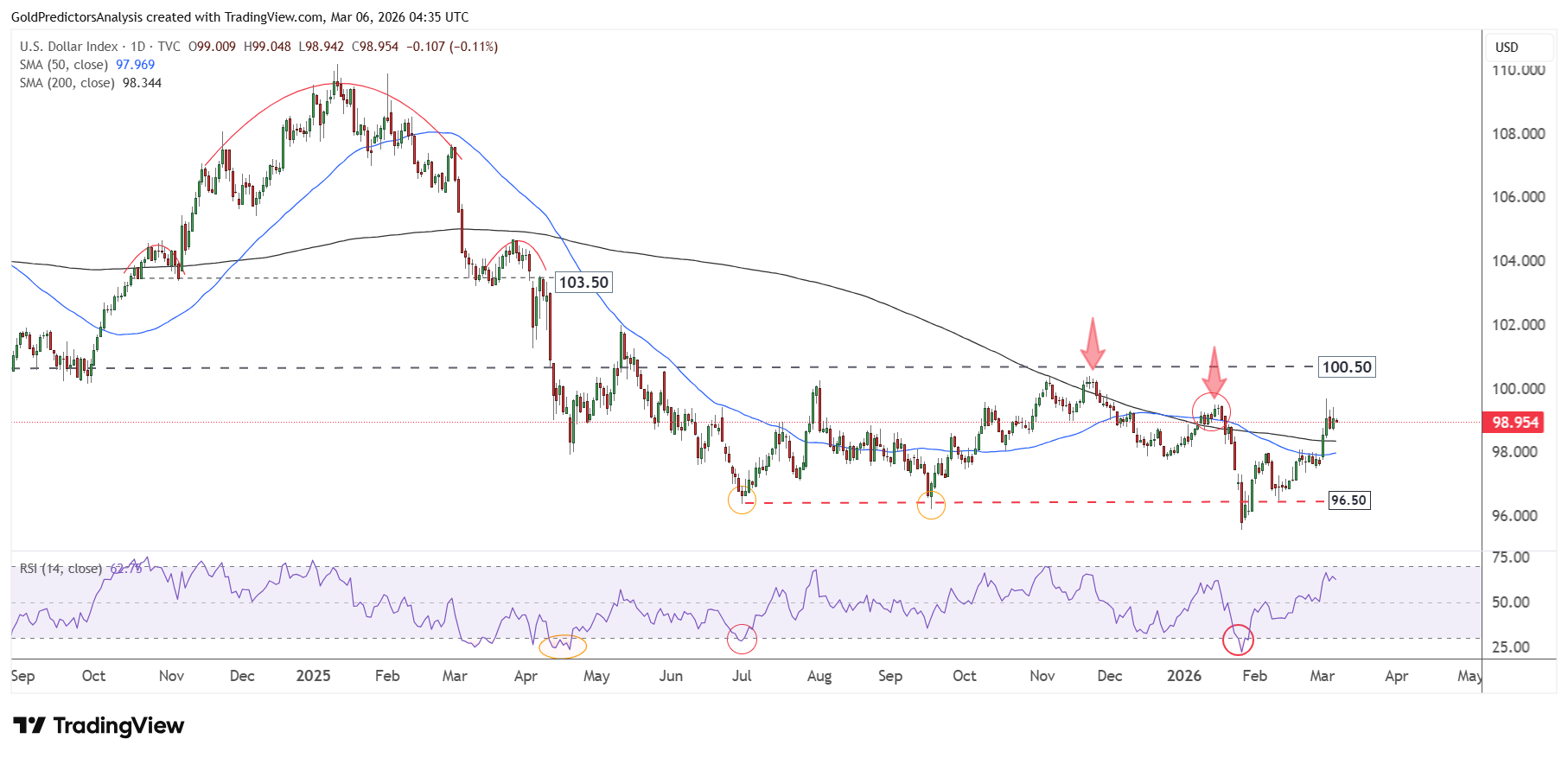
One reason for recent weakness in gold is the strength of the U.S. dollar. When the dollar strengthens, the gold tends to move the other way. The U.S. Dollar Index rose during the week as investors were seeking liquidity and safety in the world’s reserve currency. This shift in capital dropped immediate demand for gold and put downward pressure on prices.
The chart below confirms the strong surge in US dollar from 97.80 to 99.50 after the US-Israel attacked Iran. Despite this surge, the US dollar remains within the broader range of 100.50 and 96. A break of any of these levels is required to find the next move.
Another factor is the unwinding of crowded trades. Investors had been buying gold aggressively during the last year, which kept prices higher. As a result, some traders are now cashing in after the strong rally.
This selling pressure has been even more pronounced in silver, which tends to move in line with gold, but is more extreme in corrections. Therefore, this pullback is reflection of market positioning and not a total loss of confidence in gold.
Gold Price Forecast
Every new Gold analysis as it publishes, today's technical signal and key levels, live price — on one page.
See all Gold forecastsOil-Driven Inflation and Fed Policy Create Headwinds for Gold
Rising oil prices have also complicated the outlook for gold. Military tensions in the Middle East have driven up the energy prices and raised fears of inflation. Higher inflation is typically good for gold in the long run. However, it also delays interest rate cuts by the Federal Reserve, which puts short-term pressure on metal.
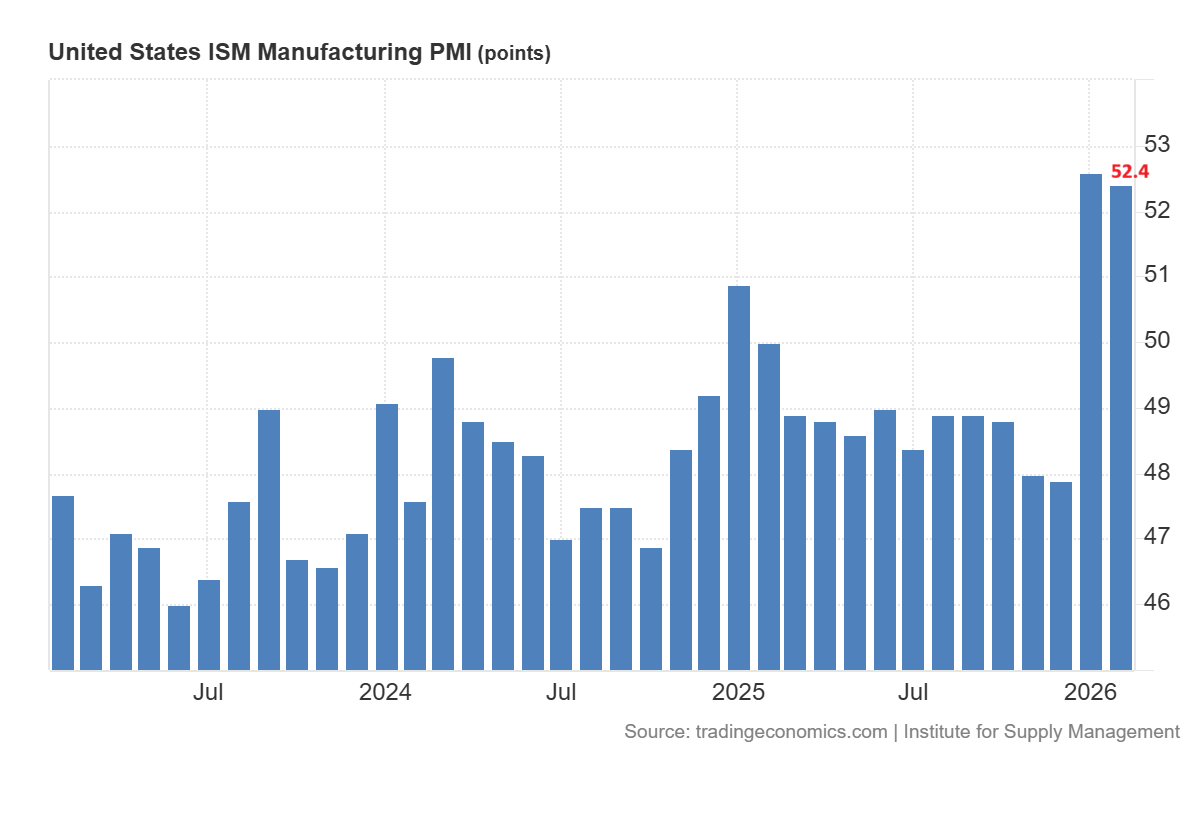
Recent economic data show that inflationary pressures are still strong in the United States. The chart below shows that the ISM Manufacturing PMI increased to 52.4% which indicates a mild expansion, while the prices paid index increased to 70.5%.
The services sector is also growing with the ISM Services PMI at 56.1%.
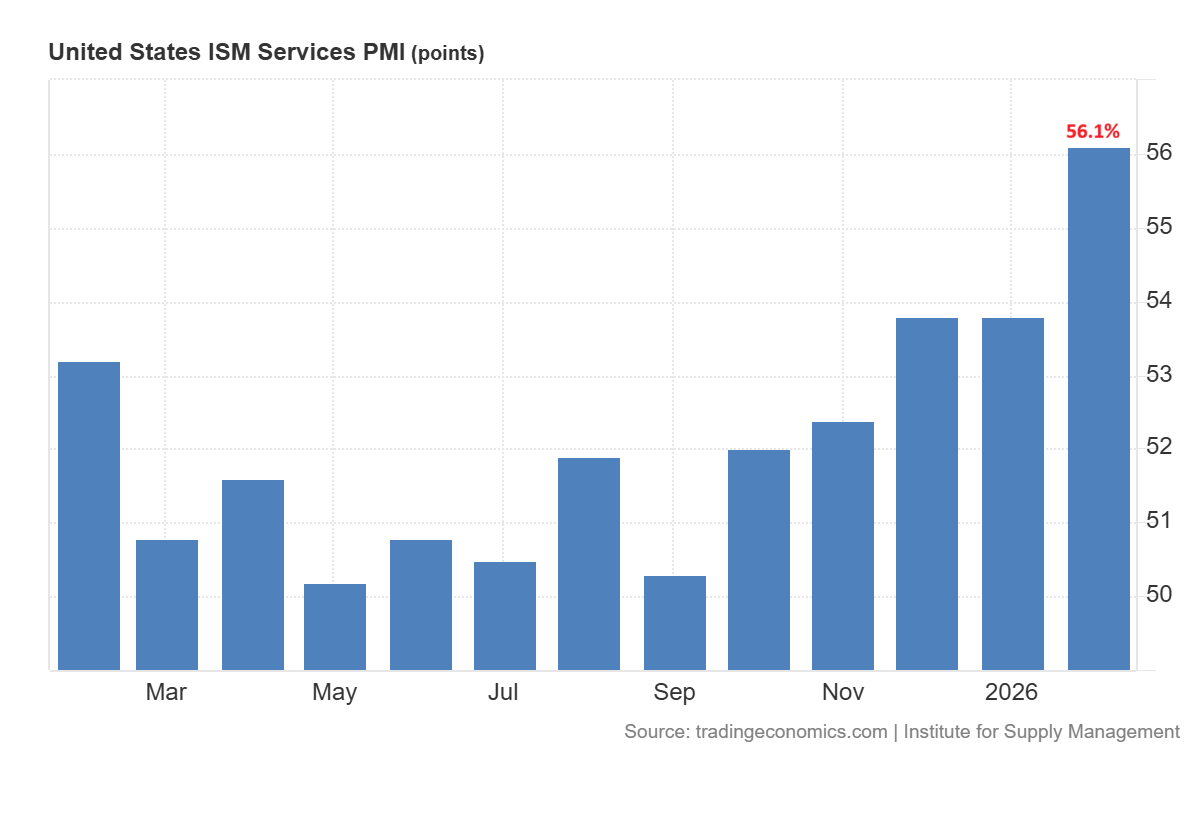
Strong growth and higher prices indicate that the Federal Reserve may not lower interest rates anytime soon. Higher rates make yield bearing assets such as bonds more attractive than gold, which is one of the reasons why the precious metal market has been weaker.
Gold Tests Key $5,000 Support Amid War Volatility
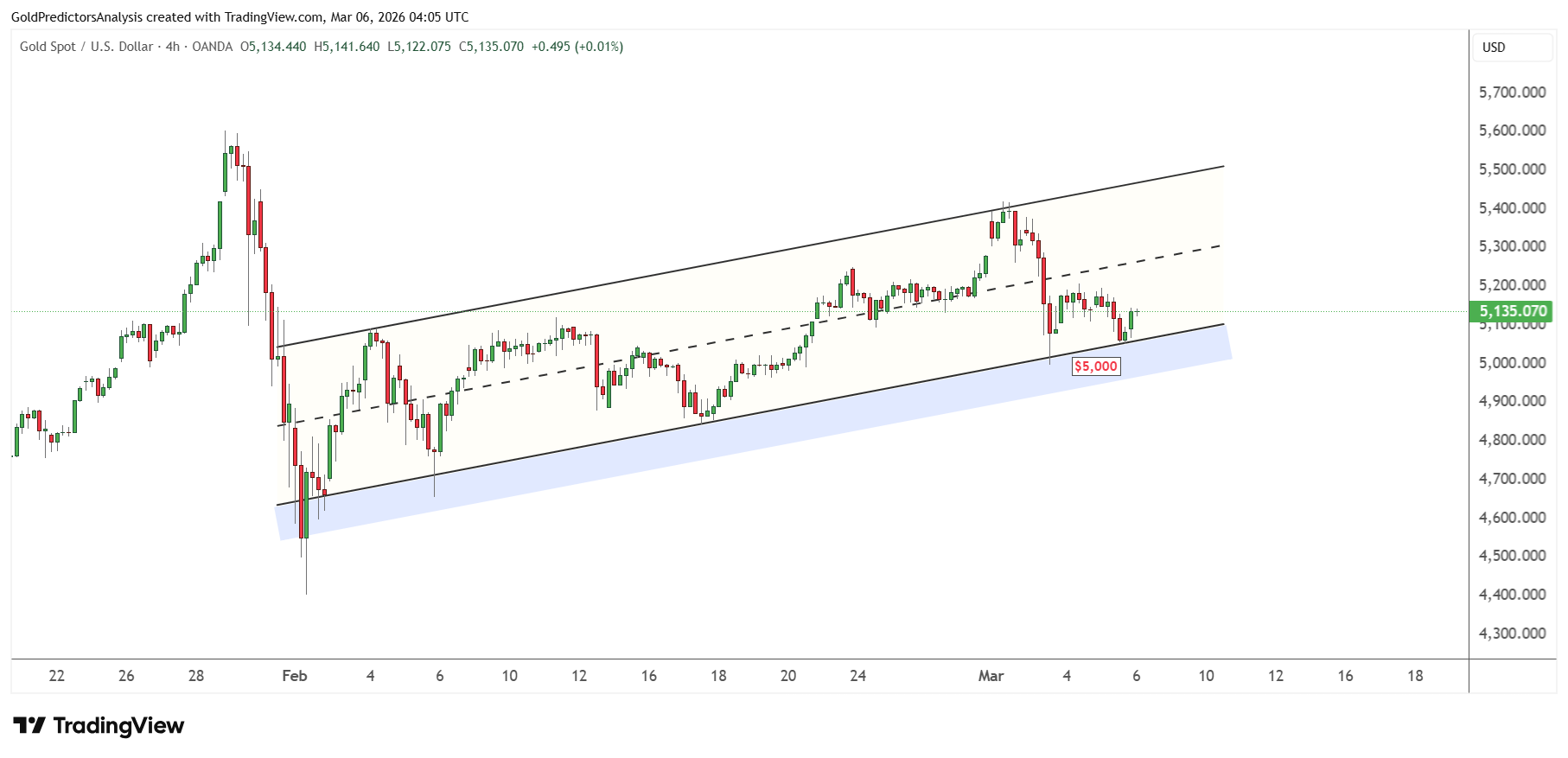
The short-term outlook for the gold price remains uncertain. The US-Iran war has triggered strong volatility within the ascending channel pattern. The price has hit the key level of $5,000 and is now rebounding higher.
As long as $5,000 holds, the price can trend higher. A break below $5,000 will trigger a drop to $4,800. The multiple rebounds from the support of ascending channel pattern indicates possibility of upside continuation in the gold market.
Bottom Line
Gold is still under pressure in the short term, but the broader structure remains bullish. The metal is stabilising above the key $5,000 level despite strong volatility and rising U.S. dollar. Profit taking and changing rate expectations have taken the wind out of the rally for now.
However, persistent geopolitical risks and inflation concerns continue to provide strength for gold in the bigger picture. The next move will depend on the non-farm payrolls report data. As long as the $5,000 support is in place, the market may try to make another attempt higher.
If you’d like to know more about how to trade gold and silver, please visit our educational area.