
Gold (XAUUSD) rebounded on Monday after hitting a lower support level around $4,000 last week. Despite this rebound, gold and silver (XAGUSD) prices remain in a bearish trend in the short term due to the strength in the U.S. dollar and U.S. Treasury yields.
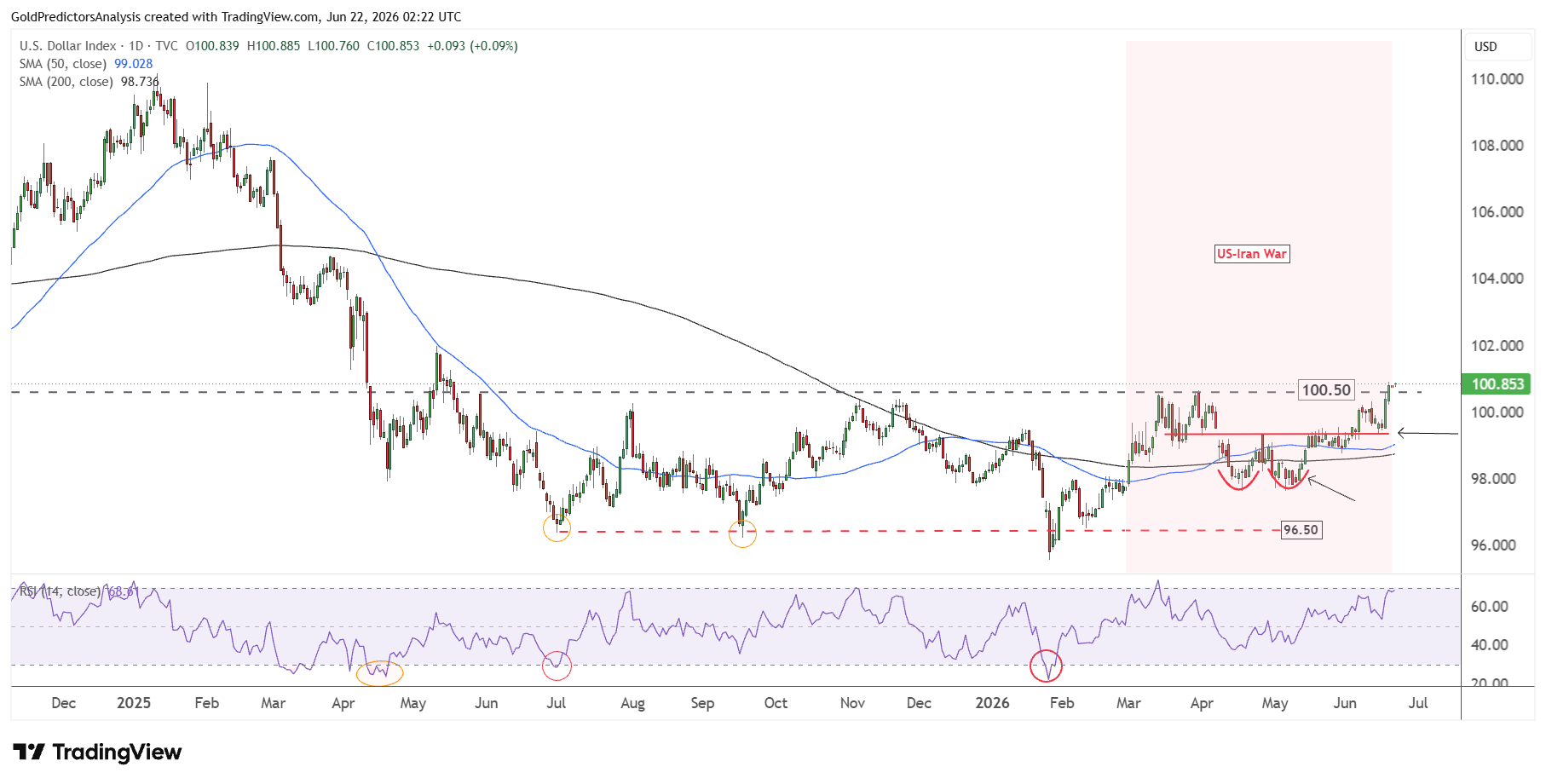
The U.S. Dollar Index broke the key level of 100.50 last week and consolidated above this level to look for further upside. The immediate resistance in the U.S. Dollar Index remains at 102. This indicates that gold and silver prices may face further pressure in the short term. The formation of a double bottom pattern in the US dollar index and then the break above 100.50 indicates a positive price action.
On the other hand, the U.S. Treasury yield remains positive and consolidates above the 50-day SMA at 4.45%. If the support level holds in U.S. Treasury yields, it will likely rally towards 4.70%. This may keep gold and silver prices under pressure in the short term.
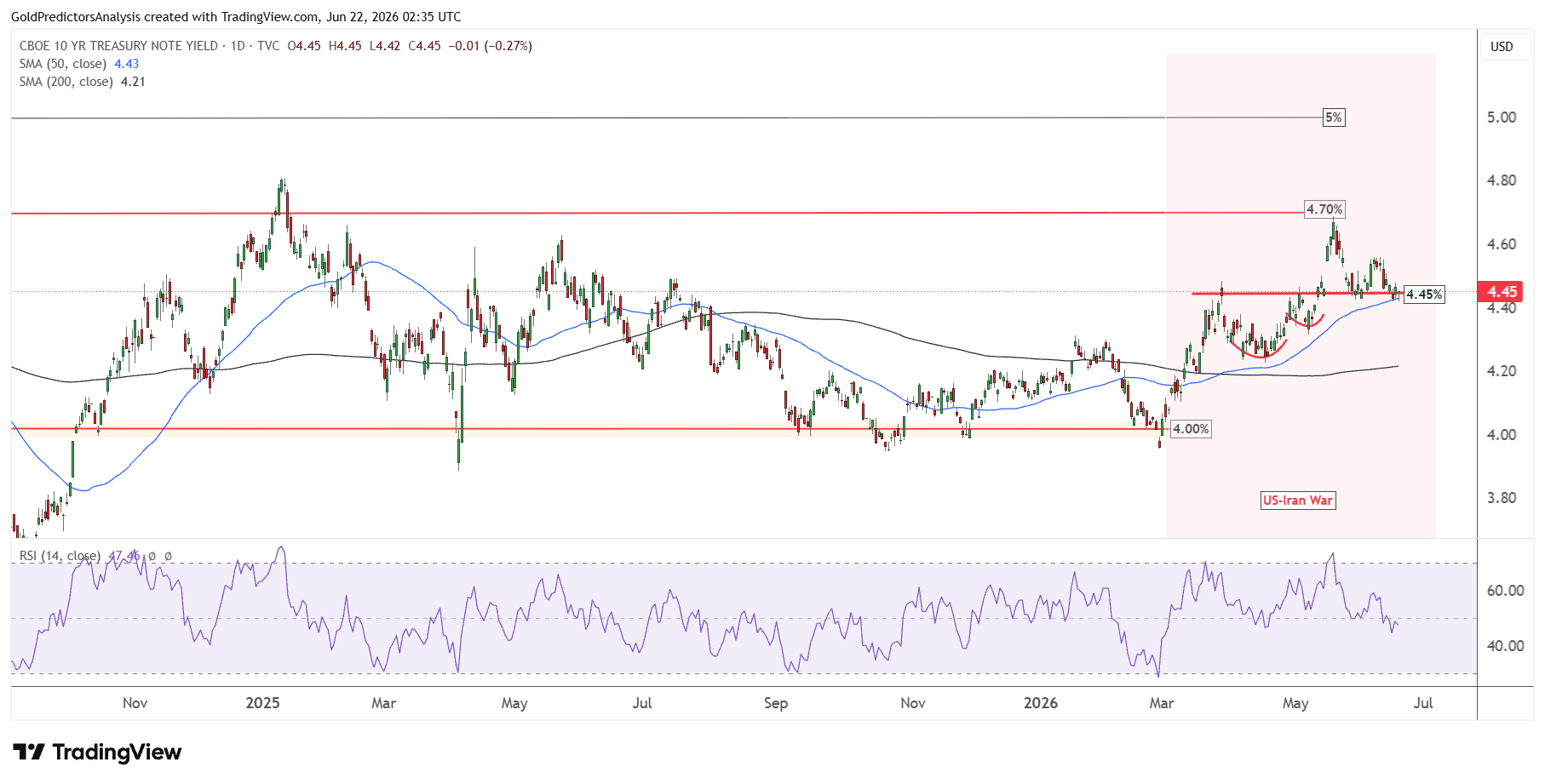
The strength in the U.S. dollar and U.S. Treasury yield is due to the hawkish Fed. Traders are pricing in tighter monetary policy due to the resurgence in inflation data.

Gold Price Forecast – XAUUSD Tests Key Support Near $4,000
XAUUSD Wedge Pattern Keeps Bearish Pressure Active
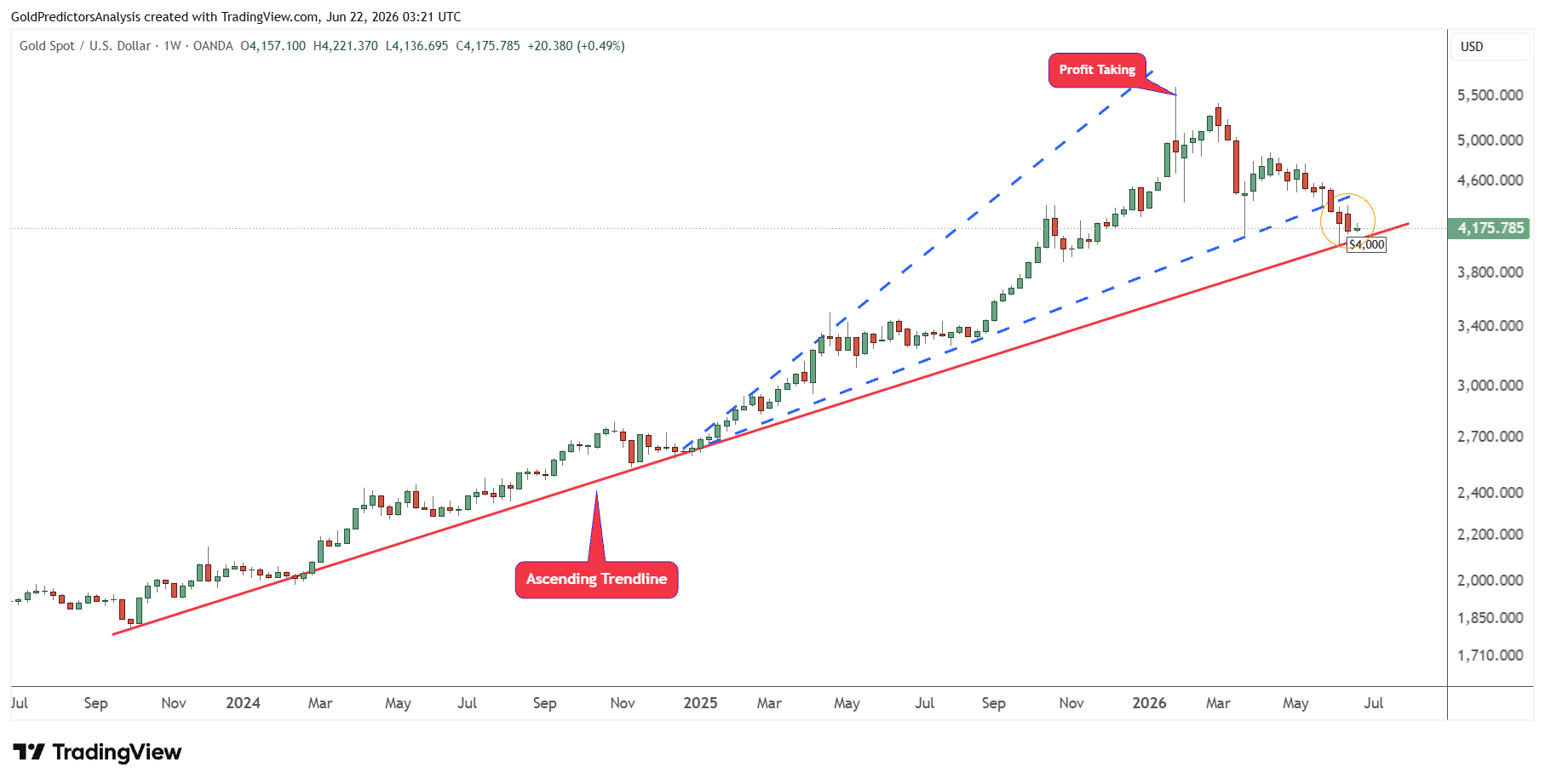
From a technical perspective, the spot gold has been consolidating within the wedge pattern between $4,000 and $5,000. However, a break below $4,500 has opened the door for further downside in the gold price and keeps the price within the bearish trend.
Now, the prices are rebounding from the $4,000 support at the lower end of this wedge. The next level of support in the spot gold market remains at $3,950 at the wedge support line. A break below $3,950 will open the door for further downside in the spot gold market. However, a break above $4,500 will indicate further upside towards $5,000.
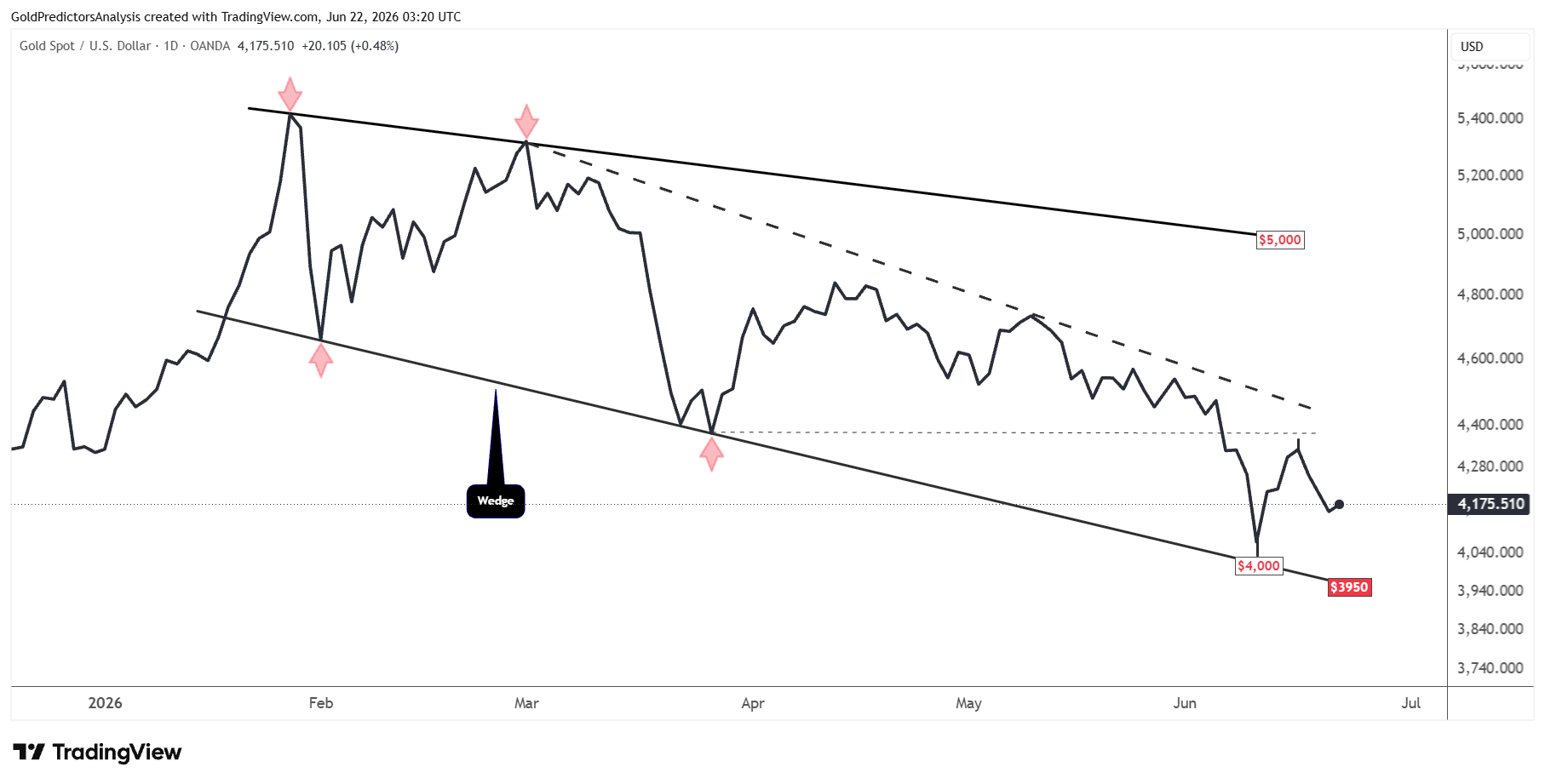
The importance of the $4,000 level is also evident on another chart, which shows that the price is compressing at the edge of the triangle. Therefore, a break below $3,950 may indicate a strong drop.
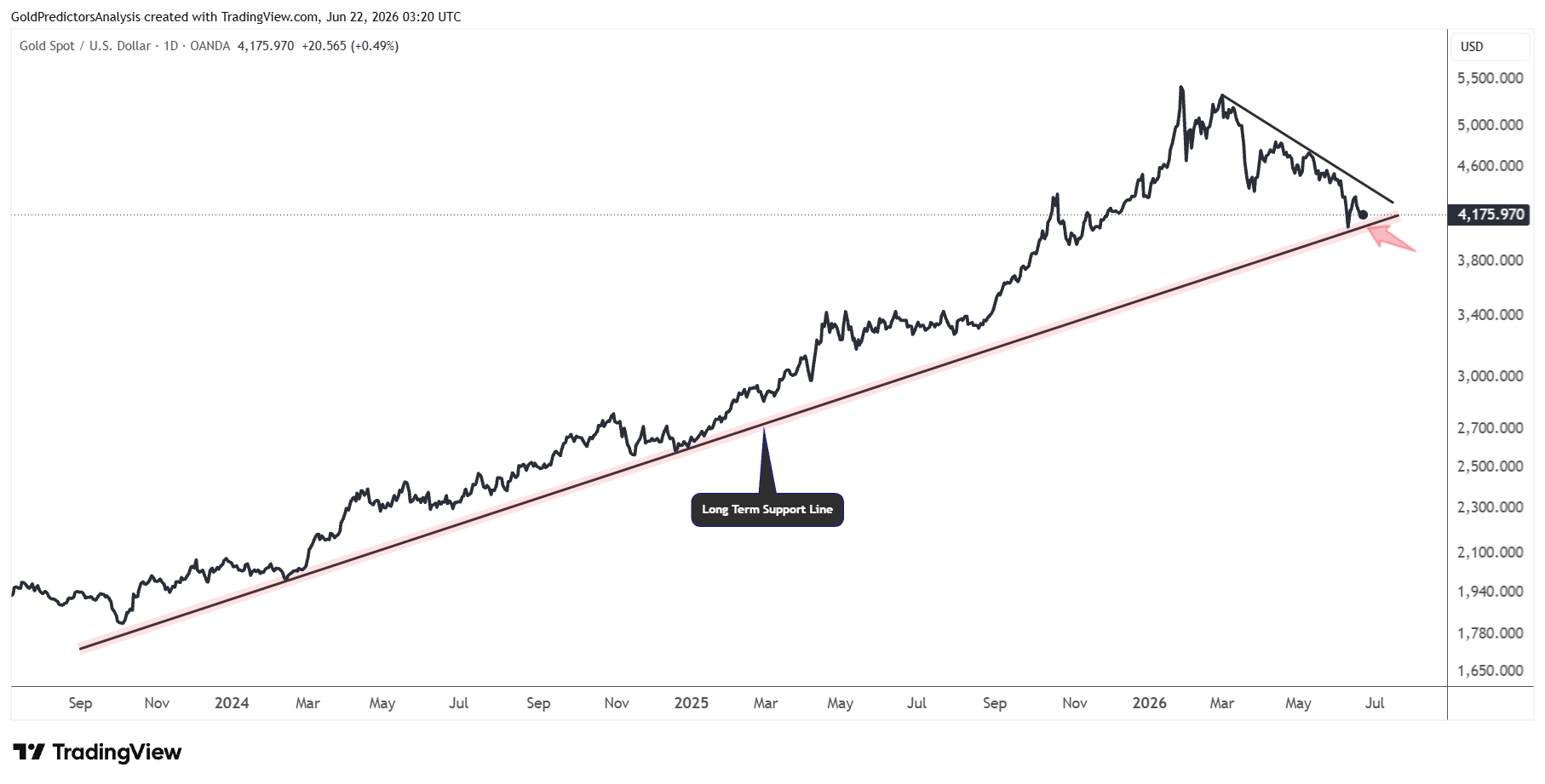
The weekly chart for spot gold also shows that the recent correction from $5,600 was due to profit-taking after a strong rally in 2025. The prices are normalizing within the strong bullish trend and consolidating within the orange circle highlighted in the chart.
Gold Price Forecast
Every new Gold analysis as it publishes, today's technical signal and key levels, live price — on one page.
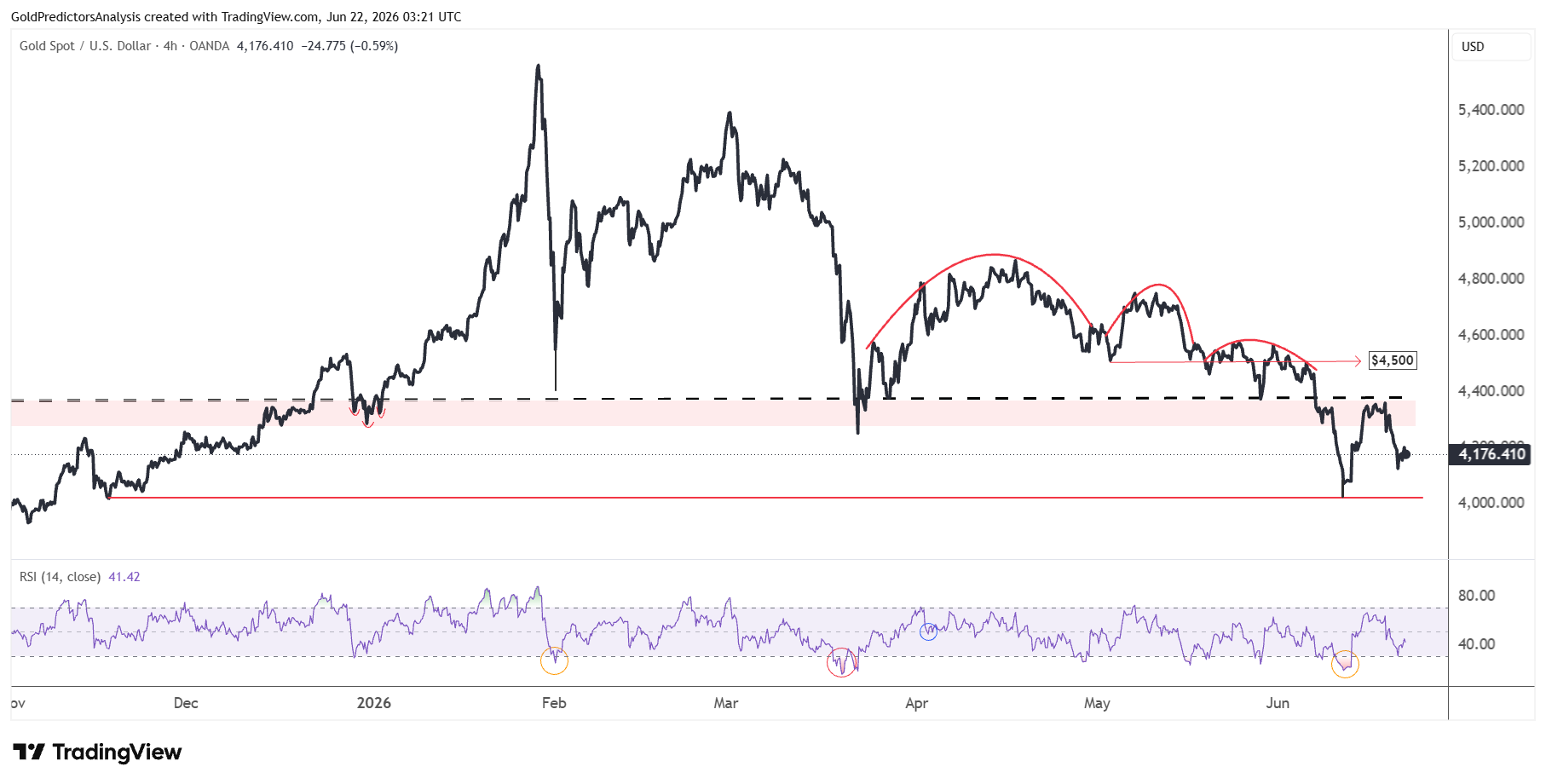
See all Gold forecastsXAUUSD 4-Hour Chart Shows Resistance Near $4,350
The 4-hour chart for spot gold also shows negative price action below the red highlighted at $4,350. A failure to break above $4,350 has kept the bearish pressure in the spot gold market. Therefore, a break below $4,000 will open the door for further downside in the short term.
Silver Price Forecast – XAGUSD Holds Key Buy Zone
XAGUSD Daily Chart Shows Support Near $60
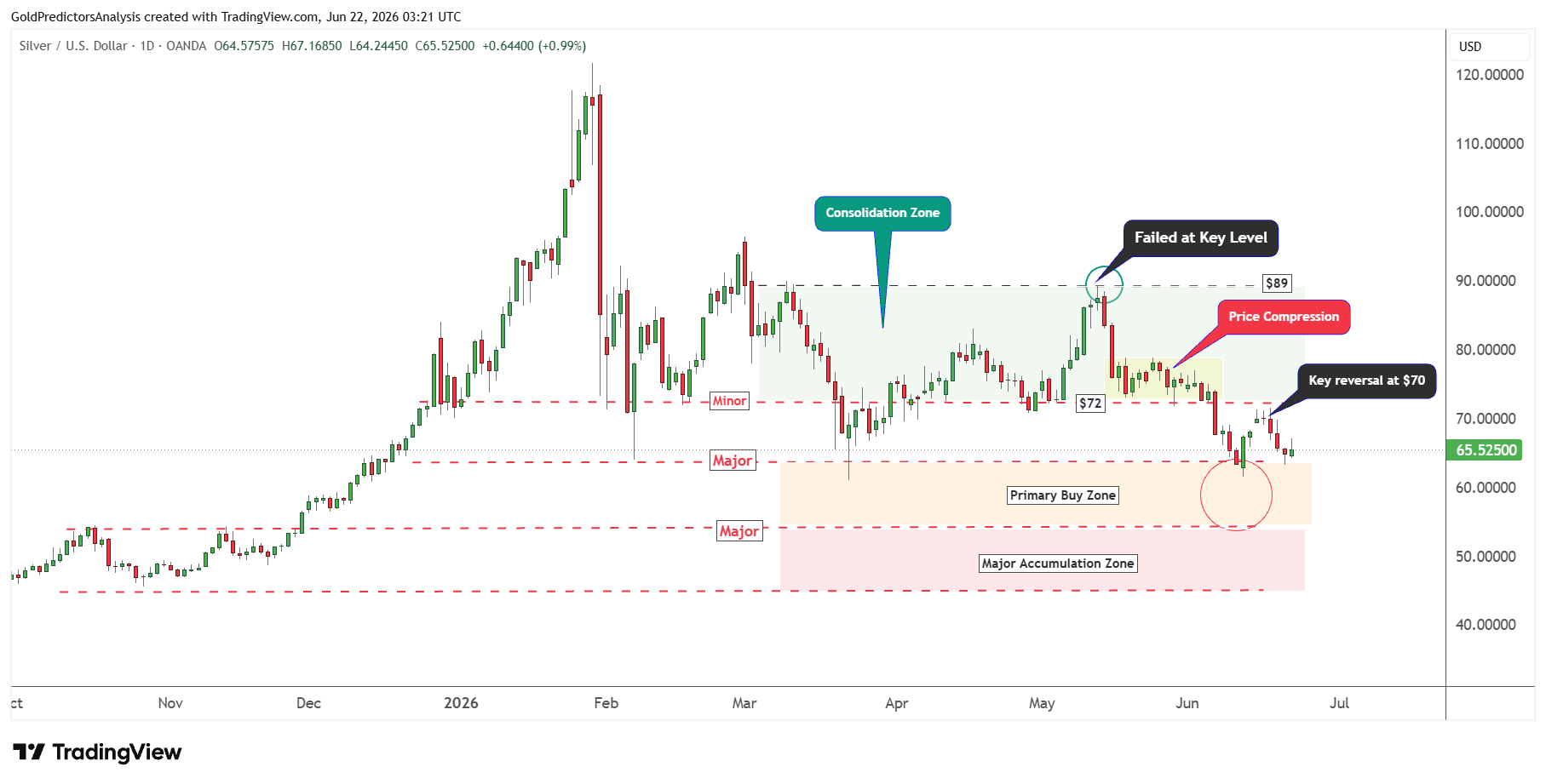
The daily chart for spot silver also shows strong support at the $60 level, where the price is currently rebounding. The $60 to $55 area remains the primary buy zone for the spot silver market. However, $45 to $55 remains the major accumulation zone. Therefore, the $50 to $60 range remains the key buy zone in the spot silver market where long-term investors will likely consider buying.
The price structure for spot silver remains constructive, but the short-term trend remains negative. Any correction within the buy zone areas will be considered a strong buying opportunity.
XAGUSD 4-Hour Chart Signals Breakout Risk
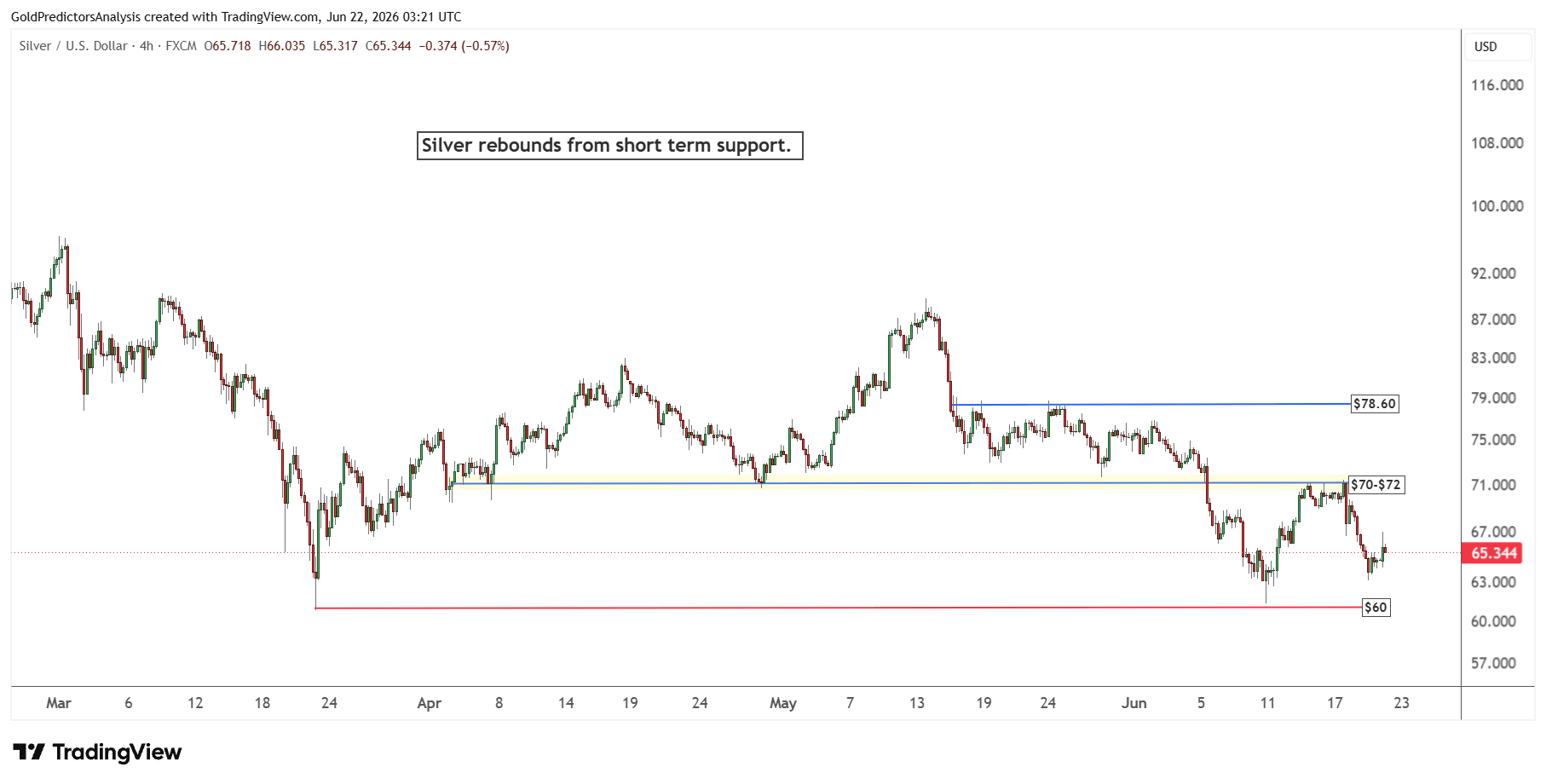
The 4-hour chart for spot silver also shows strong consolidation between the $70 and $60 area. A break above $70 will push the silver price towards $78.60. However, a break below $60 will indicate further downside towards $50.
Bottom Line
Gold and silver remain within a short-term downtrend despite a recovery from key support levels. The strong U.S. dollar and the upward trend in the Treasury yields keep pressure on metals. A break below $4,000-$3,950 in spot gold will signal further downside. But a break above $4,500 will indicate an upside momentum to $5,000. On the other hand, spot silver remains bearish as long as the price remains below $72. A break below $60 in spot silver will indicate a strong drop to $50. But a break above $72 Will indicates further upside to $78.