


Gold Struggles as Stagflation Fears and a Strong Dollar Take Center Stage
Spot Gold (XAUUSD) is under pressure to start the week. If there is any safe-haven demand because of the war, it doesn’t look like it’s enough to produce a rally, but maybe enough to prevent the market from collapsing. In my opinion, concerns over higher energy prices has moved to the forefront on the wall of worry. Coupled with stagflation fears because of a weakening job market and you get a market that is wondering if the Fed will cut rates in June.
A Stronger Dollar Adds to the Headwinds
Pushing the odds of a rate cut beyond June is what’s helping to boost the U.S. Dollar too. And a stronger greenback tends to weigh on foreign demand for dollar-denominated assets like gold.
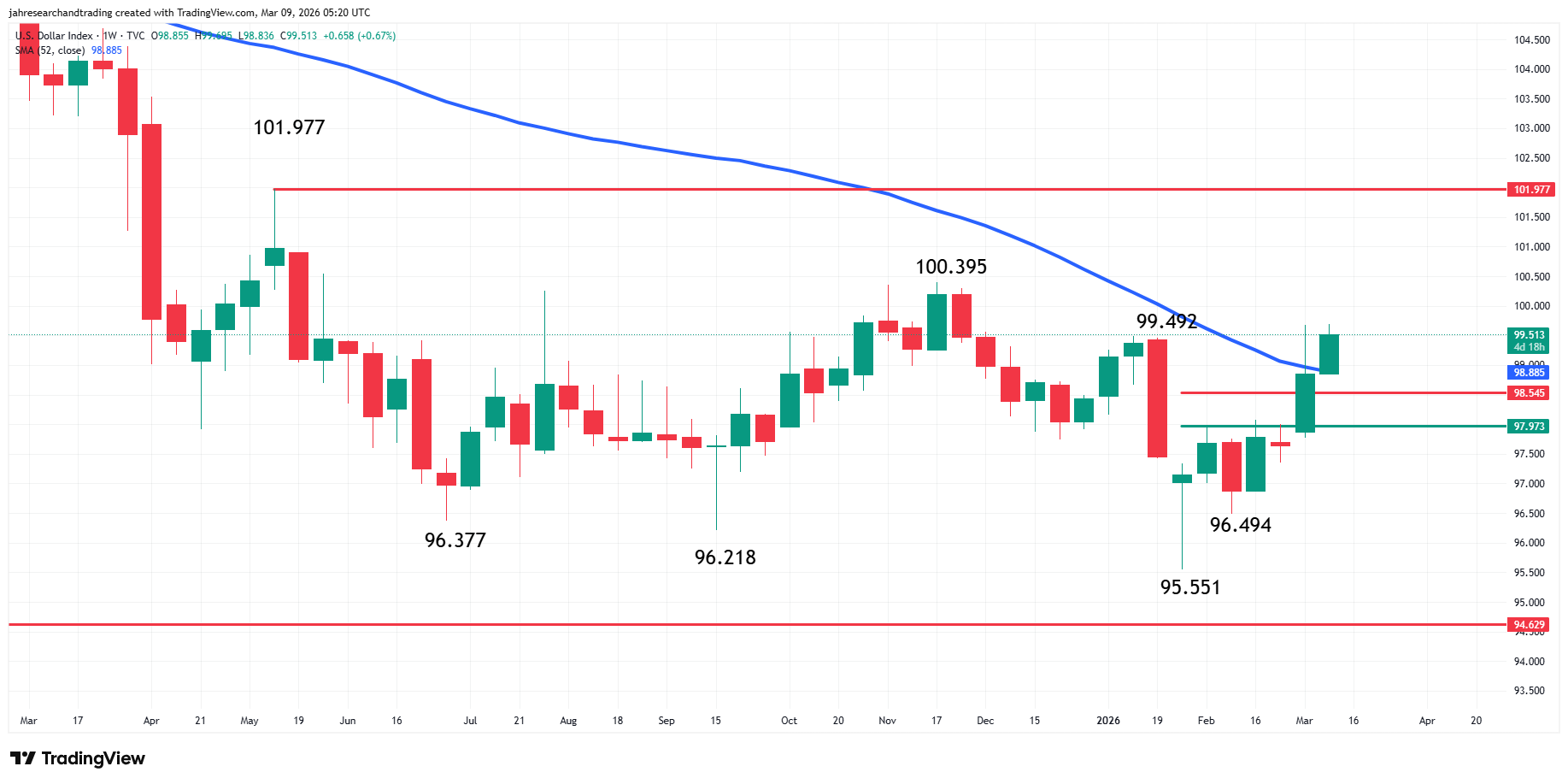
In addition to stagflation fears, rate cut delays, and a stronger U.S. Dollar, gold traders are also eyeing the jump in U.S. 10-year Treasury yields. They reached a one-month high early Sunday, increasing the cost of holding non-yielding bullion.
How We Got Here: A Week of Shifting Sentiment
Let’s look at crude oil prices first. Last Monday, crude oil prices gapped higher after the U.S. and Israel attacked Iran. Although the price action was relatively subdued, traders started to express light concerns about inflation and rate cuts. They were likely banking on a quick resolution to the war. Gold spiked up on the initial attack but weakened throughout the day because they may have also been pricing in a fast war.
However, as the week wore on, it was starting to become obvious that the war could become prolonged and that oil prices could move higher because of massive supply disruptions around the Strait of Hormuz, a key waterway that moves about 20% of global production.
Gold Price Forecast
Every new Gold analysis as it publishes, today's technical signal and key levels, live price — on one page.
See all Gold forecastsAs of Friday’s close, oil was pressing $90 a barrel with expectations of further advance if the Strait remained closed for two weeks. All of this was negative news for gold traders because higher prices for long periods is inflationary, something the Fed really doesn’t want to deal with at this time. Adding to the pressure on gold was Friday’s weak U.S. non-farm payrolls report.
The Fed Is Caught in a Difficult Position
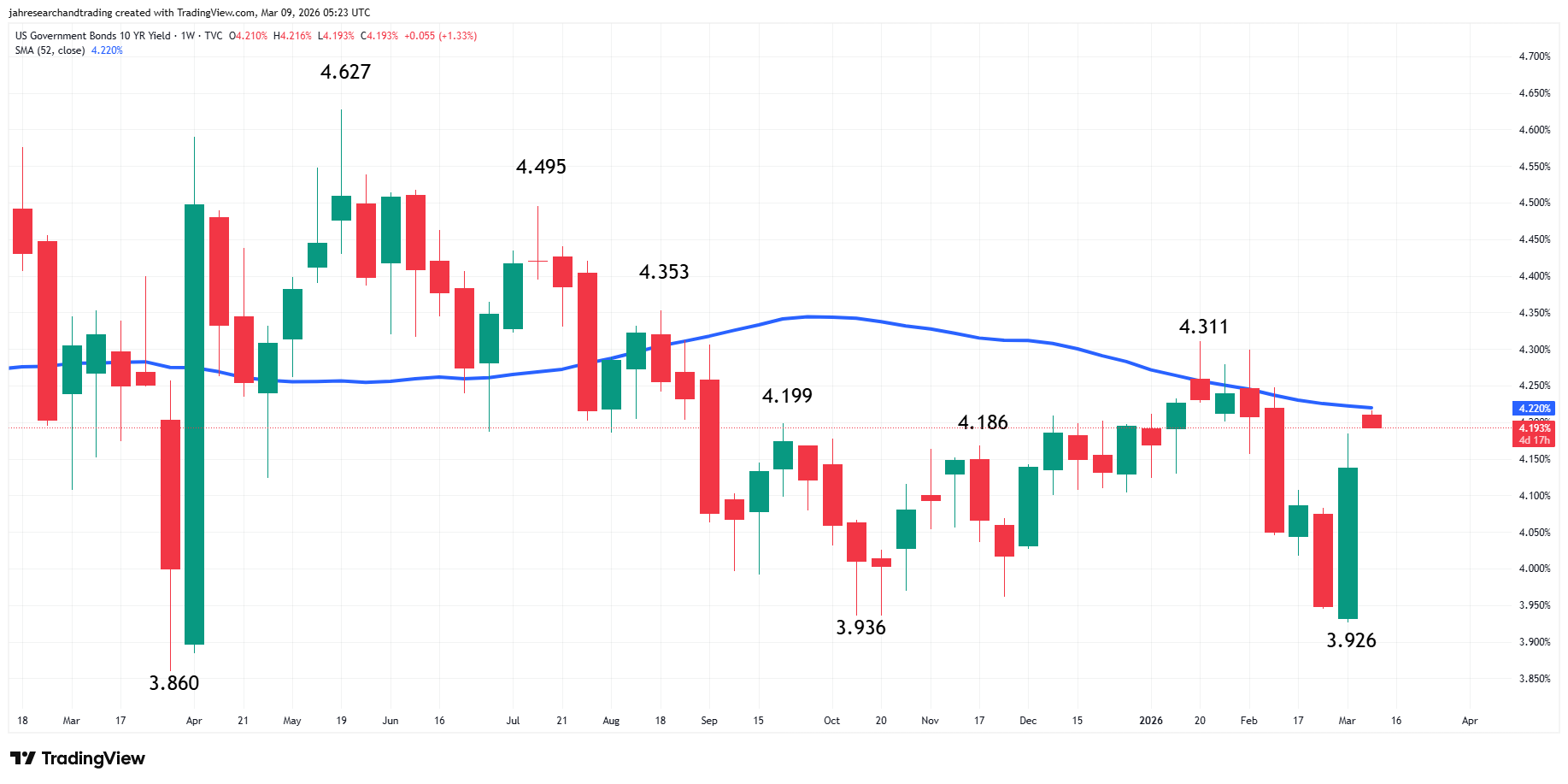
The Fed is stuck between the need to cut rates to save jobs and the risk of letting inflation get out of control. This is why investors are pushing the next rate cut to July. Investors are driving Treasury yields higher to reflect this shift in expectations. Investors are also covering short positions in the dollar with speculators doing enough buying to make 100.00 a reality.
Professional Buyers Are Sitting This One Out
Now we’re not saying that there aren’t any buyers in the gold market. We still have the central bankers probably holding on to long positions, we’re just not sure if they’re still buying. What’s missing from gold at this time is the professional buyers, the hedge funds and money managers.
They are looking for value. They were buyers when the Fed was clearly broadcasting two or more rate cuts in 2026, but that is no longer the case so the professionals are selling rather than buying. Since gold is an investment like stocks, it needs lower rates to feed the bull and we’re not seeing it at this time.
Key Levels to Watch on the Charts
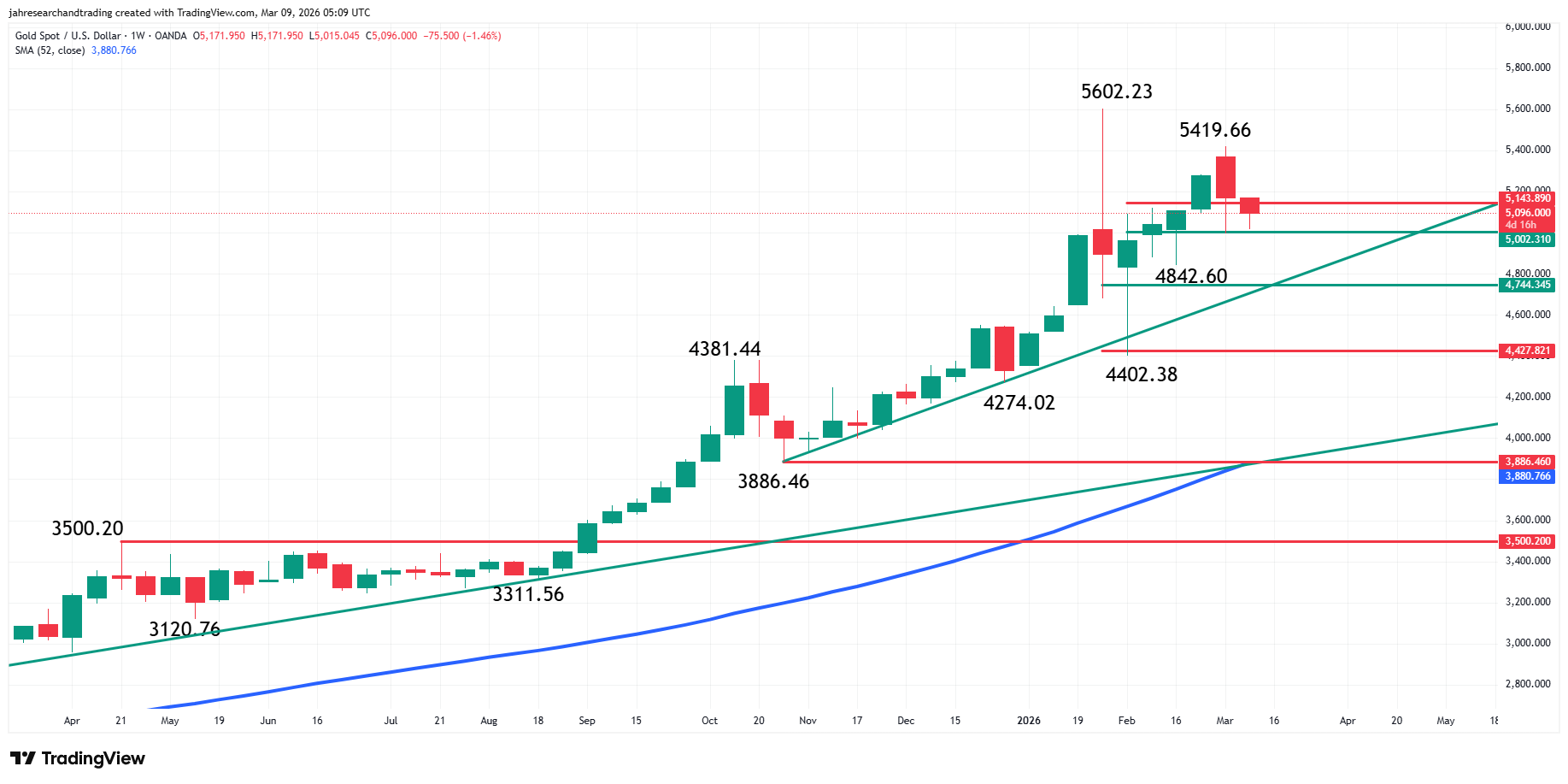
Technically, the trend is up, but last week’s closing price reversal top killed the momentum. With a possible shift to the downside in the works, traders have to start looking for potential support targets.
I can build a slightly bullish case if traders can overcome Fibonacci resistance at $5,143.89, but I can also create the case for a steep break if the 50% level at $5,002.31 fails as support. If it does then we could see a sharp break into another 50% level at $4,744.34 and a trend line at $4,708.94.
More Information in our Economic Calendar.