Post-Breakdown Momentum Extends Lower
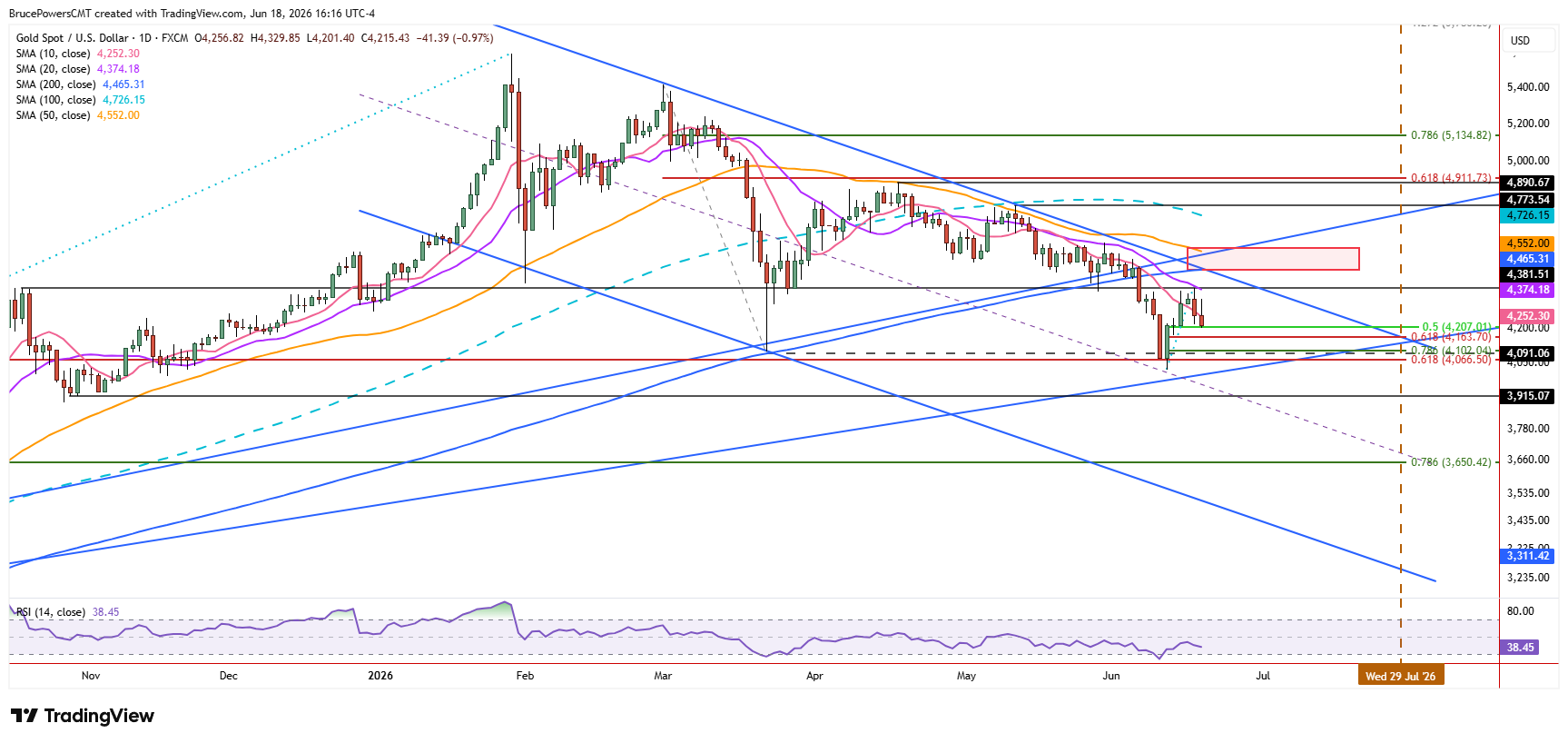
Gold extended its decline on Thursday, establishing a lower daily high of $4,330 and a lower low of $4,201. This bearish reaction follows the first pullback to test resistance after a significant breakout below the 200-day moving average and uptrend line from June 5. Resistance was seen at a high of $4,382 on Wednesday, leading to a one-day bearish reversal day, which extended on Thursday to complete a 50% retracement of the prior advance at $4,207.

Fibonacci Support Zones Under Pressure
If Thursday’s low fails as support, the 61.8% Fibonacci retracement of the prior advance is at $4,164 becomes the next downside target, followed by the 78.6% Fibonacci retracement at $4,102. That lower level is supported by several other indicators showing support in that region. Given this price behavior, gold remains clearly in a downtrend structure, with sellers remaining in control overall.
Prior Swing Low Defines Reaction Zone
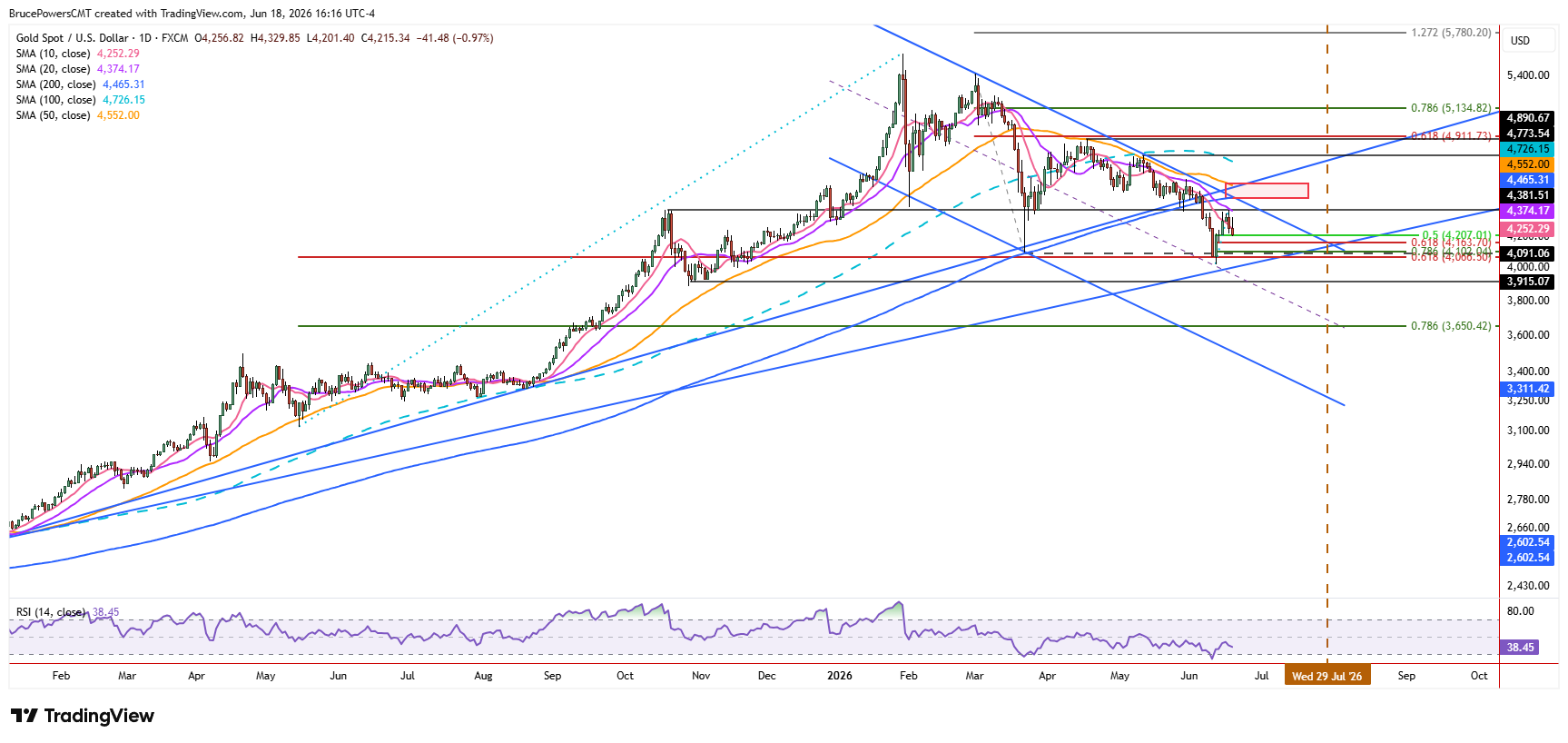
Nonetheless, the recent lower swing low of $4,023 only briefly extended below the prior swing low of $4,098 before buyers took back control and drove price back up. The support zone is validated by the confluence of several indicators, including the midline of a falling trend channel, the 61.8% Fibonacci retracement of the prior advance, and the completion of a 100% projected target for a falling ABCD pattern or bearish measured moves.
Resistance Ceiling and Trend Reversal Trigger
Key resistance is now this week’s lower swing high of $4,382, as a recovery of that level will signal a bullish trend reversal and a reclaim of the 20-day moving average, which is now at $4,374 and falling. A rally above that high will quickly hit another potential resistance zone starting with the 200-day moving average at $4,465 and up to the 50-day moving average at $4,552.
Compression Phase Near Trendline Convergence
In addition, given the developing price structure, it would not be surprising to see a short period of consolidation that has gold trading below this week’s low and the downtrend line, but it avoids breaking below key support. Notably, there are two trendlines that cross around July 29. This would suggest that would be the longest time for the consolidation to form, as a breakout through one of the trendlines would happen before then.
Gold Price Forecast
Every new Gold analysis as it publishes, today's technical signal and key levels, live price — on one page.
See all Gold forecastsIf you’d like to know more about how to trade gold and silver, please visit our educational area.