



Gold Ended the Week Where It Started and Payrolls Picks the Next Direction
Spot gold closed at $4,045.16 last week, down $7.68 or 0.19%, and the flat finish is the most honest thing the market has said in two weeks. The Fed hold pulled September hike odds from above 80% down to 65% and the dollar broke lower and gold pushed above $4,100. Then yields kept climbing, the dollar recovered Friday and the rally gave it all back. Neither side won. Friday’s Non-Farm Payrolls report is the tiebreaker.

Weekly Spot Gold (XAUUSD) Technical Analysis
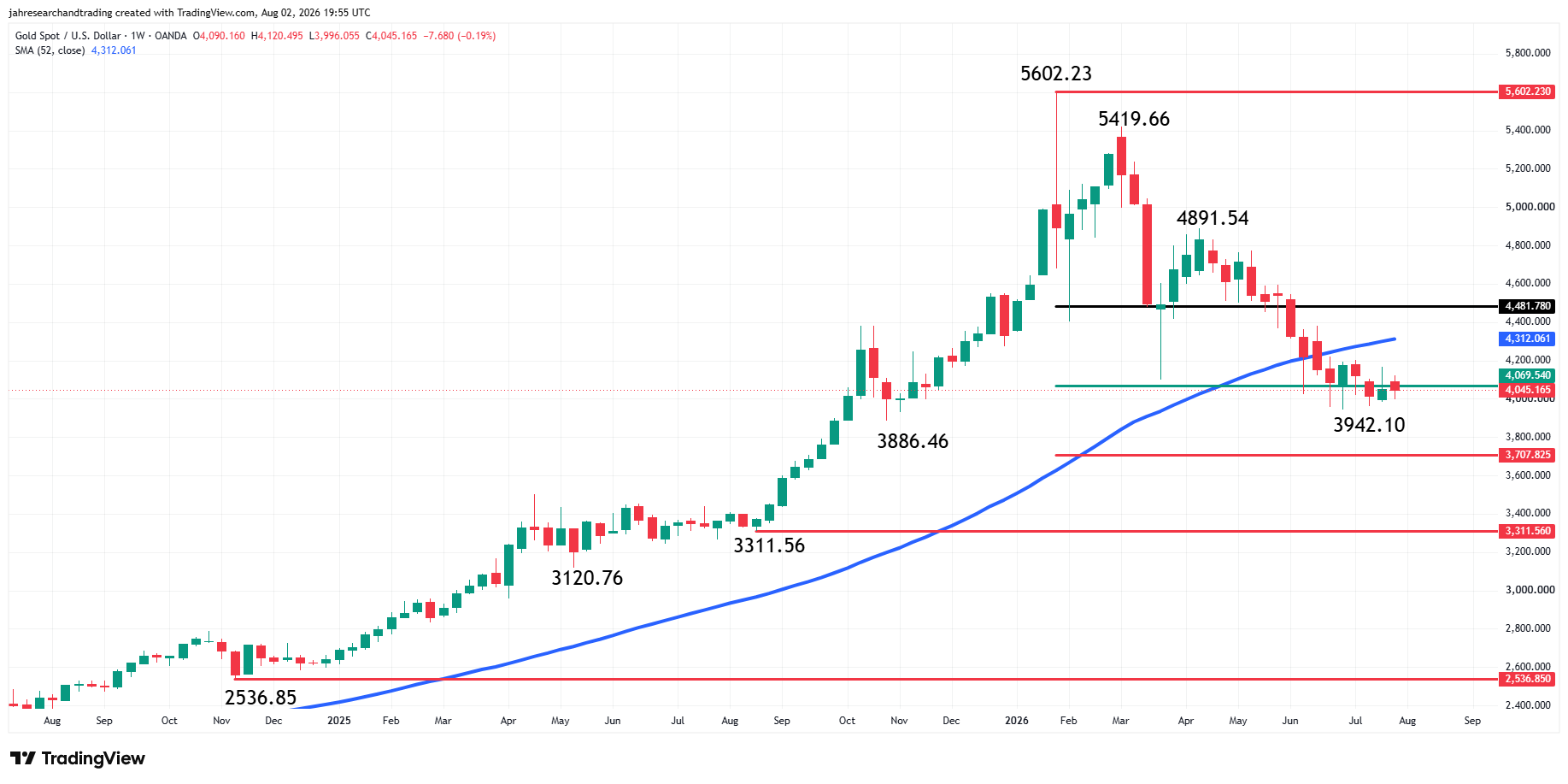
Spot gold (XAUUSD) is trending lower according to both the weekly swing chart and the 52-week moving average. However, it has been consolidating for the past 6 to 8 weeks. This suggests a new higher support base may be building for a possible shift in direction and momentum.
The weekly range I prefer to use is from November 2024 to January 2026, or $2536.85 to $5602.23. Its retracement zone is $4069.54 to $3707.82. The market has been straddling the 50% level at $4069.54 for weeks. Trader reaction to this level could set the tone this week.
A sustained move over $4069.54 will indicate the presence of buyers. If this creates enough upside momentum then look for a test of the 52-week moving average at $4312.06.
Overtaking the 52-week moving average and sustaining the rally will indicate the buying is getting stronger. Our next key level is $4481.78.
On the downside, a sustained move under $4069.54 will signal the presence of sellers. The first target is the minor bottom at $3942.10 followed by potential Fibonacci support at $3707.82.
At this time, traders should be focusing on two points, the 50% level at $4069.54 and the 52-week moving average at $4312.06.
Gold Price Forecast
Every new Gold analysis as it publishes, today's technical signal and key levels, live price — on one page.
See all Gold forecastsThe Rate Trade Took Gold Above $4,100 and Then Took It Back
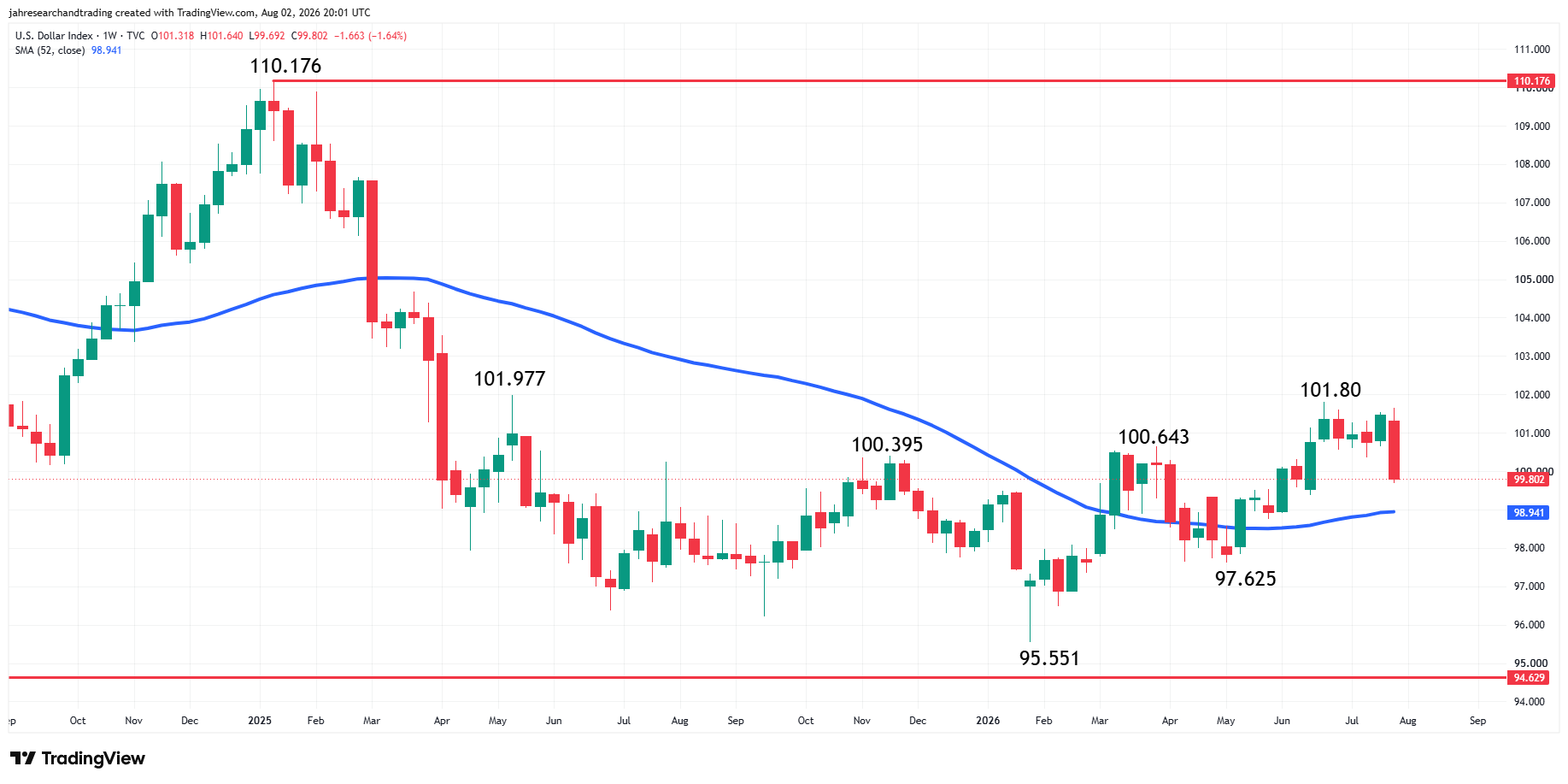
Warsh held in a 9-3 vote with three officials voting to hike and then spent the press conference refusing to give the market a schedule. The dollar dropped about 0.8% on Thursday after the decision and Japanese intervention fears, and gold grabbed $4,100. Twenty-four hours later the dollar had recovered and gold was back below the level. The metal is completely dependent on the currency right now, and the currency is not in a clean trend.
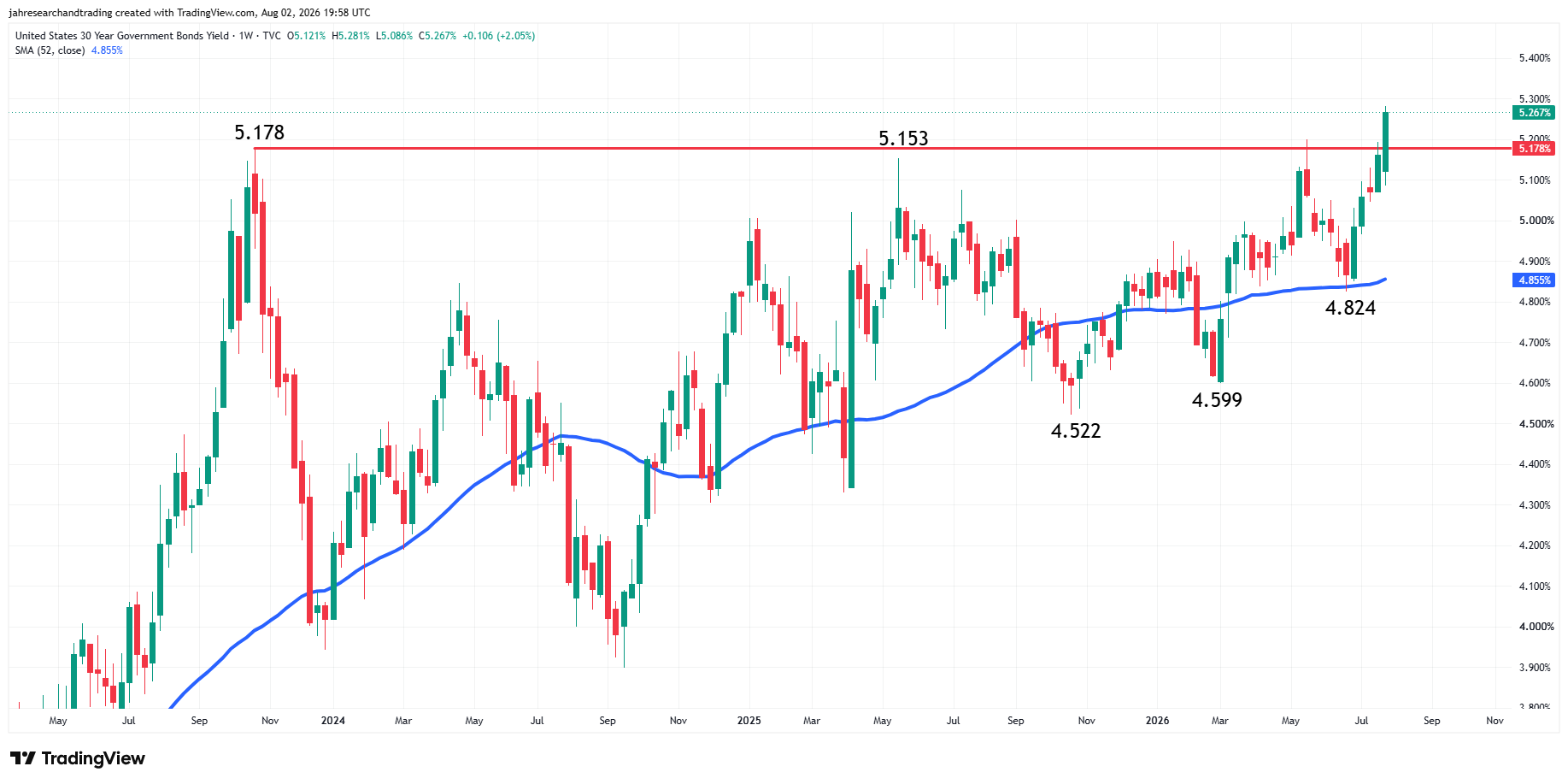
The 30-year above 5.20% killed the rally before it had a second day. Gold pushed above $4,100 on Thursday’s dollar break and the long end did not flinch. By Friday the dollar had recovered and the $4,100 bid was gone. One session. That is what gold got out of the biggest Fed repricing in two months.
Payrolls Friday Settles What the Fed Left Open
The July employment report at 13:30 GMT Friday is the number gold has been waiting for since Warsh refused to give the market guidance. He set this up so the data decides. Gold buyers need the number to come in soft enough to pull September odds lower and restart the dollar selling that lifted the metal above $4,100 last week. The dissenters already have the inflation argument. A firm jobs report with strong wages gives them the labor market too, and gold does not have a defense against both.
Tuesday’s JOLTS report is the early read before Friday’s main event. The week is about one question and the answer arrives in stages.
What to Watch
Friday’s payrolls report decides whether the September rate trade tightens or loosens, and gold is going to follow the dollar’s reaction to the number. The Fed hold pulled hike odds down from 80% to 65% and the dollar broke lower on the repricing, but the long end did not cooperate and gold could not hold above $4,100. Tuesday’s JOLTS is the early signal. If it comes in soft, gold buyers get a head start pressing the dollar before Friday. If it comes in strong, the rate rebuild starts early and gold has to defend the week’s lows.
Gold has been straddling the 50% retracement level for weeks and the consolidation is building a base that either launches toward the 52-week moving average or breaks down toward the support below. Payrolls is the catalyst that picks the direction.
If you’d like to know more about how to trade gold, please visit our educational area.


