Bearish Signals Strengthen
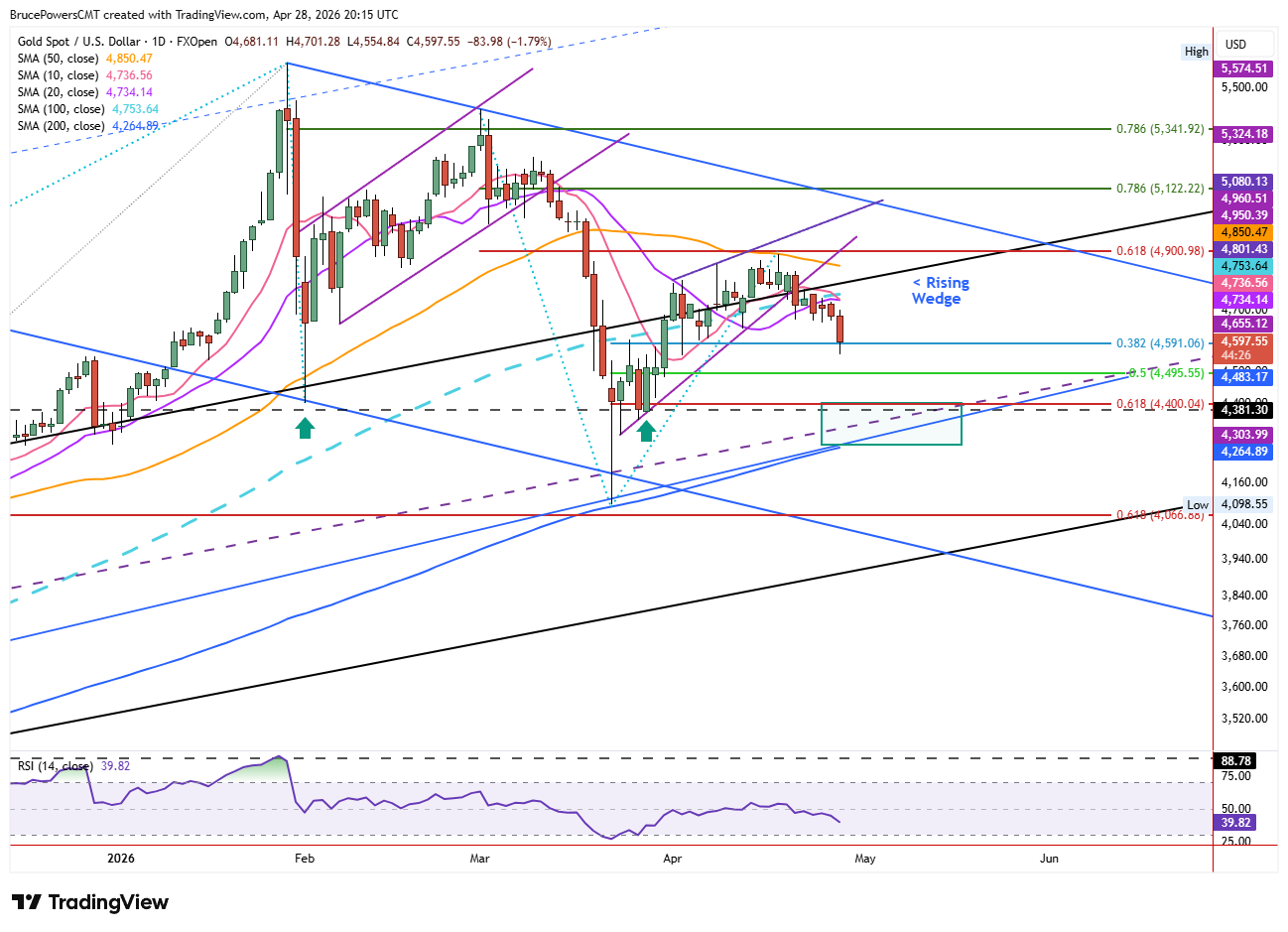
Gold reached a 17-day low of $4,555 on Tuesday, triggering a new bearish signal with a drop below a higher swing low. This reflects continued downward pressure on the precious metal following a bearish trigger for a rising wedge pattern last week. It suggests a decline to key support before the correction is complete.
On Tuesday, a 38.2% Fibonacci retracement was completed before the trend stalled. However, a daily close below the interim higher swing low near $4,640 confirms the near-term bearish reversal signal. Moreover, a weekly reversal signal occurred on a drop below a three-week low of $4,601, which matches the 38.2% retracement zone. Together, these developments reinforce the likelihood that the recent weakness is part of a broader corrective phase rather than a brief pullback.

Support Zone Comes into Focus
A minimum target for a wedge is its beginning, which is around $4,305, as drawn on the chart. However, given the confluence of several indicators in a range from around $4,402 to $4,265, support could be seen anywhere within that range before the correction completes. The more significant potential support zone is indicated by the rising 200-day moving average near $4,265. If the 200-day average rises above the $4,305 wedge low before price reaches it, it will be dominant and may act like a magnet, drawing price toward it.
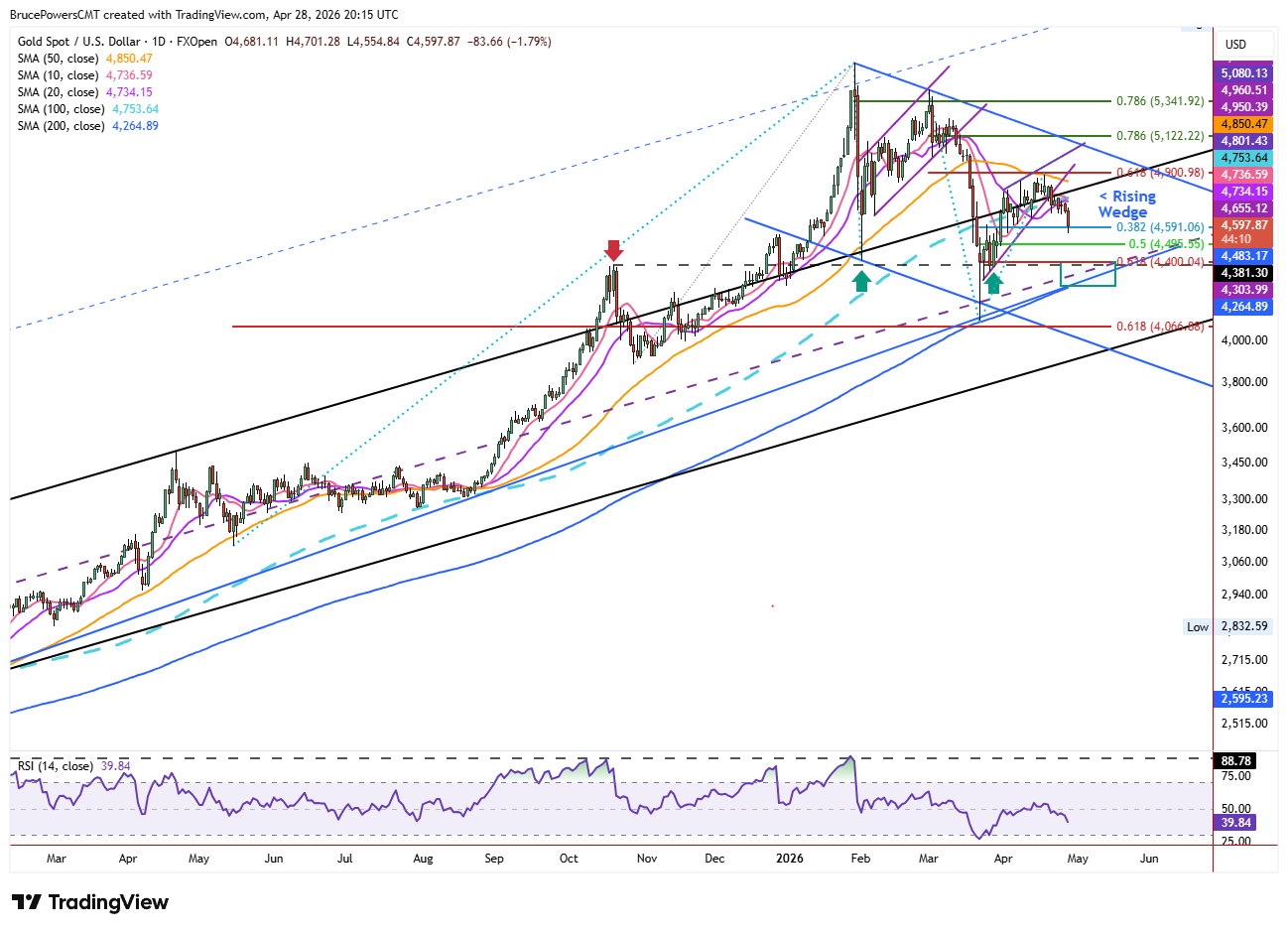
The March low bounced off support at the 200-day moving average with conviction and a second bounce is therefore likely if approached again. Given the initial bullish reaction, the market is identifying the 200-day indicator as a key dynamic support level. This time, however, it would be strengthened by other indicators validating the broader support zone. That alignment could make the area especially significant as traders assess whether the current correction is nearing exhaustion.
Channel Structure Defines Risk
Another way to consider price action is within the context of a large rising trend channel. The initial channel is bounded by black trendlines, with it duplicated up to a top channel line. It is notable that the rising wedge trigger matched support near the top channel line and further confirmed a failed new breakout of the channel. The top of the wedge at $4,838 confirmed resistance near the prior trend support indicator, the 50-day moving average. As the correction unfolds, the same technical structures that defined the prior advance are helping frame downside risk.