Gold (XAU) prices were stable in the early Asian session on Wednesday. The spot gold price is trading near $5,190 following a period of sharp volatility. The precious metal started to recover from the key level of $5,000 as oil prices dropped lower on Tuesday.
Despite the recent fluctuations, gold is still trading above important psychological levels. Markets are still looking for the geopolitical headlines. The release of CPI data on Wednesday will be the key event that may drive the next move in the gold price.
Geopolitical Risks and Economic Data Keep Gold in Focus
Middle East Tensions and Oil Market Reactions
Geopolitics is the primary driver of recent movements in prices. US President Donald Trump hinted that the US penetration in Iran might conclude in the near future. However, the situation on the ground still appears to be tense. According to some reports, Tuesday was the heaviest day of strikes within Iran.
Oil markets reacted positively to prospect of de-escalation. US crude prices dropped over 20% since the peak at $119 as traders speculated that conflict would not grow. Meanwhile G7 energy ministers agreed to hold back on releasing strategic oil reserves and asked the International Energy Agency to review situation before making any decision.
US Dollar, Economic Data and CPI in Focus
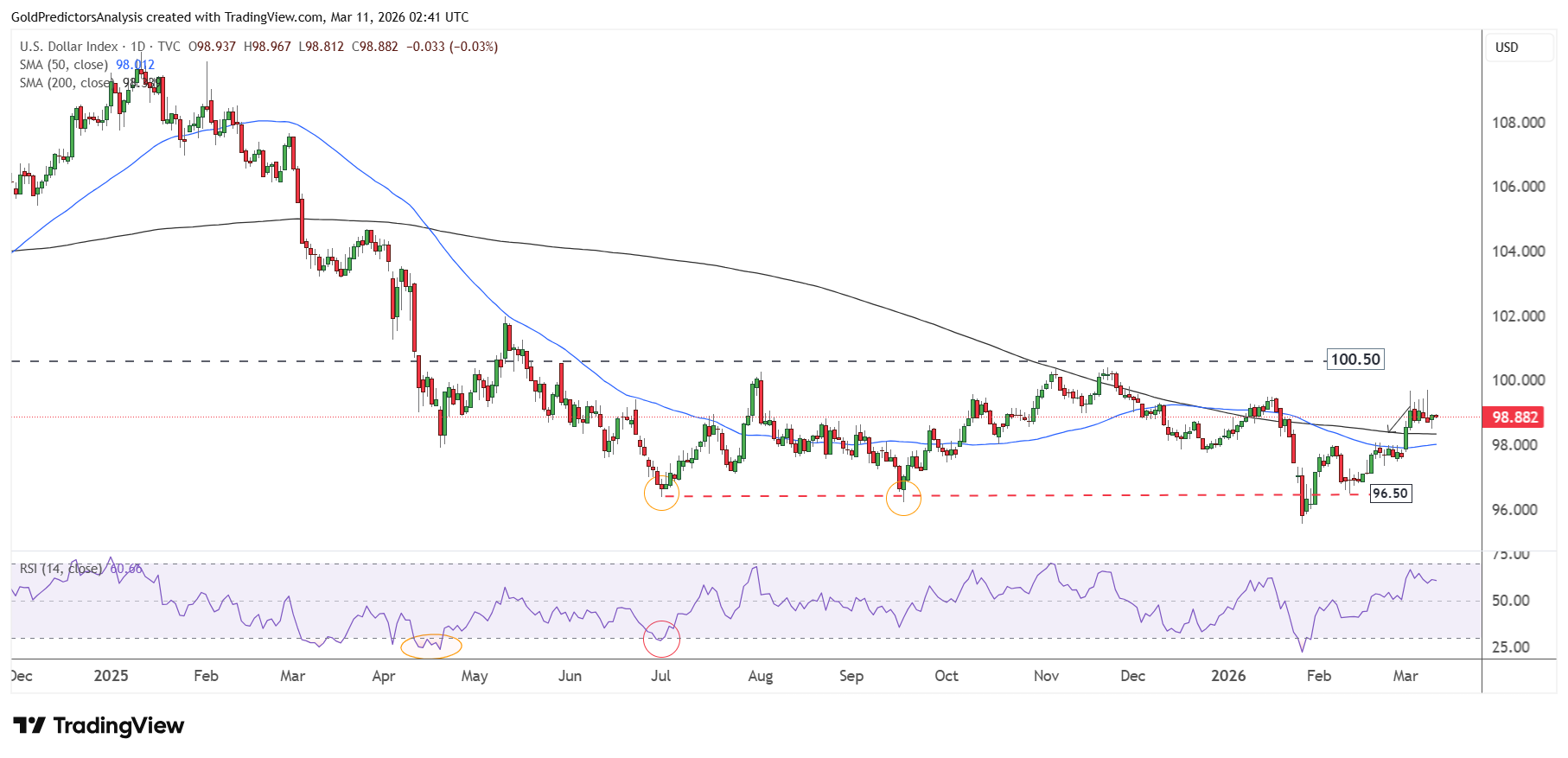
Currency markets also reacted strongly to these developments. The US Dollar Index was able to bounce back slightly and increased to about 98.90. This rebound has pushed the gold price higher to above $5,200.
Gold Price Forecast
Every new Gold analysis as it publishes, today's technical signal and key levels, live price — on one page.
See all Gold forecastsAt the same time, high energy prices brought on by conflict have complicated expectations about US monetary policy. Investors are now looking forward to slightly less dovish Federal Reserve.
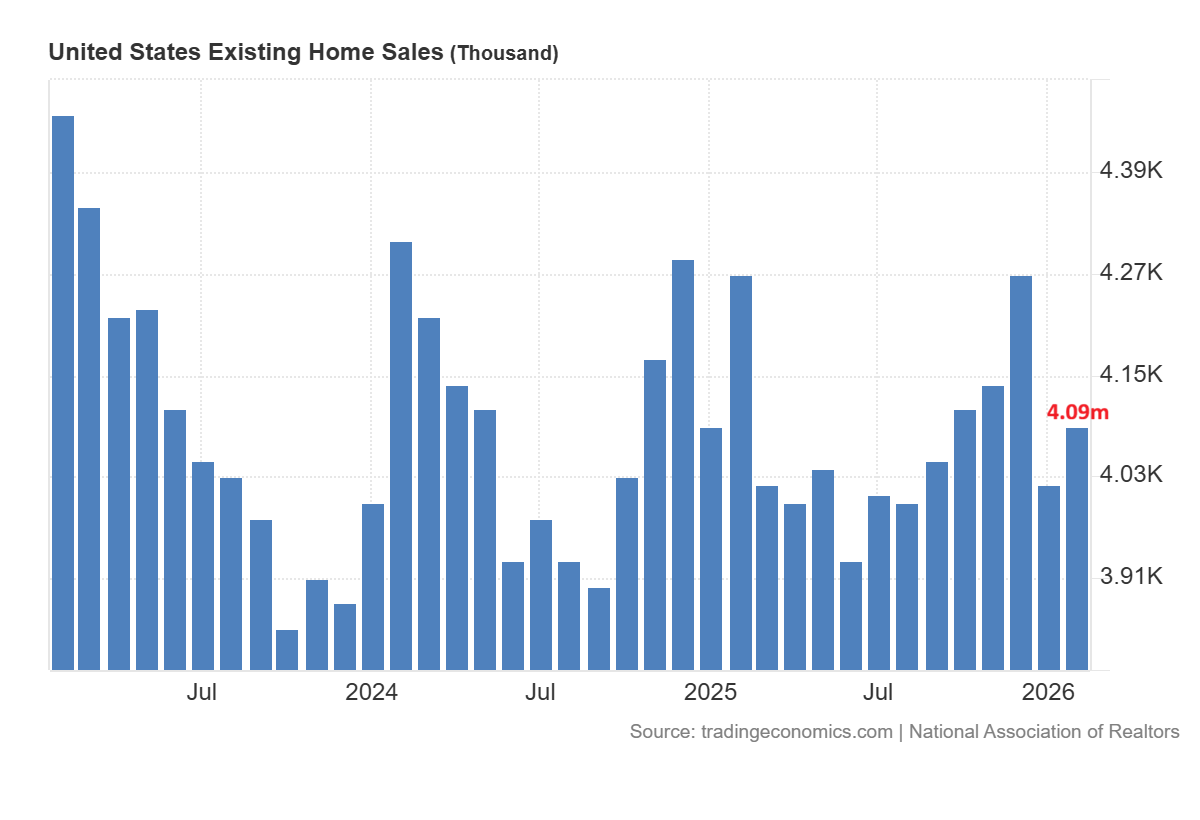
On the other hand, economic data this week also influenced sentiment in markets. The chart below shows that the US existing home sales rose 1.7% in February, recovering from sharp decline in January.
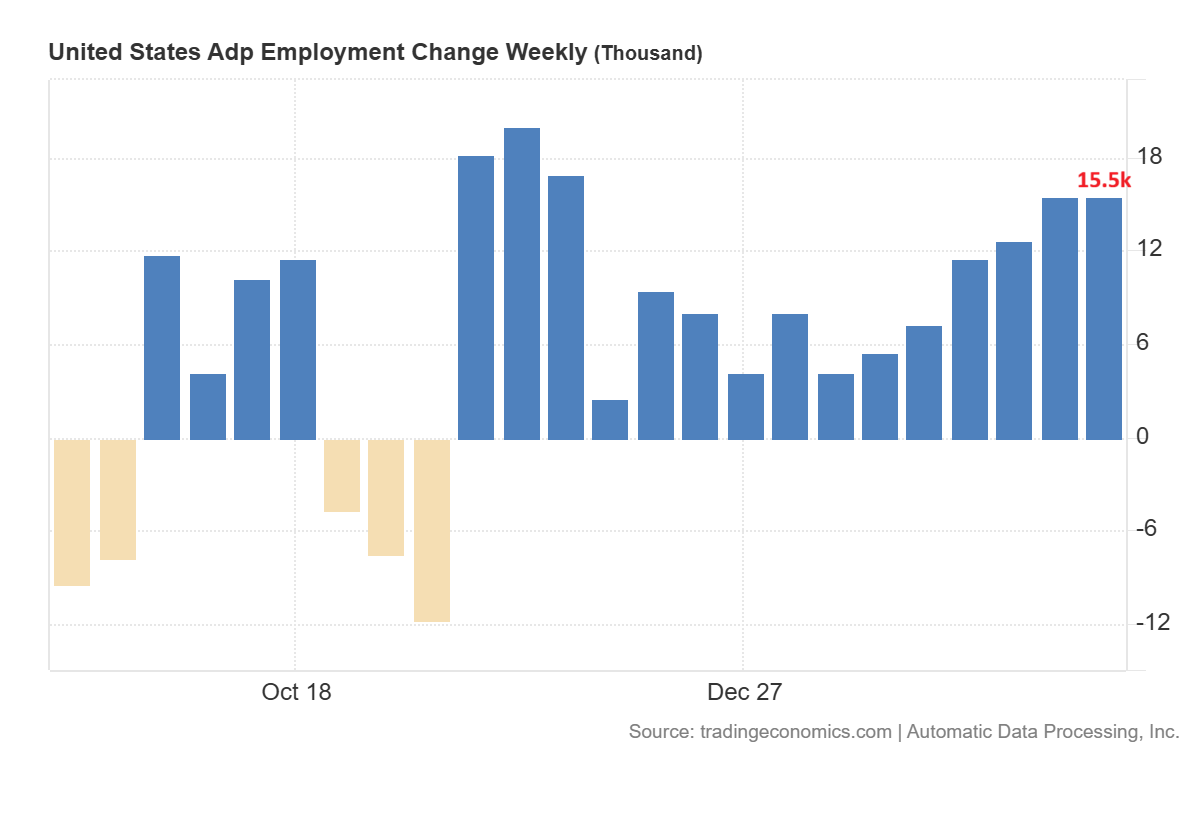
Labor market indicators also showed improvement with the weekly ADP employment change increasing to 15.5K from 12.75K previously.
Investors now focus on the upcoming US CPI data. Headline inflation is expected to continue at 2.4% year-on-year while core CPI could continue at 2.5%. A stronger than expected reading of inflation could cause the US dollar to rise and exert short-term pressure on gold prices.
Traders will also heavily monitor developments in the Middle East. Iran’s Islamic Revolutionary Guard Corps put the world on notice that continued attacks could result in disruptions in regional oil exports.
At the same time, President Trump mentioned that if any attempt were made to block oil flows through the Strait of Hormuz, the US would respond strongly. Any escalation could quickly pick up the safe haven demand and send gold prices higher again.
Gold Holds Key Support as Bullish Momentum Builds
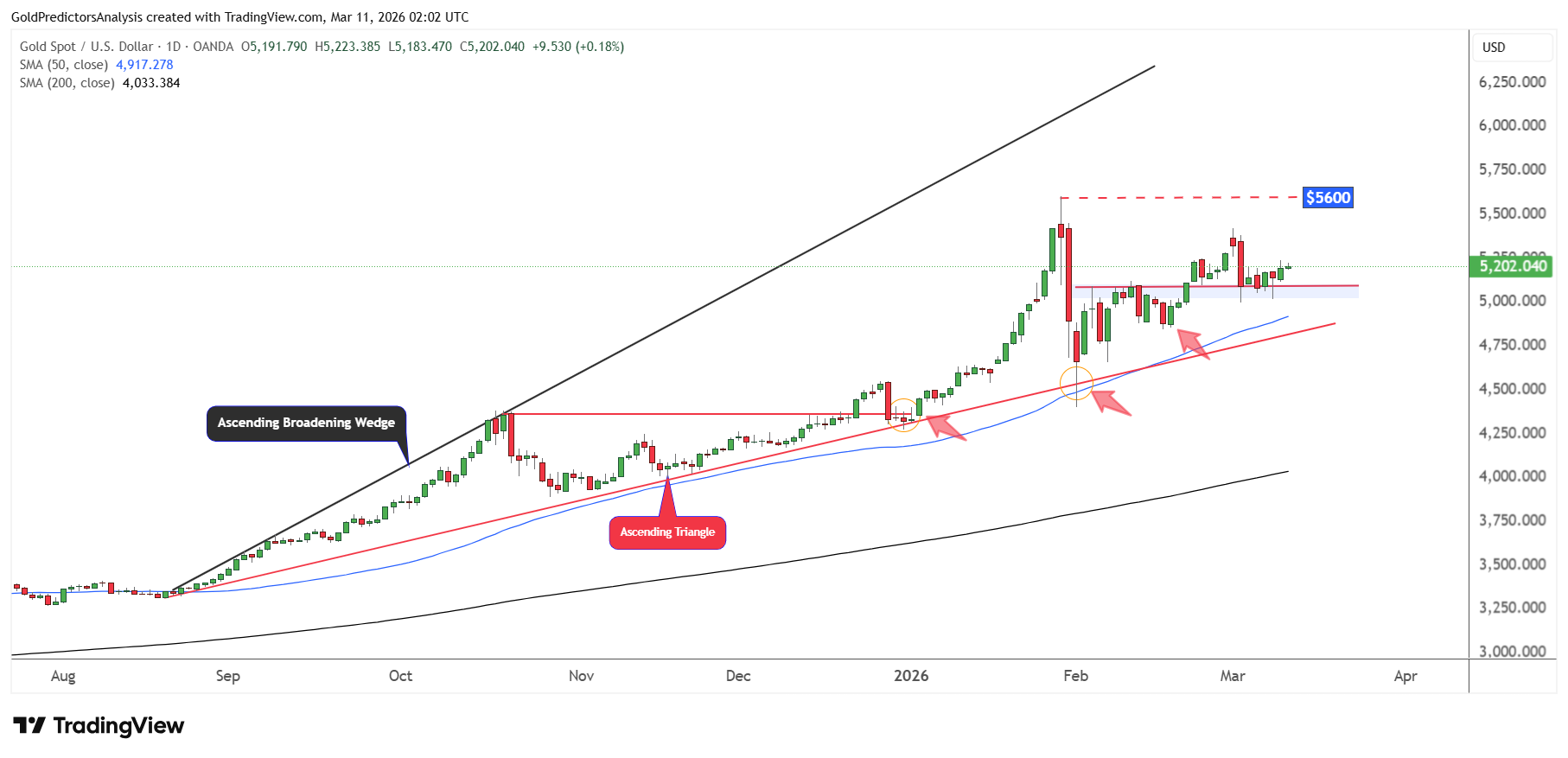
The chart below shows that the gold price has been consolidating above the $5,000 key level and is looking for the next move. The consolidation above $5,000 and then a break above $5,200 indicates that the next move in the gold price will likely be higher.
The 50-day and 200-day SMA are trending higher which indicates a strong bullish trend. The short-term target for the gold price is $5,600 as long as $5,000 holds. A break below $5,000 will find strong support at $4,800.
Bottom Line
The gold price is still trading above the important $5,000 level, which maintains the overall bullish structure. Investors are now looking at the US CPI data and Middle East developments that could influence the next move. Stronger inflation could help the US dollar and put pressure on gold in the short term.
However, increasing geopolitical risks and uncertainty in energy markets could continue to support the safe haven demand. As long as gold holds above $5,000, the overall outlook is bullish, and market may continue to move towards higher levels in the coming days.
If you’d like to know more about how to trade gold and silver, please visit our educational area.