
Gold and Silver Steady as Geopolitics and Policy Signals Intersect
Gold and silver took a breather after a wild ride that kicked off in response to shifting geopolitics, with markets trying to make sense of the peace accord in the Middle East that just took effect. The 2 week ceasefire agreement calls for tankers to start moving through the Strait of Hormuz again, which in turn has taken the edge off worries about energy supplies – that’s helped ease inflation worries and dial back safe-haven demand.
Despite all that, gold still has some serious underlying foundations. Year over year, gold has gone up around 48%, thanks in big part to the likes of China buying up into the central banks there – a trend thats shown no signs of letting up even with tensions easing in the short term, at least according to the analysts. “Official sector buying is still the anchor that long term demand for gold is tied to” they’re saying.
As for silver, which has basically doubled in value over the past year, it’s still really sensitive to the ebbs and flows of the demand cycle. As an industrial and monetary metal its doing a lot of the work that ties it closely to electronics and solar demand – where the latest reports show they’re struggling with supply deficits.
Now all eyes are turning to US inflation numbers and what the Federal Reserve is going to be saying. If rate cuts are eventually in the offing, that could boost demand for assets that don’t pay interest – but at the same time, an improved outlook and a stronger dollar could put the brakes on any short-term gains in gold and silver.

Gold Holds Trendline Support as $4,800 Acts as Barrier
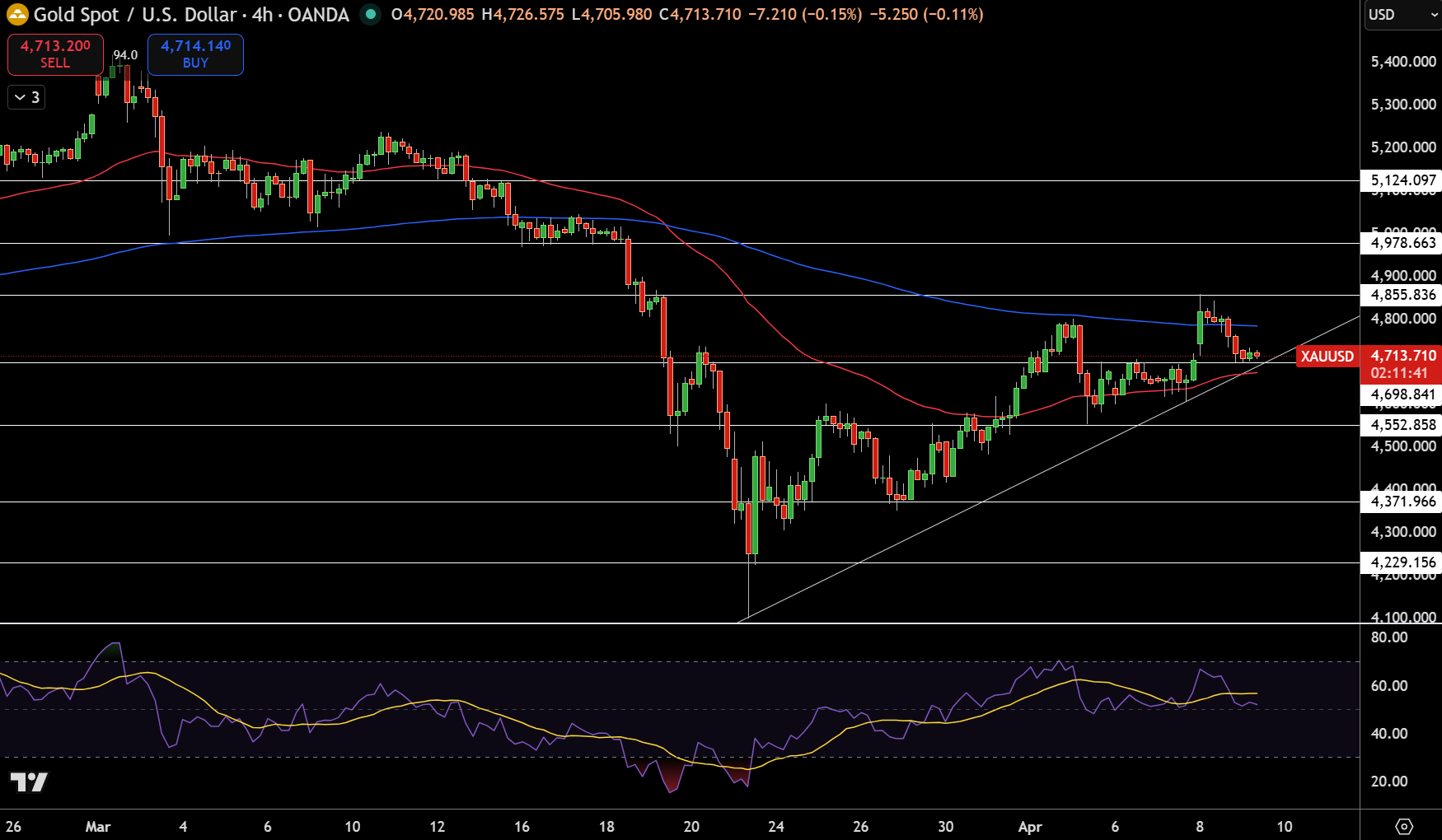
Gold is just hanging around $4,713, unable to make much headway after it got knocked back down from a run at the $4,800 ceiling. That particular spot has become a real dealbreaker, with plenty of signs of selling pressure from all the candles that got rejected there – lots of ’em too, with those long wicks pointing upwards showing that buyers just aren’t stepping up.
The 50-day moving average is basically flatlining at the moment, while the 200-day average is capping any potential upside just shy of the $4,800 mark, which just adds to the sense of resistance. The RSI is hovering around 55 too, which is just about the perfect spot – not showing any real clear divergence or anything. Just wait for a breakout above $4,800 and you might see a sudden dash to $4,855 and $4,978 on the cards, but on the flip side, if the price slips below $4,698, then the potential pullback gets a lot deeper.
Trade idea: If you want to get in on the action, then buy the price as soon as it manages to bust above $4,800 and aim for a $4,855 landing spot – just don’t forget to set a stoploss in place below $4,698, just in case.
Gold Price Forecast
Every new Gold analysis as it publishes, today's technical signal and key levels, live price — on one page.
See all Gold forecastsSilver Tests Supply Zone Near $76, Structure Remains Constructive
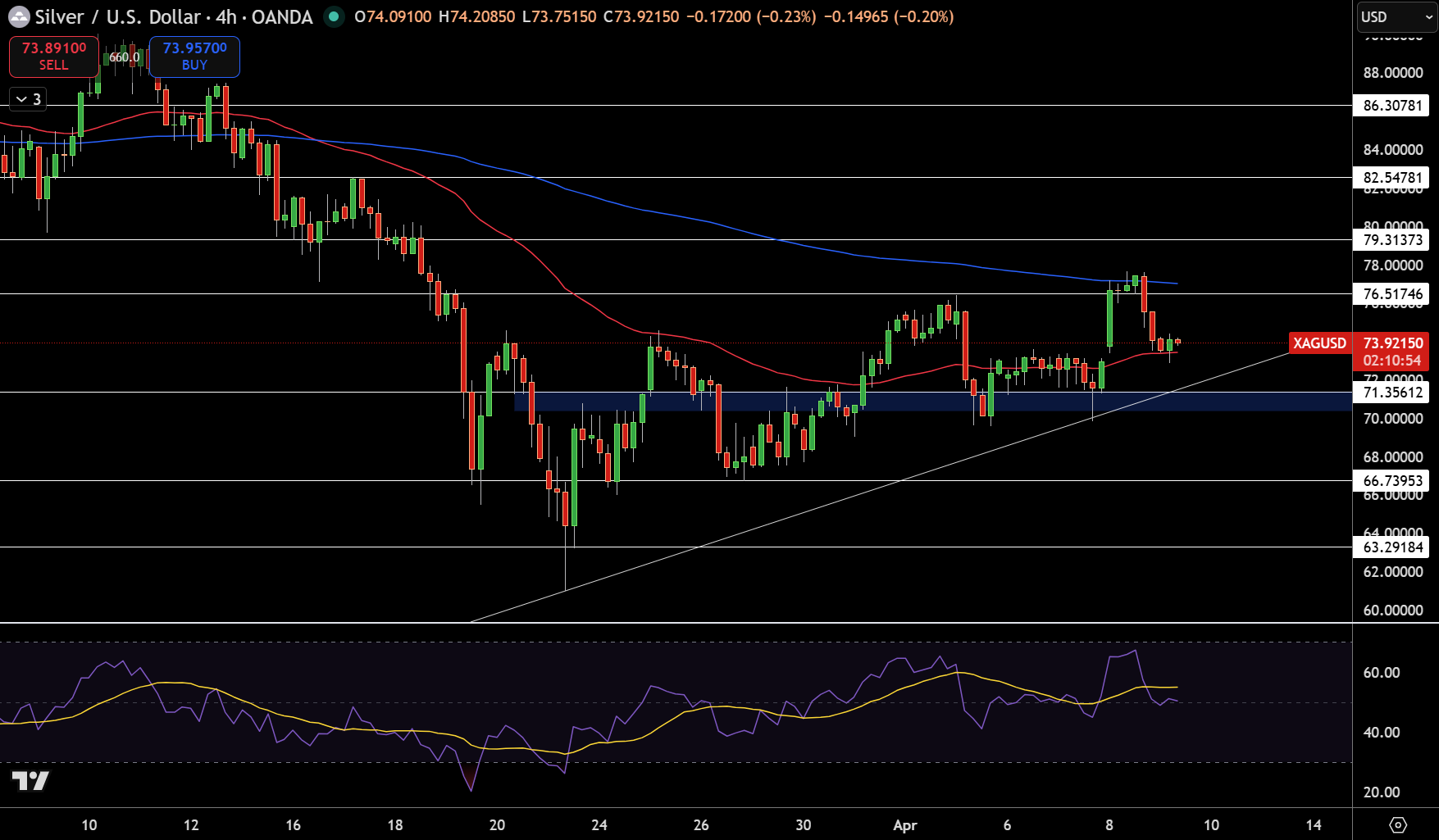
Silver’s doing a nice job of sticking above $73.90, despite a bit of a setback at the $76.50 resistance zone – turns out there were some bearish candles with some pretty long shadows that showed up there to boot. But don’t get too worried, Gold has still got the price sitting pretty above that ascending trendline and that $71.35 support zone, so the overall message is still buy/buy, with the higher lows pattern still intact. Plus the 50-day moving average is doing its best to provide some immediate support, while the 200-day average is still holding the price in check.
The RSI is pretty much right on 50 too, which just tells you that Silver’s had a bit of rally and now its just consolidating – no clear divergence to worry about. One thing that does look interesting, though, is an ascending triangle possibly forming between that $71.35 support and $76.50 resistance. If the price does manage to break above that $76.50 level then all bets are off and you could be in for a run to $79.30.
Trade idea: Then all you need to do is get in on the action by buying above $76.50 and targeting a $79.30 landing spot – just be sure to set that stoploss in place below $71.35, or you might find yourself in a world of trouble.