
Precious Metals Fundamentals Endure as Geopolitical Risks Ease
On June 22, the gold and silver complexes trade in the aftermath of the U.S.-Iran memorandum of understanding, which paves the way for the reopening of the Strait of Hormuz. This eases the short-term supply risk of energy. With geopolitical tensions reduced, so are short-term safe-haven demand that has spiked in response to the conflict. However, the underlying support in the market structure remains robust.
Central banks have continued net accumulation at high levels, driven by efforts from emerging-market central banks to diversify reserves away from traditional assets. Supply in gold and silver from mining continues to increase at slow rates for gold and silver production. The increase in fabrication demand for industrial purposes continues in the solar, electronics, and industrial applications sectors. In both metals, fiscal deficits in major developed and emerging economies continue to necessitate long-term hedging against inflation and monetary risks even if energy prices ease temporarily with the easing of energy-supply risks from the conflict.
For silver, this dual investment-industrial role is particularly salient, as fabrication demand continues to provide a price floor independent of central-bank policy. Markets now watch to see if the easing of geopolitical tensions will influence global central banks to pursue more accommodative monetary paths, in which case, gold and silver prices would likely benefit from further easing growth and policy concerns.

Gold Spot Rises to $4,194 – Pivot Zone Defense Supports Stabilization on the 4H Chart
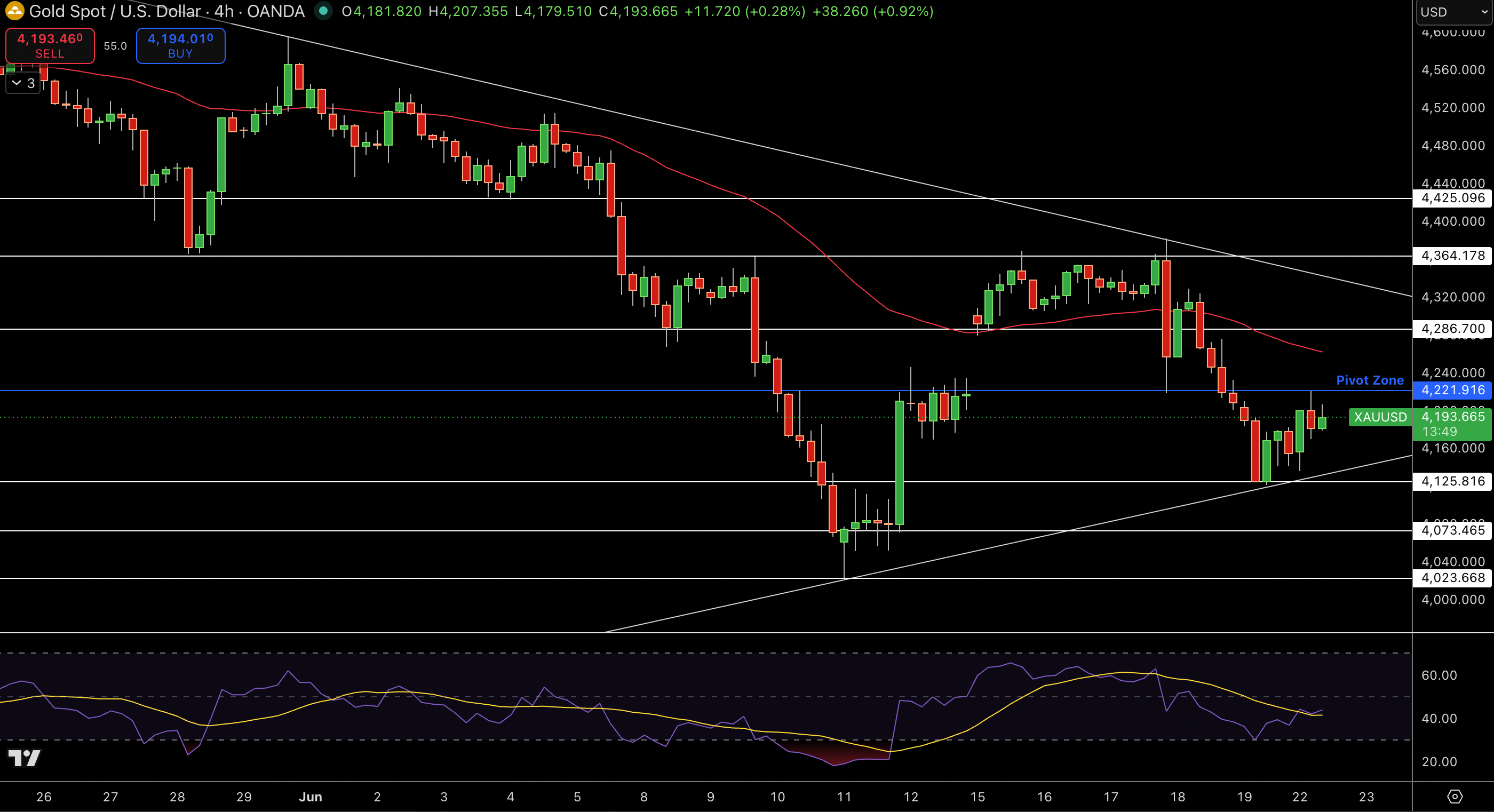
Gold Spot is currently quoting $4,194 per unit of measurement on the 4-hour timeframe. After tumbling down from the $4,364 pivot zone, Gold Spot has found buyers in the $4,221 pivot zone. The bullish rebound candlesticks in the area have bounced several times on the 4-Hour Chart. The formation of the bullish rejection candlestick wicks and multiple higher lows from the $4,073 bottom has proven the buying pressure at these zones.
RSI is sitting near $50 on the 4-Hour Chart. This signals neutral price momentum. Volume profile indicators suggest that the $4,200 to $4,226 zone is now a developing fair value zone. Sellers continue to defend the $4,287 area as the 50 SMA sits close to this level on the 4-Hour Chart. Gold Spot remains neutral to bullish if the price is held above the $4,221 pivot zone. Despite the long-term descending price trend line from the $4,597 high, the Fibonacci confluences have provided the bullish bias from the current levels of support. The formation of higher lows has attracted the buyers for a short-term reversal on the 4-Hour Chart.
Trade Idea: Buy at $4,194, targeting $4,287, with a stop-loss at $4,160.
Silver Spot Climbs to $65.99 – Pivot Zone Bounce Encourages Recovery on the 4H Chart
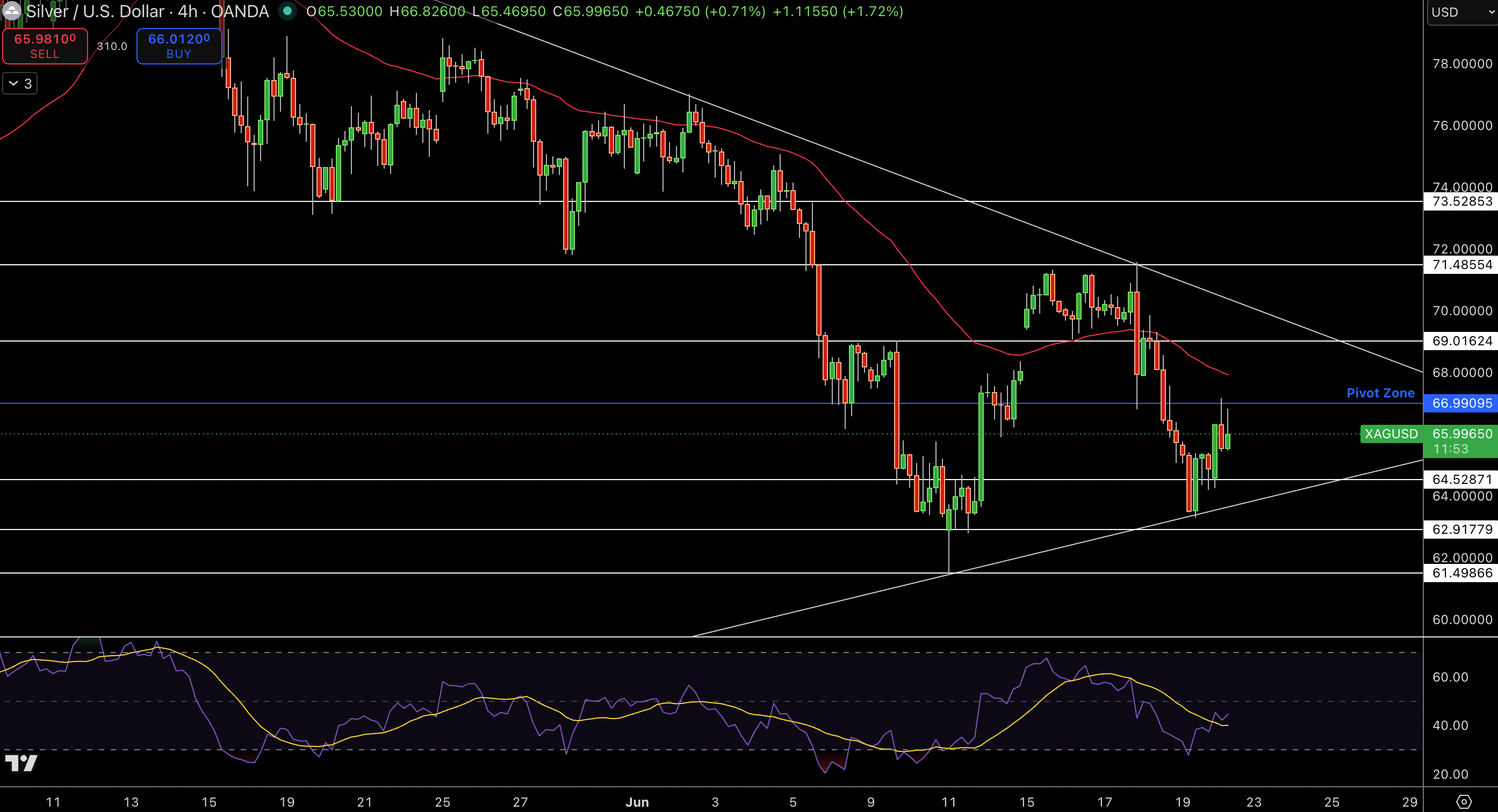
Silver is currently quoting $65.99 per unit of measurement on the 4-hour timeframe. After tumbling down from the $71.49 pivot zone, Silver Spot has found buyers in the $66.99 pivot zone. The bullish rebound candlesticks in the area have bounced several times on the 4-Hour Chart. The formation of the bullish rejection candlestick wicks and multiple higher lows from the $62.92 bottom has proven the buying pressure at these zones.
Gold Price Forecast
Every new Gold analysis as it publishes, today's technical signal and key levels, live price — on one page.
See all Gold forecastsRSI is sitting near $52 on the 4-Hour Chart. This signals neutral to bullish price momentum. Volume profile indicators suggest that the $65 to $67 zone is now a developing fair value zone. Sellers continue to defend the $69.02 area as the 50 SMA sits close to this level on the 4-Hour Chart. Silver Spot remains neutral to bullish if the price is held above the $66.99 pivot zone. Despite the long-term descending price trend line, the formation of higher lows has attracted the buyers for a short-term reversal on the 4-Hour Chart.
Trade Idea: Buy at $65.99, targeting $69.02, with a stop-loss at $64.53.