
The dollar declined in recent days against most major currencies apart from the yen as traders reduced expectations of two hikes by the Federal Reserve (the Fed) before the end of the year. Now attention turns to the upcoming job report on 7 August. This article summarises recent news, looks ahead to the NFP and briefly analyses the charts of euro-dollar and dollar-yen.
News on 6 August that Iran and Oman had agreed to establish a corridor for shipping through the Strait of Hormuz hit oil and boosted appetite for risk in markets. Traders also anticipate some degree of lull in hostilities in August and the possible resumption of active negotiations between the USA and Iran within the next few weeks.
Overall, inflation in the USA, like other major economies, has risen less than some had feared around the end of the first quarter, with June’s annual headline inflation in particular having been significantly below expectations. A plurality of traders, around 45% at the time of writing, expect a single hike between now and the end of 2026, according to CME FedWatch. The probability of this occurring next month declined in the last week to around 55%.
July’s NFP with data for June was significantly weaker than expected but still not a negative number:
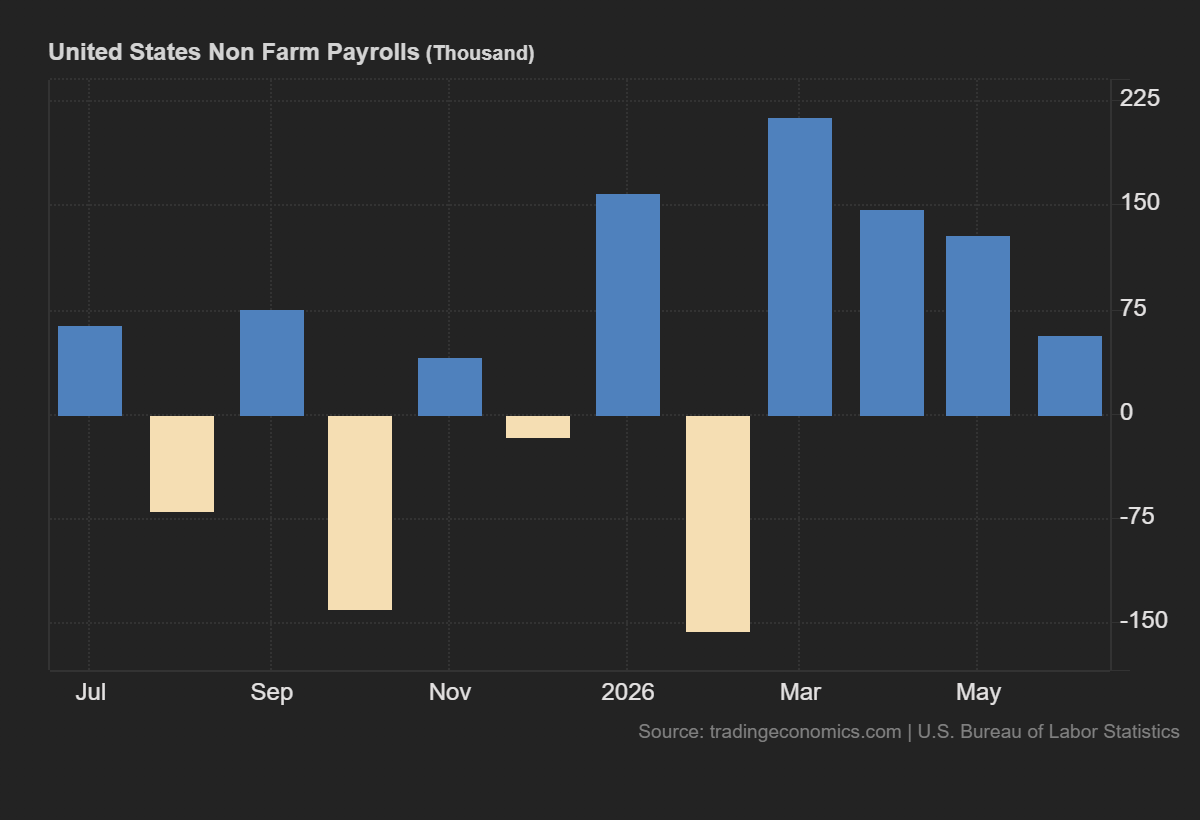
57,000 was only around half the consensus, which was somewhat negative for the dollar although it’s usually rare to see a single NFP have a lasting effect beyond a few days. The figure was still considerably better than the 12-month average. Unemployment unexpectedly declined in June:
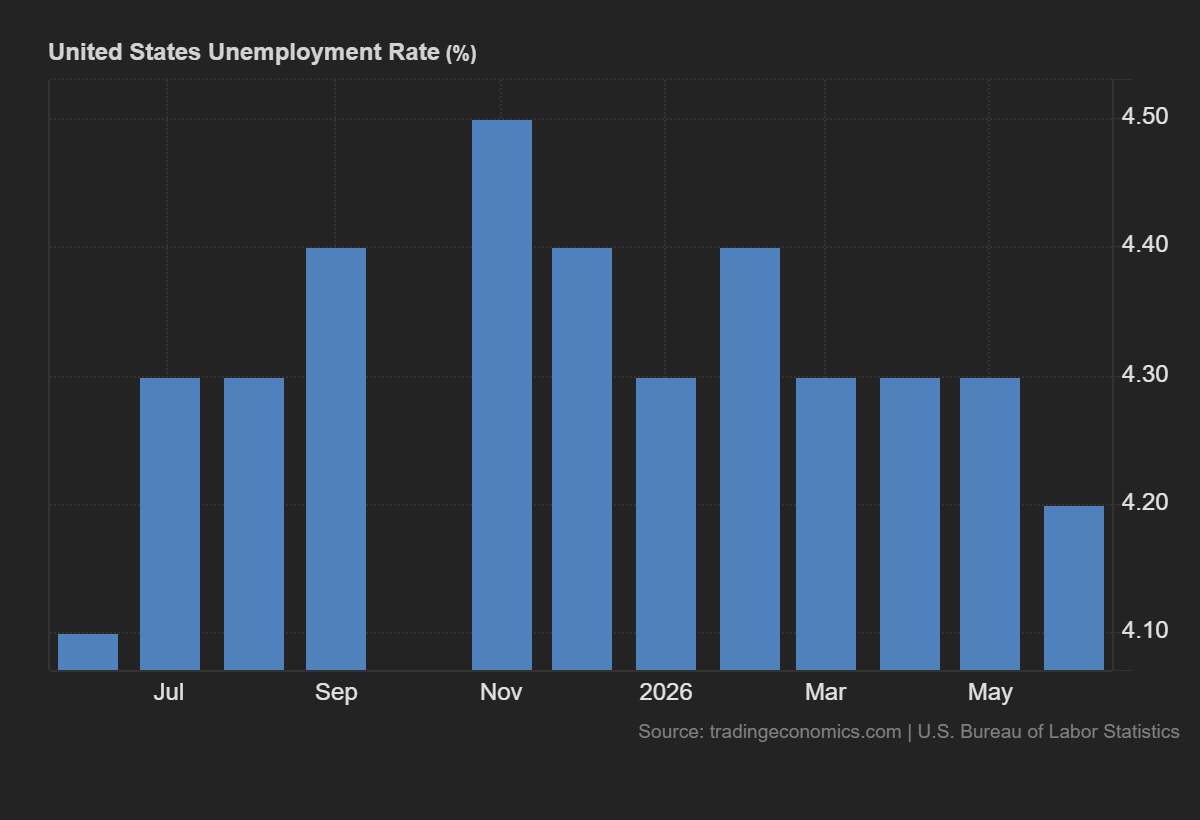
It’s too early to say for sure whether this is the start of a downward trend in unemployment, but for now, this seems to be unlikely since the rate is relatively low and less positive economic conditions overall don’t suggest a significantly better job market. However, between recent NFPs and relatively low unemployment, the general impression of a robust job market seems to be holding for the time being.
Decent but not spectacular performance from American GDP and the labor market, while inflation hasn’t surged enormously, means that the Fed doesn’t seem to be under a lot of pressure to hike rates immediately. Political pressure on the Fed to cut rates hasn’t been in clear view recently but remains a factor to consider.
A significantly better result from the NFP for July would normally suggest that inflation might be higher than current expectations of 3.4% for the annual headline figure. However, energy is likely to be a key factor in 12 August’s inflation, possibly influencing a higher reading given that oil made an overall gain last month. Stronger results from the NFP and inflation might increase the probability of the Fed hiking twice before the end of the year and boost the dollar.

Euro-dollar Hovers Around $1.155 Awaiting the NFP
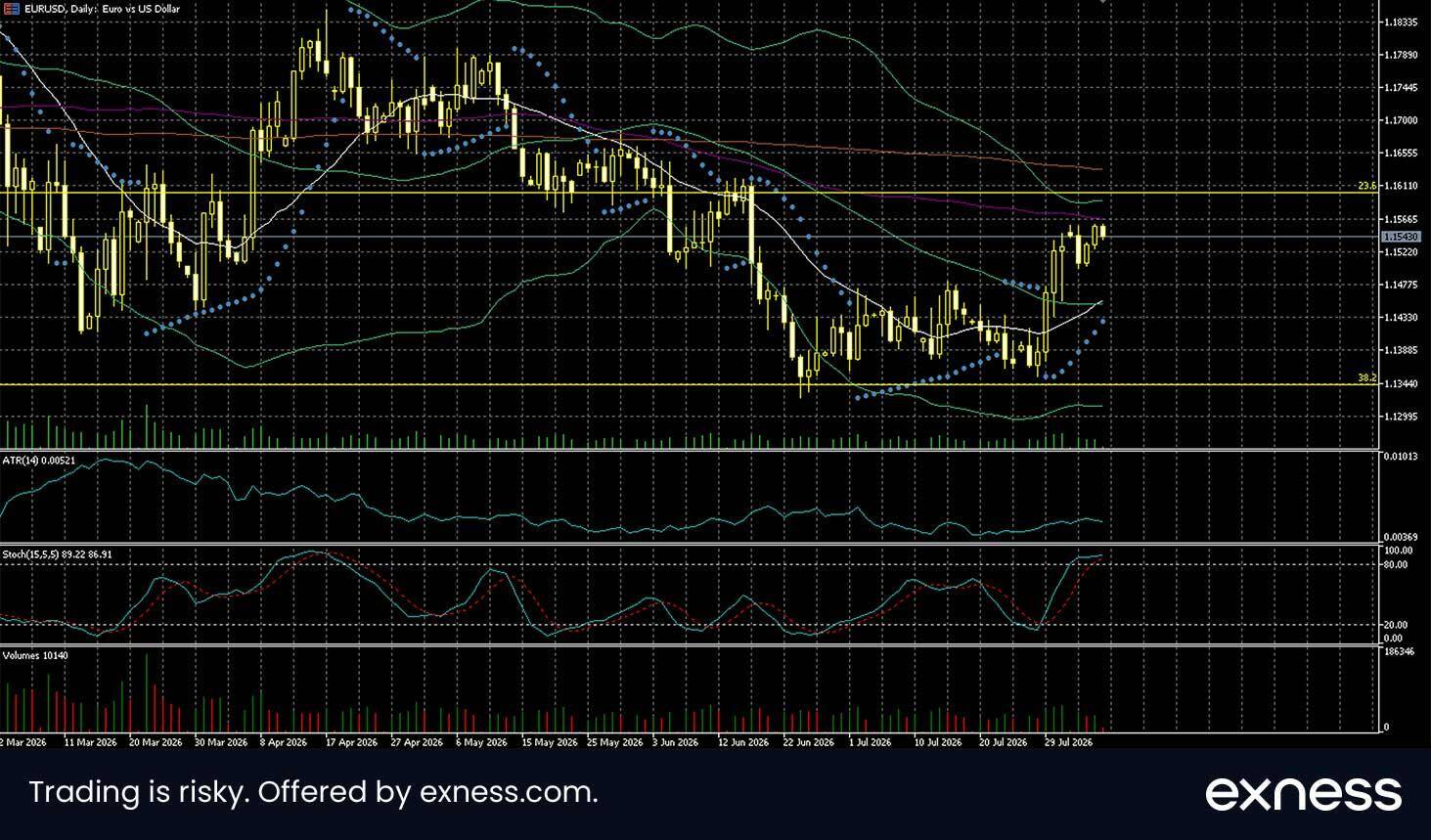
The Euro-dollar has bounced since late last month as the most hawkish possibilities for the Fed by the end of the year seem to have been rejected for now and the intensity of the conflict in the Gulf declined. The ECB is also likely to call for a single hike by the end of the year, with about 40% probability of two hikes. Recent data from the eurozone in general have been somewhat mixed, but sentiment received a boost from 6 August’s German factory orders, which were much better than expected.
The 100 SMA, slightly below $1.157, seems to be the main dynamic resistance in view ahead of a possible test of the 23.6% weekly Fibonacci retracement near $1.16. However, the slow stochastic clearly signals buying saturation, so an immediate reaction upward if the NFP is negative might be short-lived.
A better NFP broadly in line with expectations might drive the price down to retest $1.15 at least in the short term. Further ahead, stronger results from both the NFP and American inflation on 12 August might drive the price down to the confluence of the 20 and 50 SMAs around $1.145. The golden cross of these can probably be discounted in the context of major American data coming up.
EUR/USD Price Forecast
Every new EUR/USD analysis as it publishes, today's technical signal and key levels, live price — on one page.
See all EUR/USD forecastsDollar-yen Holding Above ¥157
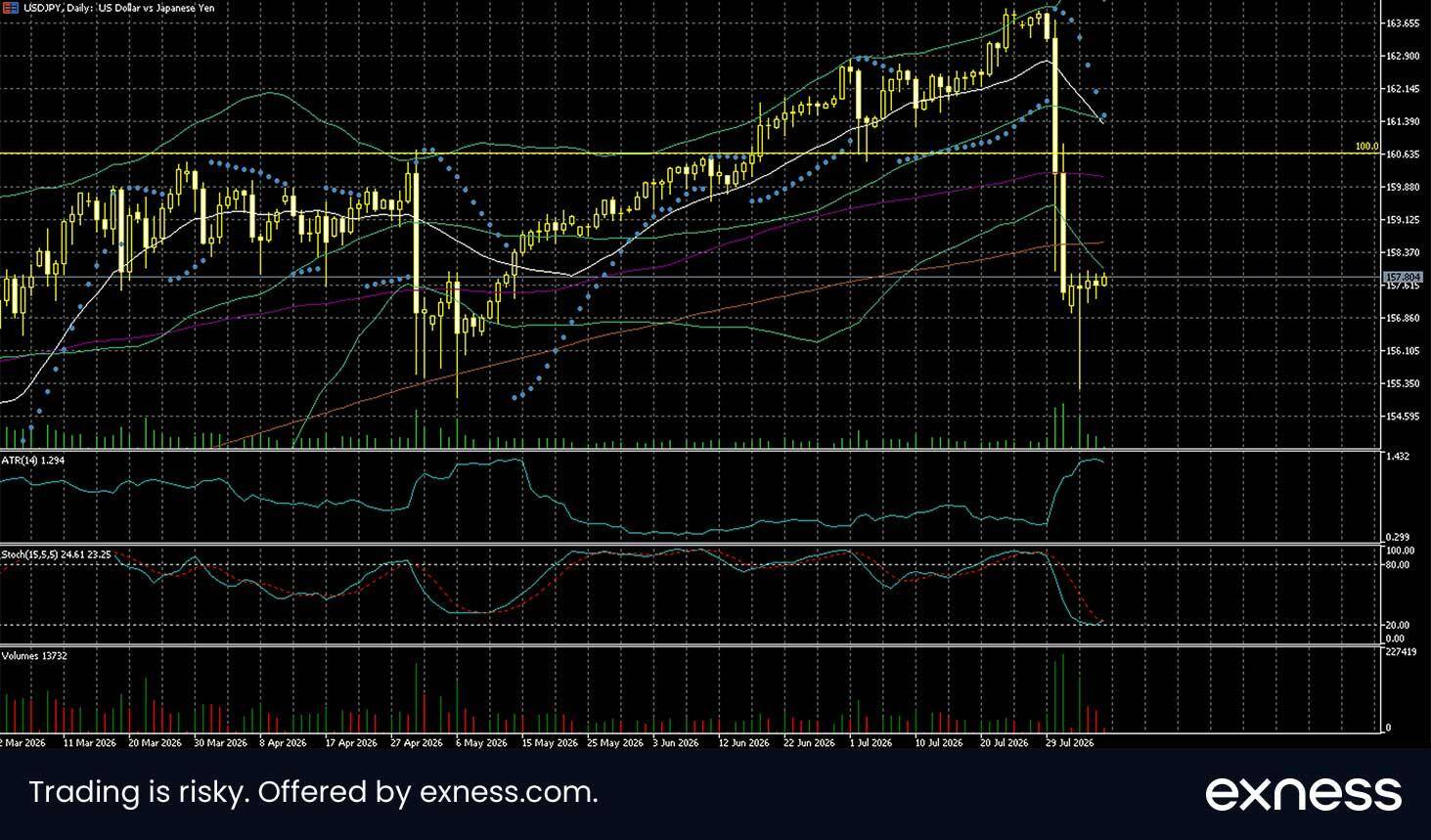
After the largest intervention in decades from both the American and Japanese governments, dollar-yen now seems to have stabilised around ¥157.50. According to official data, Japan spent more than ¥5 trillion on 31 July shoring up the yen in addition to American operations earlier last week. The below-target inflation and lackluster GDP growth in Japan in recent months make more hikes by the BoJ in the next few months questionable. However, lower expectations for the Fed to hike twice before the end of the year might delay the next push up to ¥160.
The lack of major change in basic fundamentals and spike in buying around the interventions last week might suggest that the general uptrend could continue, although perhaps with less momentum than earlier this summer. ¥160 remains an obvious potential target but both the 200 and 100 SMAs are potential dynamic resistances before there. Strong oversold signals from both the slow stochastic and Bollinger Bands suggest an ongoing bounce.
3 August’s large tail showed a clear rejection of a move below ¥157. Another serious attempt to push below there would probably need a weaker NFP and possible lower inflation next week too. However, immediate further intervention, however unlikely that might seem, could invalidate this analysis, so traders should continue to watch for further such operations as before.
This article was submitted by Michael Stark, financial content lead at Exness.
For the latest analysis, ideas for trading and more, follow Michael on X: @MStarkExness.
The opinions in this article are personal to the writer; they do not represent those of Exness. This is not a recommendation to trade.