It was seen as too cyclical, too politically exposed and too volatile to qualify as protection. In 2026, that assumption is being dismantled in real time.
As inflation proves stickier than expected, growth slows across major economies and geopolitical fault lines threaten the world’s most important energy corridors, Crude Oil is no longer behaving like a simple growth trade. It is emerging as one of the market’s most powerful defensive assets.
The Safe Haven Narrative Is Being Rewritten
This is no longer a conventional inflation scare. It is a classic Stagflationary setup: slower growth colliding with stubborn price pressures, forcing markets to confront the possibility of fewer rate cuts, firmer bond yields and tighter financial conditions.
That shift is already draining liquidity from risk assets. Equities have buckled under the weight of rising volatility, with trillions wiped out in March alone. The Nasdaq 100 has fallen into correction territory, down over 10% from its October 2025 high, while the S&P 500 is on course for its longest weekly losing streak since 2022. In this kind of environment, hard assets regain their authority.
“Traders are still anchored to an outdated playbook,” says Lars Hansen, Head of Research at The Gold & Silver Club. “The COVID crisis set and drove the market for the next five years until 2025. Now, in 2026, the rest of the decade will be shaped by Energy. Those who fail to recognize that shift will be dangerously late.”
Why Oil Is Starting to Behave Like a Hedge
What is changing is not simply price, but perception. Oil is being reappraised as a strategic store of geopolitical value in a world where energy security has moved ahead of affordability and sustainability.
Brent Oil Price Forecast
Every new Brent Oil analysis as it publishes, today's technical signal and key levels, live price — on one page.
See all Brent Oil forecastsFragile supply chains, chronic underinvestment in upstream capacity and the strain of an unfinished energy transition have left the system acutely vulnerable to disruption. That vulnerability is precisely what gives Crude Oil its new safe-haven status.
The physical risk is extraordinary. The probability that the Strait of Hormuz remains closed on March 31 is now estimated at 85%. Thirty-one days of disruption at net stopped flows of 18.5 million barrels per day would amount to 575 million barrels, roughly 1.4 times the entire U.S Strategic Petroleum Reserve.
Yet this is not merely an Oil issue. Gas, fertilisers and metals are all caught in the same logistical artery. The system cannot absorb a shock of that magnitude without disorderly repricing.
“This is where the market is still underestimating the scale of the problem,” Hansen says.
“The physical disruption is the trigger, but precautionary hoarding is the multiplier. Once nations and institutions start securing supply simultaneously, price escalation becomes far more aggressive than most forecasts imply.”
The Energy Supercycle Is No Longer Theoretical
There is a deeper structural force beneath the headlines. The world is dismantling the old hydrocarbon system before the new one can fully bear the load. That creates a dangerous gap. AI-driven electricity demand, industrial resilience, military requirements and baseload power needs are all reinforcing the relevance of fossil fuels.
At the same time, energy’s weighting in the S&P 500 has collapsed to just 3%, while technology has swollen to 53%. The portfolio hedge that once came naturally through energy exposure has vanished.
“Oil is underowned, undervalued and still widely underestimated,” says Hansen. “That is exactly the kind of setup that creates asymmetric upside. In an Energy Supercycle, constrained supply and inelastic demand do not produce polite moves. They produce violent repricing.”
The Opportunity Traders Cannot Afford to Miss
This is why the fear of missing out is intensifying. Safe havens are never obvious at the start. They are recognised only after capital has already rotated and the most profitable move is well underway.
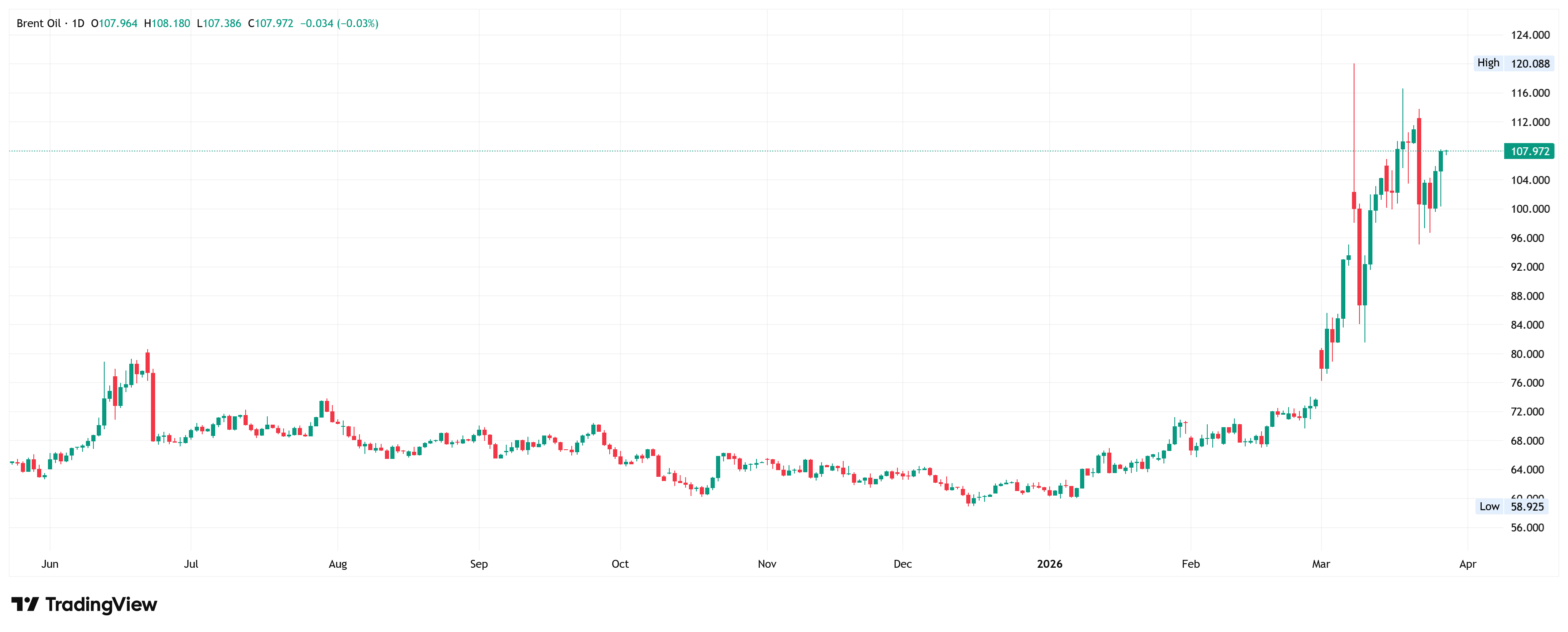
In 2026, Oil is no longer just a tactical inflation trade. It is becoming one of the decade’s defining macro hedges, with the power to outperform as risk assets weaken and policy credibility erodes.
“The market still thinks Energy is a side story,” Hansen says. “It is not. It is the main story of 2026 and Oil may prove to be the safest place to be when the next global shock hits.”
That repricing is not coming at some distant point in the future. It is happening now.
For investors and traders alike, the message is clear: if you wait for full consensus, you will be paying a far higher price for the same thesis. The smart money is already rotating. The only question is whether you move before the crowd – or after it.