On Tuesday, January 27, USD/JPY took its second plunge in three sessions, sliding below 153 for the first time since November 7.
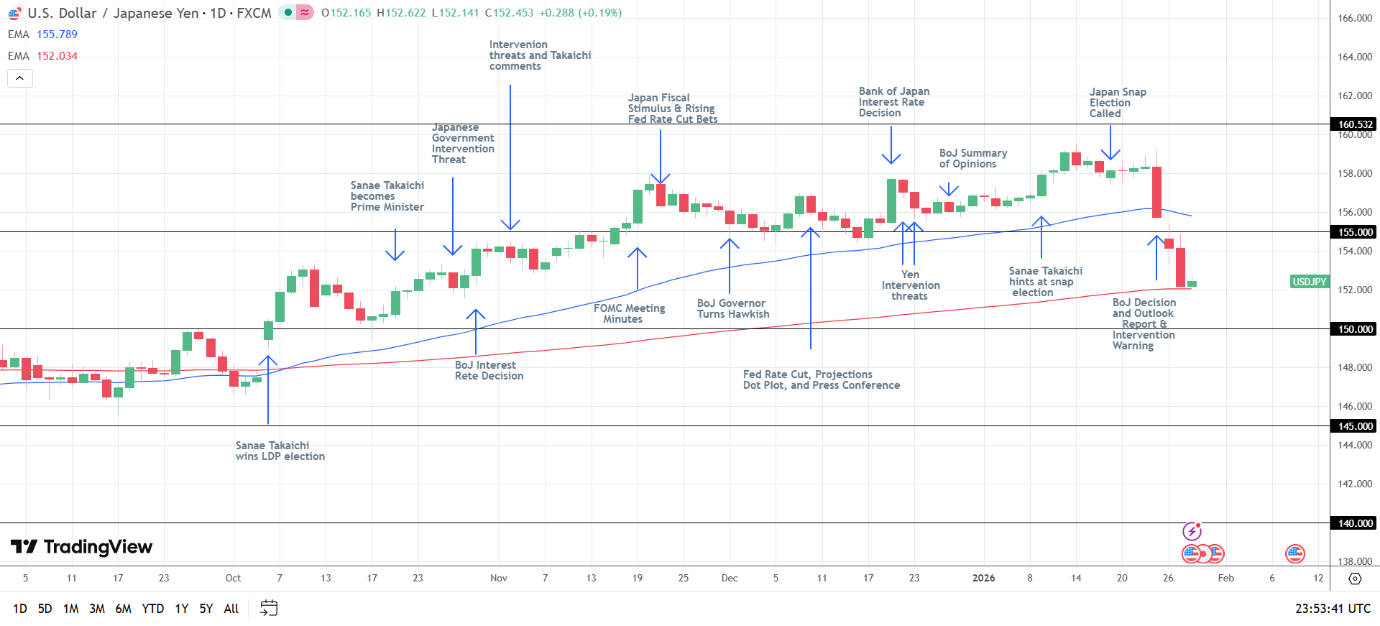
Speculation about a coordinated Japanese and US move to bolster the yen has sent USD/JPY down from Friday’s high of 159.225 to Tuesday’s low of 152.092.
US President Trump added to the selling momentum after supporting the US dollar’s recent slump.
On Wednesday, January 29, Fed Chair Powell will take center stage. With the markets expecting the Fed to stand pat on policy, Powell’s comments will be key for the US dollar and USD/JPY trends.
Nevertheless, the USD/JPY pair’s drop below 153 aligns with the bearish short- to medium-term outlook.
Below, I’ll discuss the macro backdrop, near-term price catalysts, and technical levels traders should closely watch.

Bank of Japan Monetary Policy Meeting Minutes Take a Back Seat
On January 28, the Bank of Japan released its Monetary Policy Meeting Minutes from its December gathering.
The Minutes highlighted optimism amongst policymakers that it was increasingly likely that the Bank would achieve its economic and price targets. Concerns about the US economy and the effect of Trump’s tariff policies also abated. The stance on tariffs raised expectations that wages would rise steadily in 2026.
The Bank of Japan raised interest rates by 25 basis points to 0.75% in December, signaling further rate hikes if the economy and prices moved in line with projections. In January, the BoJ maintained interest rates at 0.75%, but raised its GDP and CPI forecasts, suggesting multiple rate hikes in 2026.
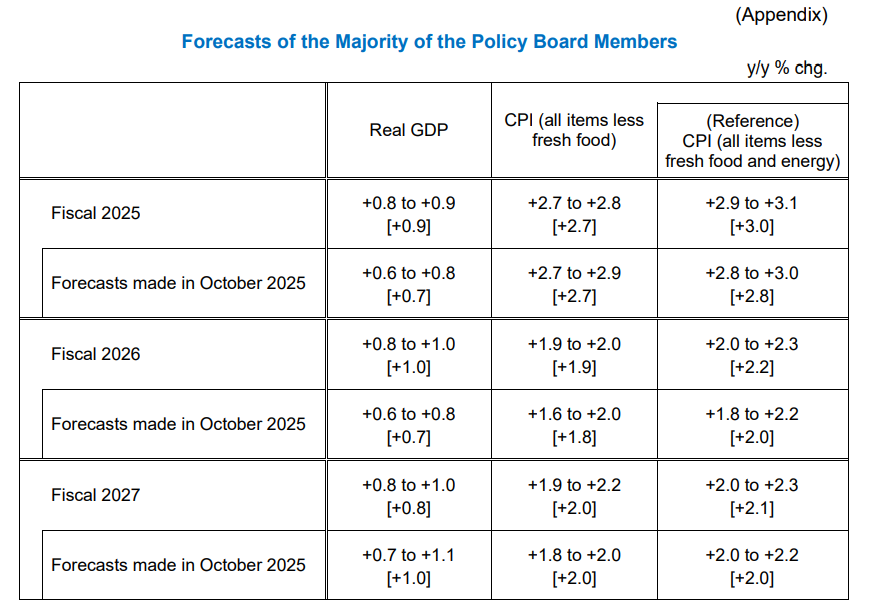
Notably, USD/JPY advanced following the BoJ’s rate hike, but plunged in reaction to the Bank’s Quarterly Outlook Report, which coincided with Japanese Prime Minister Sanae Takaichi’s warning of yen interventions.
USD/JPY Price Forecast
Every new USD/JPY analysis as it publishes, today's technical signal and key levels, live price — on one page.
See all USD/JPY forecasts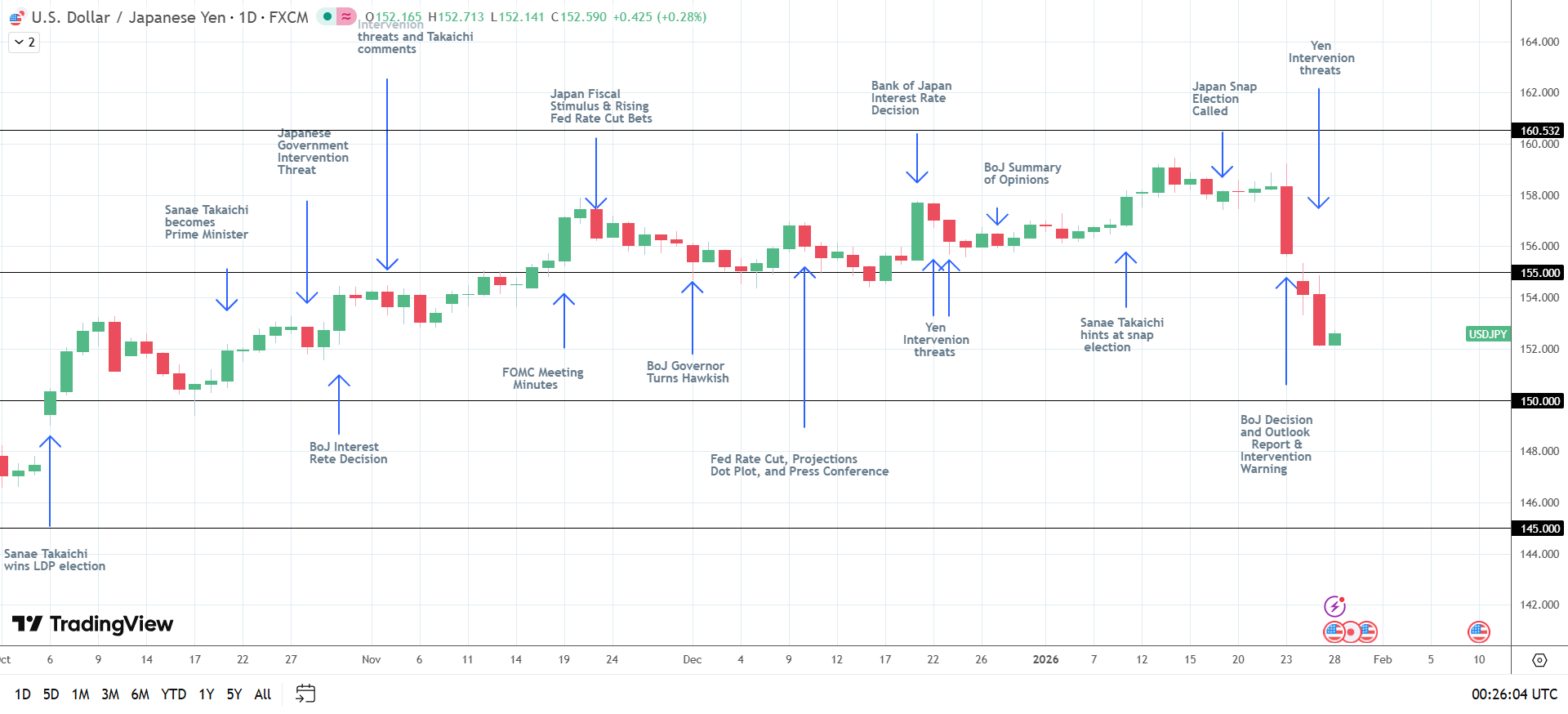
US President Trump Accepts the US Dollar Slump
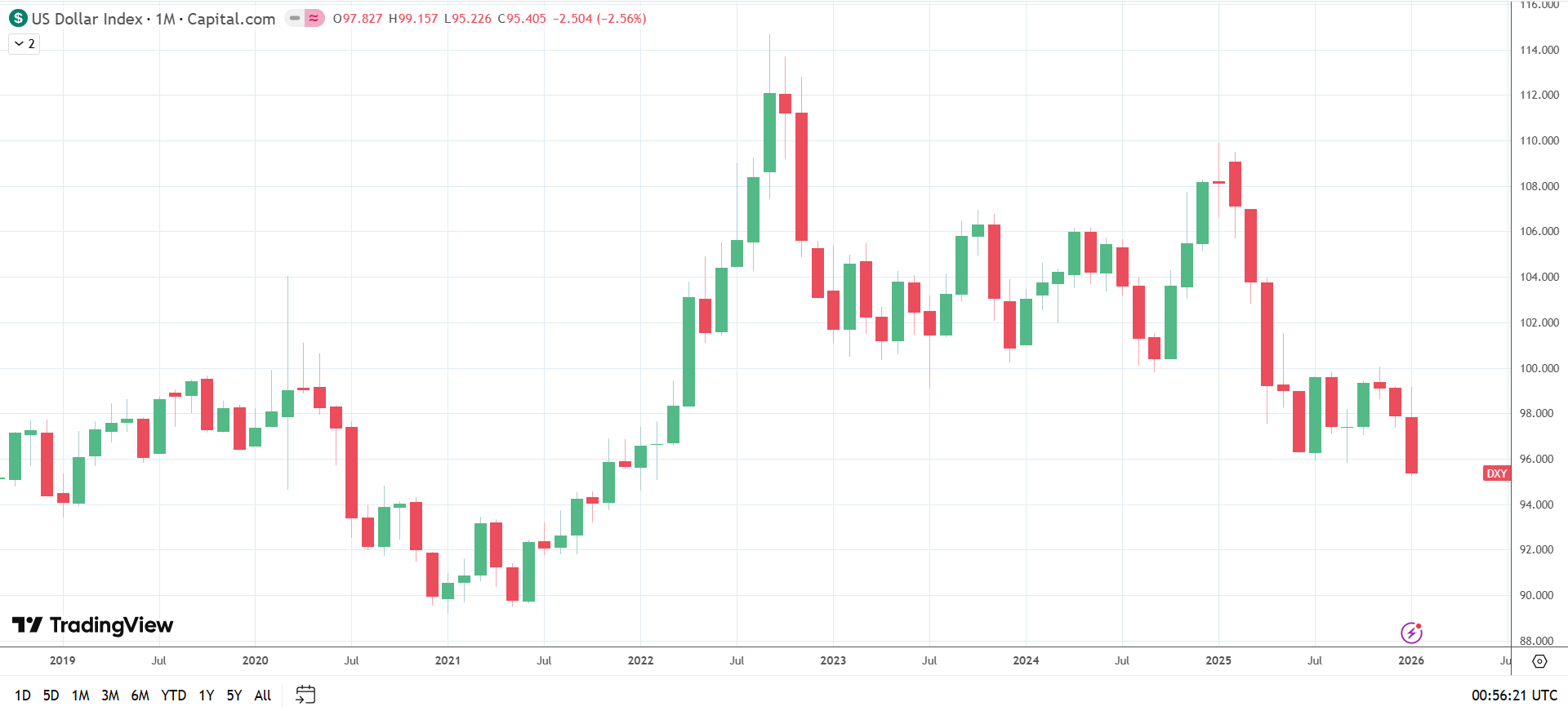
Warnings of yen interventions have coincided with a sharply weaker US Dollar, contributing to the USD/JPY pair’s plunge below 153. The US Dollar Index has tumbled 2.56% to 95.405 in January, its lowest since February 2022.
On January 27, US President Trump accelerated the US Dollar’s sell-off. The Kobeissi Letter reported:
“Most people don’t realize what Trump just said: For 12+ months, the US Dollar has been on a sharp decline, falling 10% in 2025 in its worst year since 2017. Minutes ago, for the first time, President Trump commented on the decline in the USD: “The value of the Dollar is great,” Trump said.” This immediately sent the US Dollar another 1% lower, to its lowest level since February 2022. Why? It’s a clear signal that President Trump is willing to tolerate a weaker Dollar to push rates lower and boost US exports.”
Fed Interest Rate Decision and Press Conference in Focus
Later on Wednesday, the Fed will take center stage. Markets expect the Fed to keep interest rates at 3.75%, shifting the focus to Fed Chair Powell’s press conference. Fed Chair Powell’s view on the labor market, inflation, and the timelines for further monetary policy easing will be key for the US Dollar and USD/JPY trends.
Hints of a rate cut in H1 2026 would likely weaken buying interest in the US dollar, sending USD/JPY lower.
Recent US labor market and inflation data have curbed bets on an H1 2026 Fed rate cut. However, cooling inflation and rising unemployment would change the narrative.
According to the CME FedWatch Tool, the chances of a June cut fell from 83.4% on December 26 to 65.0% on January 27. Crucially, an H1 2026 rate cut would support expectations of two rate cuts in 2026. Multiple Fed rate cuts would coincide with the BoJ’s hawkish policy stance, signaling a narrowing of US-Japan rate differentials. Narrowing rate differentials, favoring the yen, would weigh on USD/JPY.
Technical Outlook: Key Levels to Watch
For USD/JPY price trends, traders should assess technicals and closely monitor the Fed, the BoJ, and geopolitical developments.
On the daily chart, USD/JPY remains below its 50-day Exponential Moving Average (EMA), but above the 200-day EMA. The EMAs indicated a near-term bearish trend reversal, aligning with the negative outlook for USD/JPY. Positive yen fundamentals have aligned with the near-term technicals.
A break below the 200-day EMA would bring the 150 support level into play. If breached, October’s low of 146.585 would be the next key support level.
Importantly, a sustained drop below the EMAs would reinforce the bearish trend reversal and reaffirm the bearish short- to medium-term price outlook.
Positioning and Risk Outlook
In my view, warnings of yen intervention, a hawkish BoJ policy stance, and expectations of Fed rate cuts support a negative price trajectory. However, Japan’s upcoming election, US economic indicators, and Fed Chair Powell’s speech will be key, given recent price action.
Furthermore, a higher BoJ neutral interest rate level (potentially 1.5%-2.5%) would signal a narrower US-Japan interest rate differential. A sharply narrower rate differential may trigger a yen carry unwind, as seen in mid-2024. An unwind of yen carry trades would likely send USD/JPY toward 140 over the longer term.
However, upside risks to the bearish outlook include:
- Dovish BoJ rhetoric and a lower neutral interest rate (potentially 1% – 1.25%).
- Fed Chair Powell downplays the chances of an H1 2026 cut.
- Robust US economic data dampens bets on an H1 2026 Fed rate cut.
These factors would send USD/JPY higher. However, ongoing warnings of yen intervention are likely to cap the upside at the 155 level.
Read the full USD/JPY forecast, including chart setups and trade ideas.
Conclusion: Politics, the BoJ, and the Fed in the Spotlight
In summary, the USD/JPY trends will hinge on Japan’s election result, Prime Minister Takaichi’s fiscal spending plans, the BoJ’s policy stance, the Fed’s rate path, and Trump’s tariff policies.
A higher BoJ neutral rate (1.5%-2.5%) would signal a hawkish BoJ rate path, strengthening the yen. Meanwhile, Prime Minister Takaichi’s snap election will also be crucial for the near-term USD/JPY trends, given her fiscal policy goals. Additionally, dovish Fed rhetoric would suggest narrower rate differentials, reaffirming the bearish medium-term outlook for USD/JPY.
A stronger yen and the unwinding of yen carry trades would likely push USD/JPY toward 140 over the longer 6-12 month timeline.
For more in-depth analysis, review today’s USD/JPY trading setups in our latest reports and consult the economic calendar.