Long-Term Channel Meets Resistance
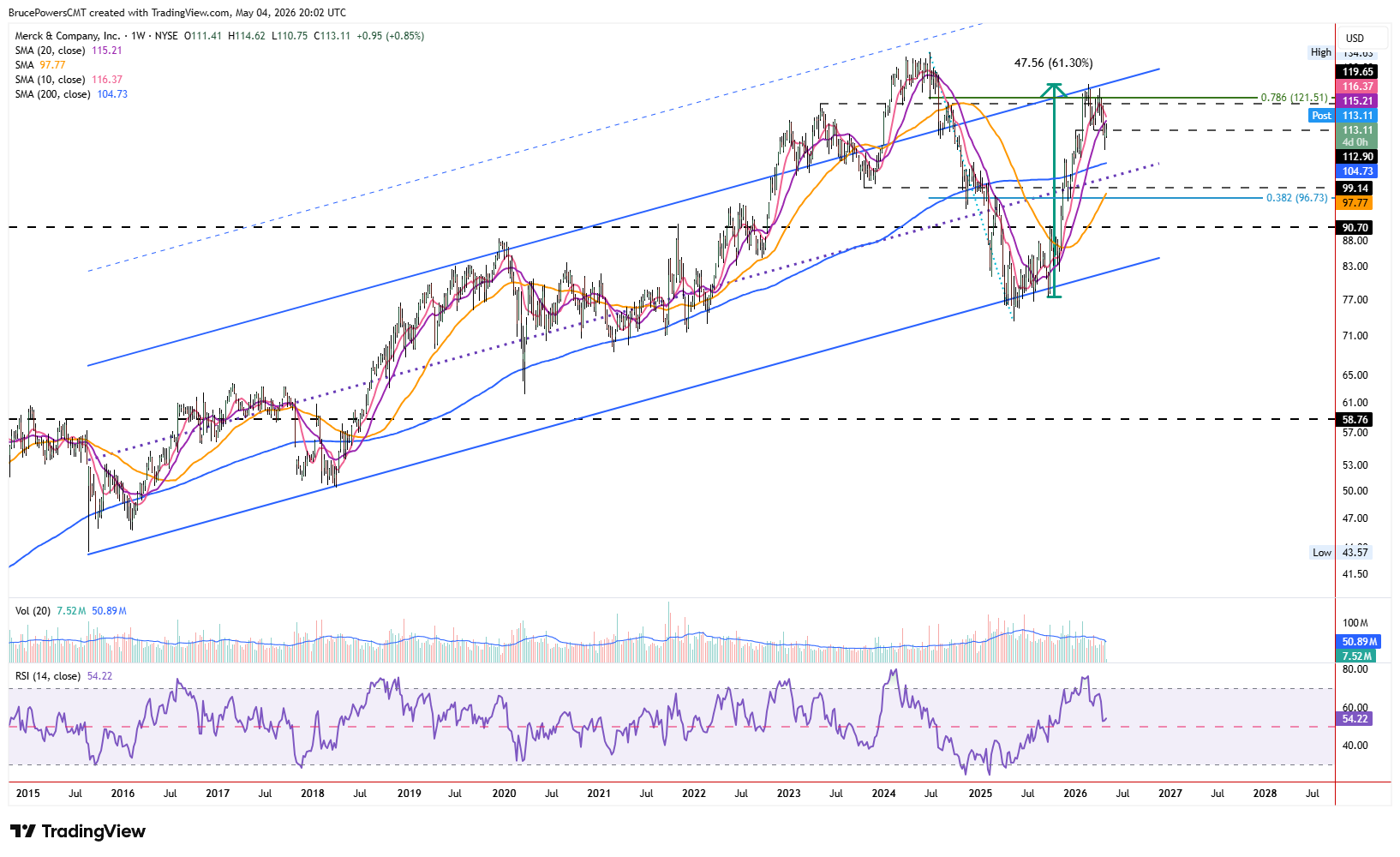
Shares of Merck & Company, Inc. (MRK), a global healthcare company, are showing signs of a possible deeper correction. The stock reached a high of $125.14 in February, marking a 61.3% ($47.56) gain when measured from the prior higher swing low at $77.58. That low followed the $73.31 bottom, which found support near a long-term uptrend line, further confirming the boundaries of a rising channel. Resistance at the recent high was seen near the top of this long-term rising channel, with the upper boundary connecting back to the June 2019 swing high. Since this channel originates from around 2015, it carries broader long-term implications for trend structure.

Double Top Breakdown Shifts Momentum
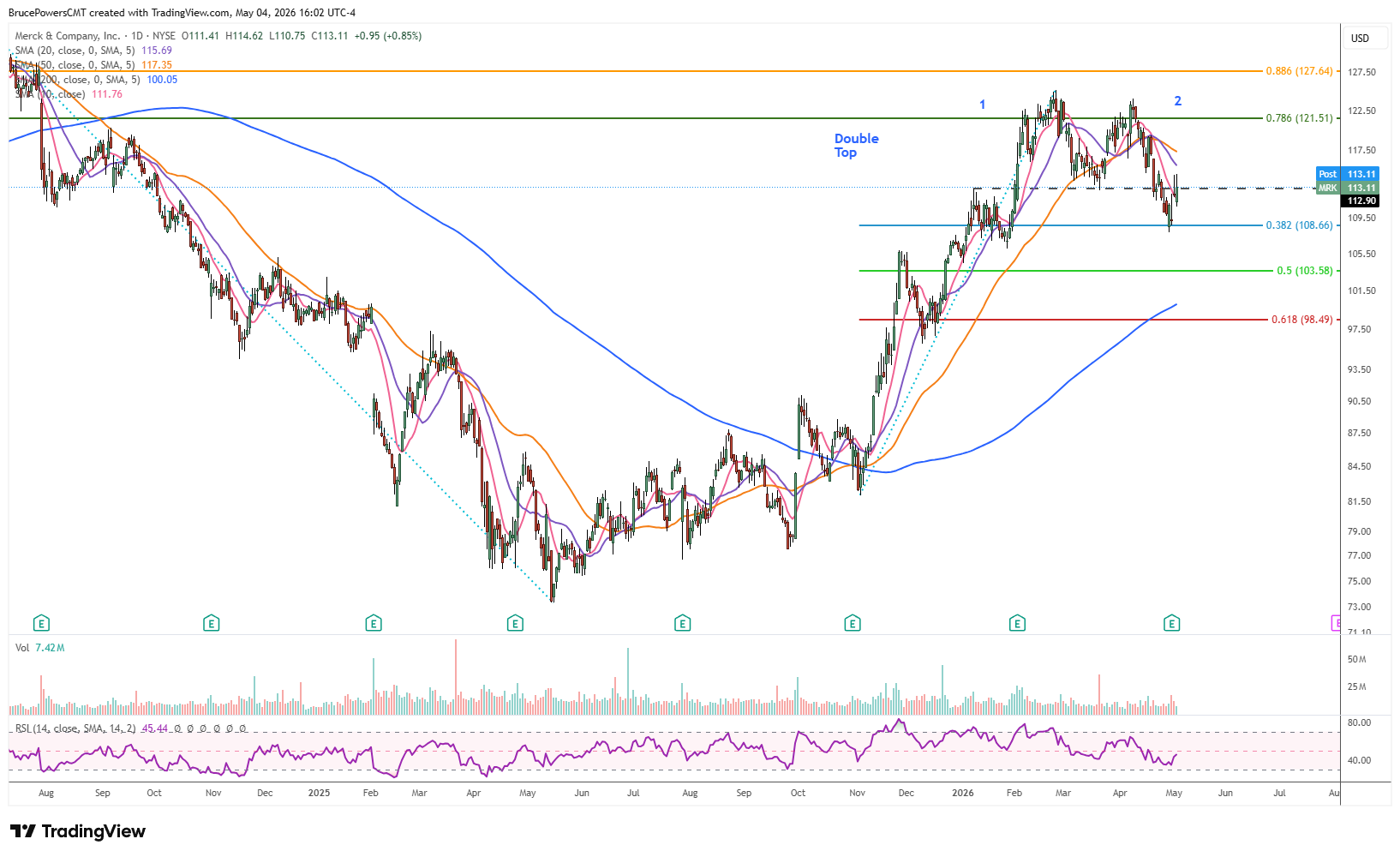
The daily chart shows a confirmed breakdown from a double top reversal pattern last week, with a decline below the neckline and higher swing low at $112.72. Key moving averages had failed to hold as support ahead of the breakdown, providing an early warning of increasing selling pressure, which was further reinforced by the formation of a lower swing high at $124.00.
Once key support is broken, it is common to see a counter-trend rally that retests prior support as resistance. The quality and structure of that pullback can provide valuable insight into underlying supply and demand dynamics.
Key Resistance Zones in Focus
On Monday, MRK tested a potential resistance zone near the prior neckline of $112.72, but is now attempting to reclaim that level, along with the 10-day moving average at $111.82. Key resistance for the counter-trend rally appears near the 50-day moving average around $117.36, which previously served as reliable dynamic support during the advance that began in November and therefore may act as a more significant resistance zone. Slightly below that, the 20-day moving average, now at $115.72, may provide an interim resistance zone.
Bearish Scenario Remains in Play
It likely requires a sustained move above the lower swing high at $119.36 to negate the bearish implications of the double top pattern. Unless that occurs, the current structure favors a continuation lower, with a potential test of deeper support levels before the correction completes.
Bullish Alternative Still Possible
Alternatively, if the bearish potential of the double top fails to develop, a decisive breakout into new trend highs could unfold, reinforcing the broader bullish trend. In that context, the current pullback may ultimately prove corrective within a larger uptrend.
If you’d like to know more about technical analysis and how traders use it, please visit our educational area.