Bearish Pattern Keeps Pressure Intact
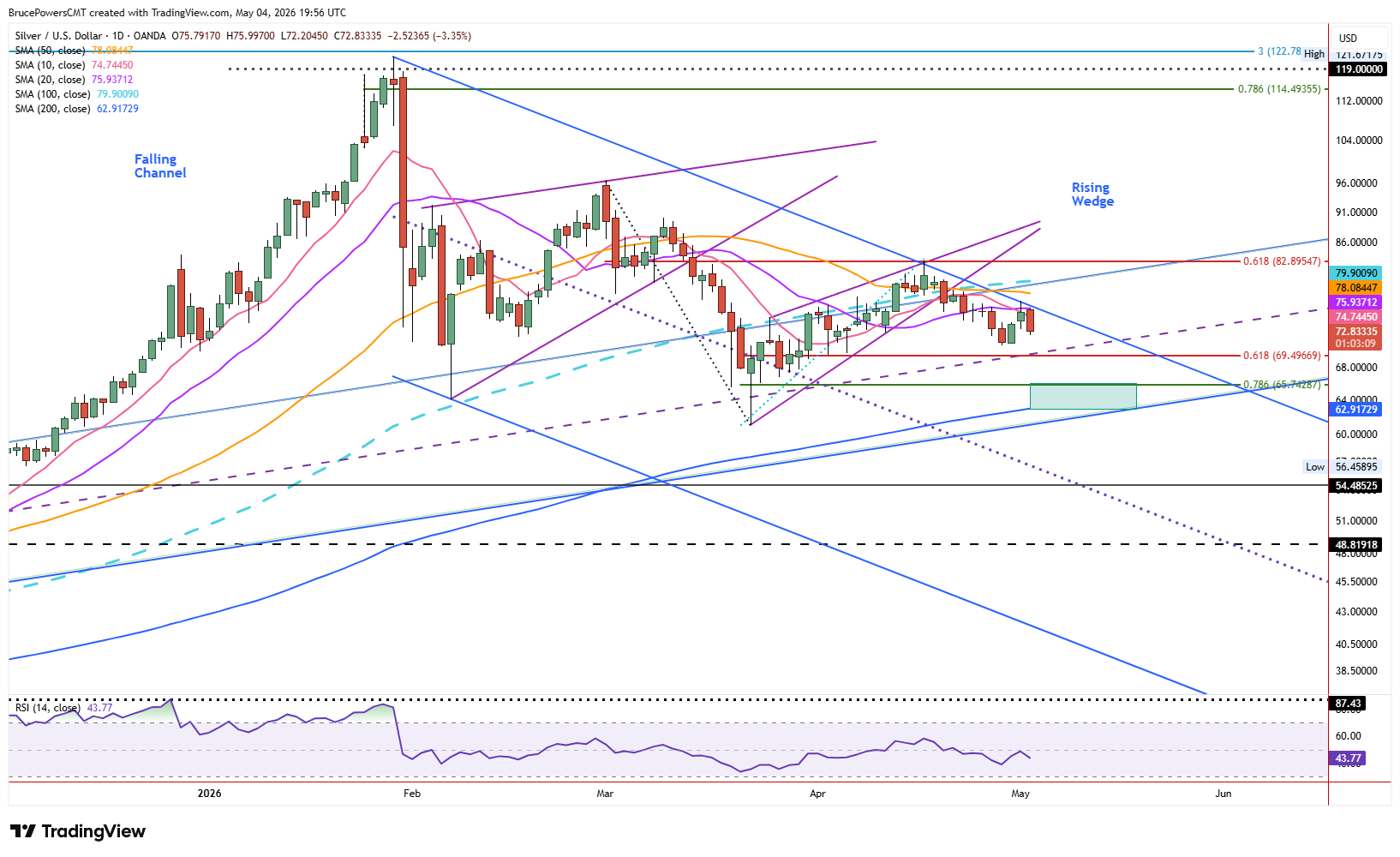
Silver continues to follow classic bearish price behavior after triggering a rising wedge pattern a couple of weeks ago. The first pullback following the bearish signal found resistance near the 20-day moving average on Friday. On Monday, sellers took back control, triggering a one-day bearish reversal and establishing a lower swing high at $76.98. Once prior support is confirmed as resistance, the short-term bearish trend is likely to continue – and that scenario began to unfold over the past couple of days at the 20-day moving average.
Fibonacci Levels Guide Next Support Zone
The next lower support zone after the first leg down from the wedge is near the confluence of the 61.8% Fibonacci retracement and the midline for a rising trend channel, near $69.50. But given the bearish wedge signal and the implications from the rising channel, it seems likely that lower price levels may be tested before the decline completes. A failure of support near the 61.8% zone points to the 78.6% Fibonacci retracement at $65.74 as a potential target.
Major Support Confluence Comes into Focus
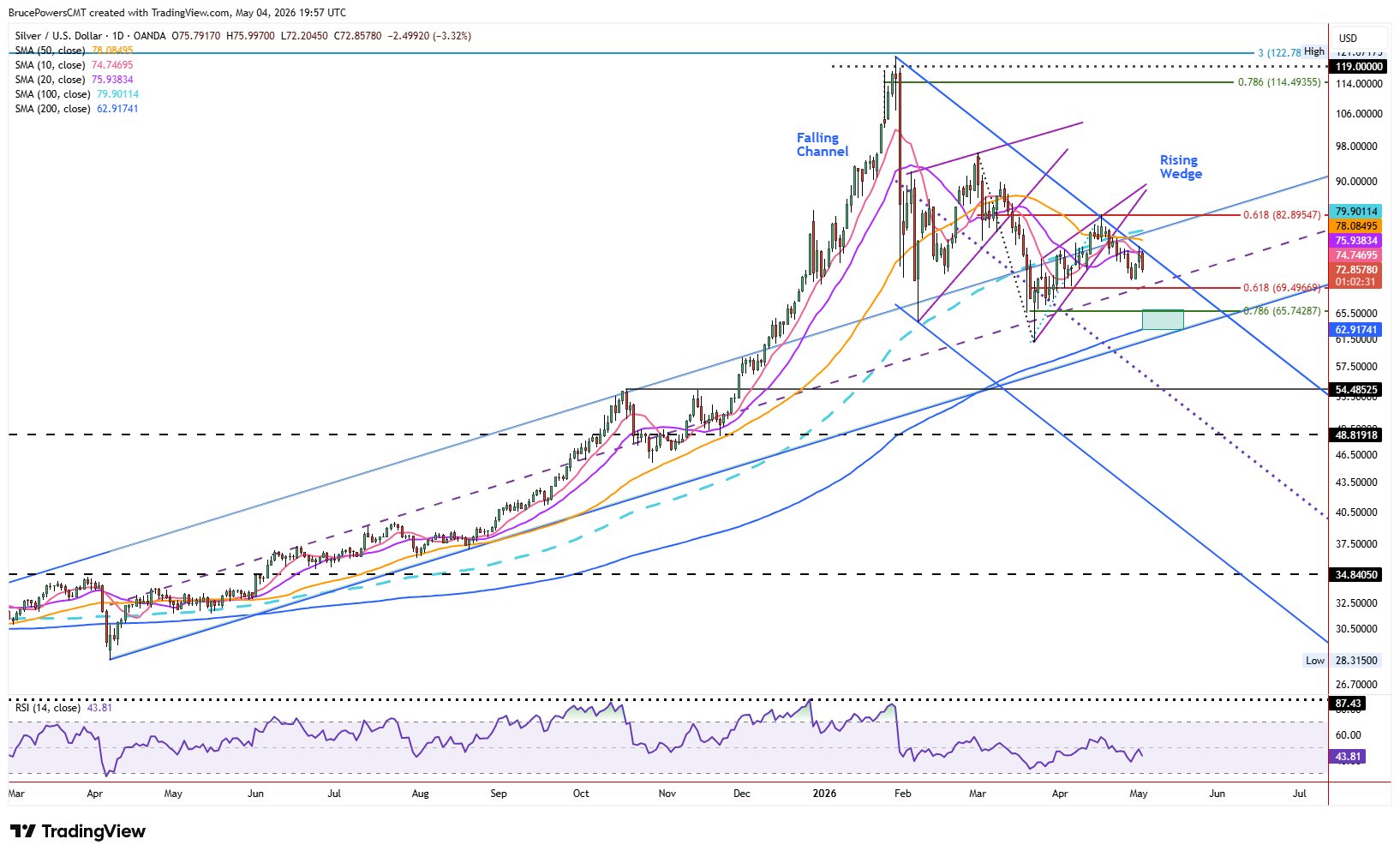
The wedge pattern suggests a downside target near the swing low and bottom of the wedge formation at $61.00. That would make sense, except for the fact that the 200-day moving average is at $62.92 and rising. It represents long-term dynamic trend support, and it has not been approached since it was last reclaimed in April 2025. This increases the likelihood that it could act as a meaningful support zone as price approaches it. Also, consider that the closer the 200-day moving average aligns with the 78.6% retracement zone, the stronger the potential support that this confluence zone may represent.
Resistance Defines Invalidity
Despite the potential for silver to continue facing resistance near the 20-day moving average, if it is exceeded to the upside, the 100-day moving average near $79.90 becomes a key resistance level. In other words, the bearish implications of the wedge signal remain valid unless silver sustains a reclaim of the 100-day moving average.
If you’d like to know more about how to trade gold and silver, please visit our educational area.