
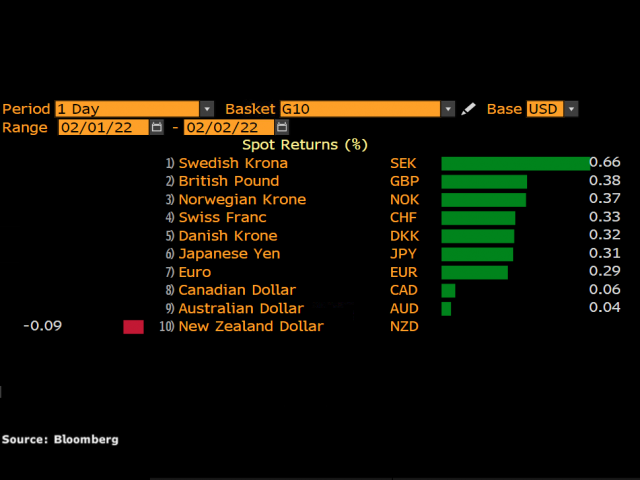
Earlier in the week, dollar bulls were dealt a heavy blow after Federal Reserve officials played down the prospects of aggressive rate hikes over the coming months. As major currencies took advantage of this development, we decided to identify potential breakout and breakdown opportunities in the new month.

What is a breakout?
When the price of an asset moves above a resistance level. Breakouts are important because they signal the start of a potential trend in the direction of the breach. A breakdown is the bearish counterpart of a breakout.
What is a fakeout?
A false break above a resistance level or below a support level. Fakeouts can be painful. Nobody likes being on the wrong side of a trade. Prices tend to reverse sharply after the false break higher or lower.
Now the basics have been covered, let’s get cracking!
AUDUSD balances above major support
The last time the AUDUSD traded well below the 0.7000 level was back in 2020.
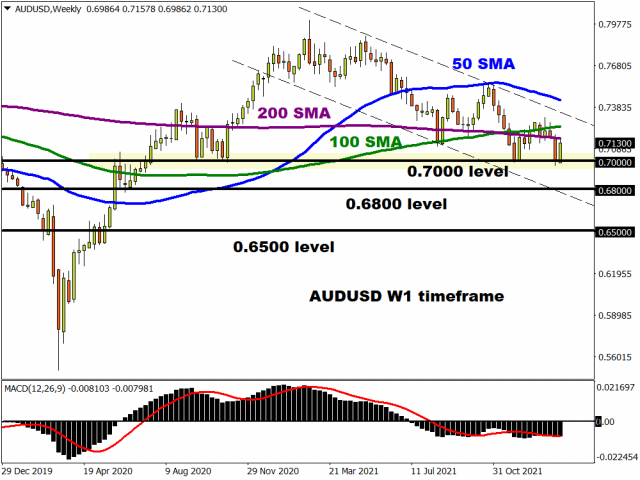
This is certainly a strong support that may require a fundamental catalyst to overcome. Looking at the technical picture, bears remain in control on the weekly charts. Prices are trading below the 50, 100 and 200 weekly SMA while the MACD trades well below zero. Given how the AUDUSD resides in a weekly bearish channel, this reinforces the bearish bias with a solid monthly/weekly close below 0.700 signalling further downside. Such a development could result in a decline towards 0.6800 and 0.6500, respectively. If 0.7000 proves to be reliable support, prices could rebound back towards 0.7300.
EURGBP waits for central bank combo
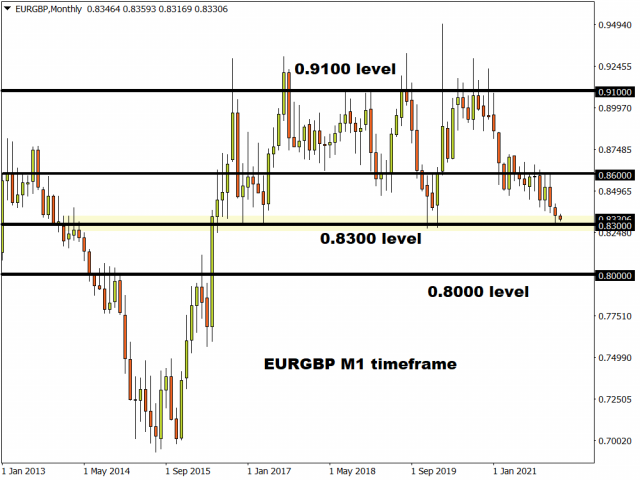
Earlier in the week, we discussed the possibility of a breakdown on the EURGBP. The policy divergence between the Bank of England and European Central Banks should continue pressuring the currency pair.
However, 0.8300 could be a tough nut to crack given its reliance in the past. If bears are able to break past 0.8300, the next key level of interest can be found at 0.8300. Alternatively, a rebound from 0.8300 may signal a move back towards 0.8600 on the monthly charts.
NZDUSD ripe for a breakdown?
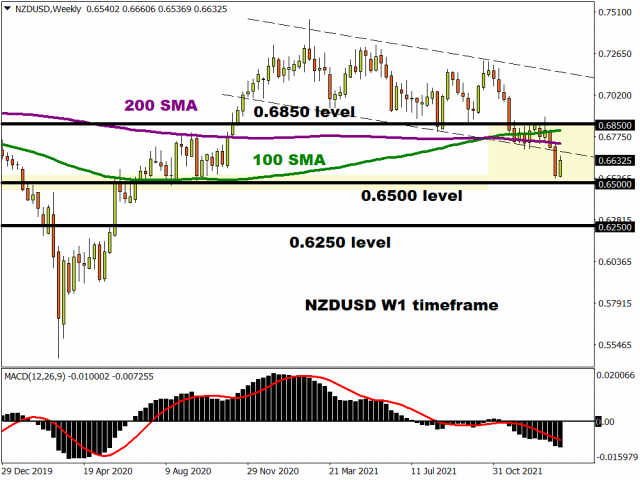
Just taking a quick glance on the NZDUSD we can see prices are bearish on the weekly timeframe.
There have been consistently lower lows and lower highs while the MACD trades to the downside. Given how prices are below the 200 weekly Simple Moving Average, a steeper decline could be on the horizon with 0.6500 acting as the first key point of interest. A solid weekly close below this level may open the doors towards 0.6400 and 0.6250. If 0.6500 proves to be reliable support, we expect a rebound back towards 0.6850 on the weekly charts.
Watch out for potential USDCAD breakout in the future
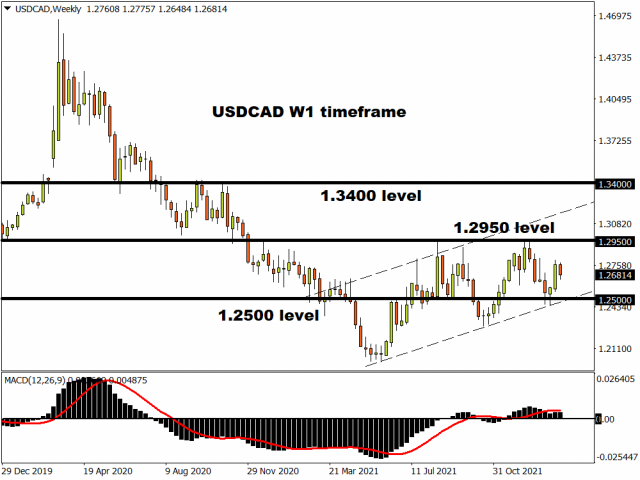
Taking a look at the USDCAD, prices are bullish on the weekly charts. There have been consistently higher highs and higher lows in a bullish weekly channel. Keep an eye out for a potential breakout above 1.2950 in the future. This may open the doors towards 1.3400 which is a distance away. If bulls lose momentum and slip back towards 1.2500, bears could be inspired to target 1.2300.
By Lukman Otunuga Senior Research Analyst
Disclaimer: The content in this article comprises personal opinions and should not be construed as containing personal and/or other investment advice and/or an offer of and/or solicitation for any transactions in financial instruments and/or a guarantee and/or prediction of future performance. ForexTime (FXTM), its affiliates, agents, directors, officers or employees do not guarantee the accuracy, validity, timeliness or completeness, of any information or data made available and assume no liability as to any loss arising from any investment based on the same.