



Oil and Natural Gas Markets Stabilize as Fundamentals Regain Prominence
On Tuesday, May 12, 2026, crude futures were relatively steady in the wake of what looked like a sustained truce between the US and Iran, which has now been in place for more than a month, and with shipping resuming through the Strait of Hormuz. The ceasefire has seemingly lifted the immediate geopolitical overhang over oil prices, which had contributed to a spike in prices in the March and early April. Now that the threat of a full-scale regional war has abated, the energy market can return to focusing on more traditional fundamentals such as supply, demand, and inventory data.
WTI and Brent are trading as the global picture is becoming clear. There are no major disruptions to the supply flow from any of the oil-producing areas. US supply levels are relatively high while OPEC+ is slowly bringing back its production and repairs are underway in the affected area. The truce is holding, but the supply situation is far from back to normal.
Natural gas was trading on Friday, backed up by ample gas storage in the US and Europe in light of the milder spring weather patterns. The truce has also reduced the risk of supply disruption on natural gas shipments from the Middle East, so prices for LNG at the global spot market are lower. On the other hand, continued strong demand growth from major gas-consuming countries in Asia and Europe could keep prices for natural gas up in the medium term.
Traders will continue to monitor US gas and oil inventory levels, along with any changes in OPEC+ policy to inform the markets’ direction. While the truce has temporarily eliminated the supply shock risk on natural gas and oil, the situation could change quickly.

Natural Gas Futures Grinds $2.92 – Descending Channel Resistance
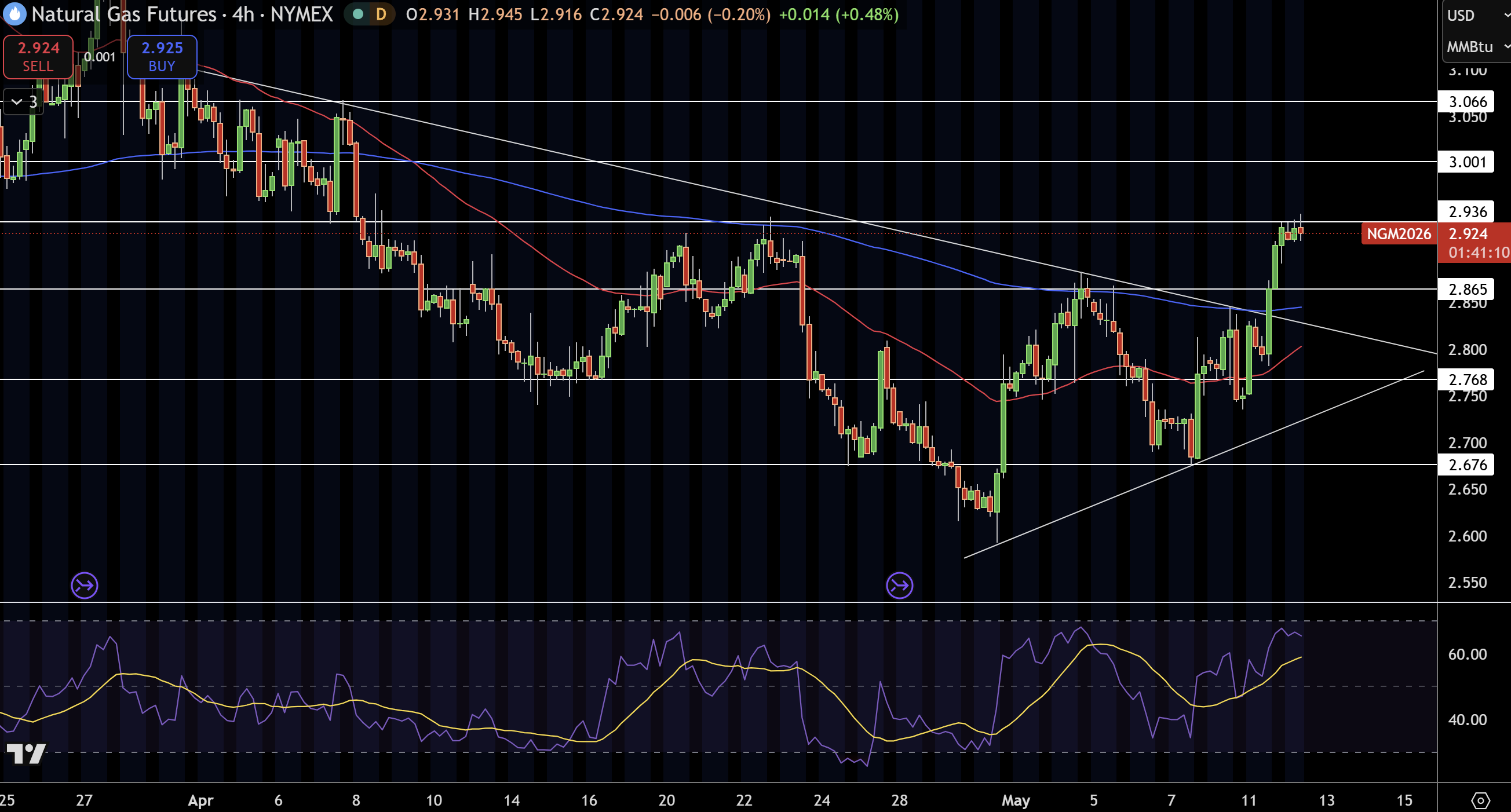
Natural gas trades at $2.924 on 4h chart inside white descending channel from April highs. The recent green candles have reclaimed red MA around $2.93 but the descending channel from April has price action below the $2.945 resistance with price action printing upper wicks. Price still respects lower highs as the blue descending channel offers price support around $2.90.
The May swing low fib extensions have downside targets of the $2.768 and $2.676 levels if broken. The RSI is hovering near 48 as price momentum is near neutral. Price action is bearish below $2.945 as the volume profile has $2.93 as a key supply zone.
Trade Idea: Sell $2.924, $2.768 target, $2.95 stop.
Natural Gas Price Forecast
Every new Natural Gas analysis as it publishes, today's technical signal and key levels, live price — on one page.
See all Natural Gas forecastsWTI Crude Oil Reclaims $101 – Blue Channel Bounce in Play
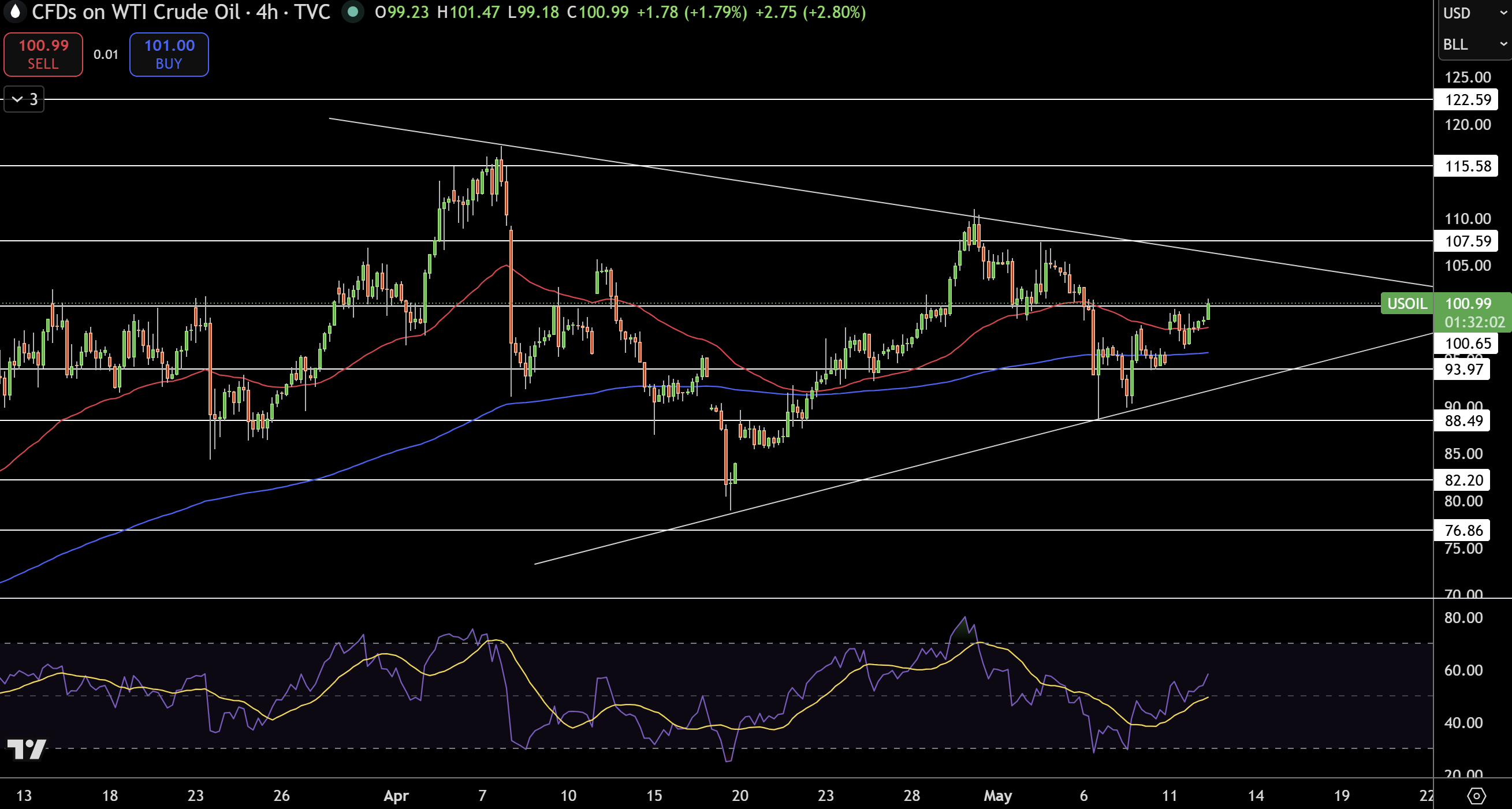
WTI crude trades at $100.99 on 4h chart after strong green engulfing candles emerged from the $99.18 low and pushed price back above the red 50-period MA. Price continues to bounce from within the blue ascending channel that formed from the April lows while the blue channel preserves higher lows. The recent bullish continuation green candle bodies move above the $100 pivot while the RSI has reclaimed momentum above 52. Fib retracement from May swing low shows $100.65 as defended 38.2% level.
Immediate overhead resistance is the $101.47 high. Then $103 to $105 forms a key overhead resistance area as the top of the ascending channel. The recent volume profile puts $100 as a new dynamic floor as aggressive buyers absorb the supply. The structure has turned bullish above $99.18 while price continues to respect channel support.
Trade Idea: Buy $100.95, $103.00 target, $99.50 stop.
Brent Crude Oil Holds $106.84 – Ascending Channel Support Tested
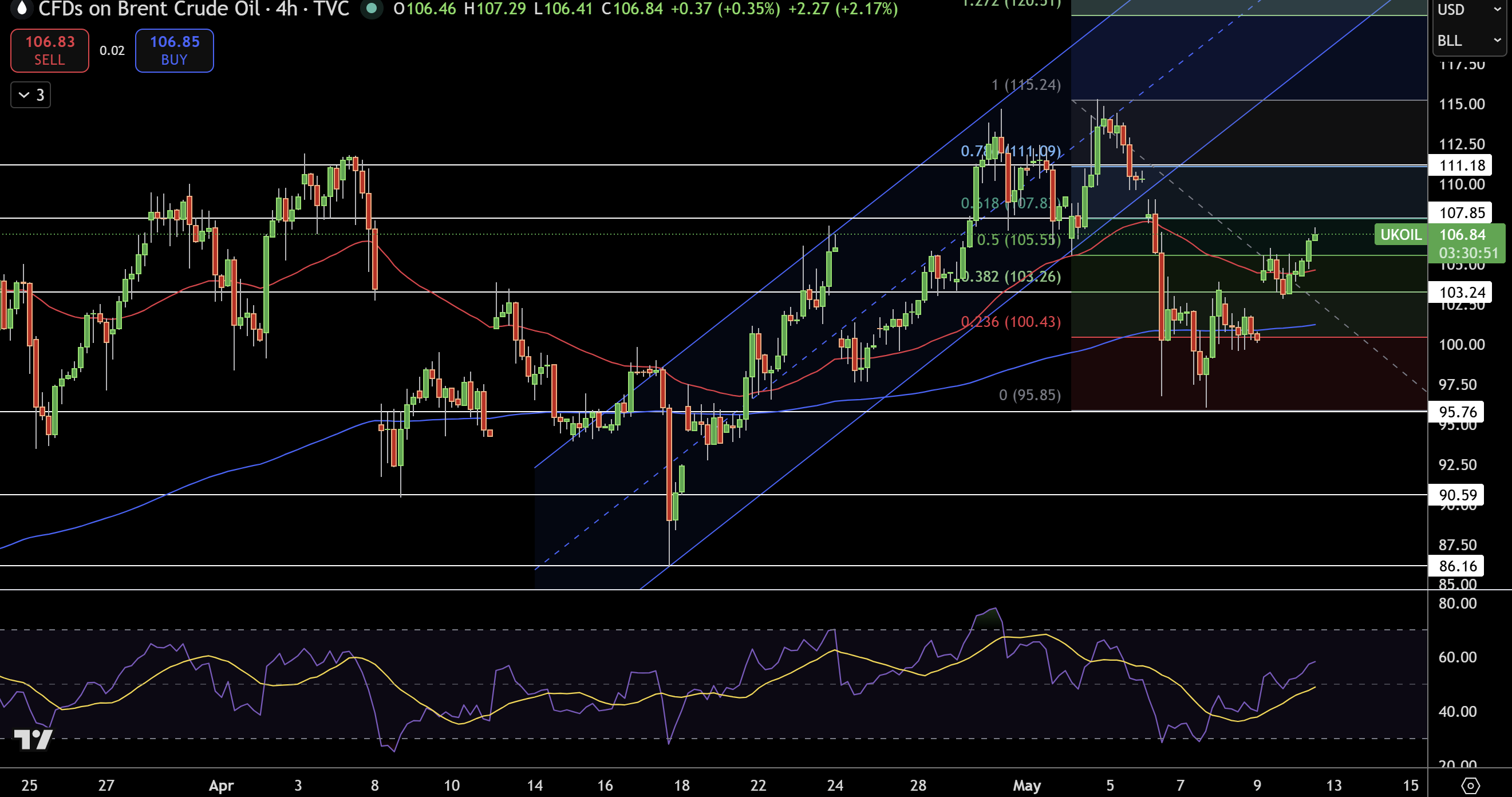
Brent trades at $106.84 on 4h chart after the recent pullback to $107.29, the green candles defended the blue lower ascending channel line. Red price action tested the 0.382 Fib level at $103.26 but recent price action is green as rejection wicks have confirmed buyer defense at lower levels around $106. Price respects higher lows as the red MA has been acting as dynamic support. The RSI is hovering near 50 as no major bearish divergence can be confirmed.
Price will next target the 0.5 Fib level at $105.55 and then the $107.85 channel resistance. The volume profile has $107 as a key pivot level. The uptrending blue ascending channel from the April lows remains intact above $103.24.
Trade Idea: Buy $106.80, $107.85 target, $105.50 stop.


