Oil and Natural Gas Markets Weigh Ceasefire Gains Against Normalization Hurdles
Oil fundamentals as of June 16, 2026, lean positive, buoyed by a ceasefire deal between the United States and Iran and pledges to unblock the Strait of Hormuz shipping lane. The Strait has restricted Middle East oil shipments for months, causing massive oil production curtailments in the past. Oil shippers are supposed to start slowly getting vessels through it, but some oil company representatives predict a return to normal will take several months and will not be complete until late 2026 or even later.
Oil supplies worldwide are still low, as oil storage in OECD countries is at its lowest level in several years. The United States’ Strategic Petroleum Reserve releases and workarounds provided limited relief during the disruption. Non-OPEC+ oil production is keeping oil supply in balance for now, especially with U.S. oil output remaining stable.
Natural-gas fundamentals as of June 16, 2026, are stable, with plenty of supply to satisfy U.S. gas consumers. Associated U.S. natural gas production has been increasing, and gas storage inventories have climbed above five-year averages. Recent EIA data showed solid injections, and LNG exports have also remained high. Moderate demand forecasts and reduced weather-driven volatility reinforce balanced outlooks into the second half of the year.
Natural Gas Futures Rise to $3.170 – Ascending Channel Momentum Builds on the 2H Chart
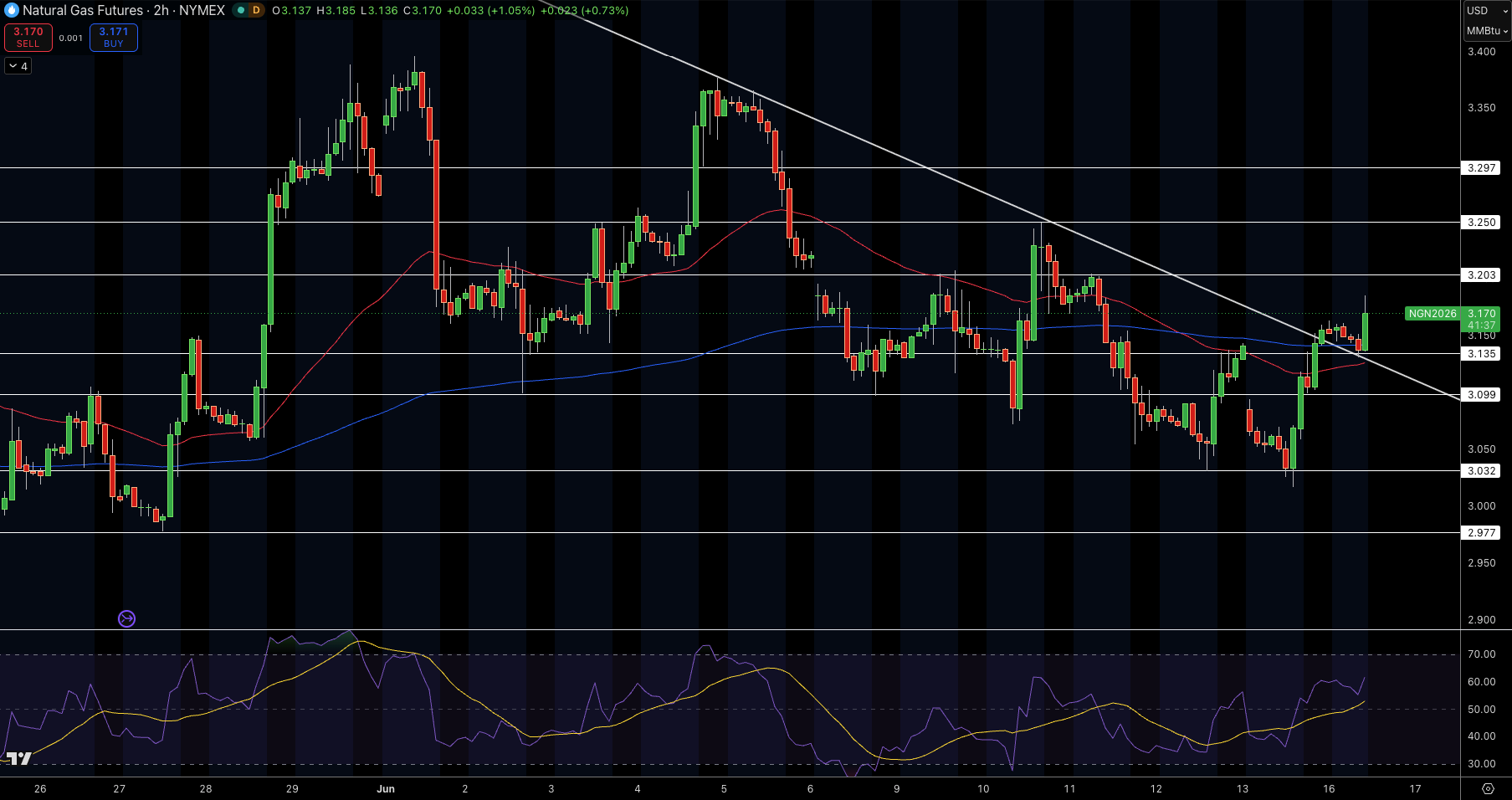
On the 2H NYMEX chart, NG is trading at $3.170. Consecutive bullish candles have broken over the 50-period moving average, which was near $3.15. The price has risen within an ascending blue channel. Consecutive higher highs from the $3.099 swing low highlight growing buyer control. The RSI is around 52. The price volume profile shows $3.10 as a potential support pivot.
Fibonacci extension levels project upside targets in the $3.203 to $3.297 region. The market remains bullish for now, above $3.099. The pattern of higher highs and higher lows remains bullish in nature.
Trade Idea: Buy at $3.170, targeting $3.203, with a stop-loss at $3.10.
WTI Crude Oil Holds $80.09 – Ascending Channel Support Tested on the 4H Chart
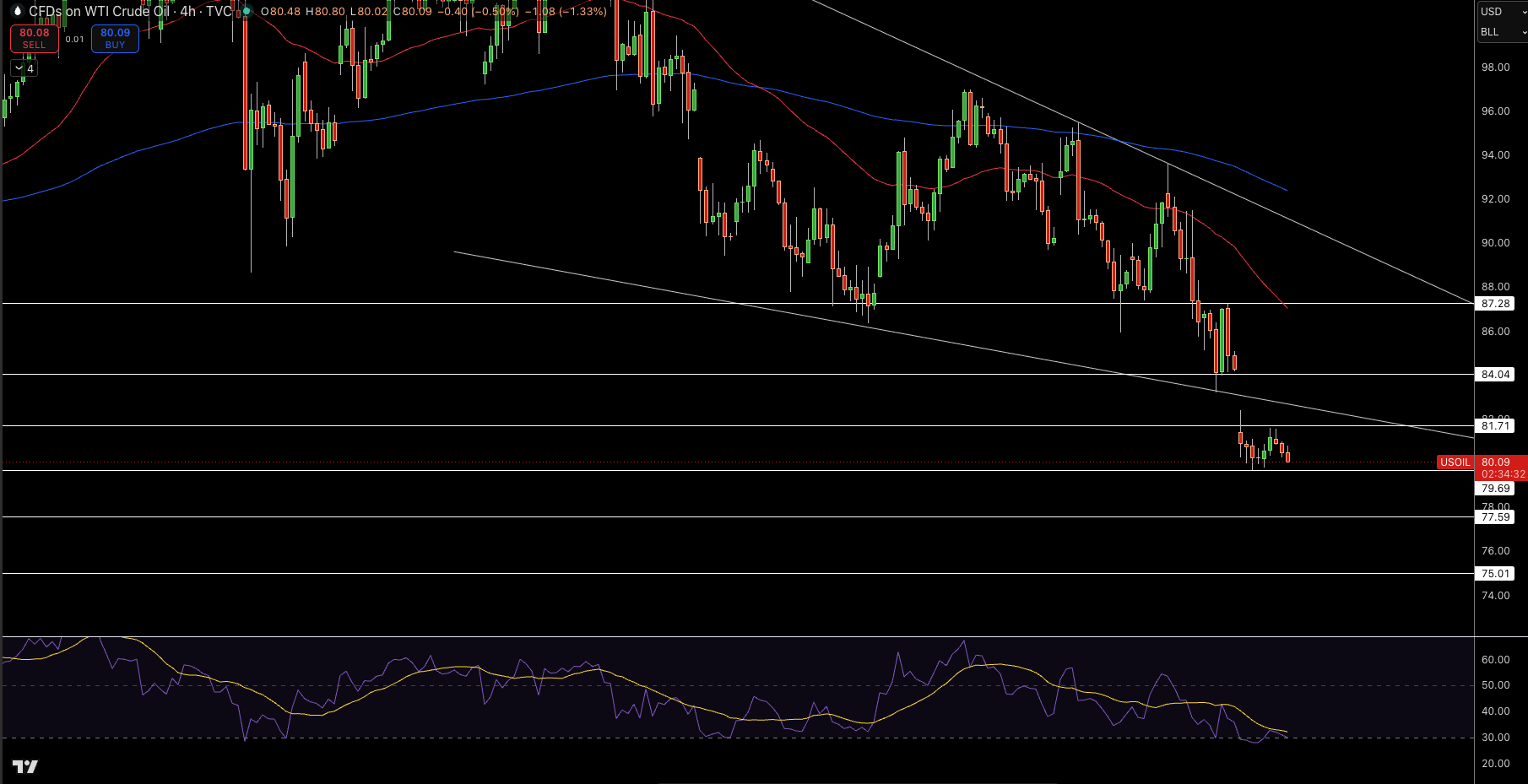
On the 4 hour chart, WTI is trading at $80.09. After bouncing off the 50-period moving average at around $85.97, the price is trying to support itself at the lower end of the upward-sloping blue channel, near $79.24. This price action has included both bullish and bearish candles. Buyers have absorbed the pressure at support levels with bullish rejection wicks, while downside follow-through has been muted.
Natural Gas Price Forecast
Every new Natural Gas analysis as it publishes, today's technical signal and key levels, live price — on one page.
See all Natural Gas forecastsAt this time, the RSI is hovering at approximately 48. The price volume profile shows $79 to $81 as a new level to watch. A descending line of resistance remains active near $85.00. The market is generally bullish to neutral, provided it can stay above $79.24. The higher lows pattern is a bullish sign for short-term consolidation. This technical analysis has Fibonacci confluence in its favor.
Trade Idea: Buy at $80.09, targeting $82.50, with a stop-loss at $78.50.
Brent Crude Oil Slips to $82.41 – Moving Average Rejection Reinforces Bearish Trend
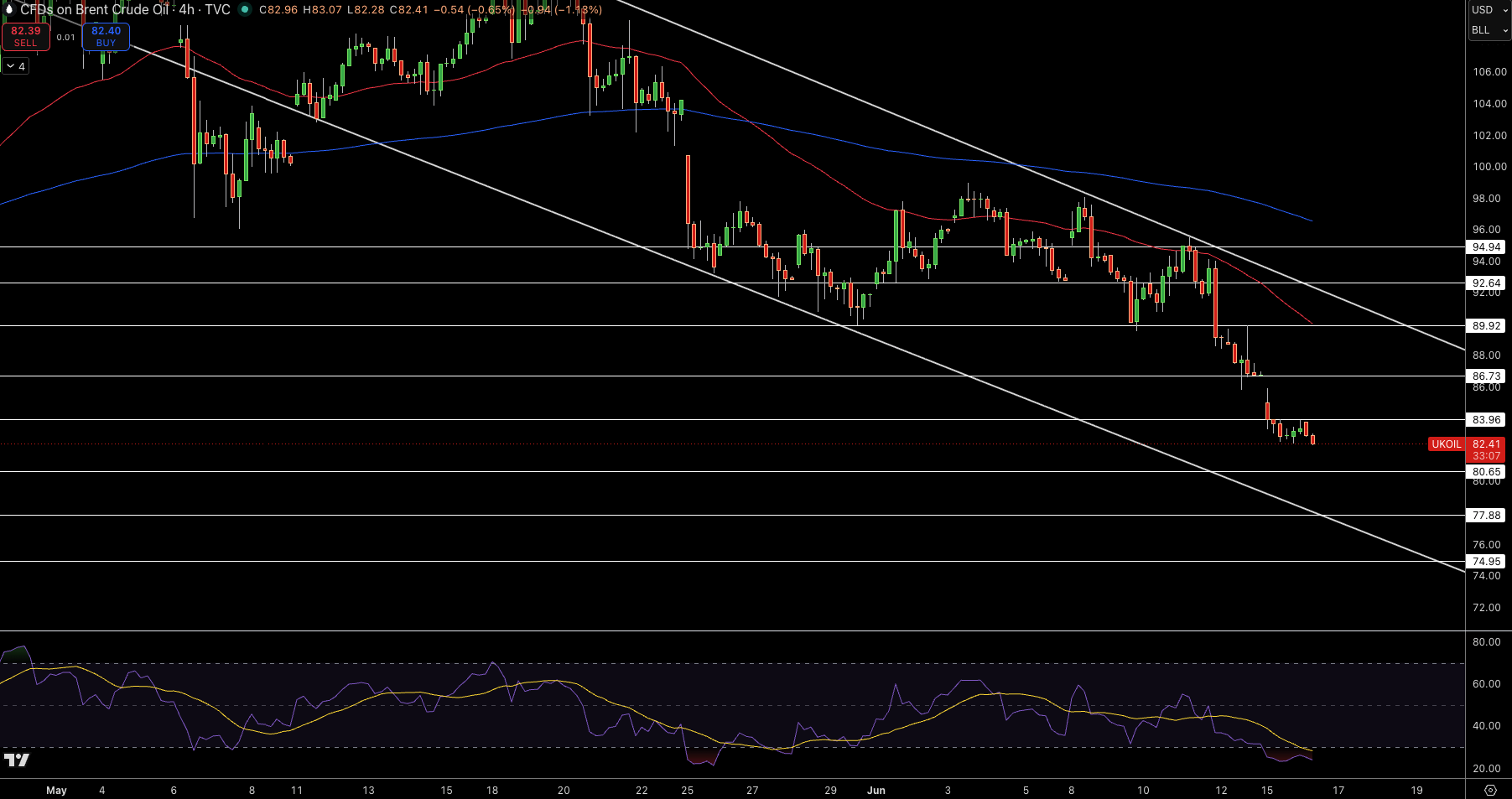
On the 4 hour chart, Brent is trading at $82.41. After the rejection from the 50-period moving average near $89.92, price has fallen below the bottom of the blue channel. There are a series of consecutive bearish candles. This price action follows the downtrend that began from the recent high at $94.94. The RSI has declined to around 45. The price volume profile shows $87 to $90 as a major supply level.
Price targets on the downside according to Fibonacci projections would be between $80.65 to $77.88. The overall market structure remains bearish below $85.96, within the larger downtrend channel from $103. The ongoing pattern of lower highs and lower lows favors the sellers.
Trade Idea: Sell at $82.41, targeting $80.65, with a stop-loss at $84.00.