



Natural Gas Attempts To Rebound
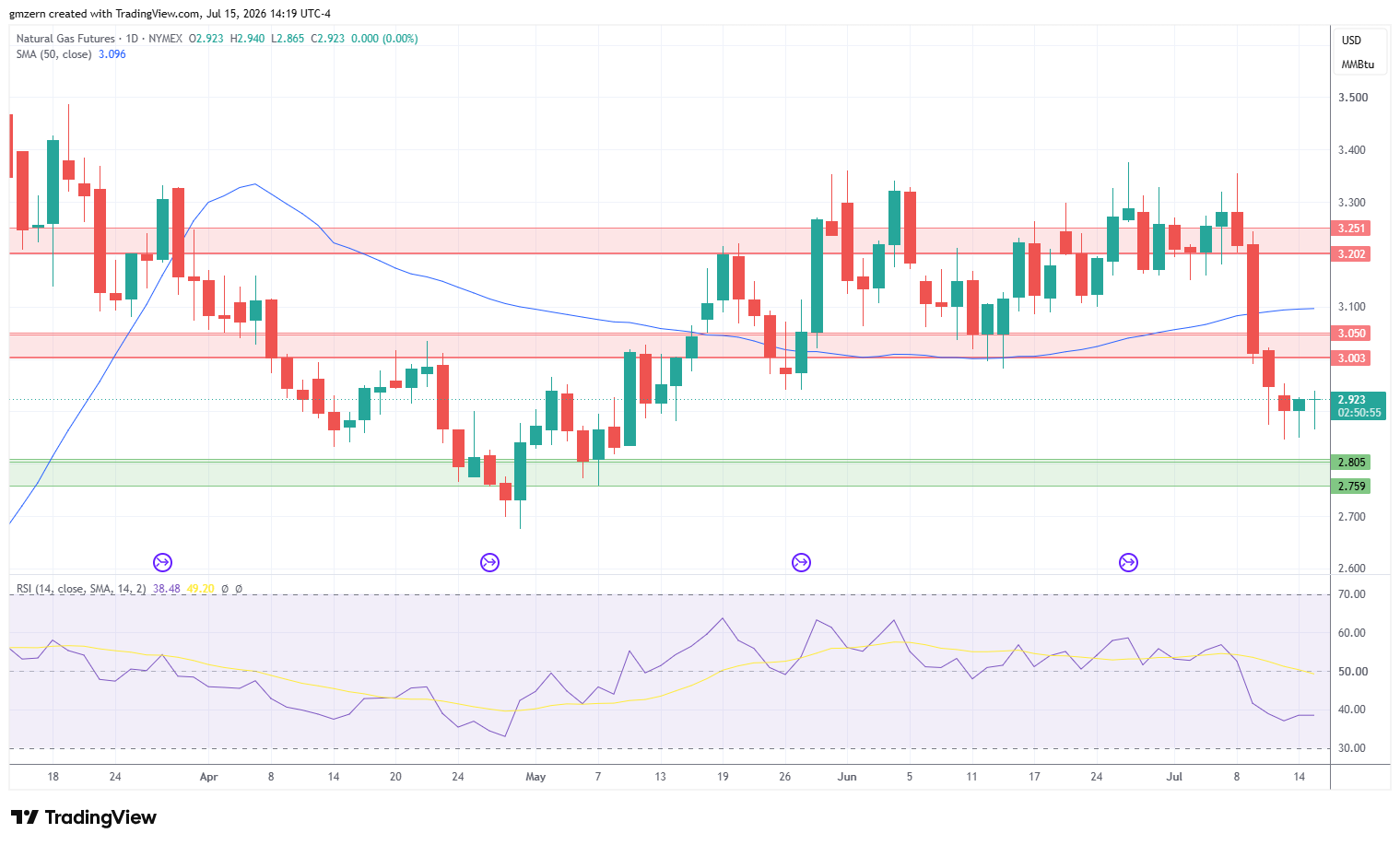
Natural gas attempts to rebound as traders prepare for the EIA Weekly Natural Gas Storage Report, which will be released tomorrow. The report is expected to show that working gas in storage increased by +45 Bcf from the previous week.
In case natural gas settles above the $2.90 level, it will head towards the nearest resistance, which is located in the $3.00 – $3.05 range. A move above the $3.05 level will push natural gas towards the 50 MA at $3.09. If natural gas moves above the 50 MA, it will head towards the next resistance at $3.20 – $3.25.
On the support side, a move below $2.85 will open the way to the test of the nearest support level at $2.75 – $2.80. RSI is in the moderate territory, so there is plenty of room to gain momentum in case the right catalysts emerge.
WTI Oil Pulls Back Amid Profit-Taking
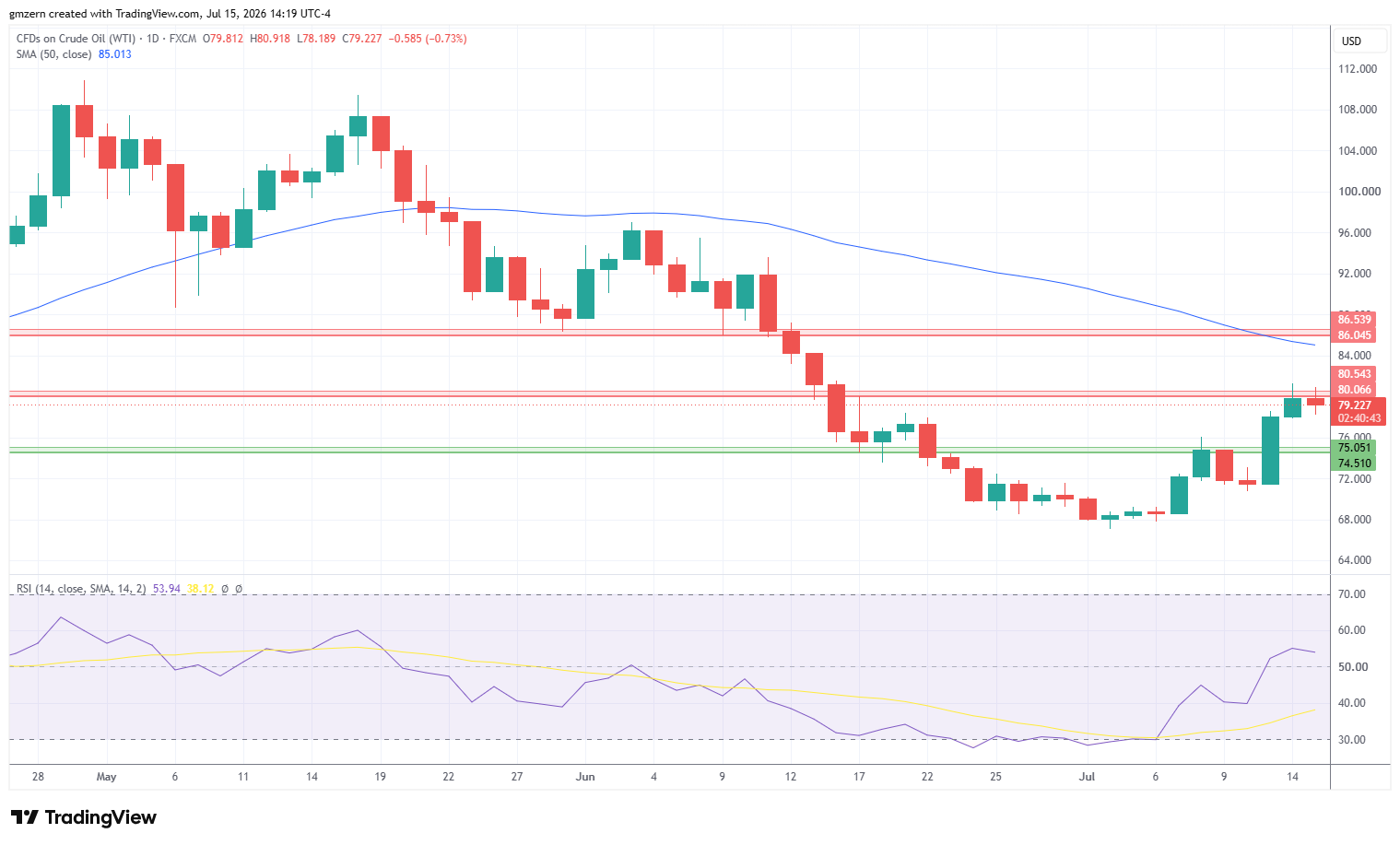
WTI oil is losing ground as traders take some profits off the table after the strong rally.
U.S. and Iran exchanged strikes, and there were no signs indicating that both sides are ready to get back to negotiations.
Iran’s Islamic Revolutionary Guard Corps said that oil exports would be available to all or available to none, indicating that Iran planned to shut exports through the Strait of Hormuz.
Today, traders also focused on the EIA Weekly Petroleum Status Report. The report indicated that crude inventories decreased by 1.7 million barrels from the previous week, compared to analyst consensus of -2.6 million barrels. At current levels, crude inventories are about 6% below the five-year average for this time of the year.
Total motor gasoline inventories declined by -1.5 million barrels, compared to analyst forecast of -0.8 million barrels. Distiallate fuel inventories increased by +4.6 million barrels from the previous week.
U.S. crude oil imports increased by +60,000 bpd, averaging 5.7 million bpd. Over the past four weeks, crude oil imports averaged 5.5 million bpd.
Strategic Petroleum Reserve decreased from 319.5 million barrels to 316.5 million barrels as U.S. continued to sell oil from strategic reserves. The Strategic Petroleum Reserve is at multi-decade lows, which is bullish for oil markets.
Domestic oil production was mostly unchanged at 13.861 million bpd. It remains to be seen whether domestic oil production would exceed 14 million bpd by the end of the year.
From the technical point of view, WTI oil continues its attempts to settle above the resistance level at $80.00 – $80.50. In case WTI oil manages to settle above $80.50, it will head towards the next resistance, which is located in the $86.00 – $86.50 range.
On the support side, a move below the $77.50 level will open the way to the test of the support at $74.50 – $75.00.
Natural Gas Price Forecast
Every new Natural Gas analysis as it publishes, today's technical signal and key levels, live price — on one page.
See all Natural Gas forecastsBrent Oil Pulls Back As Traders Stay Focused On Middle East
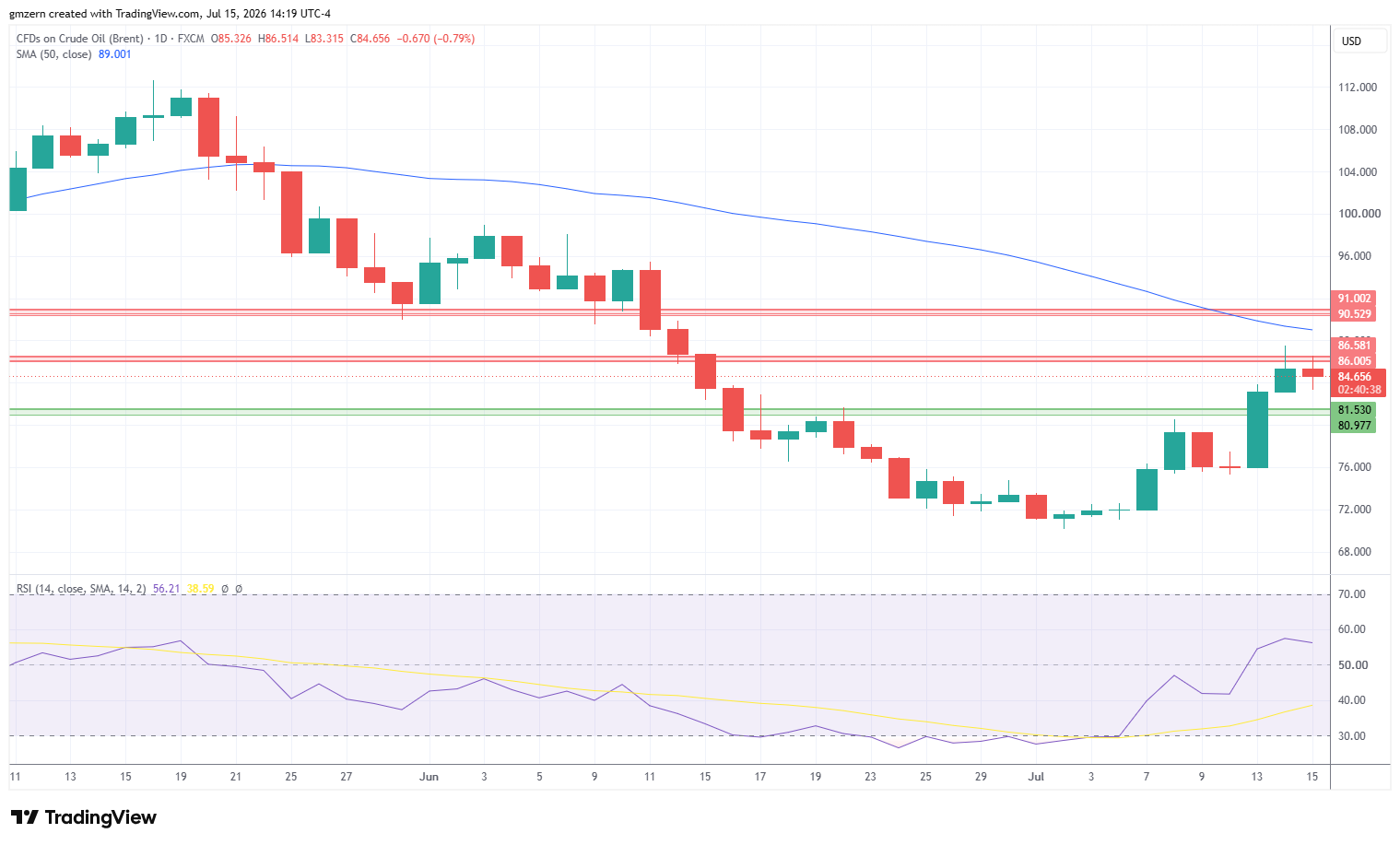
Brent oil moved lower as traders decided to take some profits off the table despite escalation in the Middle East.
The nearest resistance level for Brent oil is located in the $86.00 – $86.50 range. If Brent oil climbs above the $86.50 level, it will head towards the 50 MA at $89.00. A move above the 50 MA will open the way to the test of the next resistance at $90.50 – $91.00.
If you’d like to know more about how commodity markets work, please visit our educational area.