The Nikkei 225 is pulling back in the near term as traders take profit on a strong rally while high oil prices and geopolitical tensions remain negative on market sentiment. The index is moving back toward the major 60,000 breakout zone from 63,800, making this zone important for short term traders. The overall trend is bolstered by the favorable economic conditions in Japan, demand for AI technologies and its strategic position in the global supply chain. The main question is whether this move is a healthy pullback before the next rally or it is the first sign of a deeper pullback toward lower support.

AI Demand Supports Nikkei 225, but Oil Risk Remains
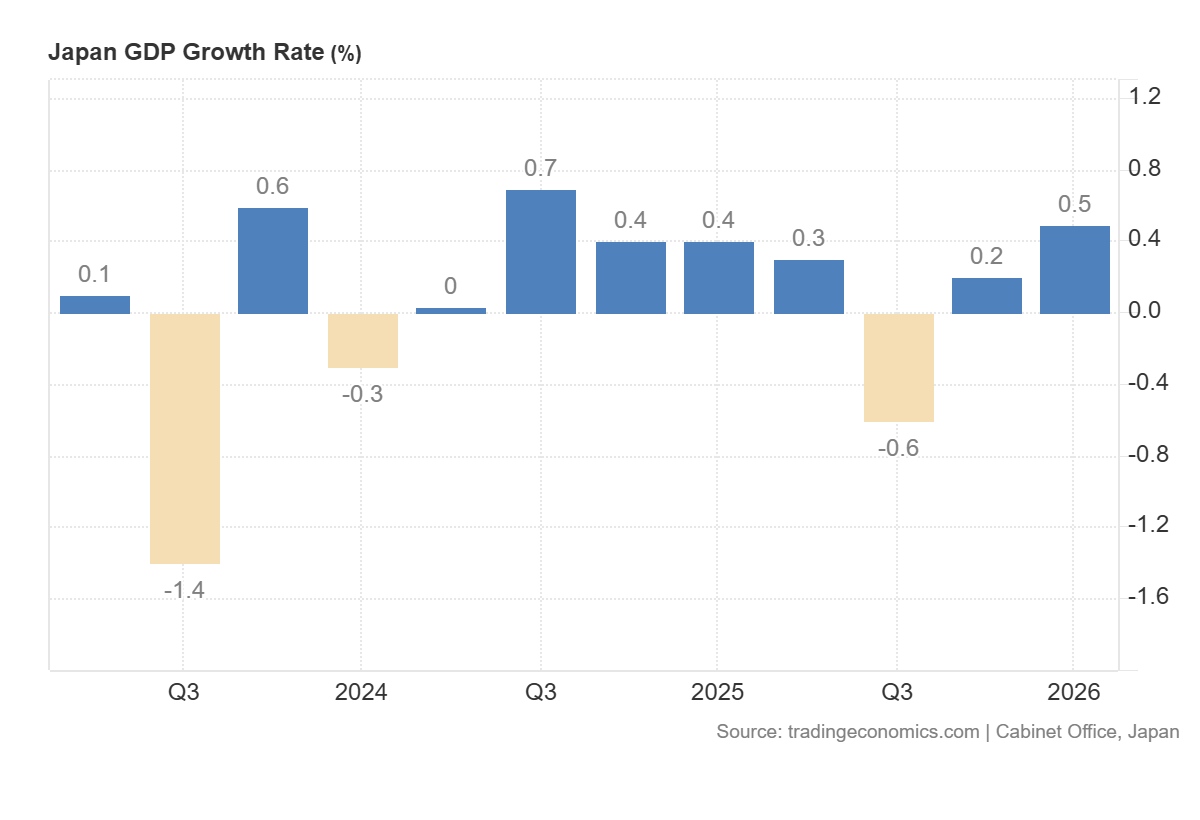
The strong rally in Nikkei 225 in 2026 was due to the improved sentiment and strong economic data for Japan. The GDP growth for Japan for Q1 2026 came in better than expected at 0.5%. This provides new reason for the markets to be optimistic. The gains were not confined to a handful of big-cap stocks as the Topix also rallied. This is important as robust domestic growth can help support corporate earnings, banks, industrial companies and exporters.
Artificial intelligence is still the larger theme for the Nikkei 225. The index is likely to continue the rally in 2026 as Japan is a critical component of the global AI supply chain. Japanese companies provide semiconductor equipment, materials, machines and critical components for advanced technology production.
This provides the market with solid structure theme. Earnings momentum has already been good for electronics, machinery and banking stocks, while AI-related demand may continue to propel the index throughout the year.
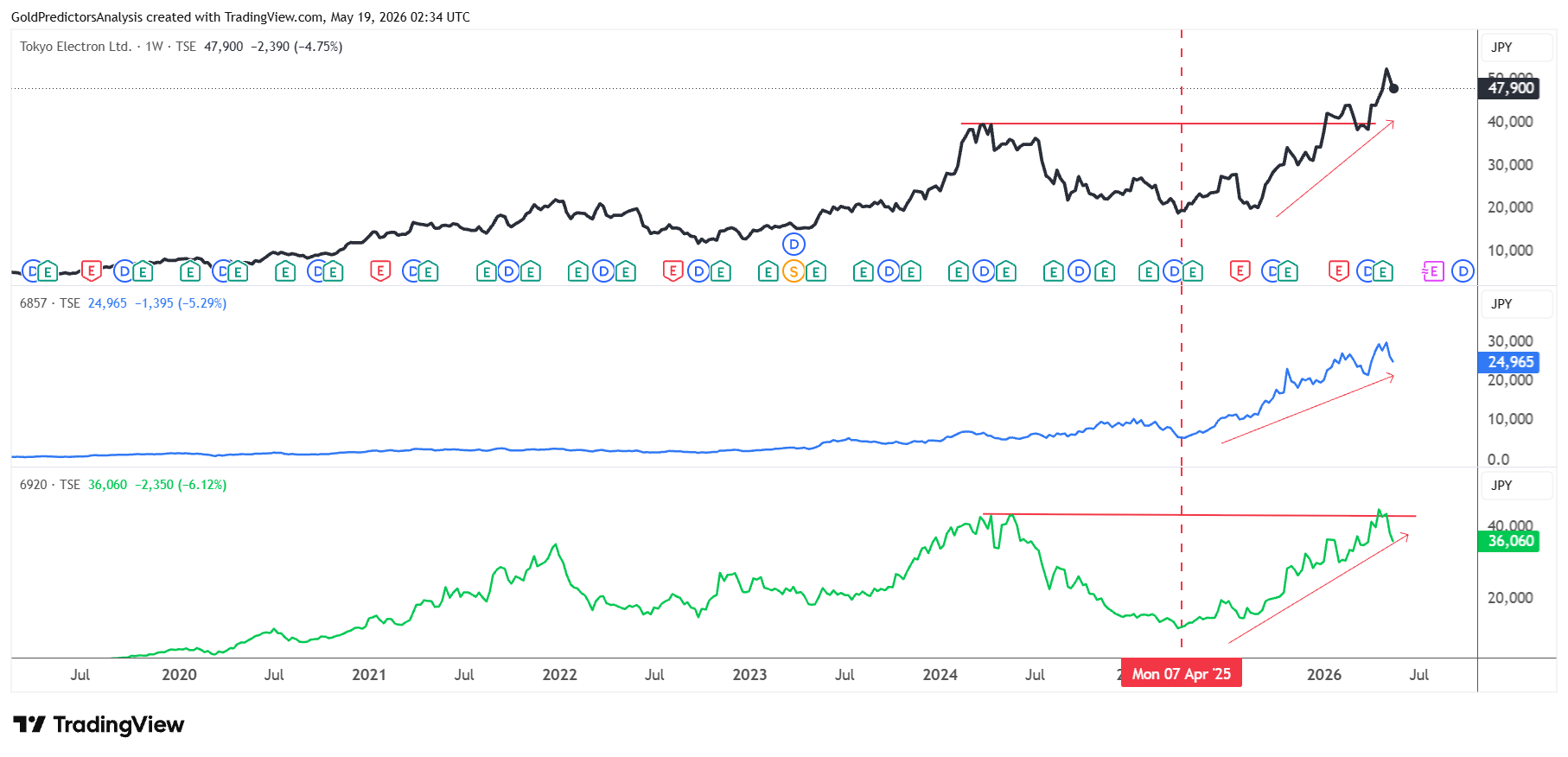
The chart below shows that Tokyo Electron Ltd. is correcting from the record rally back to the support of 40,000-45,000. On the other hand, Advantest Corp. is also showing the correction, while the Lasertec Corp. is correcting from the resistance of the 44,000 level. These corrections will likely set the stage for another rally in the next few weeks. That rally will likely push the index towards 65,000.
Nonetheless, the market is clearly at risk in the short term. The Strait of Hormuz is still closed, which means higher prices for oil. This could negatively impact transport, fuel dependent industries and inflationary expectations. AI stocks could come under pressure if energy prices increase again. Overall, the Nikkei 225 is still bullish, but the next leg could be more picky and choppy.
Nikkei Price Forecast
Every new Nikkei analysis as it publishes, today's technical signal and key levels, live price — on one page.
See all Nikkei forecastsNikkei 225 Technical Analysis: Pullback Tests Key Breakout Zone
The 4-hour chart for Nikkei 225 shows a strong correction from the 63,800 level back towards the 60,000 breakout. The price is hovering above the orange zone, which was considered the neckline of the cup pattern. The price is now consolidating within this range to find some buyers.
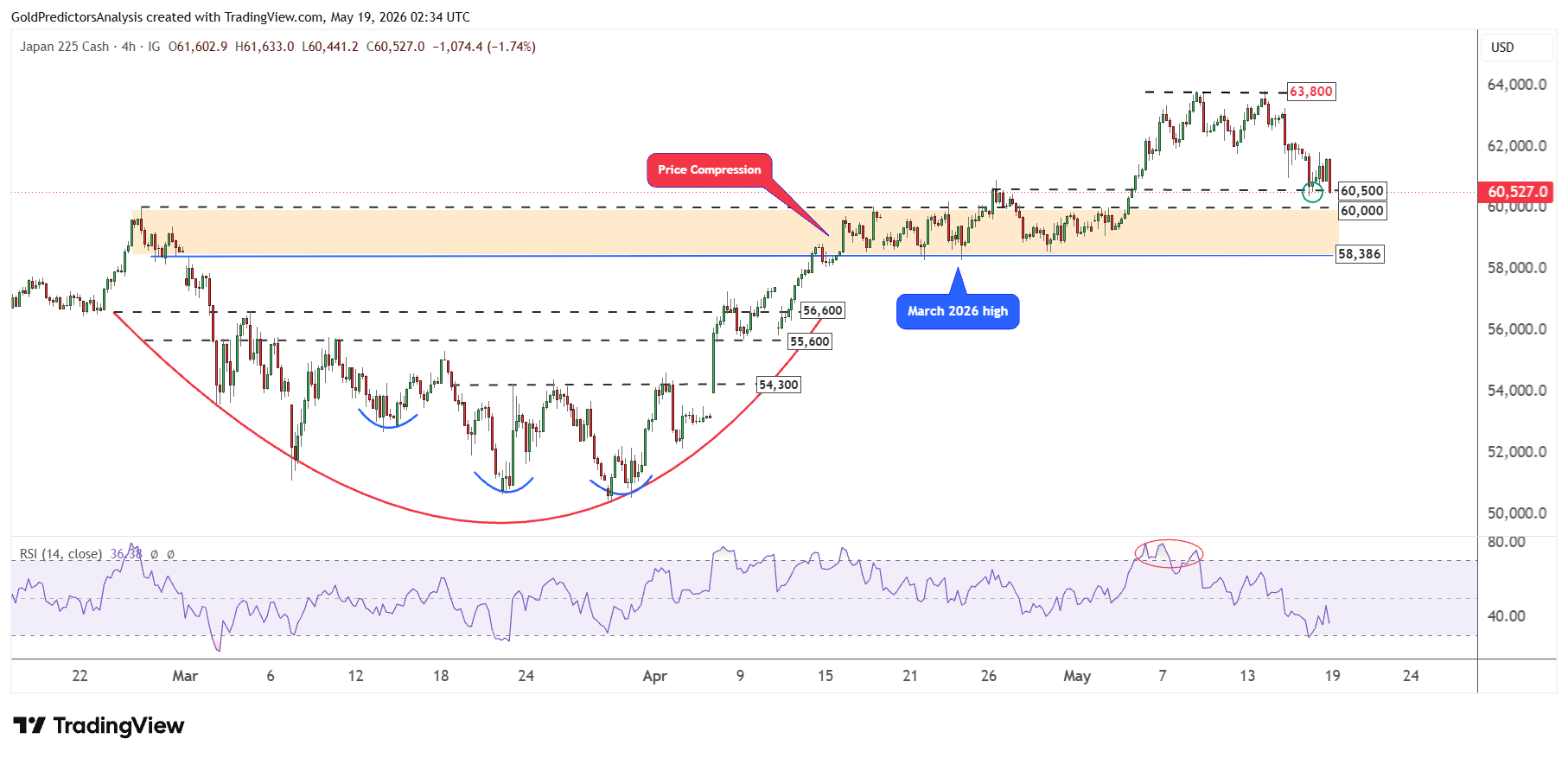
The immediate support on Tuesday is 60,000. A break below 60,000 will likely push the index towards 58,386. As long as the 58,386 to 60,000 zone holds, the Nikkei 225 has the potential to turn from this zone. The RSI has also reached oversold, which suggests a bounce from current levels.
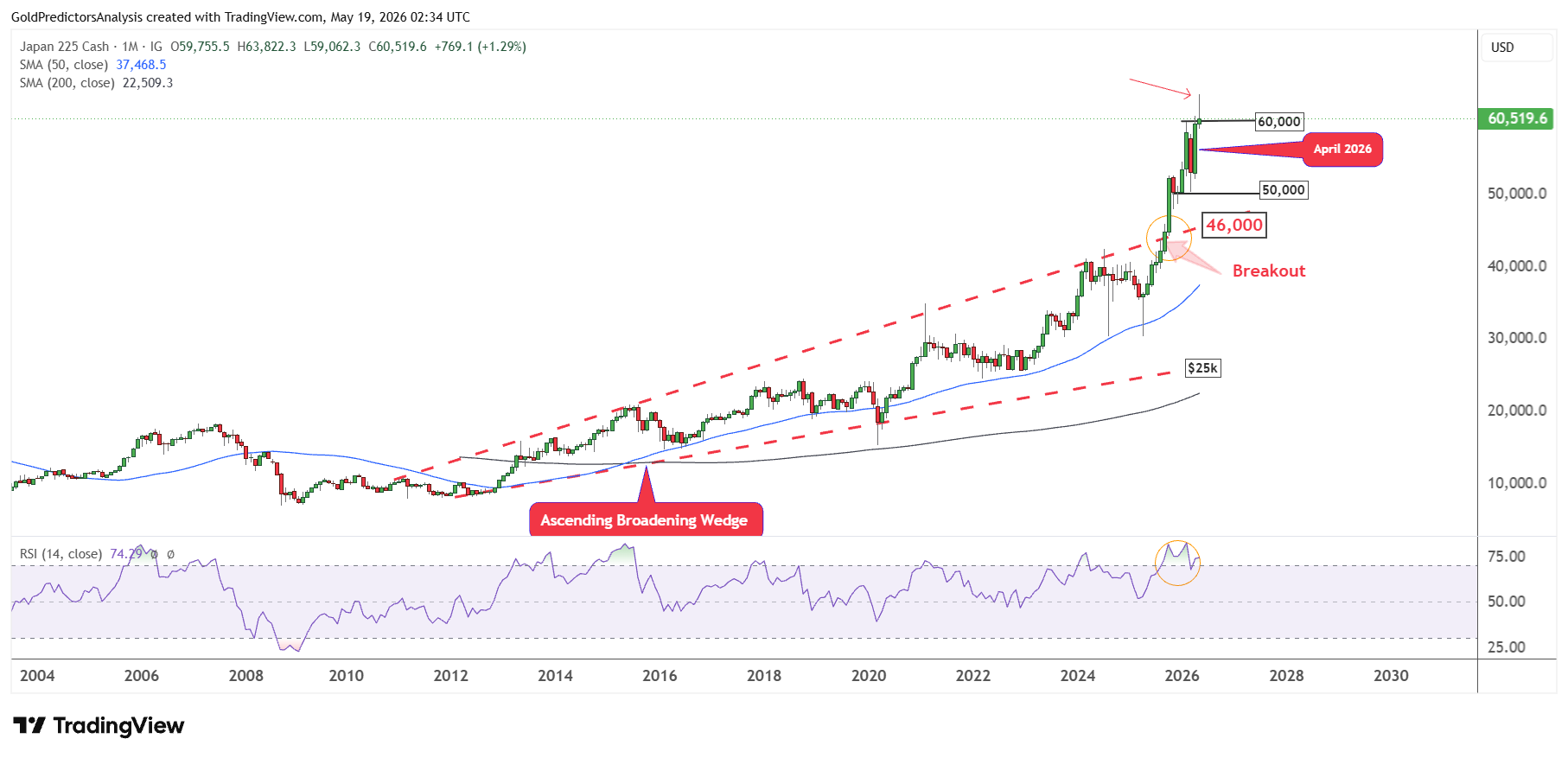
Strong bullish momentum is observed on the monthly chart. The chart shows that the month of April was strong. May has pushed above the 60,000 level to mark a high above the 63,000 area. The index has been surging higher since April 2025 lows and now it is also approaching the overbought level. Despite these overbought conditions, the overall trend remains bullish. As long as the 50,000 level holds, the Nikkei 225 will likely consolidate around current levels to find the next leg higher.
Final Words
The Nikkei 225 remains in a bullish trend. The robust GDP growth, demand for AI and Japan’s pivotal role in the global semiconductor supply chain provide support. But it’s now a more critical time for the rally due to the high price of oil and the continued closure of the Strait. A short term correction is possible if energy prices continue to rally or AI stocks lose their momentum. The focus has turned to the key support area of the 58,386 to 60,000 zone. The index is expected to recover and rise towards 65,000 during the next bull thrust as long as the index holds this zone.