
The Nikkei 225 dropped as the markets responded swiftly to increased geopolitical risk. The failure of U.S. talks with Iran prompted investors to move into a defensive position. The possibility of naval blockade posed fears of a protracted war. This increased insecurity lowered the demand for equities, especially in export markets such as Japan. This led to premature selling in the session.

War Risk and Oil Surge Weigh on Japan’s Economy and Nikkei 225
The increase in oil prices further stressed Japan’s economy. Japan is an energy intensive economy where soaring inflation in the price of crude has a direct impact on business. The cost of production and transportation has increased due to higher fuel prices. This lowers corporate margins, particularly for industrial and manufacturing companies that are mostly dominant in the Nikkei. Increased crude also increases inflation risks that can weaken consumer demand and decelerate economic growth.
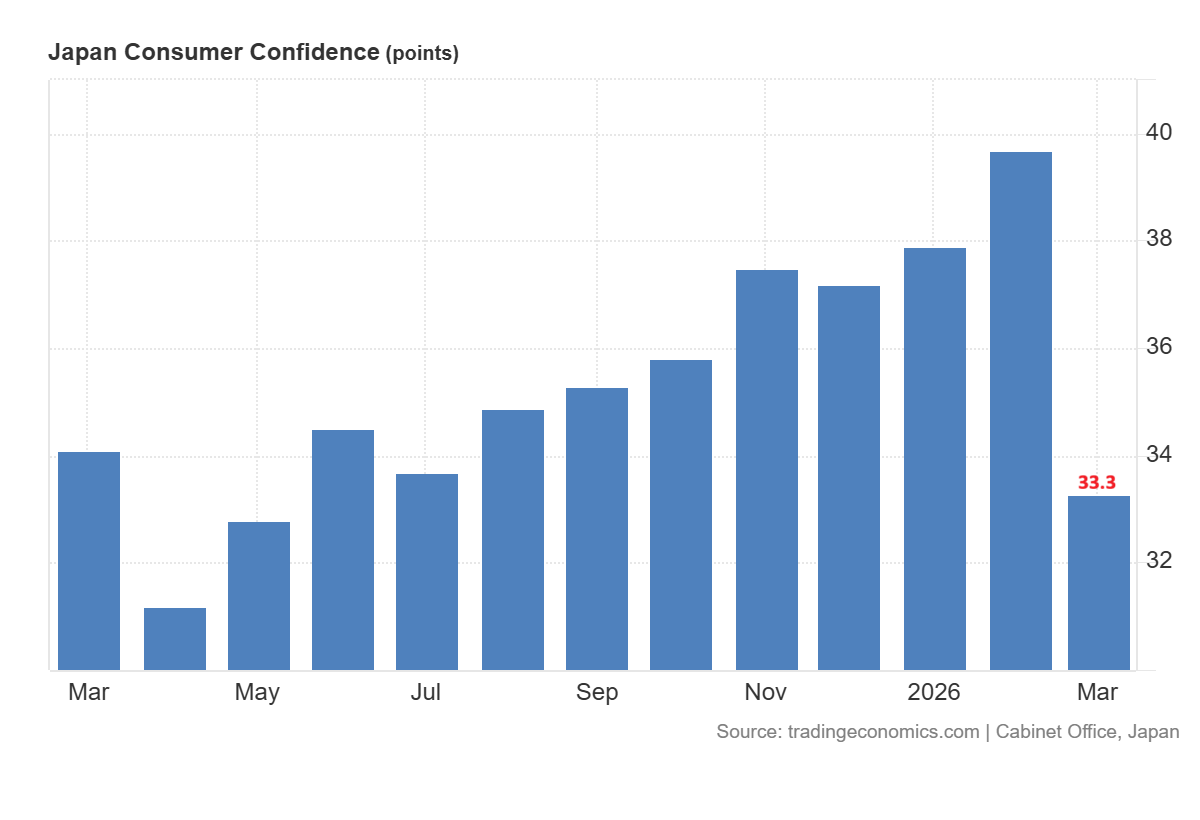
The chart below indicates that the Japanese consumer confidence index dropped to 33.3 in March 2026 which is the lowest figure since May 2025. This decline is a symptom of greater confusion in the war. It indicates that people worry about Job security, income growth and the overall economy.
The decline in the Nikkei 225 was also caused by currency and policy expectations. The higher oil prices can weaken the Japanese yen as it increases the import bills. A weakened yen sustains exporters but this advantage neutralizes when there is a heightened risk in the global demand. At the same time, rising global yields and inflation concerns limit the flexibility of the Bank of Japan. This puts a doubt on monetary policy support. Therefore, the Nikkei 225 remains between the external shocks and internal economic restraints.
Nikkei Price Forecast
Every new Nikkei analysis as it publishes, today's technical signal and key levels, live price — on one page.
See all Nikkei forecastsNikkei 225 Technical Outlook: Pullback Within a Bullish Trend
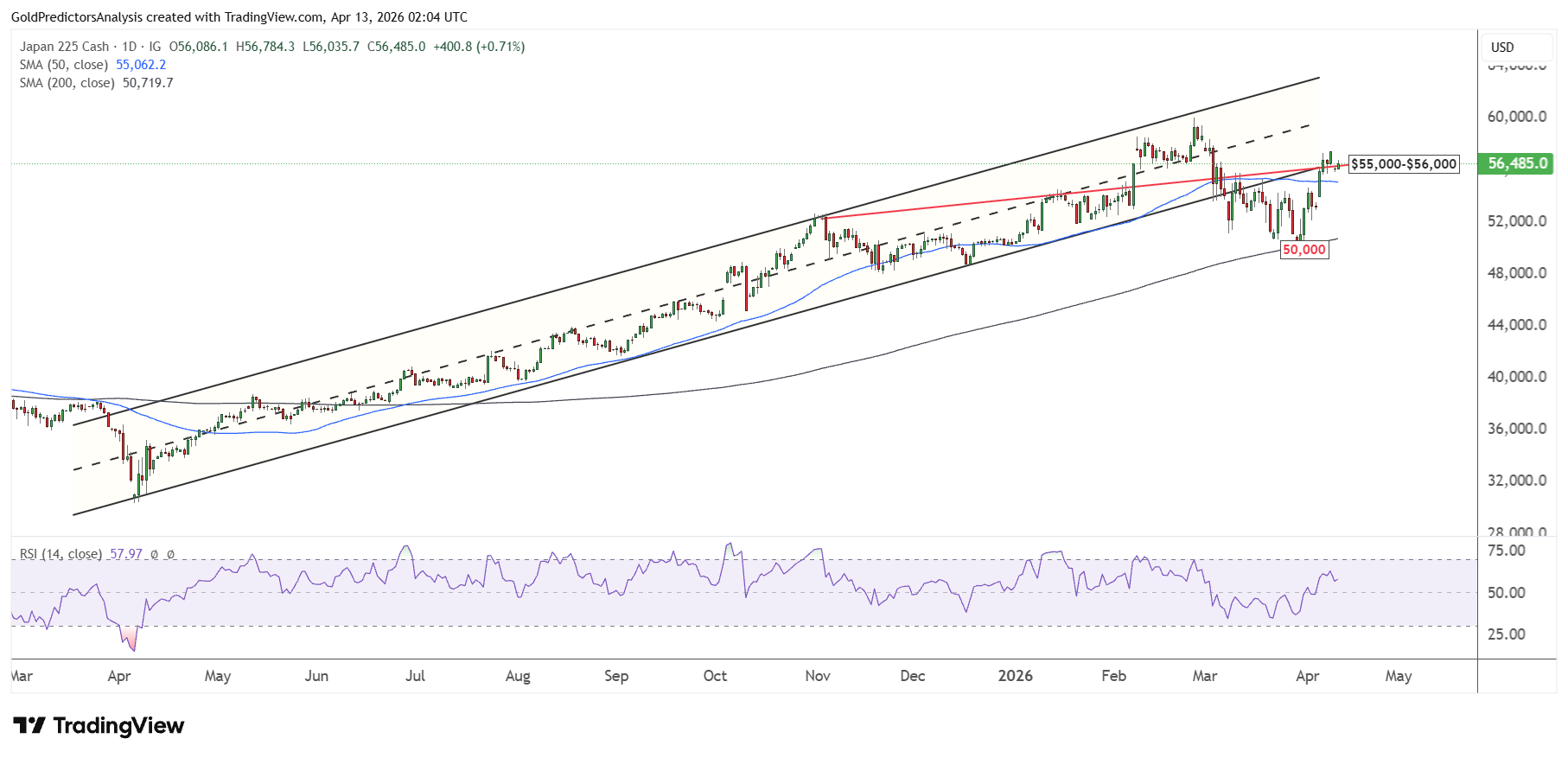
Despite the strong breakout in the Nikkei 225 last week, the failure of U.S.-Iran talks opened the Nikkei 225 with a gap downside. Despite this gap, the overall picture for the Nikkei still remains bullish. Therefore, any correction in the index may be considered as a buying opportunity for the next uptrend.
As long as the Nikkei 225 index remains above 50,000, it may consolidate to form a bottom for the next rally higher. RSI also shows that the index is consolidating above the mid-level, which indicates further upside in the short term. A recovery above the 57,500 level will introduce another rally towards 60,000. However, a break above 60,000 will push the index further upside towards the 65,000 level.
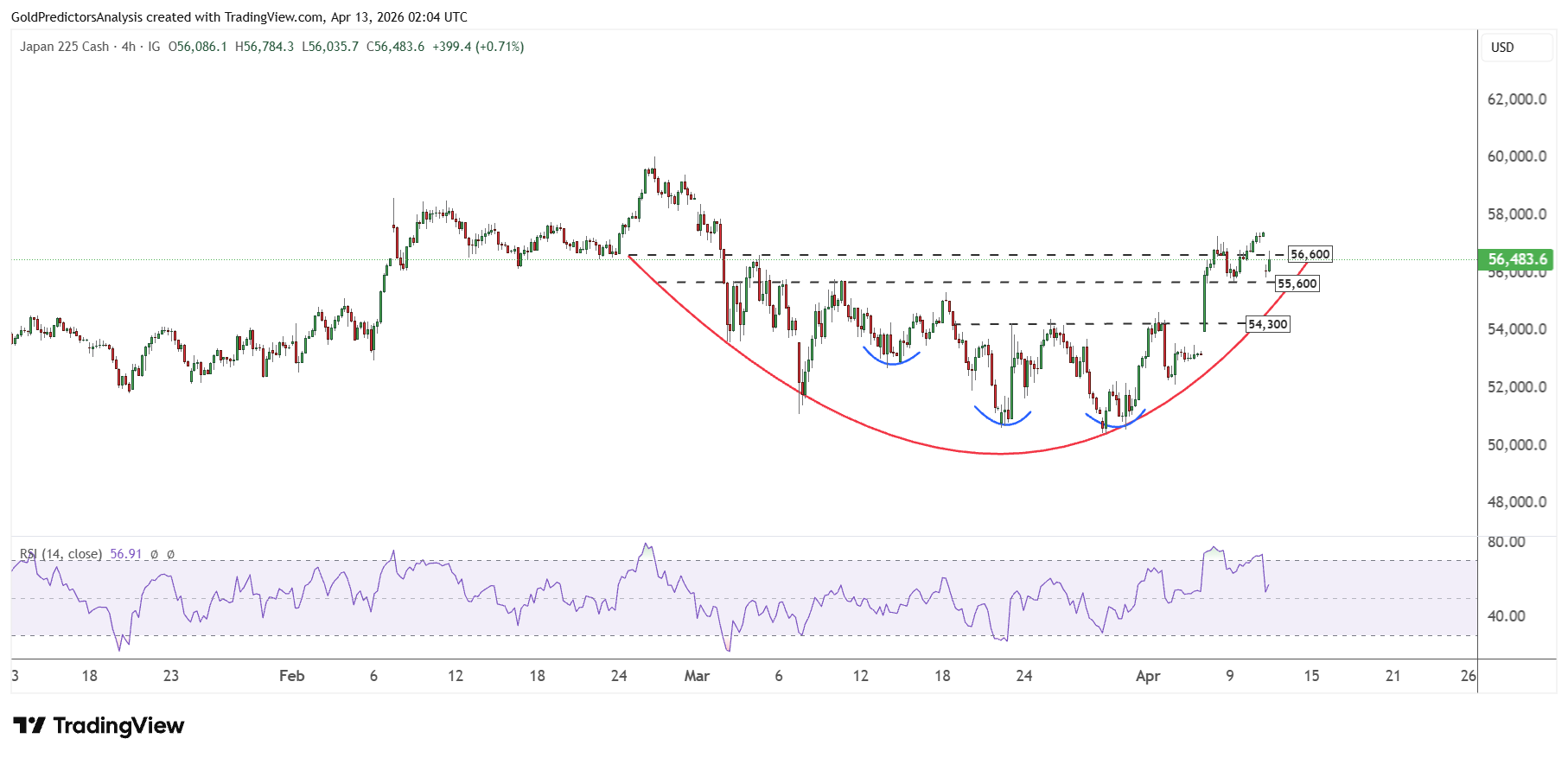
The 4-hour chart for Nikkei 225 shows immediate support at 55,600 on Monday. A break below this level will introduce further downside towards the 54,300 level. If the index remains above 54,300 in the short term, the next move in Nikkei 225 might be higher.
Bottom Line
Nikkei 225 is on the defensive side because geopolitical tensions and increased oil prices take a toll on the sentiment. Increasing energy prices are still hurting the Japanese economy and corporate margins. On the other hand, consumer confidence deteriorates as people become increasingly uncertain. The problem is compounded by currency and policy constraints which restrict the assistance by the Bank of Japan.
Nevertheless, the larger trend remains to the upside so long as 50,000 holds. The weakness in the short term can continue to persist but the current pullback can still serve as a foundation for the subsequent move higher, if market conditions stabilize.