
Brent oil prices dipped slightly in Asian trading as investors hedged against an Iranian naval drill near the Strait of Hormuz that could cause a supply disruption. The market remained cautious in anticipation of U.S.-Iran talks on the nuclear issue. Traders are more focused on geopolitical headlines than pure demand trends. Brent oil dipped a bit after Monday’s advance, while WTI crude oil held firm near $63.50. Thin liquidity due to Lunar New Year holidays in major Asian markets also limited directional moves.
Strait of Hormuz is important chokepoint for exports of crude oil by Gulf producers, including Saudi Arabia, UAE, Kuwait, and Iraq. Any military action on this route evokes concerns of shipping problems and justifies a geopolitical risk premium in oil. Nevertheless, there was no immediate supply shock that would have led to sharp rally.
Oil prices are likely to be volatile in near term as sentiment is driven by diplomatic signals. Positive progress in talks could rapidly eliminate risk premium and send prices back to $60. On the other hand, any threat to shipments through Strait of Hormuz could cause a sudden spike. OPEC+ may also react to sustained prices in $65-$70 with an output increase which will cap upside momentum and keep oil trading in a choppy range.
Meanwhile the story of Natural gas is different as the price dropped to the critical level of $3 following the collapse of winter risk premiums. The previous spike above $7.00 diminished as panic buying was wiped out by expectations of warmer weather. This breakdown is indication of forced liquidation and poor demand. Although oil is more susceptible to geopolitical tensions, gas markets are more sensitive to weather and storage effects.

Oil Technical Analysis
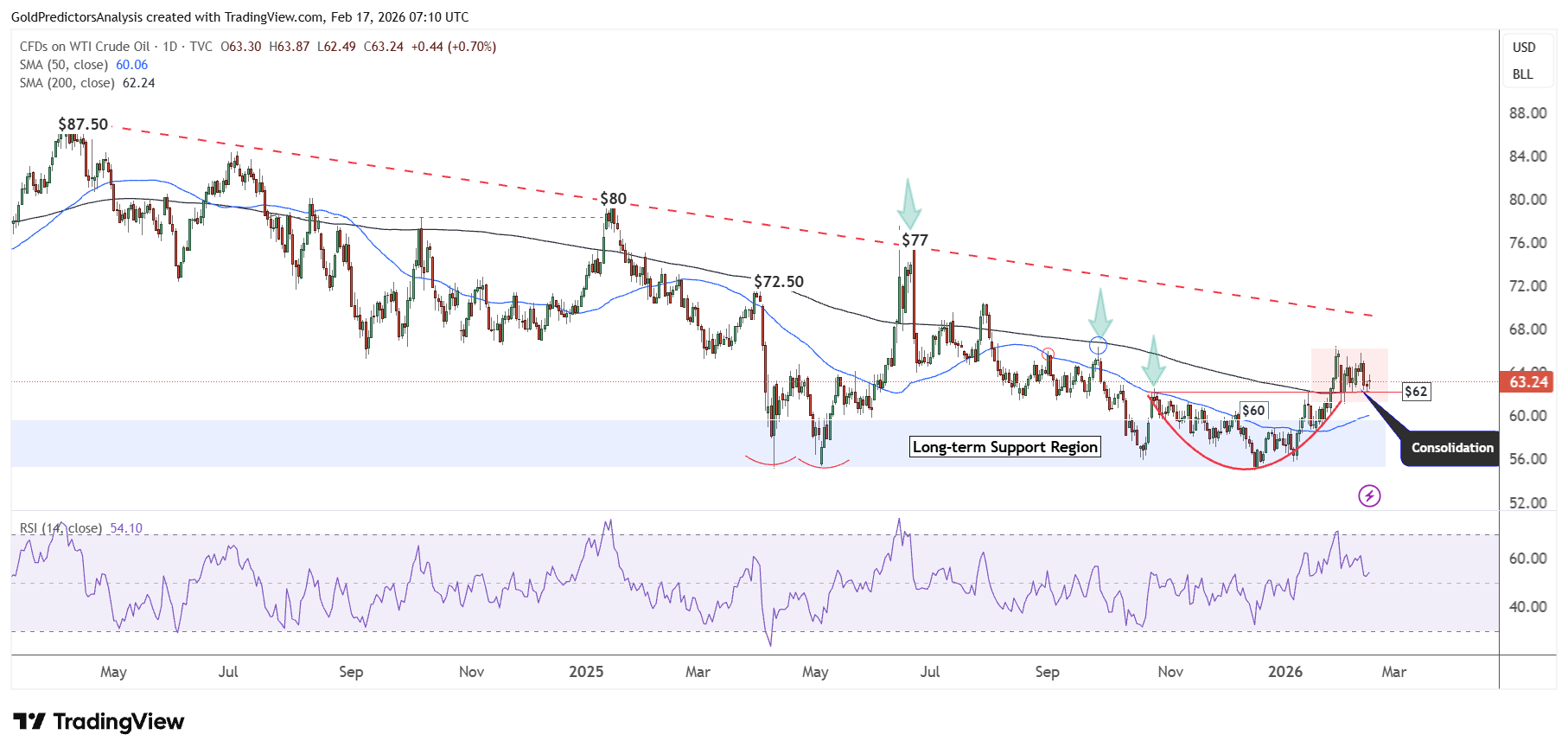
WTI Oil Daily – Descending Trend Line
The daily chart for WTI crude oil shows bullish price action above $55 in the short term. However, the consolidation between $62 and $65 is increasing uncertainty. Despite this uncertainty, the price remains above the 200-day SMA, and the RSI is consolidating above the mid-level, which increases the possibility of another push higher toward $69. The $69-$70 level remains a strong key resistance in WTI crude. This resistance is indicated by the descending trend line, which is highlighted by the red dotted line on the chart below.
Natural Gas Price Forecast
Every new Natural Gas analysis as it publishes, today's technical signal and key levels, live price — on one page.
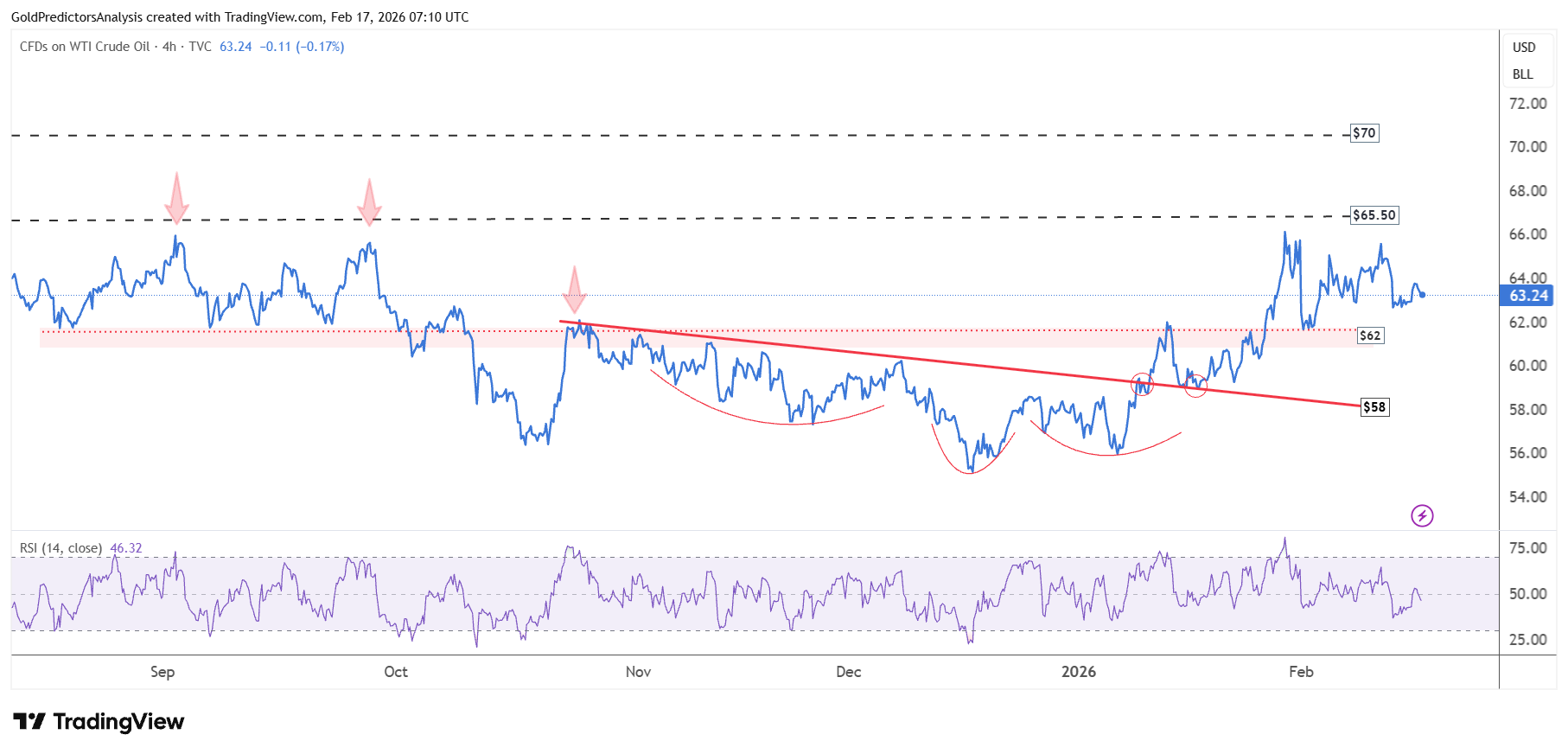
See all Natural Gas forecastsWTI Oil 4 Hour – Consolidation
The 4-hour chart also shows that the price is consolidating below $65.50 and looking for the next direction. As long as the price remains above $62, the possibility of an upside breakout remains likely. However, a break below $62 will indicate further downside toward $58. The RSI on the 4-hour chart is consolidating below the midline, which indicates further downside in the short term.
Natural Gas Technical Analysis
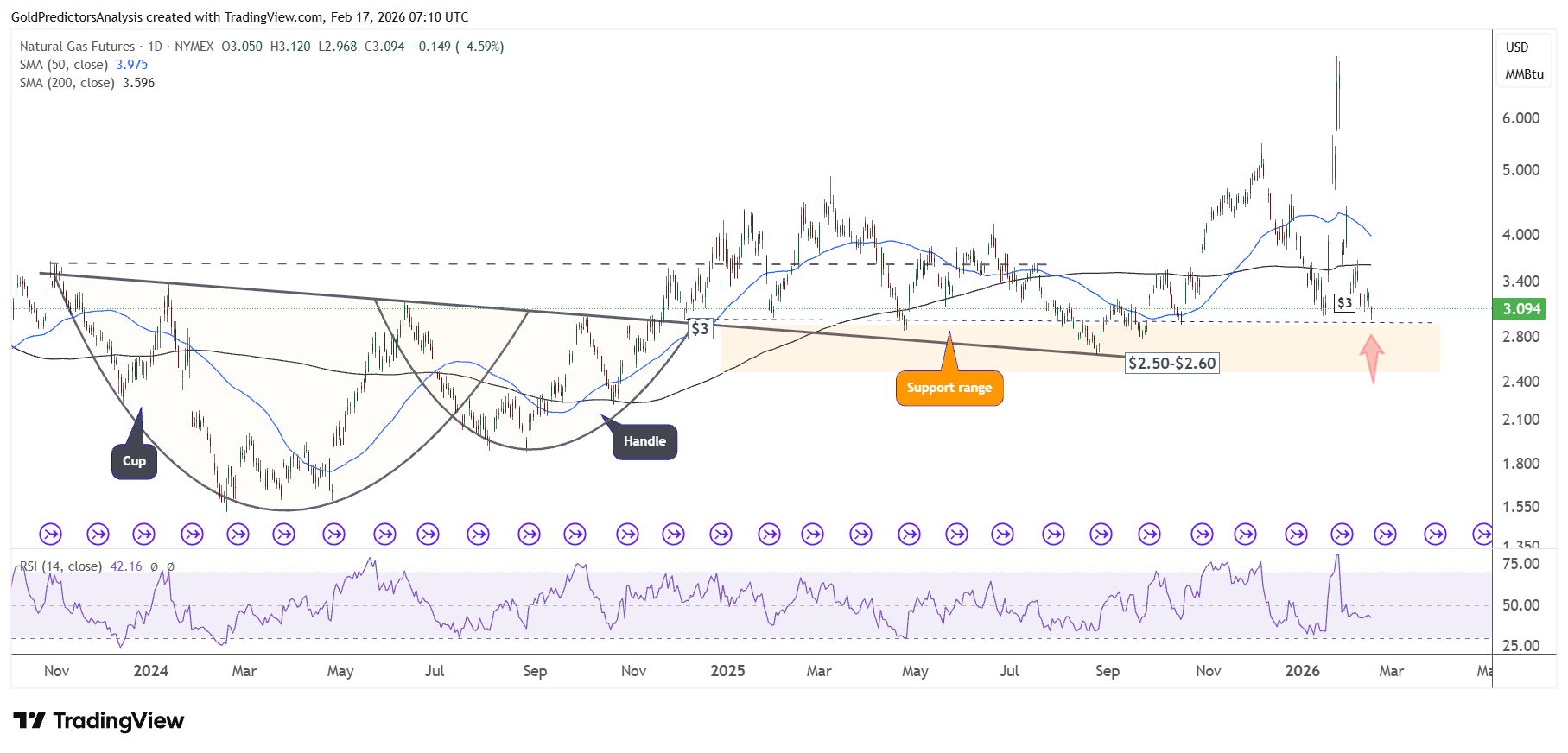
Natural Gas Daily – Key Support Zone
The daily chart for natural gas shows strong spike during the winter season at around $7.40. Then, prices dropped by more than 50% to $3. Now the price is again rebounding from this support and looking for the next direction. The orange shaded area on daily chart highlights the key support zone, which is seen by the neckline of the cup and handle pattern. Thus, the support region between $2.50 and $3 remains the key zone, which may introduce another rebound to higher levels in natural gas.
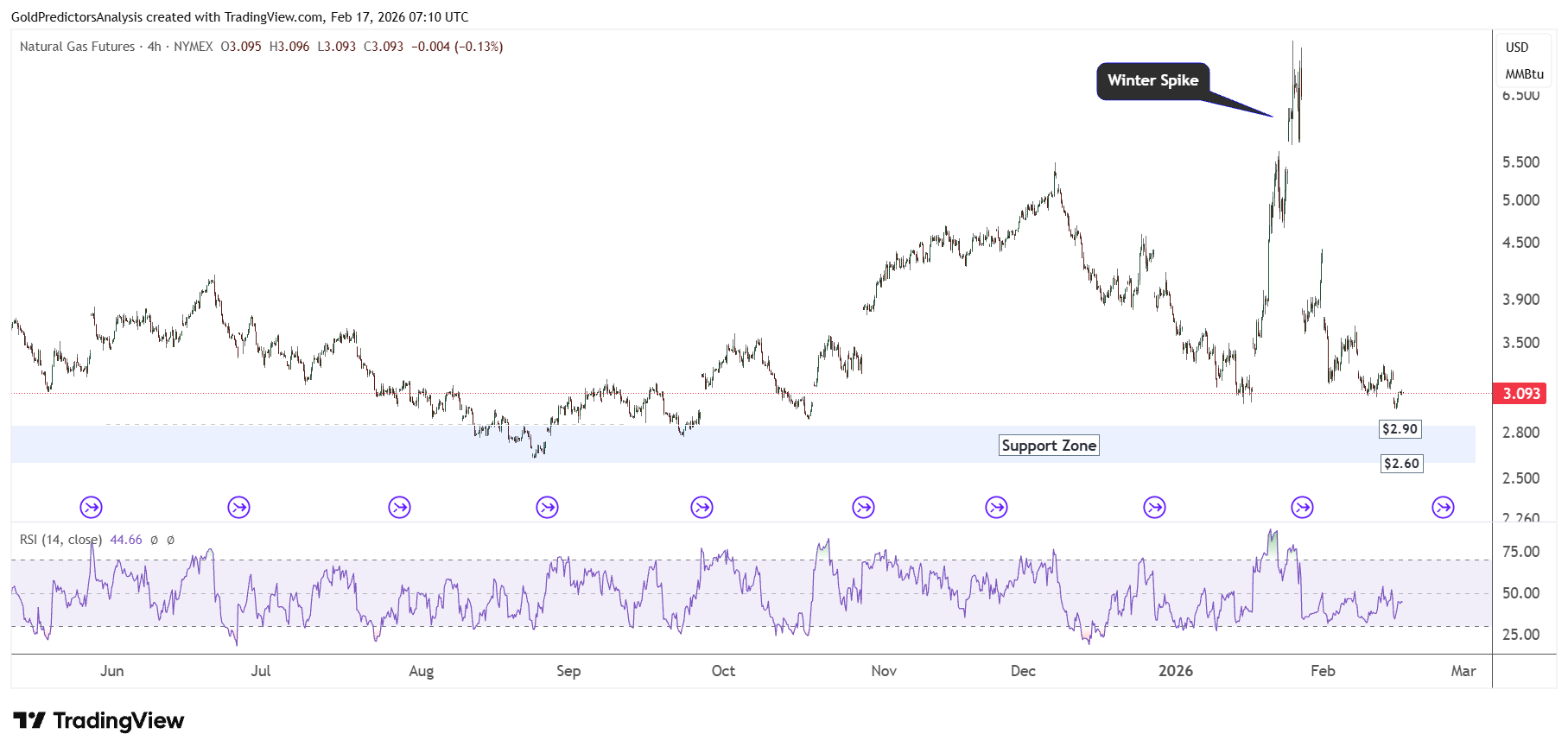
Natural Gas 4 Hour – Key Support Zone
This support zone is also evident on the 4-hour chart. The chart shows short-term support between $2.60 and $2.90. Historically, natural gas prices have produced a rebound when they come around this level. Moreover, the RSI has remained below the midline over the past 15 days, which increases the possibility of a rebound from current levels in natural gas.
If you’d like to know more about how to trade natural gas, please visit our educational area.