
Oil prices consolidate at lower levels after a sharp decline on Tuesday. Brent crude oil trades at $78.80 while the WTI crude oil consolidates below $74.30. The market still sees risks regarding the U.S.-Iran deal and the Strait of Hormuz. Any interruption to the normal flow of oil through the Strait may keep oil prices supported in the short term.
The U.S. and Iran have resumed peace talks, but the market is looking for assurances that the agreement will hold. Traders are also looking for a steady flow of tankers in the Strait of Hormuz before removing the war premium from oil prices. A positive sign was seen on Monday with some tankers going through the Strait. But the traffic is not yet up to normal. This means that the oil prices could remain volatile and move with news from the Middle East.
The drop in the U.S. Strategic Petroleum Reserve may also support the oil prices once the bottom is reached. Reserve crude stocks fell back to their lowest level since June 1983. This indicates that the supply situation is tight after the US-Iran conflict. Oil prices could slide further if the Strait of Hormuz opens smoothly and tensions abate. But if the peace deal is weakened, Iran withholds inspections or delays them, or blocks shipping, both Brent and WTI could rise further as traders start to rebuild the risk premium.

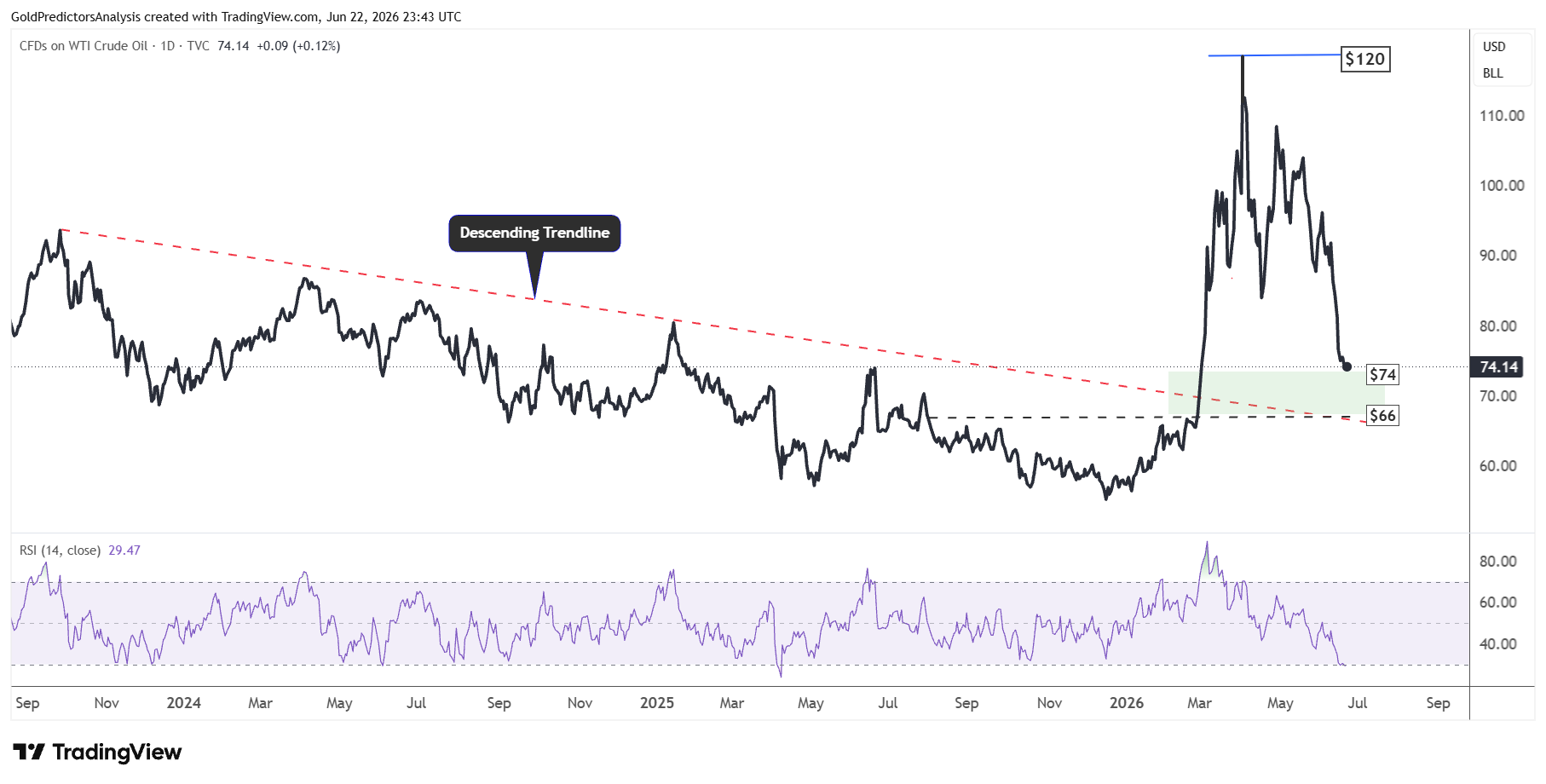
WTI Crude Oil Tests $66–$74 Support After $80 Breakdown
The daily chart for WTI crude oil shows strong bearish pressure in the oil market after peaking at $120. WTI crude oil has already broken $78 and is now pushing toward the long term support region of $66 to $74.
This region is highlighted in green in the chart. The RSI has already reached the oversold region for the first time since December 2024. This suggests that there might be some consolidation or reversal from the support zone.
This support zone is further highlighted by the descending trendline that is coming from the September 2023 highs. A break below $66 will further push WTI crude oil toward the $60 area which is the long-term support region.
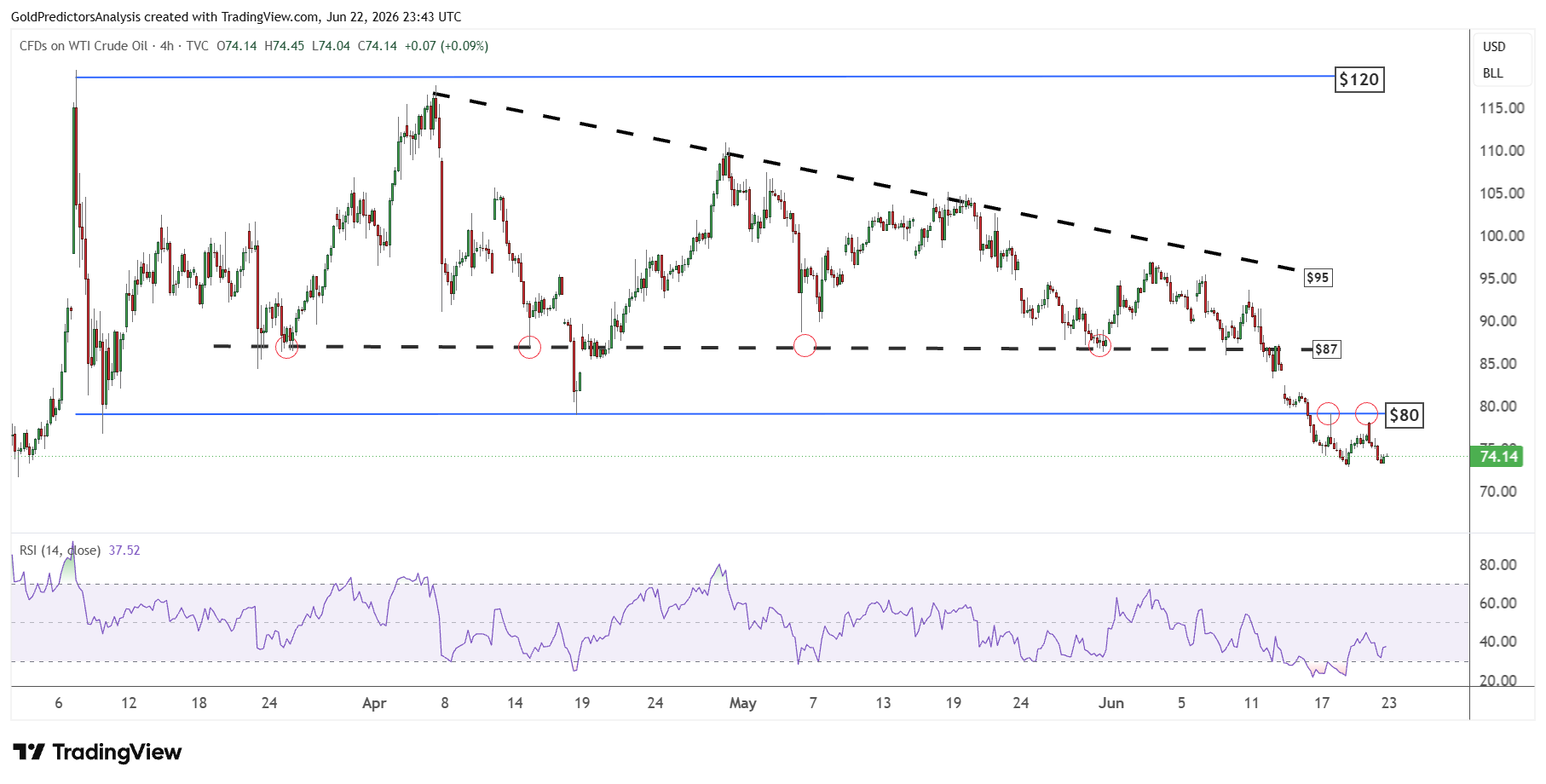
The 4-hour chart for WTI crude oil also shows a breakout from the consolidation zone that has been developing since March 2026. This consolidation range was between the $120 and $80. A break below $80 is now pushing WTI crude oil lower. The $80 level now becomes the resistance level in the WTI crude oil market.
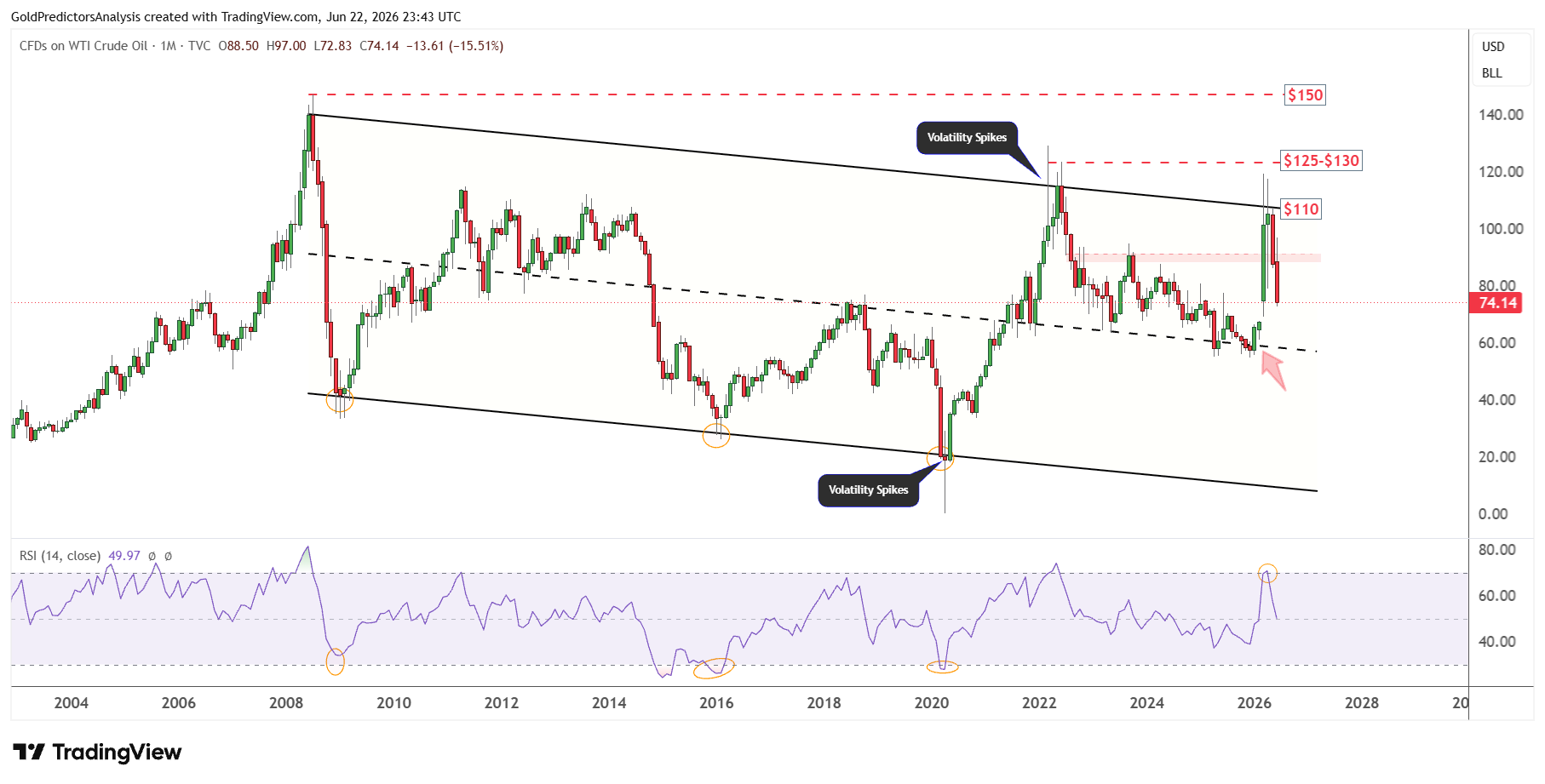
The immediate support now remains the $66 to $74 region. This strong drop in WTI crude oil stems from the resistance of the descending channel at $110 where the price did not close a single month above $110 and continued to push lower. This failure has triggered the bearish pressure in the short term.
Brent Oil Price Forecast
Every new Brent Oil analysis as it publishes, today's technical signal and key levels, live price — on one page.
See all Brent Oil forecastsBrent Crude Oil Breaks $80 as $72–$74 Support Comes Next
The daily chart for Brent crude oil also shows the negative price action. The price has already broken the 200-day SMA at $82 and is now pushing toward the support of the $72 to $74 area. A break below $72 will likely push Brent crude oil to $67.50. The price structure for Brent crude oil has already eroded the support zone of $80. This indicates that prices may remain under pressure in the short term. However, the RSI shows that the price is already reaching the strong support area in the short term.
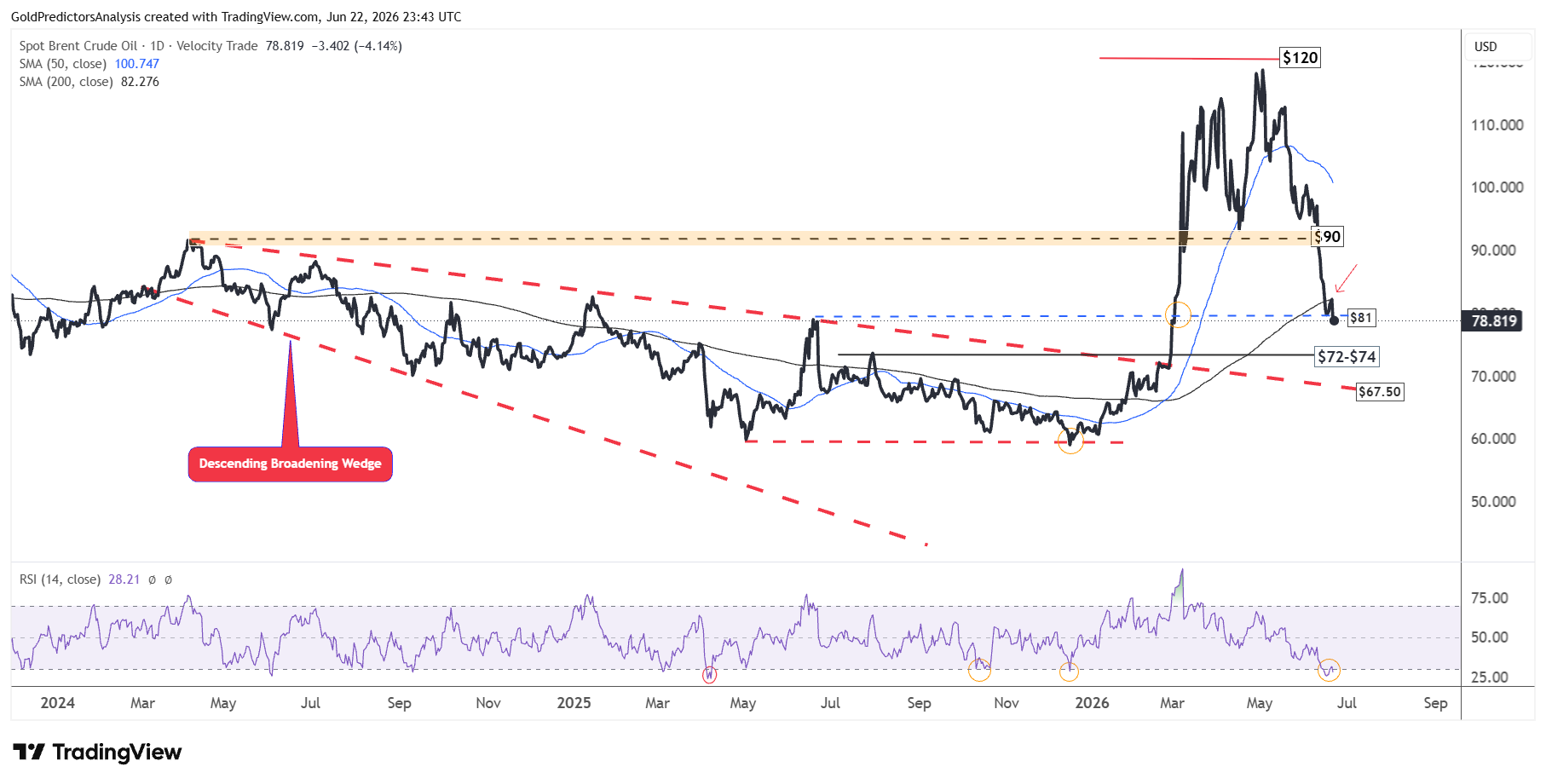
This important support of $80 in Brent crude oil is also evident on the weekly chart. This support is seen by the strong horizontal support at $80 and the intersection of the 50 and 200 SMAs on the weekly chart.
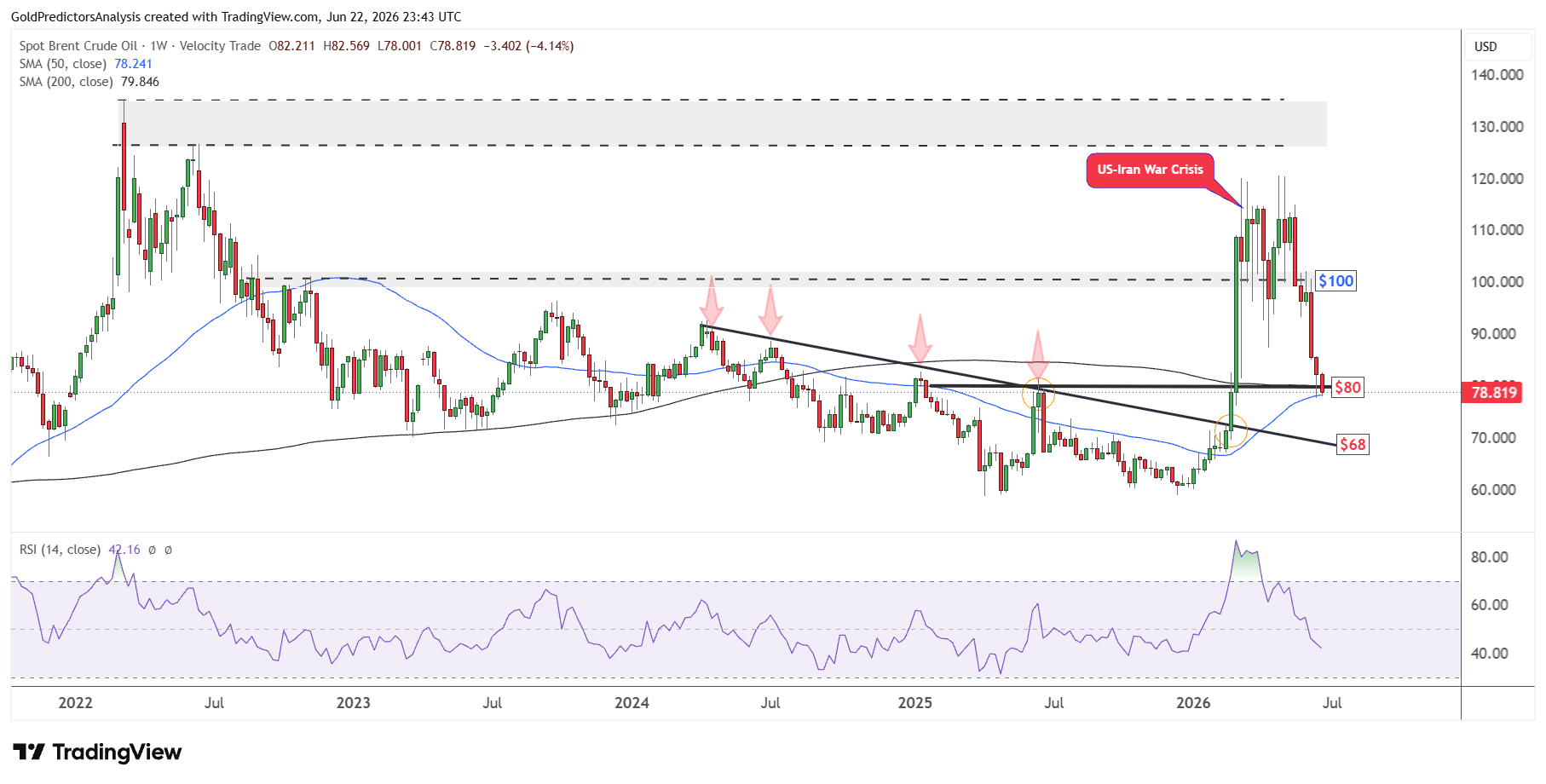
A break below $78 will likely push Brent crude oil toward $68. Moreover, the RSI has already broken the 50 level, which indicates negative pressure in the Brent crude oil market. However, the ongoing uncertainty in the Middle East is complicating the oil market and may lead to strong volatility in prices in the short term.
Bottom Line
Oil prices remain under pressure after breaking the critical support levels. WTI crude faces strong support within the zone of $66 to $74. On the other hand, Brent crude oil faces strong support at $72 to $74. These levels could attract buyers as long as the Middle East risk remains on the table. But the break of $80 has turned the trend negative in the short term. Oil prices may remain volatile due to the uncertainties stemming from the U.S.-Iran deal and the Strait of Hormuz. WTI crude oil must break above $87 to regain the short-term strength.
If you’d like to know more about how to trade crude oil, please visit our educational area.