
Oil prices continue to rally on Wednesday as the U.S. re-imposes a naval blockade on Iranian shipping. The move raised fears of lower oil flows through the Strait of Hormuz. Brent oil consolidated above $85 while the WTI oil consolidated above $80. Both benchmarks closed at the highest level since mid-June.
The Middle East tensions increased after U.S. forces carried out another round of attacks on Iran. Iran had announced the closure of the Strait of Hormuz. But President Donald Trump declared that the route will be open to all other vessels except those from Iran. The oil prices remain strong after two UAE oil tankers were attacked. These attacks fuelled new uncertainty about the recent deal between the U.S. and Iran that is supposed to provide a lasting solution to the conflict.
The positive momentum in oil prices can increase the transport and production costs. This increment may slow down the global growth and dampen future demand for oil. At the same time, the Ukrainian attacks on Russian refineries have compelled Moscow to cut back on diesel exports. This situation has impacted the diesel prices and will further strain the global energy market.

WTI Oil Price Forecast: Break Above $81 Targets $90–$95
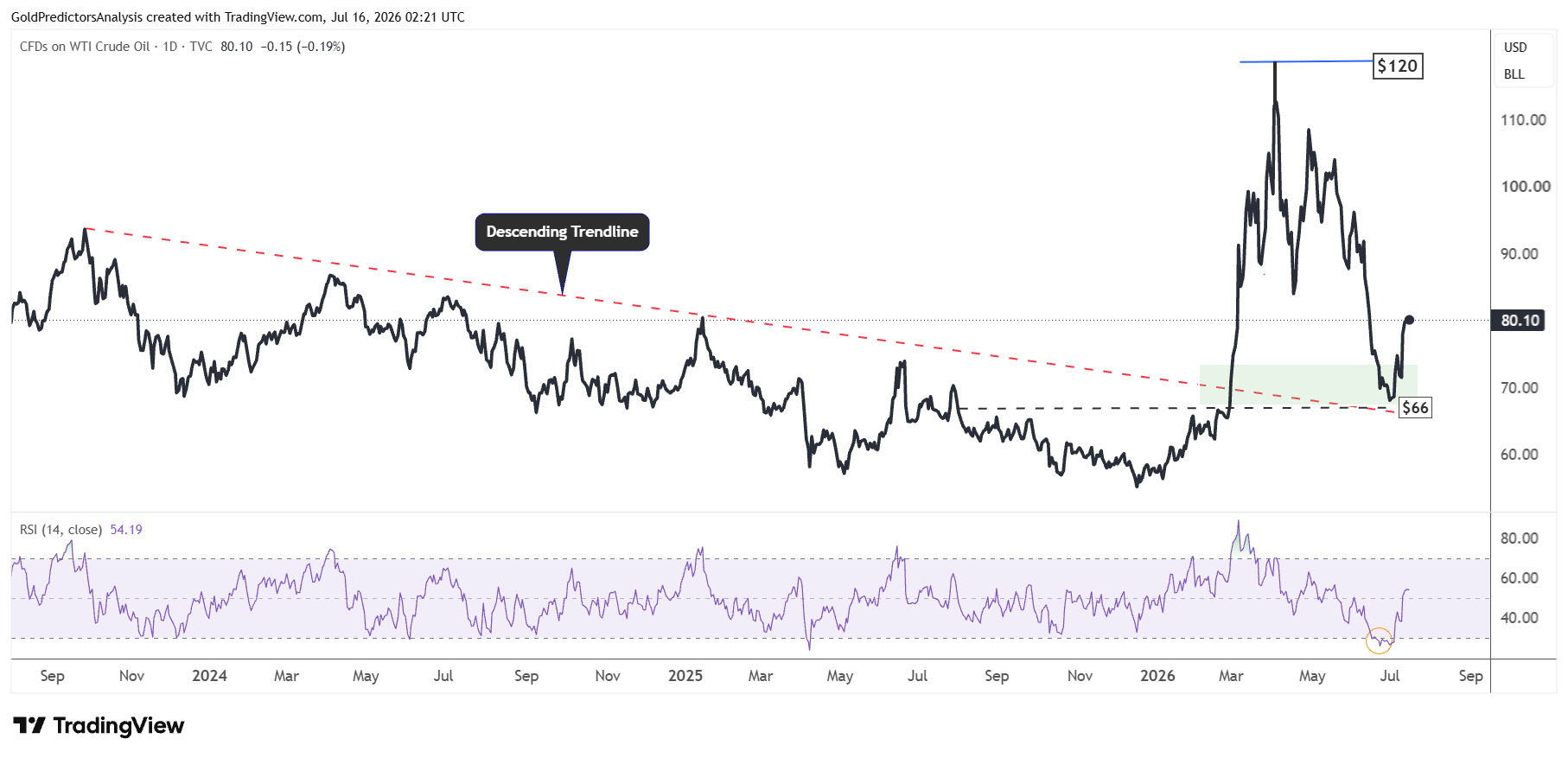
The daily chart for WTI crude oil shows that the price has produced a strong rebound from the $66 area. This rebound has pushed the price toward the key resistance at $80 and points to further upside. This rebound was driven by oversold conditions as seen by the RSI. This indicates that there is potential for prices to continue higher in the short term.
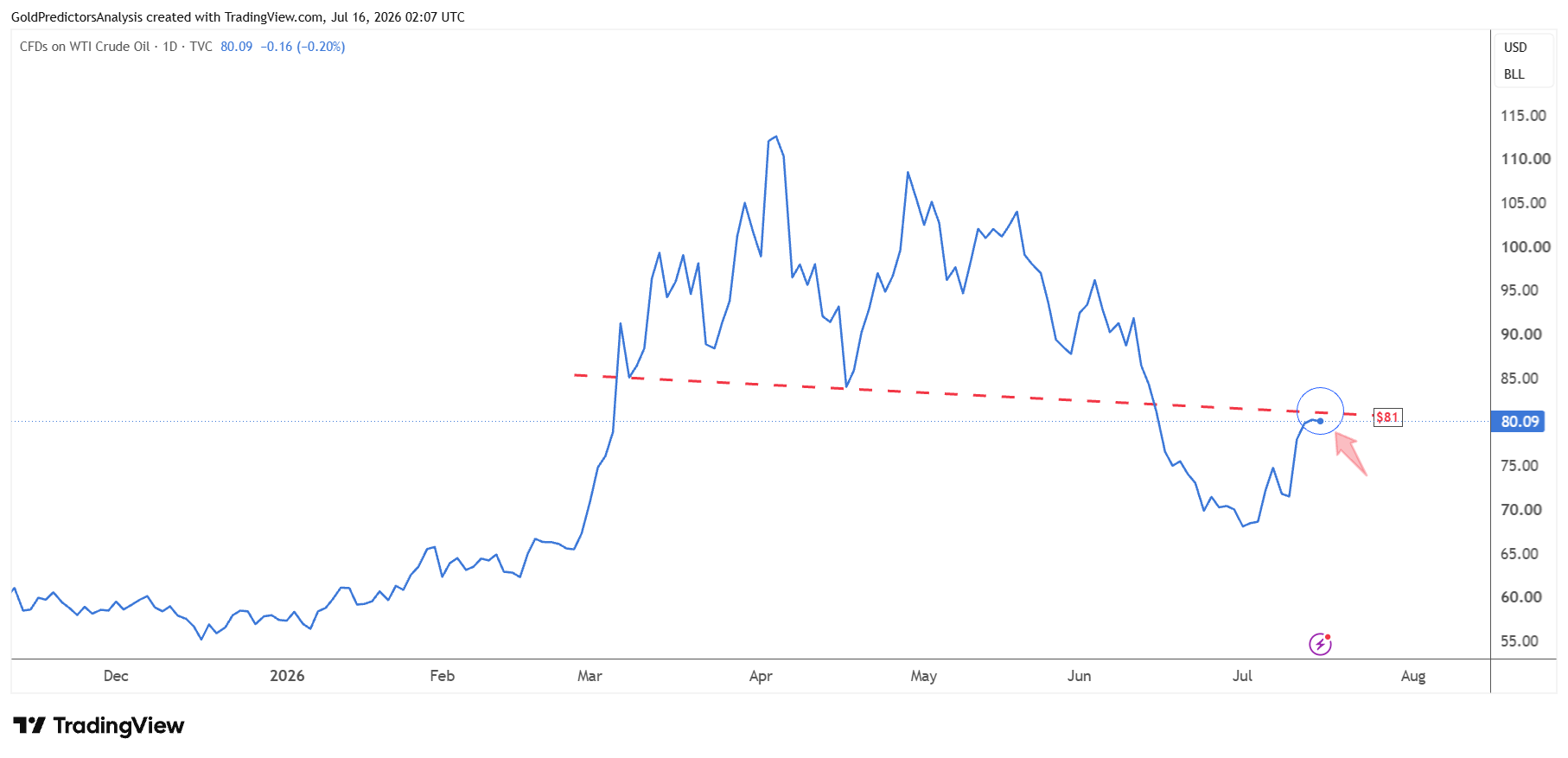
The importance of the $80 area is evident on another chart. The chart below shows that the rebound has pushed prices toward the important key resistance defined by the red dotted trendline. A confirmed break above $81 will likely push oil prices further higher toward the $90 to $95 area.
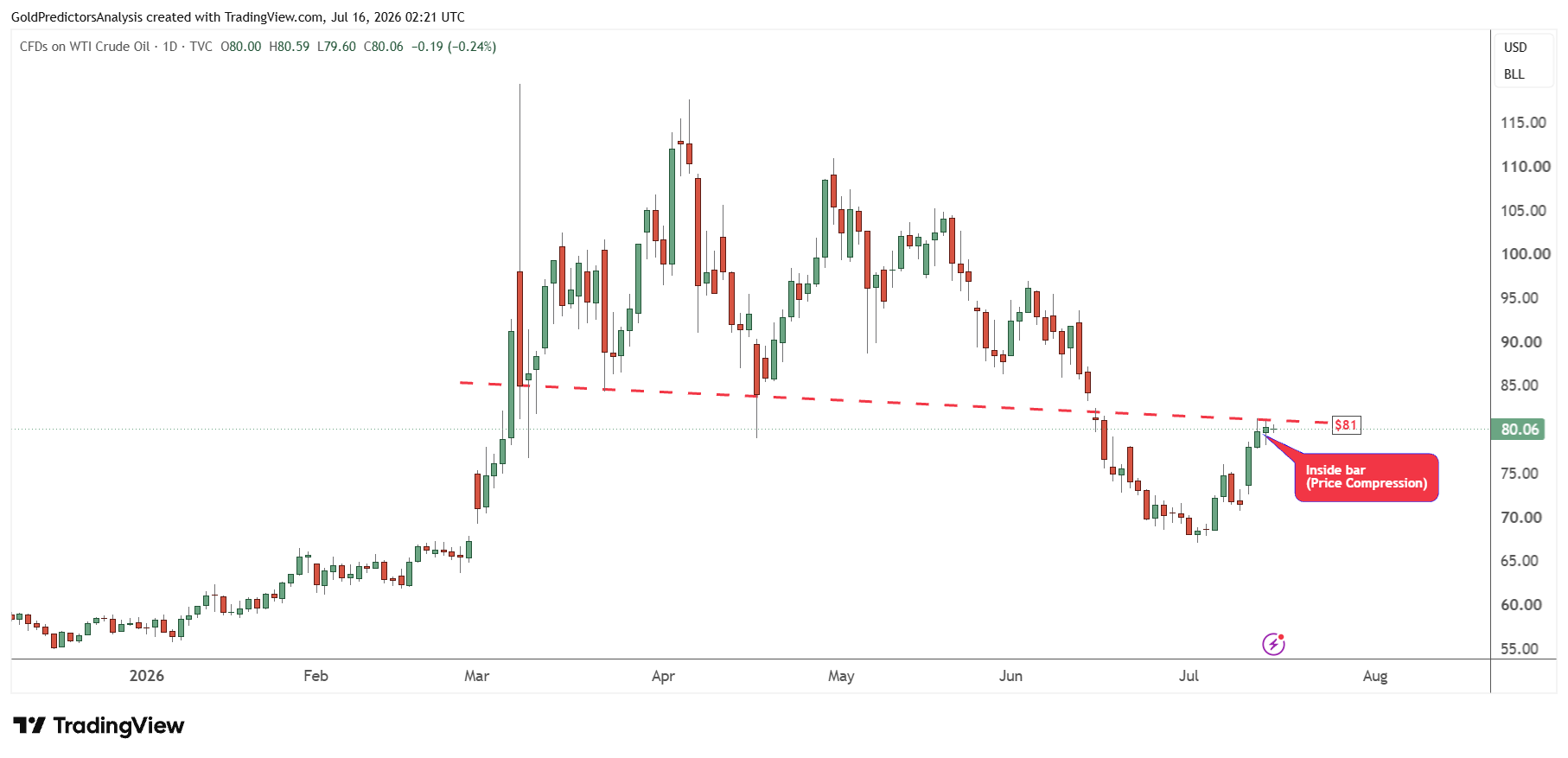
It is interesting to note that WTI oil produced an inside day candle on Wednesday. This formation suggests the price compression below $81. This means that if the price breaks above the Wednesday’s high, it will likely push WTI crude oil quickly toward $90. If this breakout develops, then the $80 to $81 area will likely become support. A failure to break above $81 and a break below $70 will likely push WTI crude oil toward lower levels.
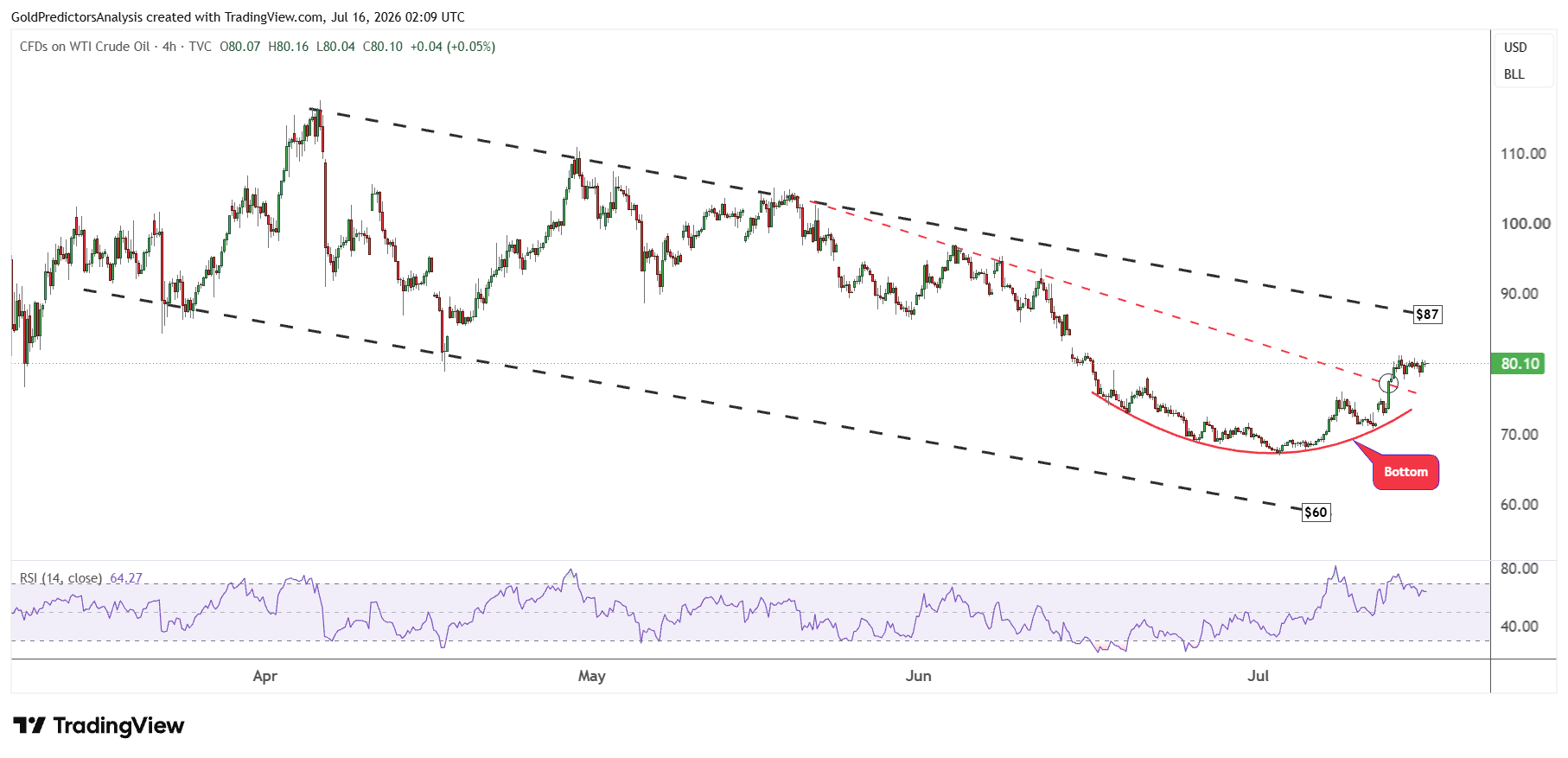
The 4-hour chart for WTI crude oil shows strong bottom formation below red dotted trendline. The immediate resistance remains at $87 as seen by the descending trendline stretching from April 2026 highs.
Brent Oil Price Forecast
Every new Brent Oil analysis as it publishes, today's technical signal and key levels, live price — on one page.
See all Brent Oil forecastsBrent Oil Price Forecast: Break Above $90 Opens the Way to $100
The daily chart for Brent crude oil also shows similar price action, as the price rebounds from the $72 to $74 support area. The price is now consolidating between the 50-day and 200-day SMAs and needs to push toward the $90 area in the short term.
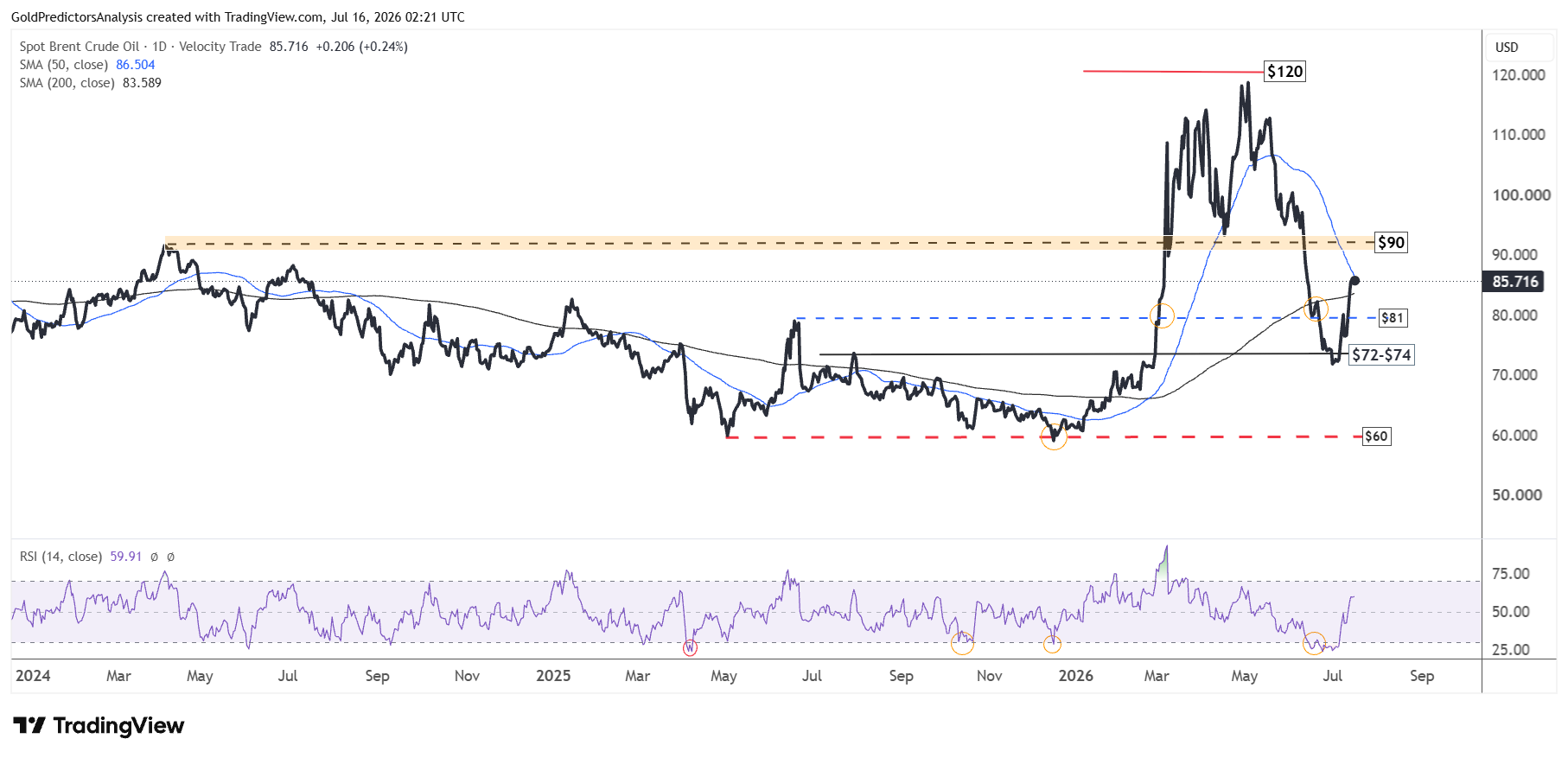
As long as the $81 support holds in Brent crude oil, the next move will likely be toward $90. A break above $90 will push the price toward $120.
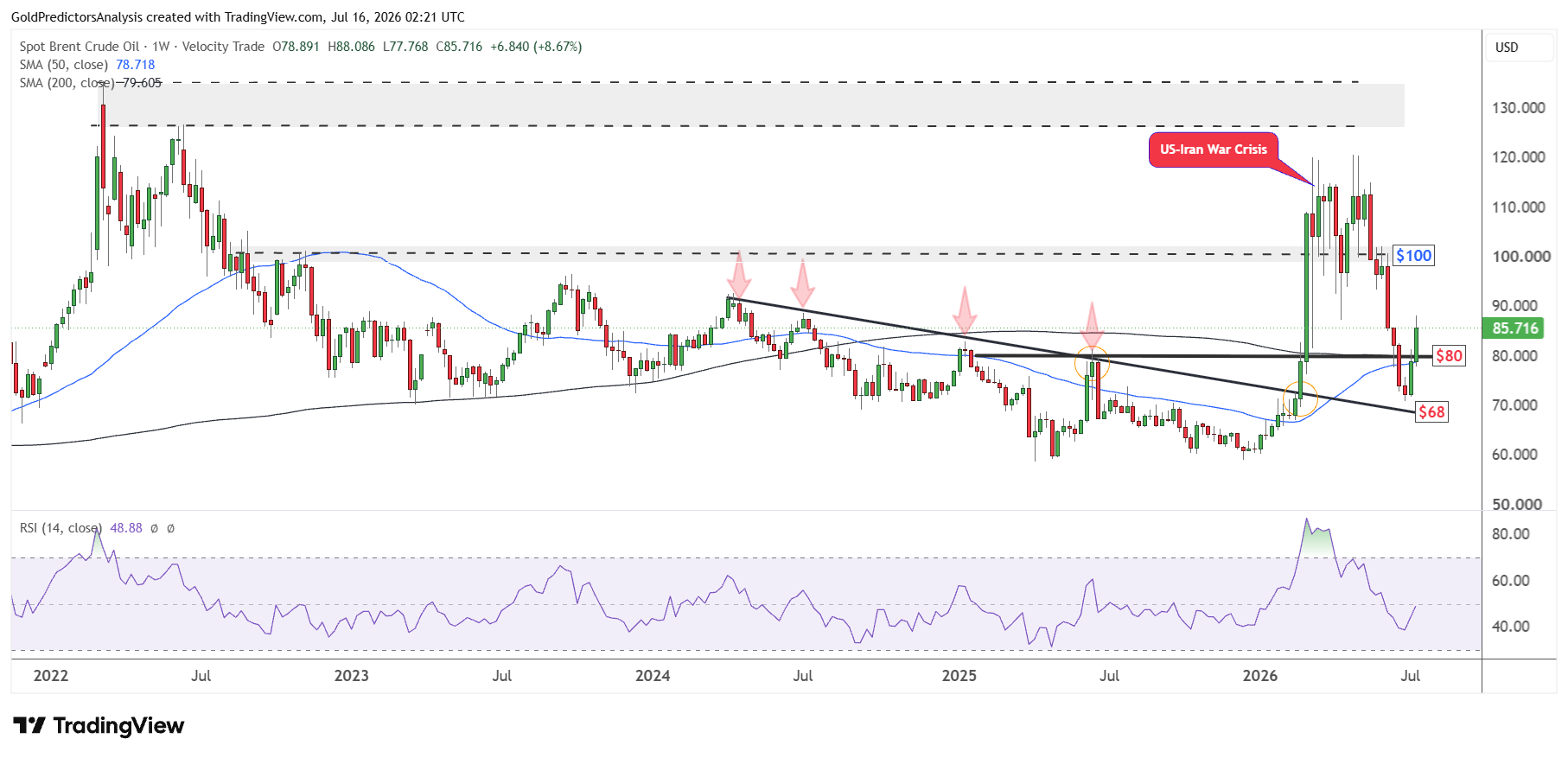
The weekly chart for Brent crude oil also shows strong support at the descending trendline near $68. But the price has already recovered above the 50-week and 200-week SMAs. This breakout indicates a quick recovery toward the $100 region.
Final Words
Rising tension throughout the Middle East and new supply risks continue to support oil prices. WTI may continue its rally on the back of a break over the key resistance level at $81 and $87 to reach the $90-$95 range. Brent oil could also rally to $90 as long as the $81 support level holds. A break above $90 could open the door for $100 and potentially $120. But a failure to hold these key support levels may weaken the bull market sentiment. Rising energy costs could also lead to greater inflation and a deceleration in global demand. The traders should now pay attention to the Strait of Hormuz, more attacks in the area and important technical breakout levels.
Read more: WTI Eyes $100 Breakout as Hormuz Tensions Fuel Supply Risks