
Oil prices fell on Thursday in response to an interim deal between the U.S. and Iran. The deal may end the Iran war and reopen the Strait of Hormuz. This may return Iranian oil to global markets. Brent oil dropped to $79.40 while WTI oil fell to $74.70. This indicates that the markets are pricing in reduced supply risk and war premium is beginning to fade.
The key factor weighing on oil is the prospect of the return of Iranian barrels. If the Strait of Hormuz is reopened, the oil and gas will be able to flow through one of the world’s busiest shipping lanes within 30 days. This would take the strain off the supply that helped hold prices up during the war. The 60-day negotiation period is also being closely watched by traders. If both parties follow the deal, oil supply may improve quickly. Therefore, the oil prices dropped back near the pre-war levels.
The bigger risk for oil is that the supply shortage could turn into an oversupply next year. According to IEA, the supply could exceed demand by 5.05 million bpd in 2027 following the return of the Middle East oil. This might put downward pressure on prices. The Fed has become more hawkish due to continued high inflation. A rate hike by the Fed later this year could slow economic growth and lower oil demand. The supply growth and weak demand are bearish setup for oil prices unless the U.S.-Iran deal breaks down again.

WTI Oil Technical Analysis – Breakout Below $80
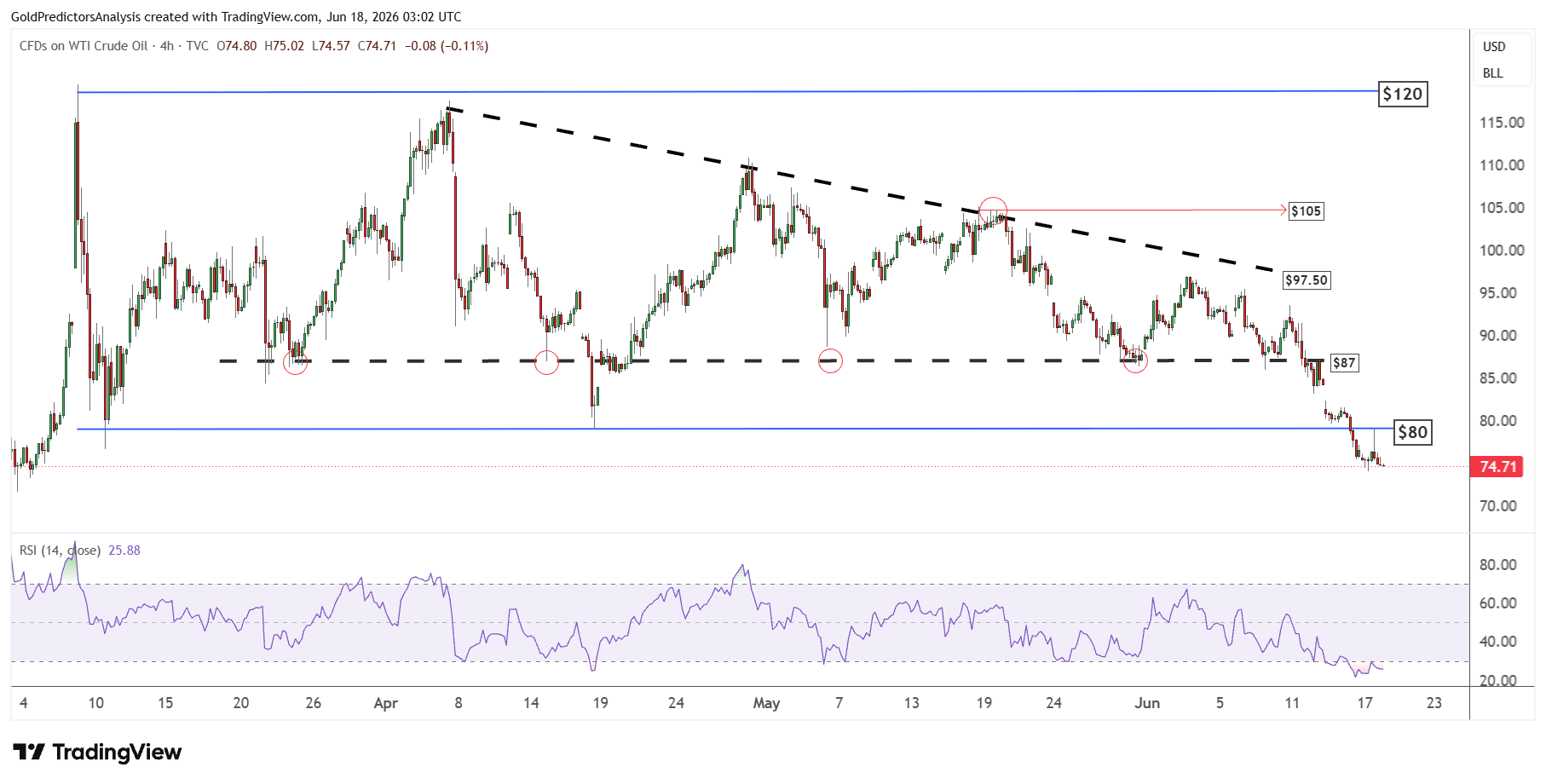
WTI oil has broken below $80 on the short-term chart, which was the primary support level after the U.S.-Iran war. This breakout has opened the door to further downside in the short term, whereby $87 remains the key resistance level. But the 4-hour chart shows that RSI has reached extremely oversold levels in the short term, which indicates that a rebound may develop soon.
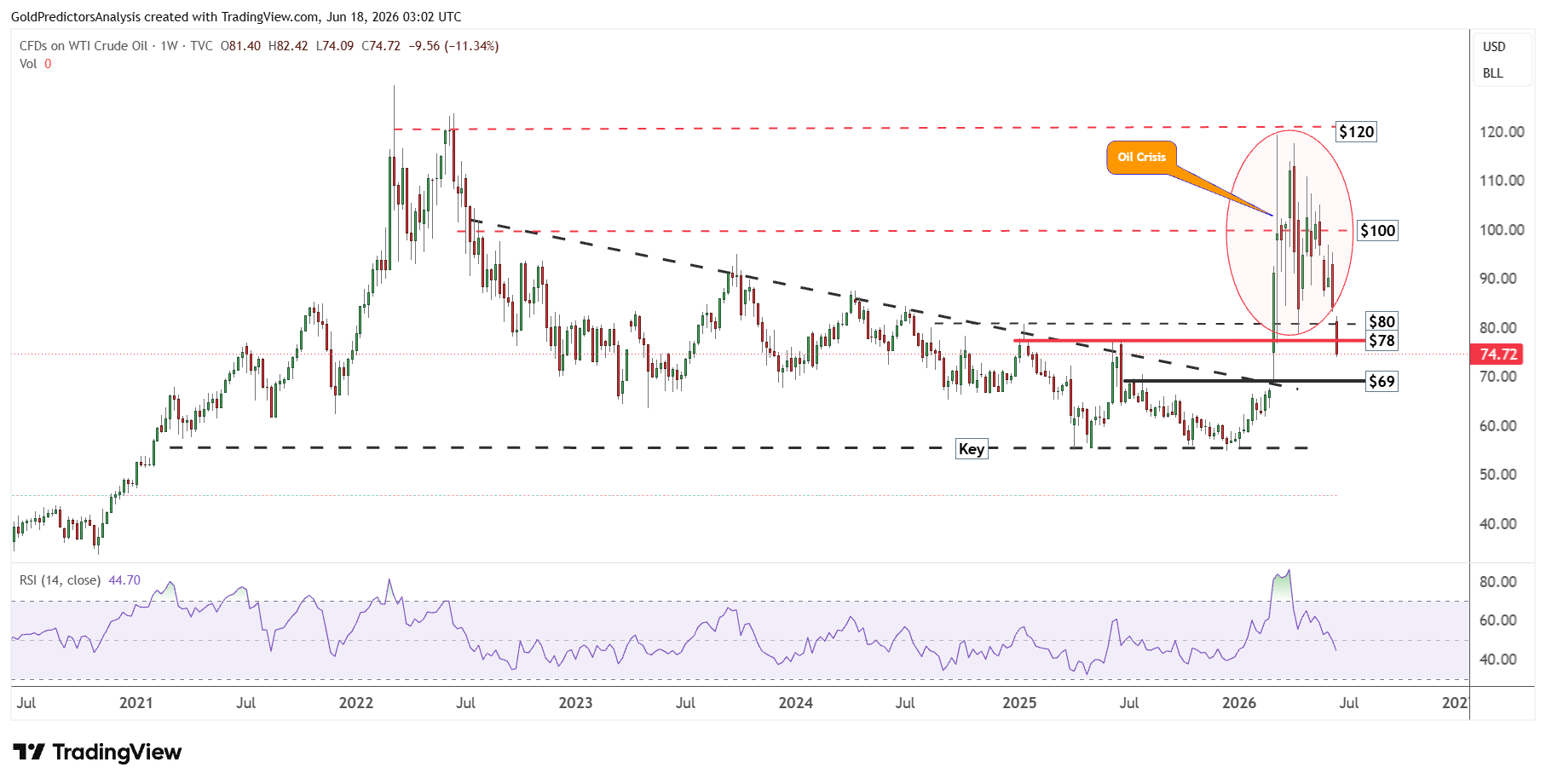
The weekly chart also shows that $80 to $78 was the important key support in the WTI oil. The immediate support after the break of $78 is $69. The RSI is also attempting to break below the mid level if the WTI oil price closes below $80 on the weekly close.
The daily chart for WTI oil also shows that the $66 to $73 area remains the important key support zone. This support zone is also highlighted by the descending trend line from September 2023. If the $66 support level holds in WTI and prices break back above $80, it will likely consolidate between $80 and $100.
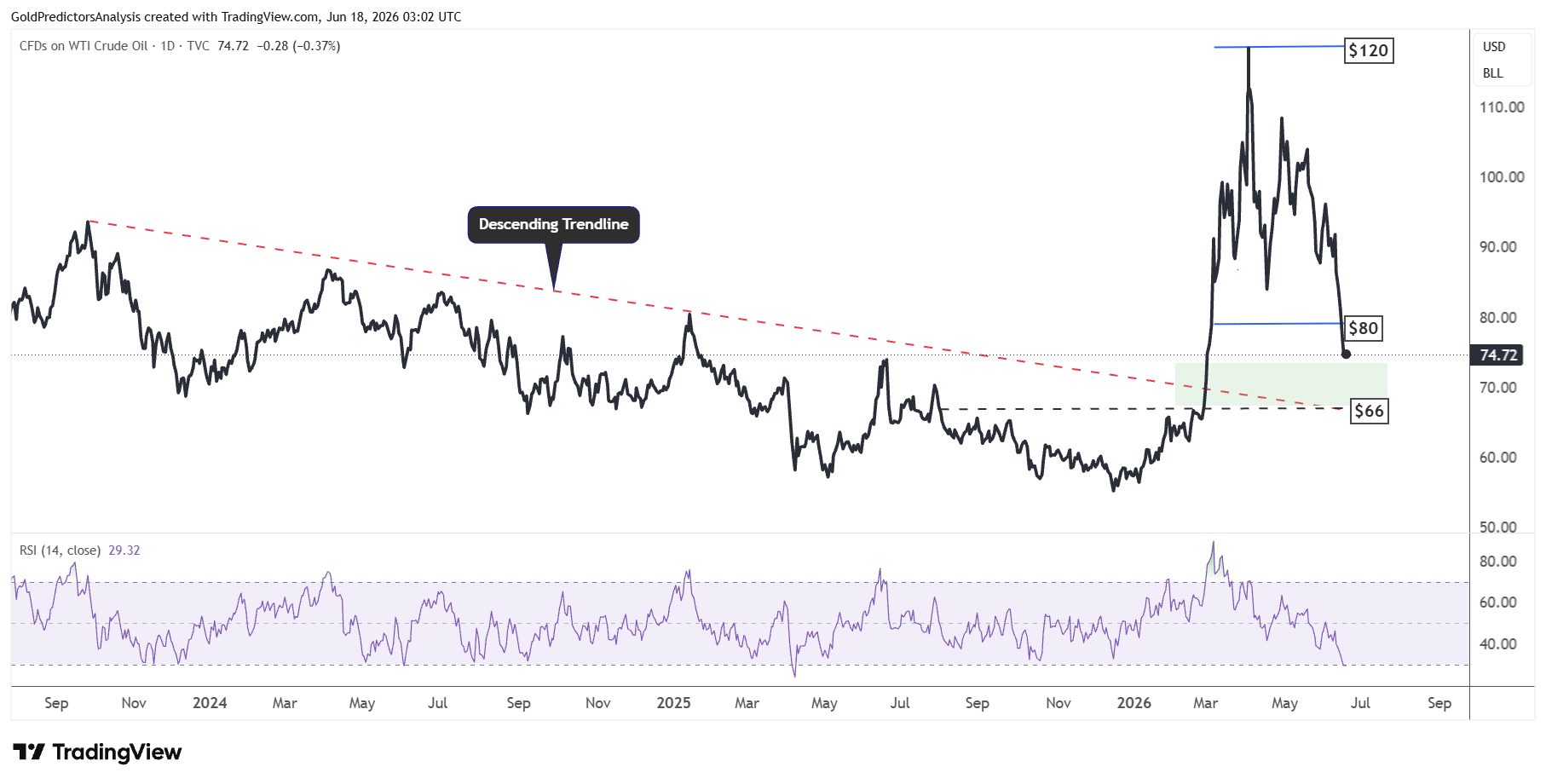
But if crude oil prices break the $66 level, they will likely remain under downward pressure.
Brent Oil Price Forecast
Every new Brent Oil analysis as it publishes, today's technical signal and key levels, live price — on one page.
See all Brent Oil forecastsBrent Oil Technical Analysis – $80 Support Zone Becomes Key
The weekly chart for Brent oil also shows that the price has approached the important key support at $80 on Thursday. This support is also seen by the 50 and 200 SMA on the weekly chart. If the weekly candle closes below $80 on Friday, it will likely break the mid level on RSI. This will introduce further pressure in the short term.
But if the price recovers back above the $100 area, it will likely continue higher toward the $120 to $125 level.
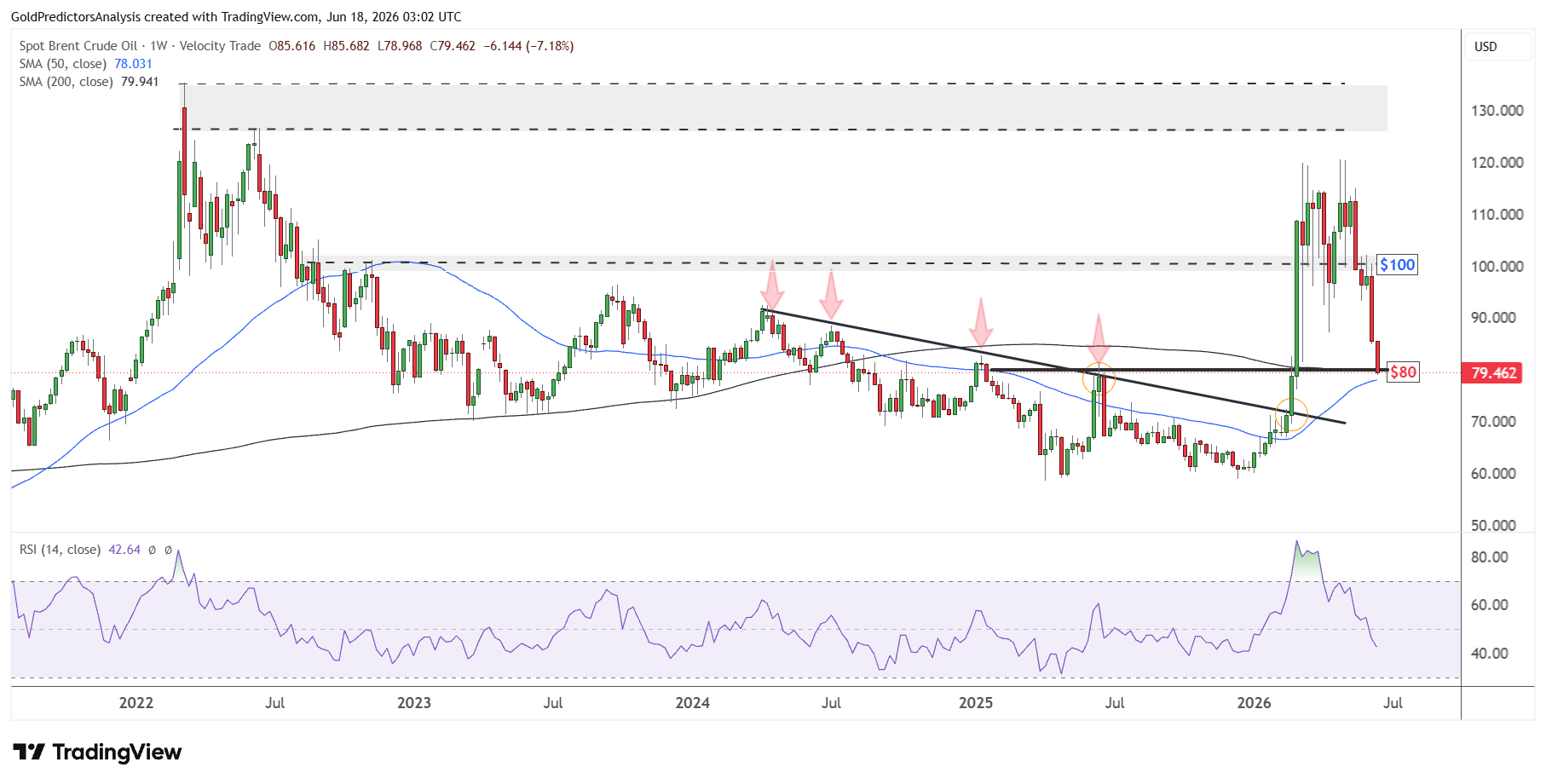
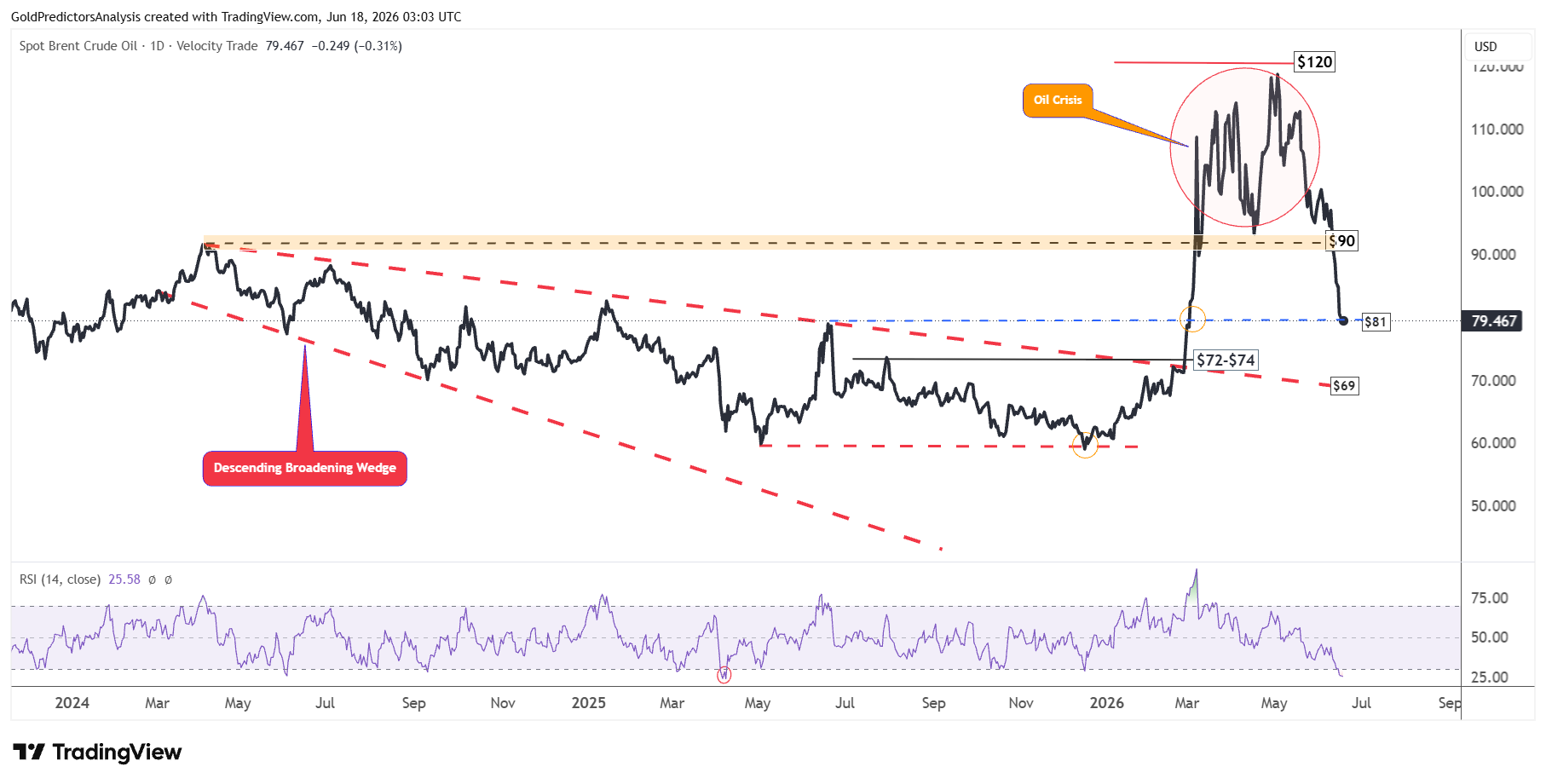
The daily chart for Brent also shows an important support zone of $80 to $81 where the price is hovering on Thursday. A break below this level will push Brent toward $72 to $74.
On the other hand, a break of $72 will likely push prices toward the $69 area, which is the support of the descending broadening wedge pattern.
The RSI has reached the extremely oversold condition not seen since December 2025 and April 2025. These oversold conditions have triggered a strong rebound in the global oil market. Therefore, traders may expect a rebound from the $70 to $80 region in the Brent oil market.
Bottom Line
Oil prices remain under pressure as a U.S.-Iran deal reduces the risk of oil supply shortages and raises the prospect of additional Iranian crude entering the market. The easing of the supply shock and a hawkish Fed could weigh on the oil prices. From technical perspective, WTI and Brent are entering the support area. Due to the uncertainty in the oil markets, the support zones are broad. The oil market is also oversold in the short term, and prices may rebound from the $70-$80 range.
If you’d like to know more about how to trade crude oil, please visit our educational area.