Silver (XAG) hit the critical resistance level of $120 following a strong rally during the last year. Rising crude oil prices are raising risks of inflation moving higher. On the other hand, tightening financial conditions and weaker freight activity are raising concerns of economic slowdown.
At the same time, the metal has already breached a significant long term resistance point and moved to new record highs before moving into a correction phase. This article presents the recent macro catalysts, the technical structure of the silver market and signals from the gold to silver ratio to understand the next move.
Recent Market Catalysts Shaping the Silver Outlook
Rising Oil Prices Could Push Inflation Higher
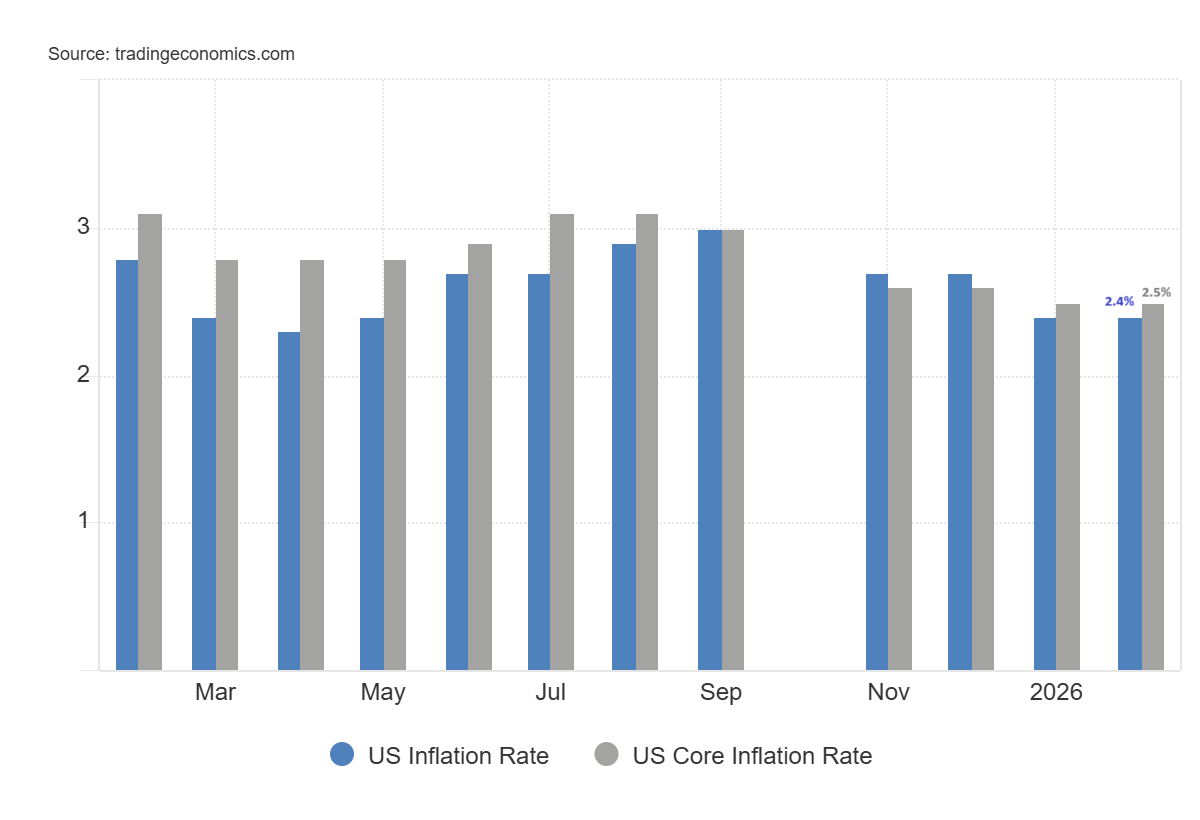
The recent inflation data looked soft on the surface, but the bigger picture is looking less friendly for silver. The chart below shows that the core CPI was steady at 2.5% in the 12 months to February, while headline CPI was 2.4%. However, the energy market is transmitting a very different message. Brent crude oil is trading above $100 per barrel which increases the risk that inflation will move higher in the months ahead.
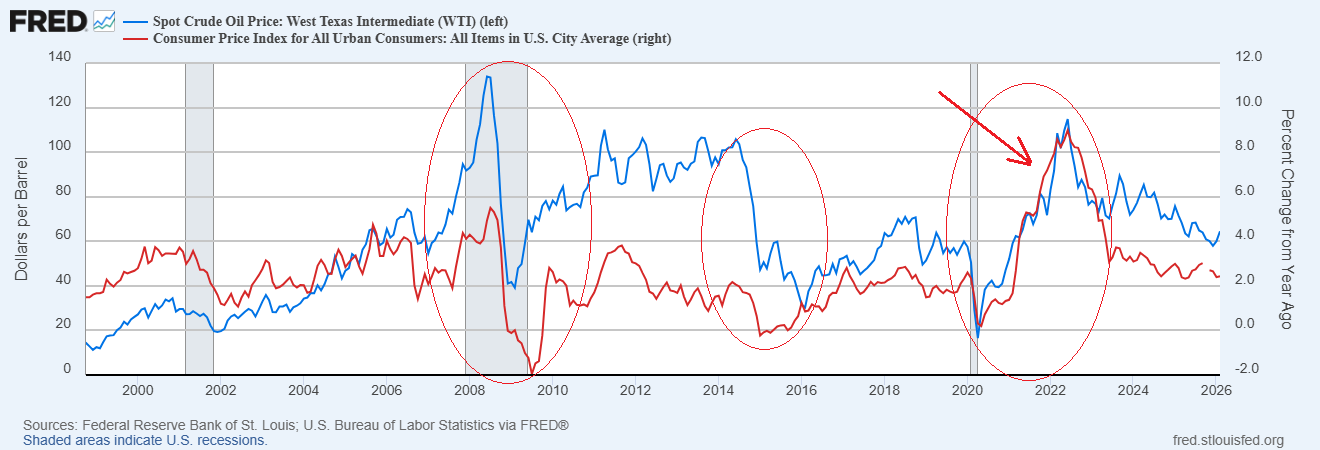
The connection between oil and consumer prices is already obvious from recent history. The chart below illustrates that headline CPI spiked to 9% following WTI crude oil jumping to $115 per barrel in June 2022. This surge followed Russia’s full-scale invasion of Ukraine. That move did not remain confined to fuel. It spread throughout the entire economy.
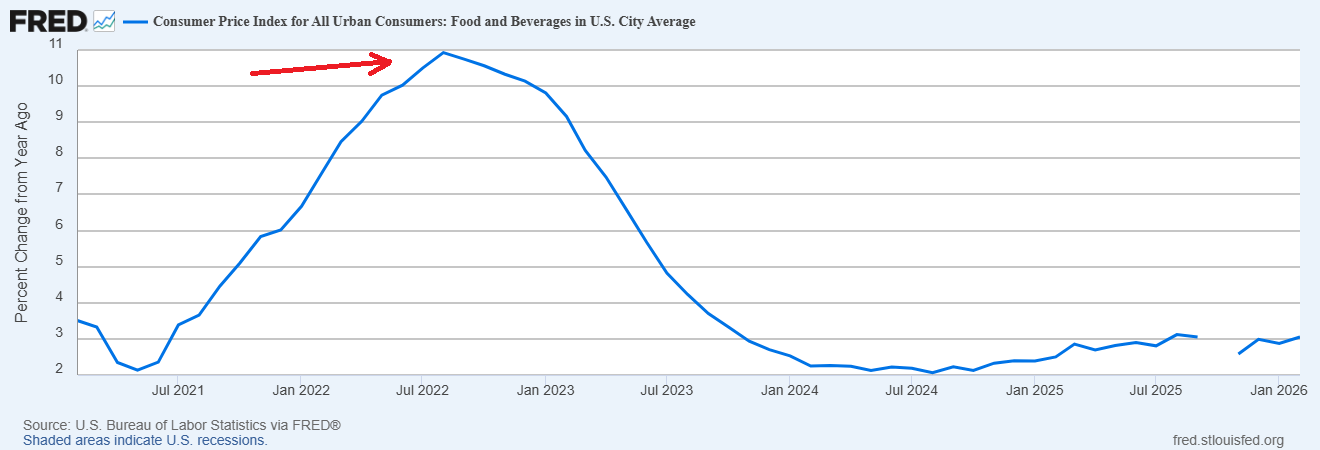
Food inflation went even higher to 11% in August 2022 as diesel contributes largely to agriculture. It is used by farmers for plowing, irrigation, harvesting, processing and transport. When energy costs increase dramatically, they push up production and delivery costs throughout supply chain.
That is why the current move in oil is so significant. If Brent remains above $100 then the recent 2.4% figure for the headline CPI reading may turn out to be just a temporary low point.
In my view, inflation may increase to at least 5% in coming months and could go even higher if energy prices continue to rise. This kind of setup tends to matter for silver because the metal not only reacts to expectations of interest rates but also to changing fears of inflation. When investors begin to doubt that price pressures are under control, precious metals will often come back into focus.
Silver Price Forecast
Every new Silver analysis as it publishes, today's technical signal and key levels, live price — on one page.
See all Silver forecastsTightening Financial Conditions Increase Recession Risks
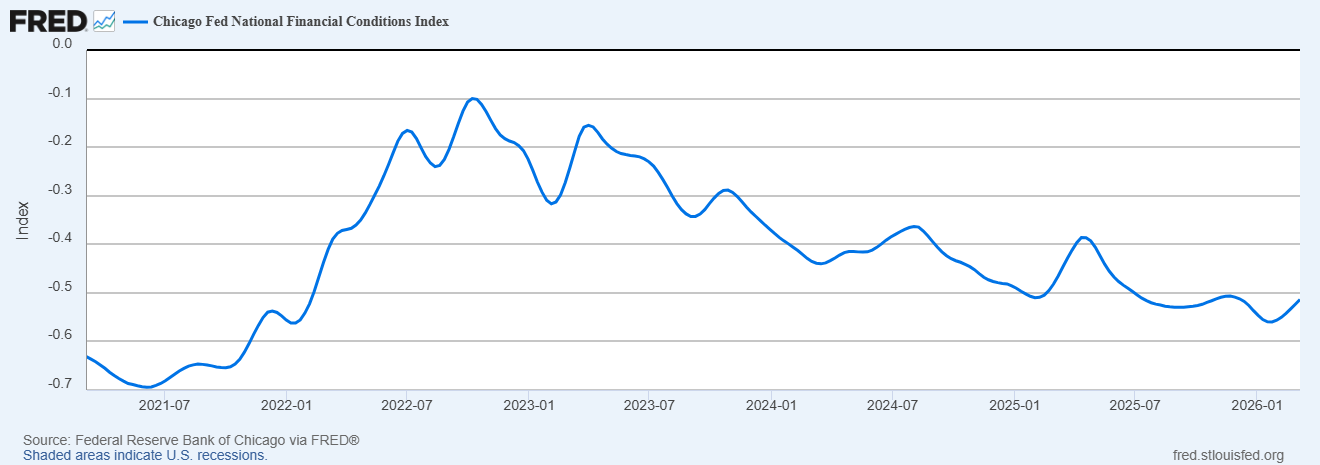
At the same time, signals for growth are weakening. The Chicago Fed National Financial Conditions Index increased to -0.514 last week. The increase in this index indicates that the financial conditions are tightening. The tighter financial conditions tend to result in greater stress over growth-sensitive assets and greater caution in markets. That pressure is also manifesting itself in the real economy.
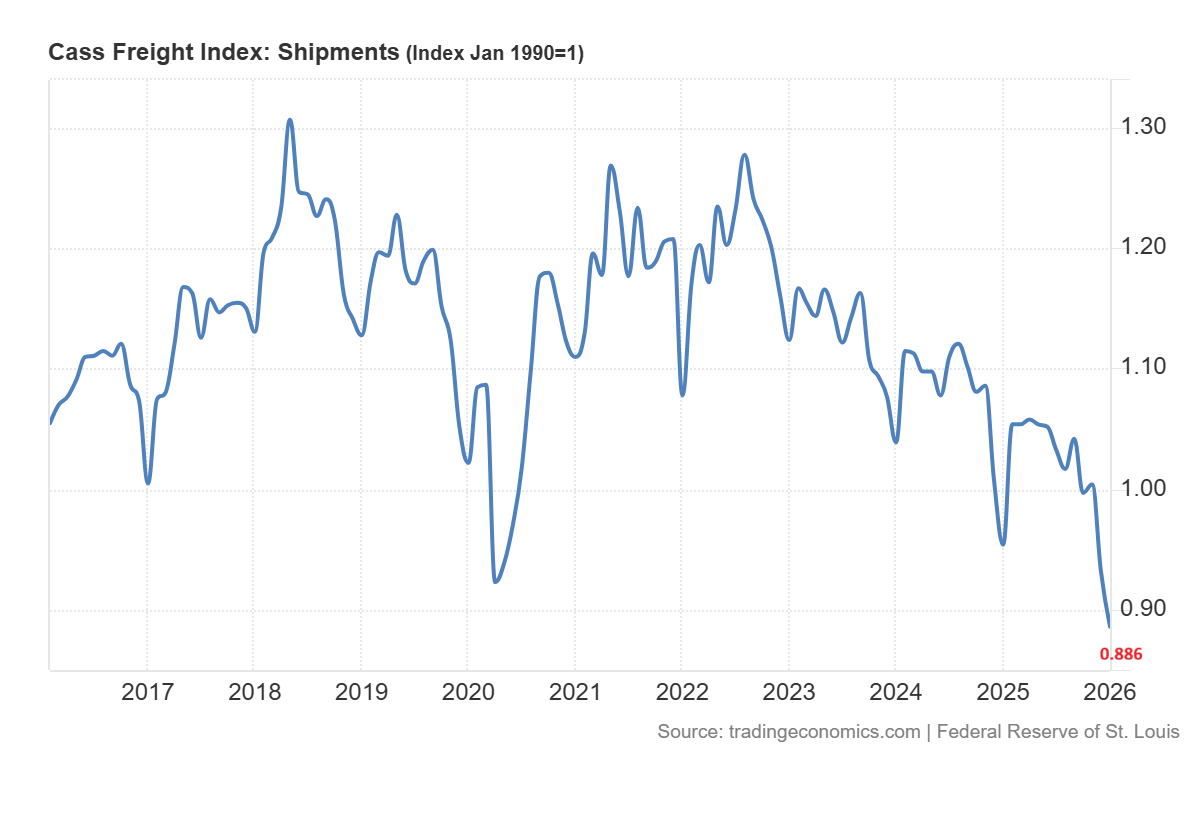
The slowdown is also reflected in the Cass Freight Shipments Index which is dropping to recession levels. These trends indicate weaker demand and forecast a slowdown in the broad economic activity.
This environment creates a difficult macro mix. Inflation risks are increasing, but recession signals are also building. That combination serves as a friend to silver in periods when investors begin to search for assets that can react to both monetary uncertainty and economic stress.
However, silver is not reacting to one factor here. It is sitting in the middle of market that is experiencing higher oil prices, higher inflation pressure, tighter financial conditions and increasing recession risks.
Silver Technical Structure: Breakout Above $50 Signals Bullish Trend
The overall picture for spot silver remains strongly bullish, as the price has broken $50 in 2025. The breakout from this key area has initiated a strong surge to reach a record of $120 in 2026.
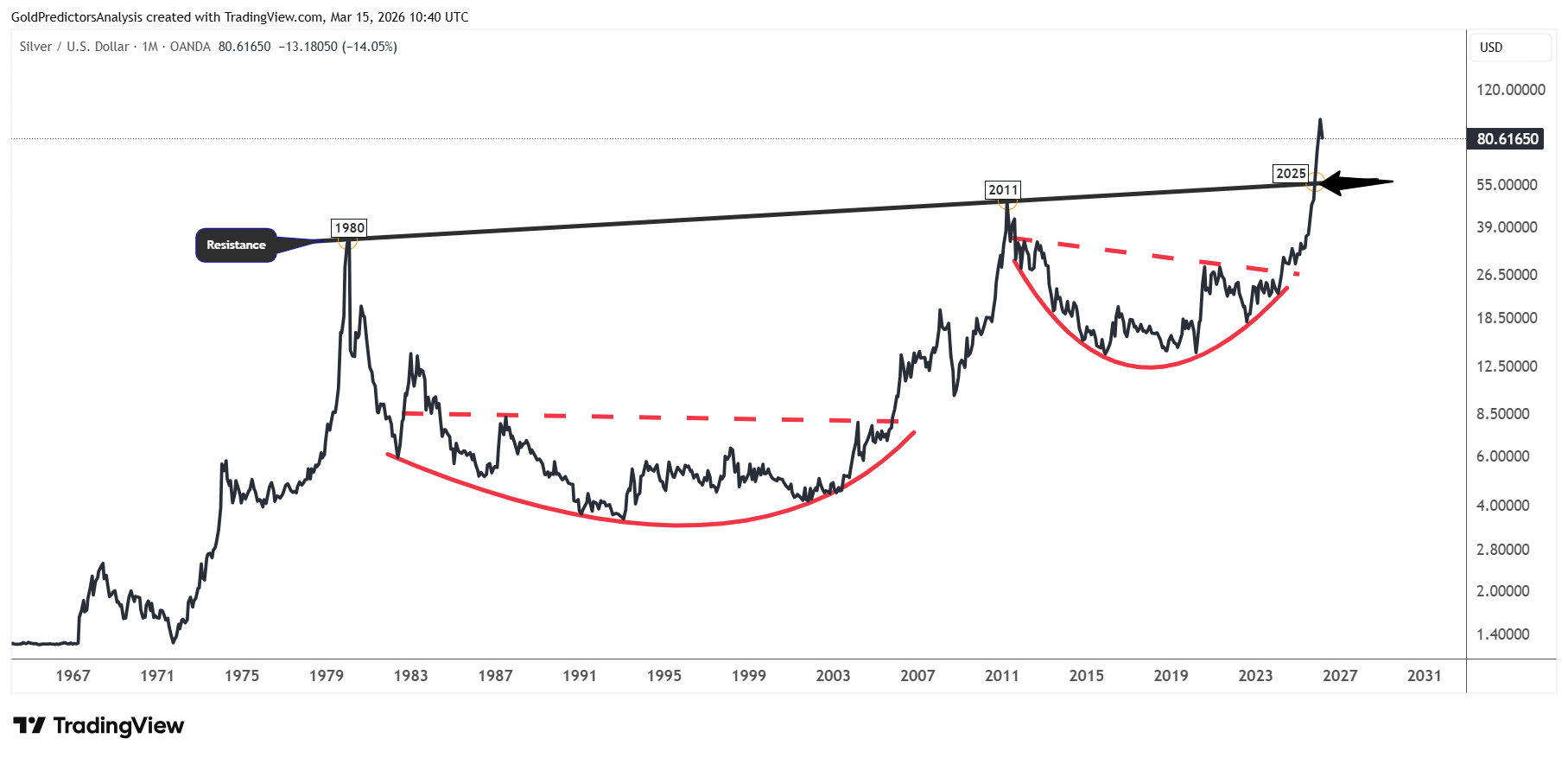
Before the breakout of $ 50, the silver market produced a long-term cup and handle formation, which has been in place since the 1980s high. The 1980s high and the 2011 peak produced the cup, and the 2011 peak to the 2025 consolidation produced the handle.
This cup and handle formation indicates a long-term bullish pattern, which suggests that the silver market will multiply by a large multiple over the next few years.
However, the breakout from $50 occurred just a few weeks ago. This indicates that the price is likely to find support before a rally toward the $300 region.
Therefore, silver is correcting back toward $50-$70. This correction indicates a strong buying point for long-term investors.
The strong surge in silver during Q4 2025 and Q1 2026 was a parabolic move. The price broke above the resistance of $50, extending the ascending channel pattern.
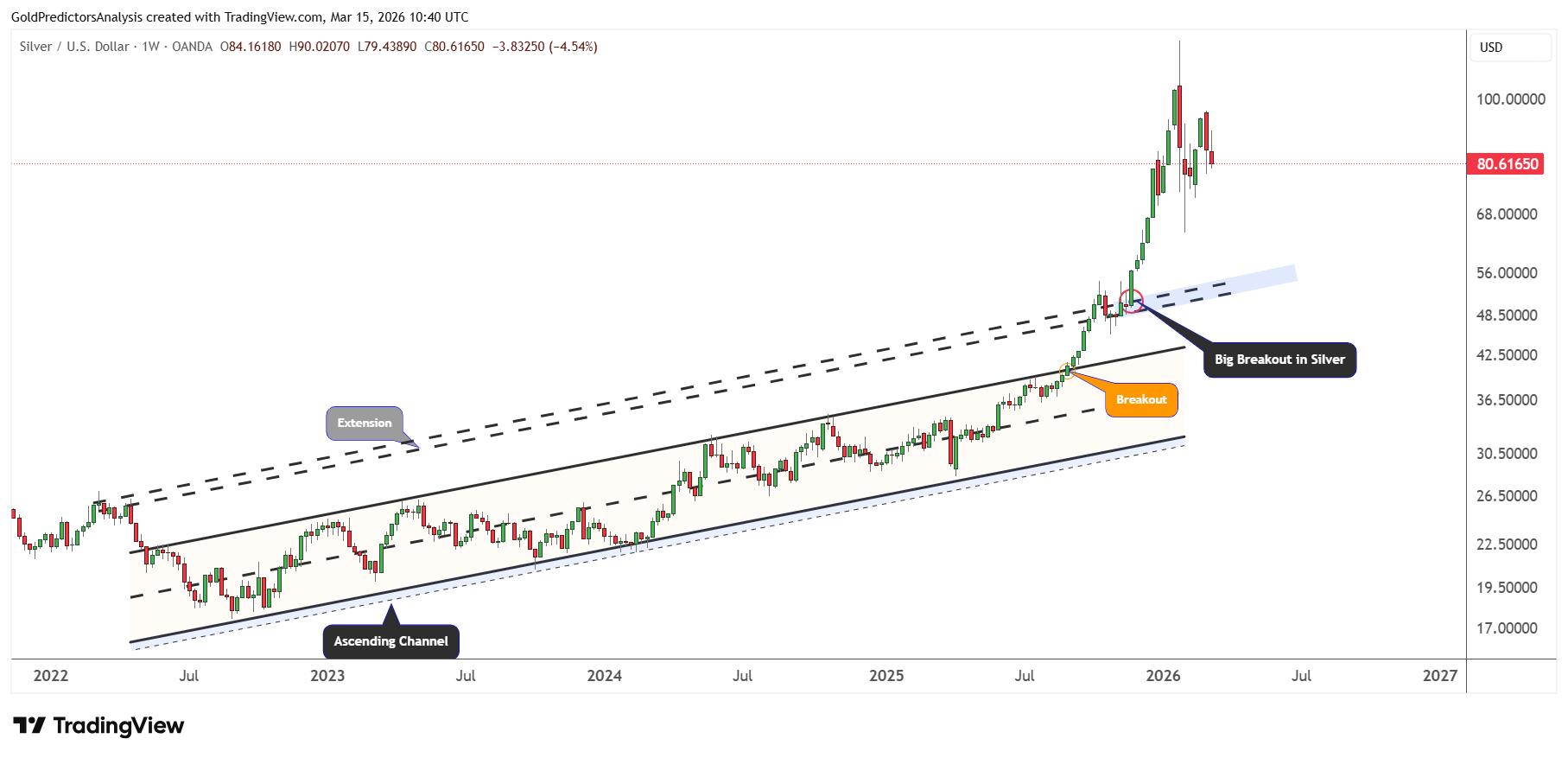
The price is correcting back towards the blue highlighted region, which lies within $50-$60. Overall, the correction towards the $50 to $60 region is considered a strong buying area for long term investors.
Gold–Silver Ratio and Market Signals
The strength in silver in 2025 was evident when the gold to silver ratio peaked in April 2025 at 105.58. After peaking in April 2025, the ratio dropped to mark a low at 43.40.
It is observed that when the gold to silver ratio peaks, silver prices reach a bottom and gold (XAU) prices continue to surge toward new record levels. The same happened in 2025 when the ratio produced a bottom at 43.40. Silver prices peaked at $120, while gold prices continued to correct lower. However, this rebound from 43 in the gold to silver ratio has not broken 65 on a monthly basis.
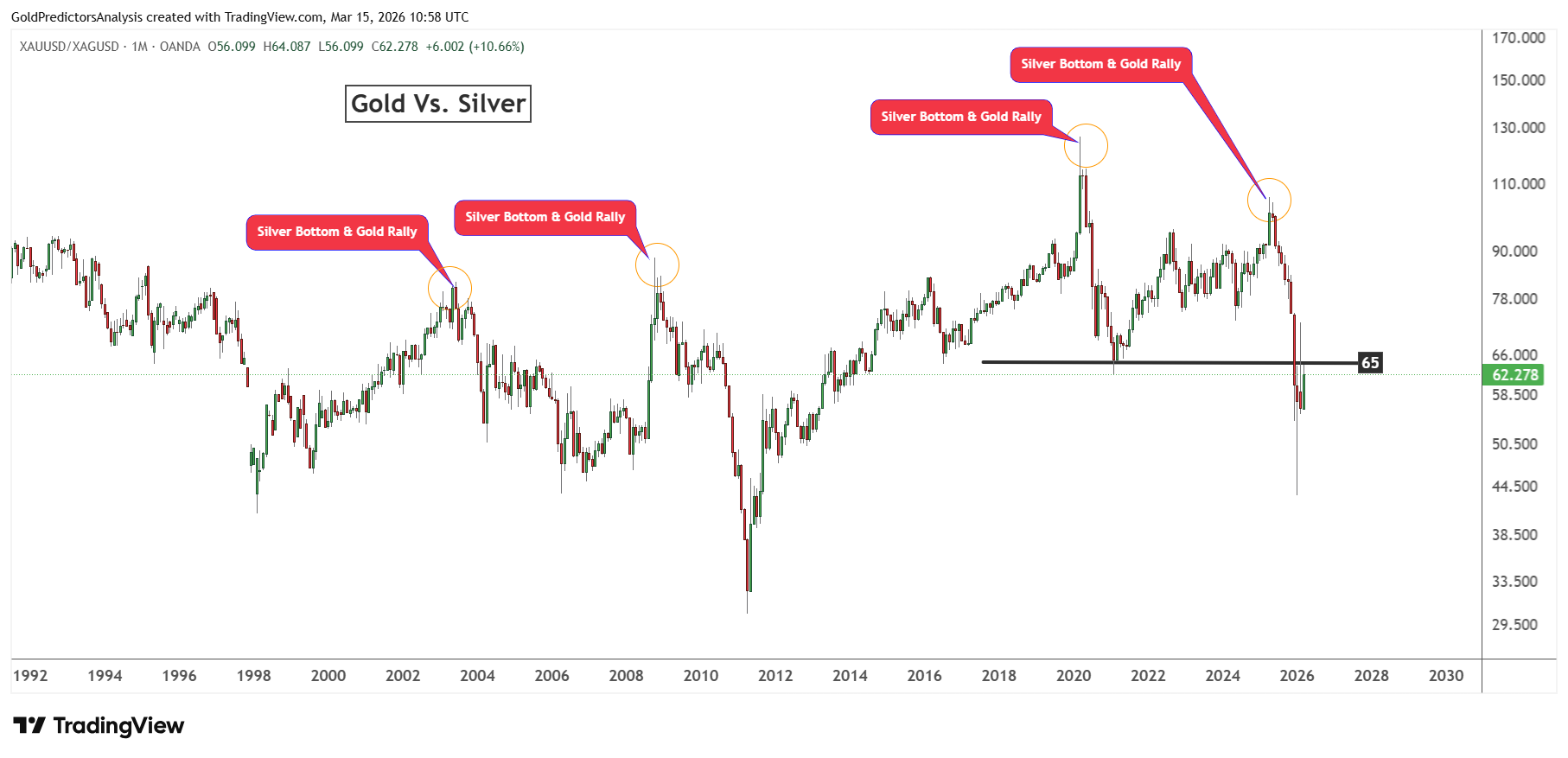
As long as the ratio remains below 65, silver prices will likely produce a bottom and continue to surge higher.
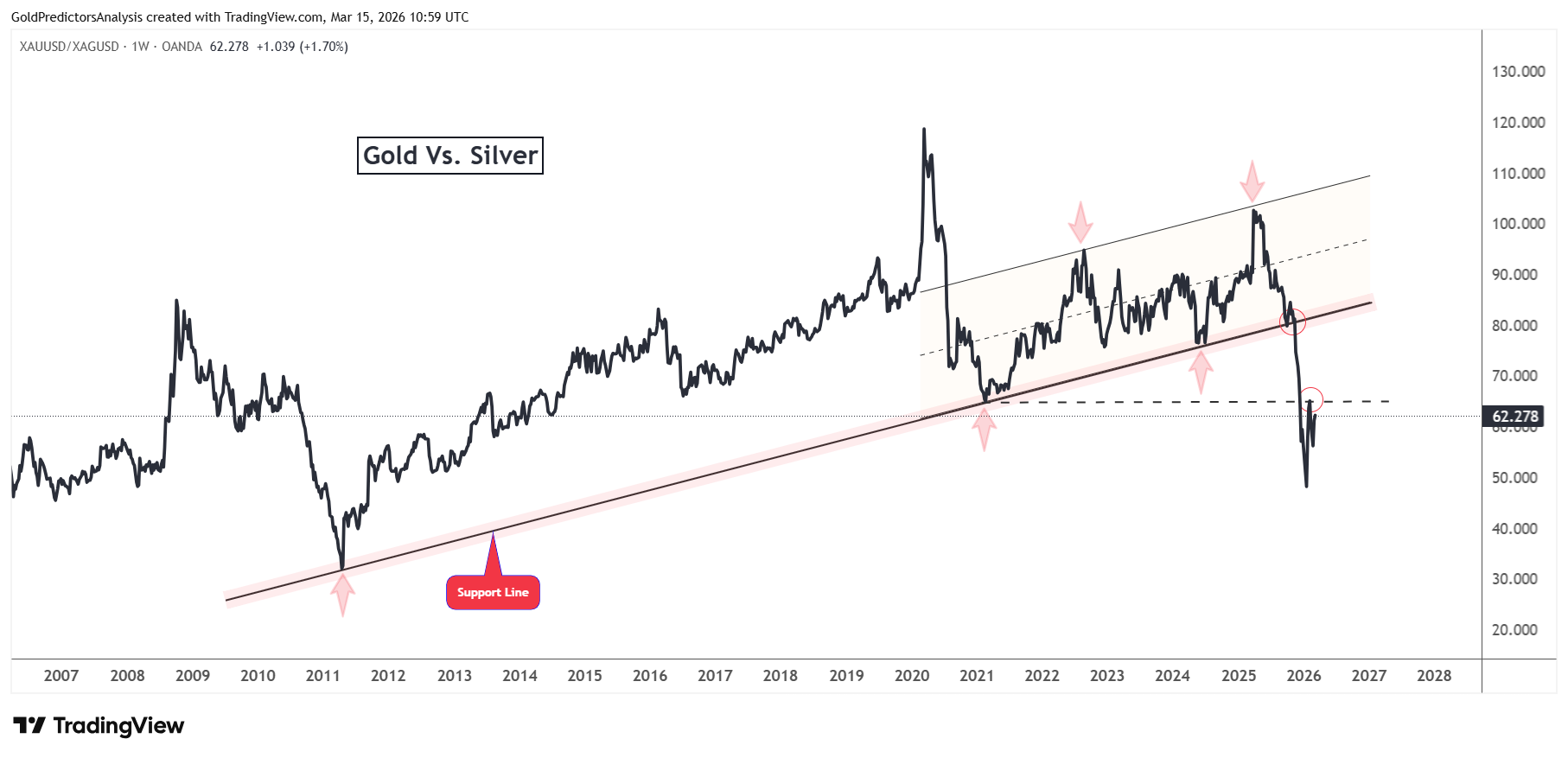
The weekly chart also shows that the ratio has failed to close above 65 on a closing basis. It is now providing resistance after breaking below this level. This indicates that if the ratio drops lower this time, the chance of breaking below 43 will increase. A break below the 43 level will likely continue to drop towards 30. A drop in the ratio to 30 will indicate further upside for silver towards $300.
What is the Next in Silver?
The long-term outlook for silver remains strongly bullish as seen by the cup handle breakout in 2025. The chart shows that the strong surge in silver prices from 1993 to 2011 has produced over 700%.
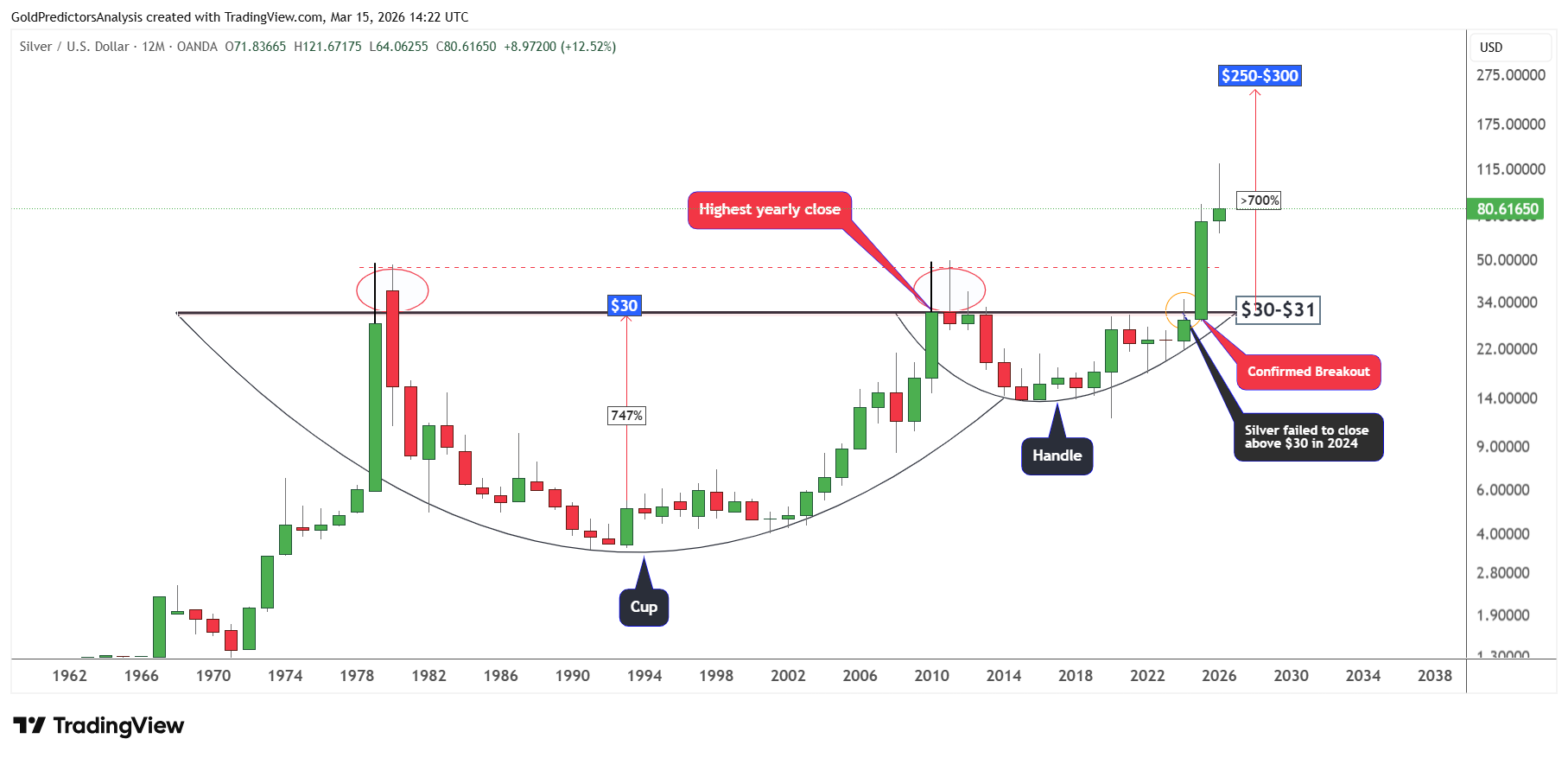
The $30 level has been the inflection point in the silver market. 2025 was the first year that closed above $30 in the entire history of silver. If the 700% move in silver is calculated from the breakout of $30, then silver prices are expected to reach $250-$300 in the next few years. However, the silver price must hold $30 in 2026 in order to keep this bullish outlook active.
Market Risks for Silver
Silver faces several risks in the near term. A recovery in the U.S. dollar or a sharp increase in bond yields would decrease demand for precious metals. The higher interest rates tend to favour interest bearing assets and can put pressure on metals. A sharp fall in the price of oil could also help ease inflation fears and make investors less desperate to hold onto metals as an inflation hedge.
In addition, mounting indications of economic slowdown, as shown by weaker freight shipments and heavy truck sales, may hurt industrial demand for silver as the metal is widely used in manufacturing and electronics. If these developments intensify, silver prices may experience deeper corrections before the longer term bullish trend resumes.
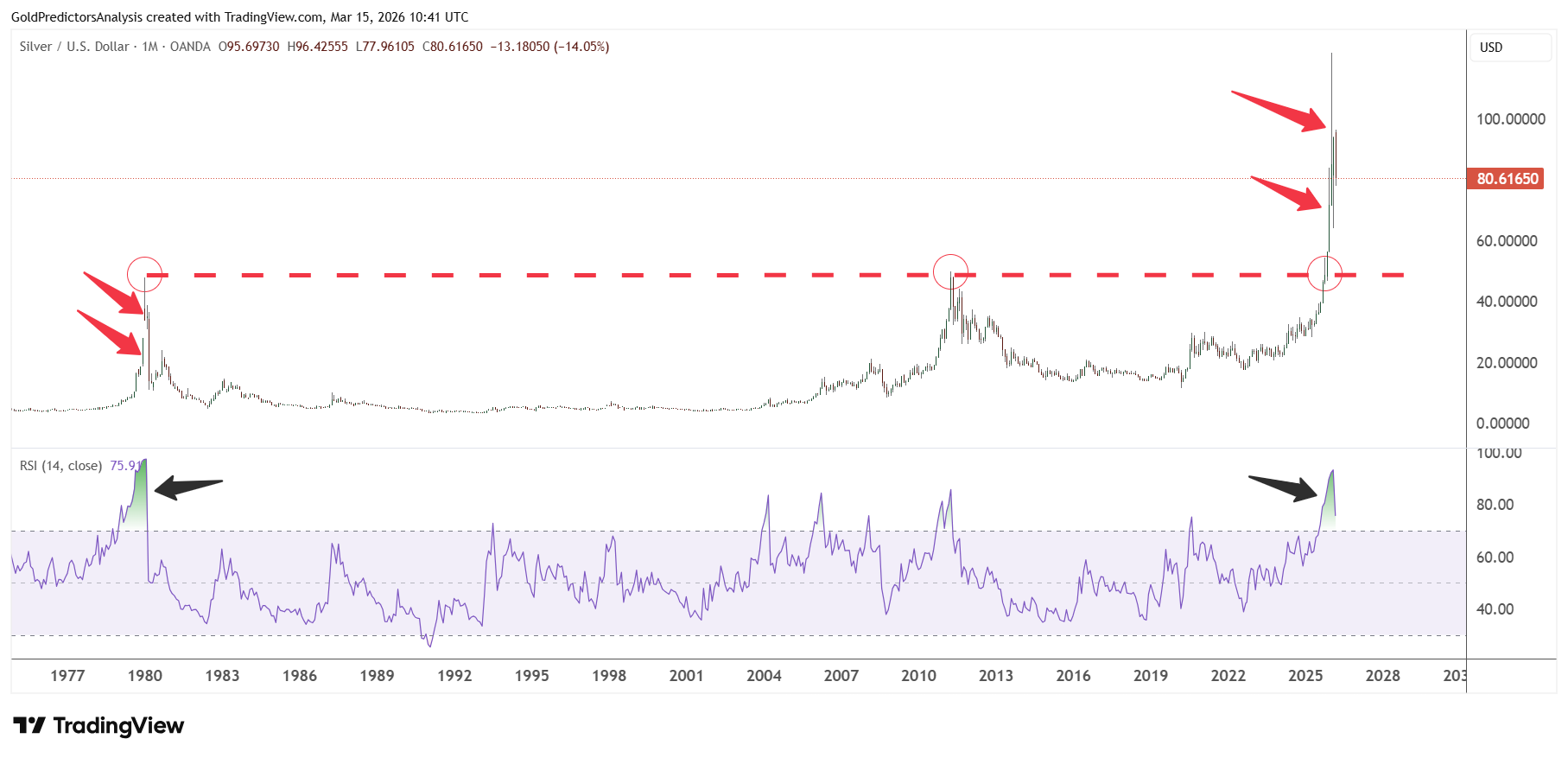
From a technical perspective, silver prices have hit extremely overbought levels in 2026. These levels have not been seen since the 1980s, when silver prices peaked at the $48 region.
This extremely overbought level indicates a strong correction in the silver market, suggesting that silver could drop towards $50-$60 before the next move higher.
Final Words
Silver is at a very critical point in the current cycle. Rising oil prices suggest that inflation may increase after the recent reading of CPI at 2.4%. At the same time, tightening financial conditions and weaker freight activity are pointing to growing recession risks. This combo of inflation pressure and economic uncertainty supports demand for precious metals. The long term technical picture is strong after the breakout above $50 in 2025 which saw prices explode to $120 in 2026.
However, the market went too far too fast. Extremely overbought RSI levels indicate that a correction is imminent before the next big move. The price has already pulled back to $64. If prices correct back to $50-$60, it will be considered a strong buying opportunity for long term investors. The gold-to-silver ratio also remains below 65 which is considered a key indicator of the strength of silver. If the market stabilizes after this correction, the larger structure for silver points to a move to $300.
If you’d like to know more about how to trade gold and silver, please visit our educational area.