As traders close out a volatile, holiday-shortened week, the S&P 500 Index (SPX) is consolidating off the March lows. A geopolitical relief rally has provided a temporary intraday bid, but an ominous catalyst still looms in the form of Friday’s Non-Farm Payrolls (NFP) report.

SPX Seasonality Matrix Signals a Weaker 2026 Backdrop
While April has historically offered a seasonal tailwind averaging 1.07%, a -5.09% March drawdown has already pushed SPX into negative territory for 2026. That shift suggests the broader market tone has weakened, even if short-term sentiment occasionally improves on headline relief.
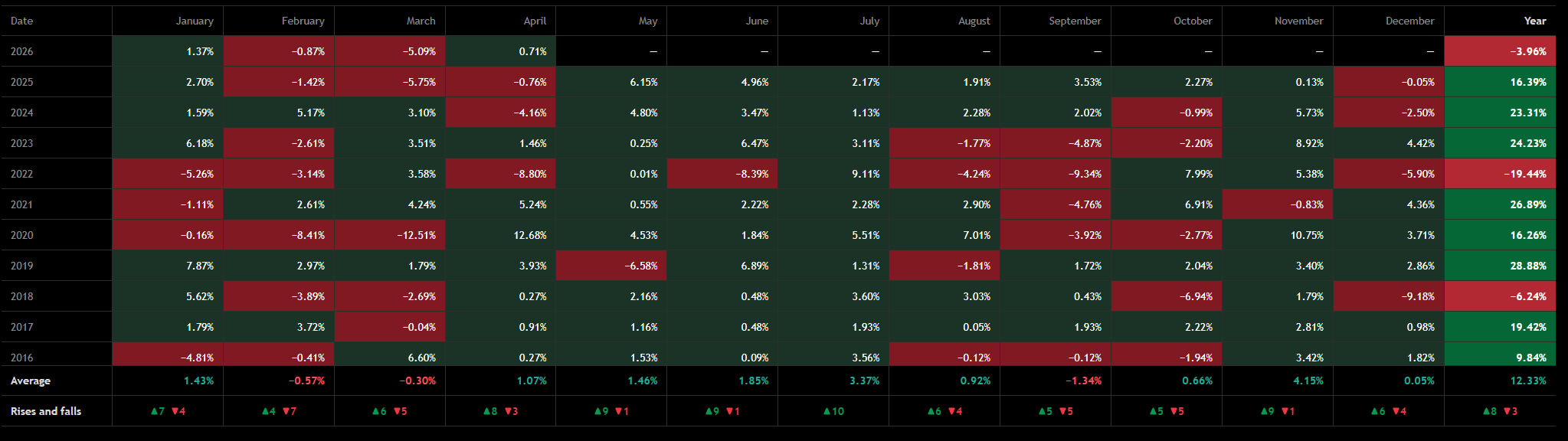
Heatmap of SPX monthly and yearly seasonal performance from 2016 through 2026.
Source: TradingView
S&P 500 Price Forecast
Every new S&P 500 analysis as it publishes, today's technical signal and key levels, live price — on one page.
See all S&P 500 forecastsU.S. Data Keeps the Macro Backdrop Mixed Ahead of Friday’s NFP
Thursday’s domestic data pointed to a U.S. economy that is slowing, but not breaking. Initial jobless claims dipped to 202,000, coming in below consensus and reinforcing the view that broad-based layoffs remain contained. At the same time, the U.S. trade gap came in at $57.3 billion, with the import mix still heavily influenced by AI-related capital expenditure and semiconductor demand.
U.S. Balance of Trade
The U.S. trade deficit widened to $57.3 billion in February, which was better than forecast but still reflects strong capital-goods imports tied to AI infrastructure spending.
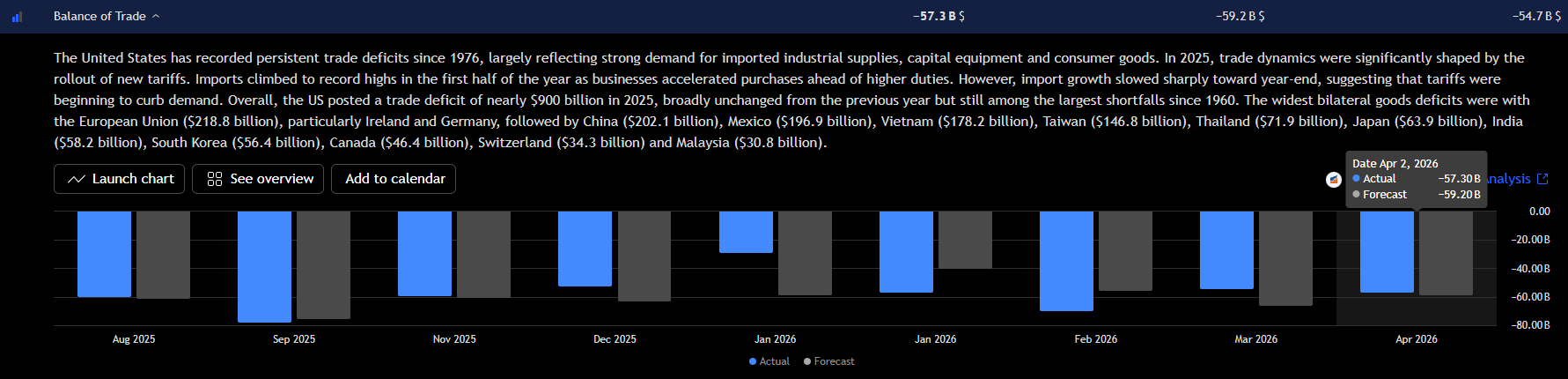
U.S. trade balance chart showing a $57.3 billion deficit versus forecasts.
Source: TradingView
Initial Jobless Claims
Jobless claims slipped to 202,000, signaling a still-resilient labor market even as targeted AI-related layoffs continue to pressure parts of the tech sector.

Weekly U.S. initial jobless claims chart showing an actual print of 202K.
Source: TradingView
Geopolitically, SPX managed to pare steep early-session losses after reports that the UK and Oman were working toward reopening the Strait of Hormuz. That de-escalation narrative stabilized equities and cooled a massive spike in crude oil, offering a brief lifeline to risk assets while pressuring airline stocks.
The dominant catalyst, however, remains Friday’s NFP report. Forecasters are looking for a tepid gain of roughly 60,000 jobs. Because the release lands on Good Friday, traders in cash equities cannot respond in real time, which raises the probability that pent-up reaction gets expressed through a sharp Monday opening gap.
U.S. Non-Farm Payrolls Preview
Markets are bracing for an anemic 60K jobs forecast for March, setting up a high-stakes holiday release that could reshape risk sentiment before Wall Street reopens.
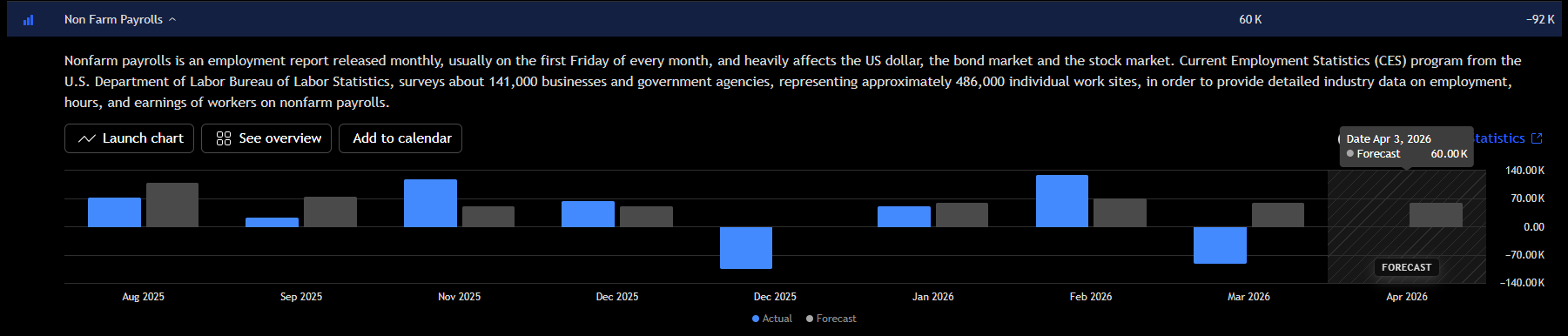
U.S. nonfarm payrolls chart showing a 60K forecast for the upcoming release.
Source: TradingView
Weekly Chart Shows a Fractured Medium-Term Uptrend
On the weekly timeframe, the primary trend structure has clearly deteriorated. After peaking at 7,014.6, SPX broke its prior sequence of higher highs and higher lows and slipped beneath both the short-term and long-term Dual Supertrend levels. On this timeframe, medium-term resistance is clustered near 6,700 and 7,125, while support is seen around 6,145.
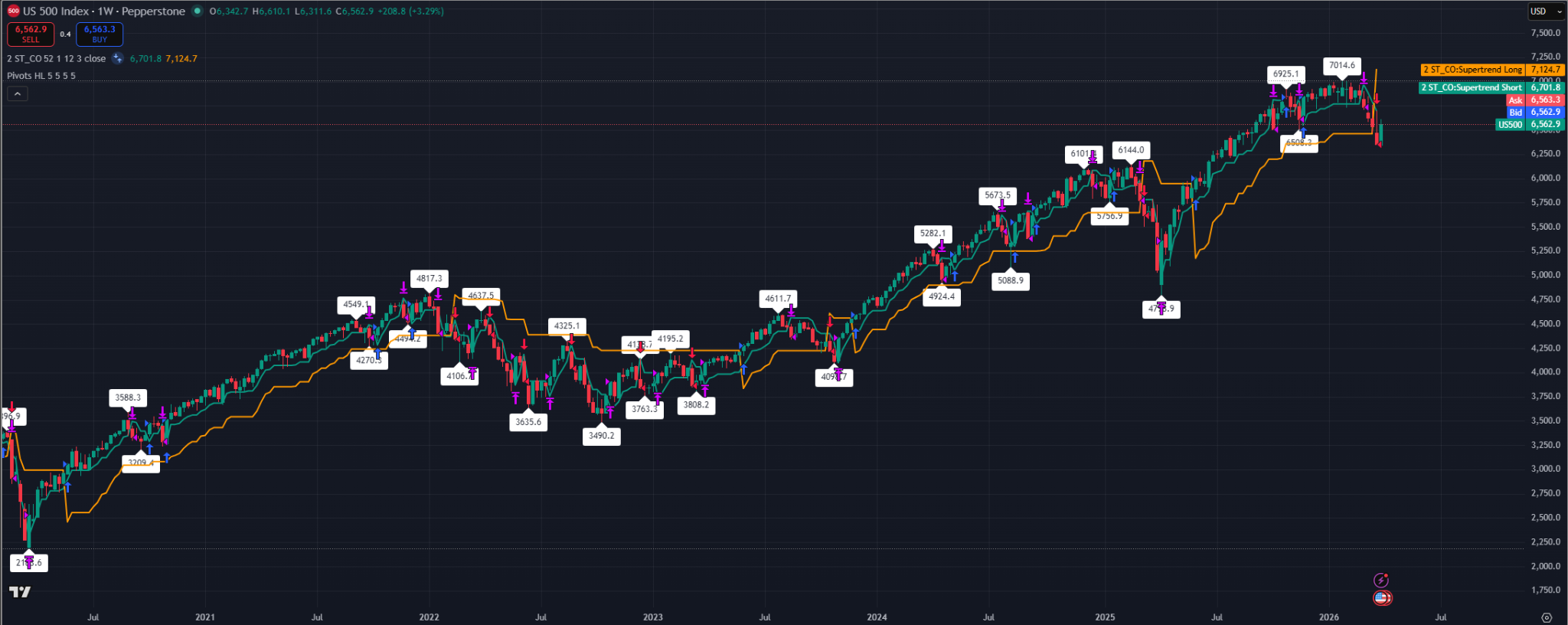
SPX weekly chart with Dual Supertrend indicators showing a breakdown from the 7,014.6 peak.
Source: TradingView
Daily Chart Keeps the Bearish Structure Intact Below the 21-EMA
The daily chart still carries a bearish bias. SPX has carved out a staircase of lower highs and lower lows, and price remains pinned below the 21-EMA, which continues to act as dynamic resistance.
RSI is still below 50. Although that marks an improvement from deeply oversold territory, it does not yet overturn the broader bearish read. In practical terms, the index needs to reclaim the 21-EMA decisively before traders can argue that the dominant trend has shifted.
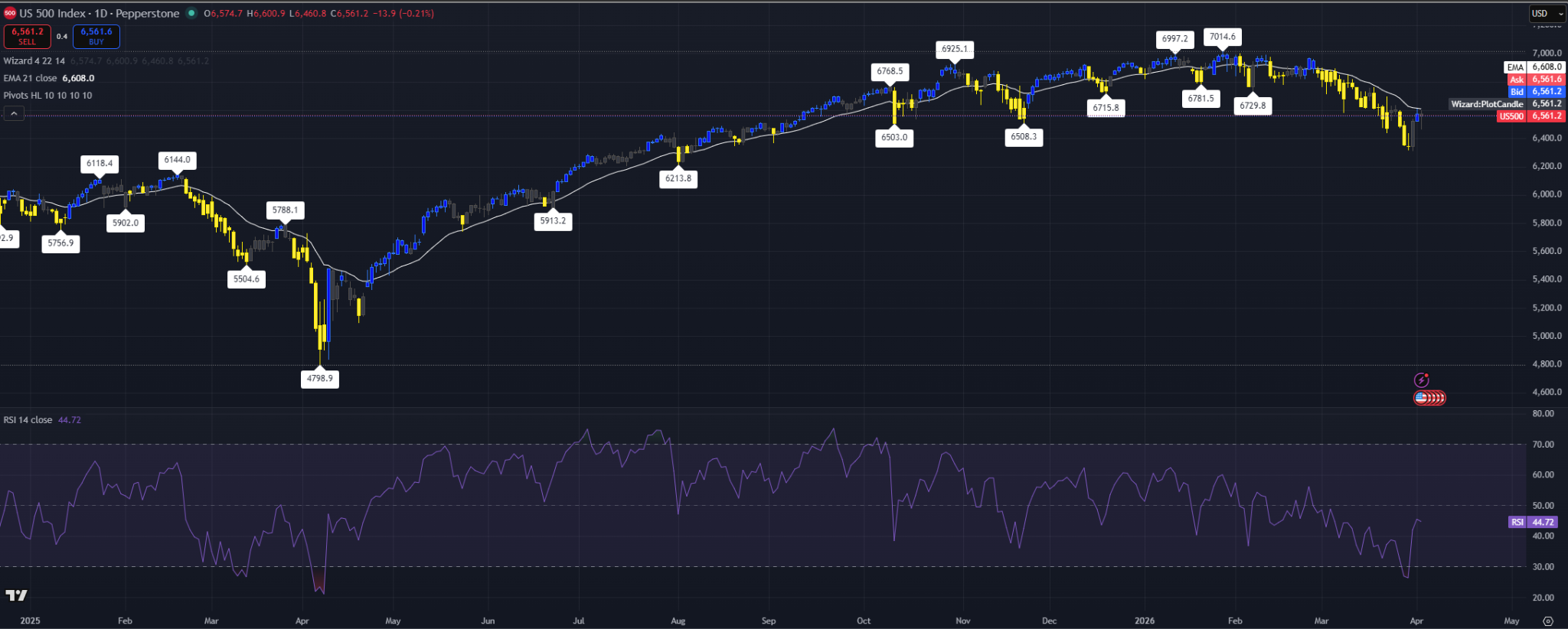
SPX daily chart showing price capped below the 21-EMA as RSI attempts to recover.
Source: TradingView
Renko Chart Shows a Countertrend Bounce Into Major Resistance
The Renko chart paints a less bearish short-term picture. After capitulation around 6,311.9, buyers triggered a V-shaped rebound and stacked a run of bullish bricks that suggests near-term momentum has improved.
Even so, this move is now running straight into important overhead resistance. For the countertrend reversal to extend, SPX likely needs to break above the long-term SMA in the 6,700 area.
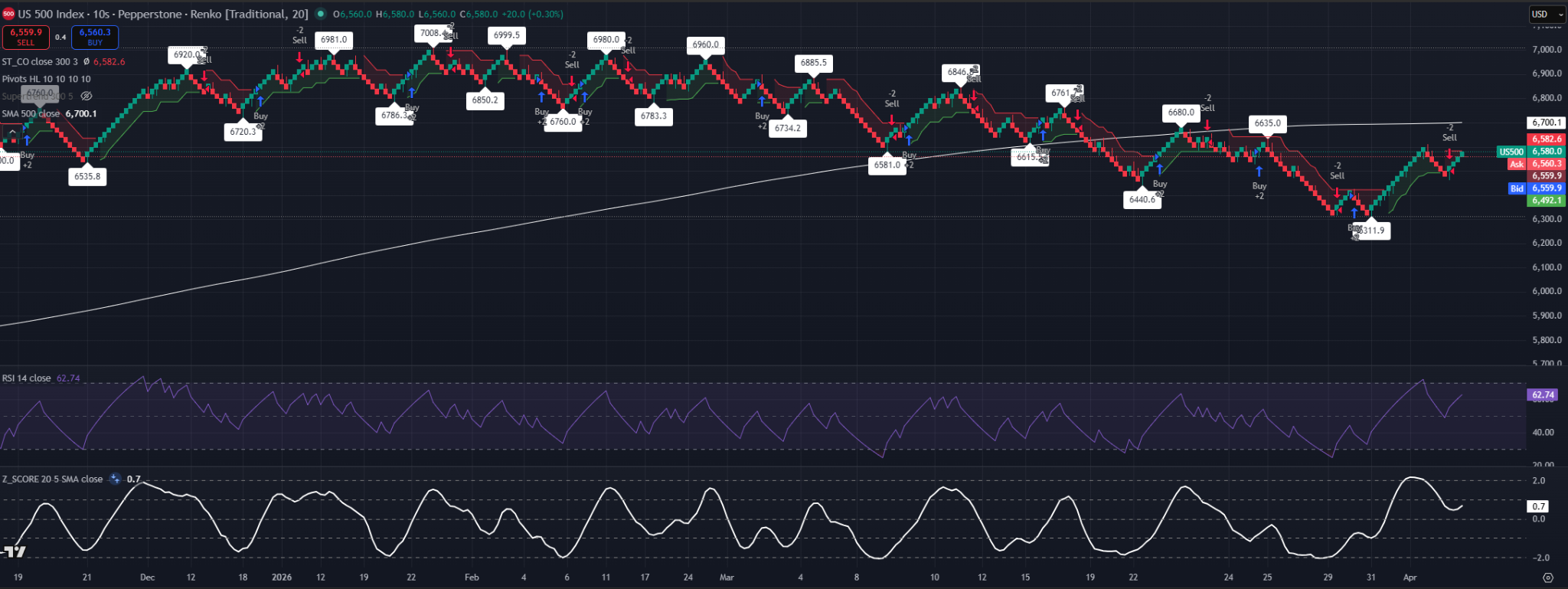
SPX 20-brick Renko chart highlighting a V-shaped squeeze into overhead SMA resistance.
Source: TradingView
SPX Outlook for the Post-NFP Reopen
Heading into the extended holiday weekend, the most likely near-term scenario is continued consolidation into the 6,700 area followed by a sharper reaction once markets reopen. With a market-moving payrolls release landing during an equity holiday, capital preservation matters more than prediction.
• Current Trend – Bearish
• Bias – Negative
• Key Support Levels – 6,145, 6,215, 6,310
• Key Resistance Levels – 6,700, 7,015, 7,125
Medium-Term Path: Given the historical volatility that often follows a holiday payrolls release, the current intraday bounce may struggle as it approaches 6,700. Traders may be better served by waiting for post-NFP price action to define the next structural move rather than forcing exposure into a thin-liquidity event.