
S&P 500 Breaks Key Support, Posts First Negative Year-to-Date Session
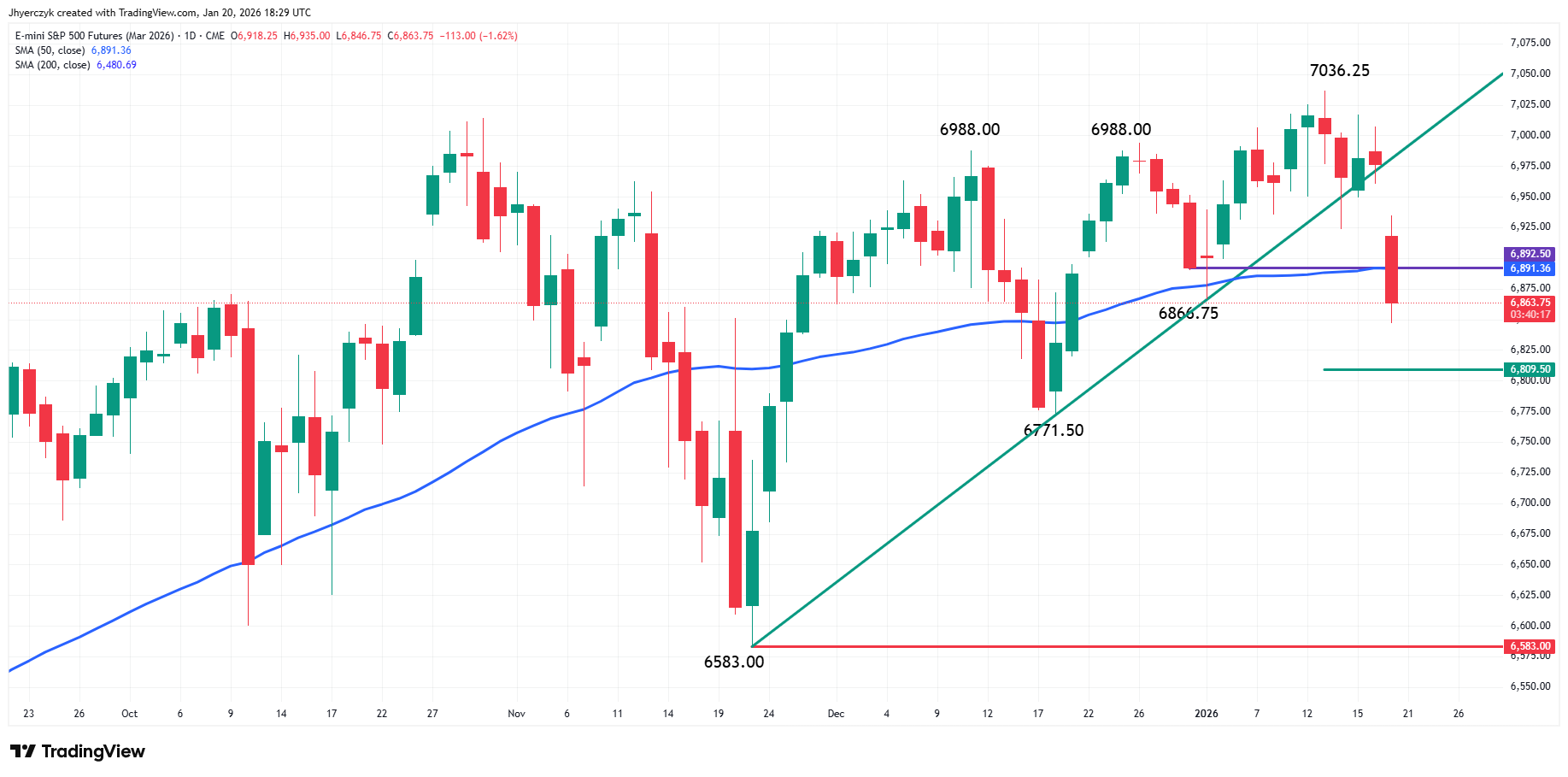
March E-mini S&P 500 Index futures are sharply lower at the mid-session on Tuesday after gapping lower through an uptrend line that had been providing support and direction since November 21. The subsequent sell-off drove the index to its lowest level since December 19, while turning lower for the year under 6892.50 and crossing to the weak side of the 50-day moving average at 6891.36.

Critical 6,892.50 Level Separates E-mini S&P Recovery Rally from Extended Decline
Both levels form the key area to watch over the near-term. If traders treat this sell-off as overdone and a buying opportunity, then we can see a massive rebound rally once 6892.50 is regained with 6980.75 as a major objective.
If the 6891.36 to 6892.50 zone becomes resistance then look for the selling to possibly extend into the intermediate pivot at 6809.50 and the December 18 main bottom at 6771.50.
Nasdaq-100 Shows Greater Weakness, Breaks Multiple Support Levels
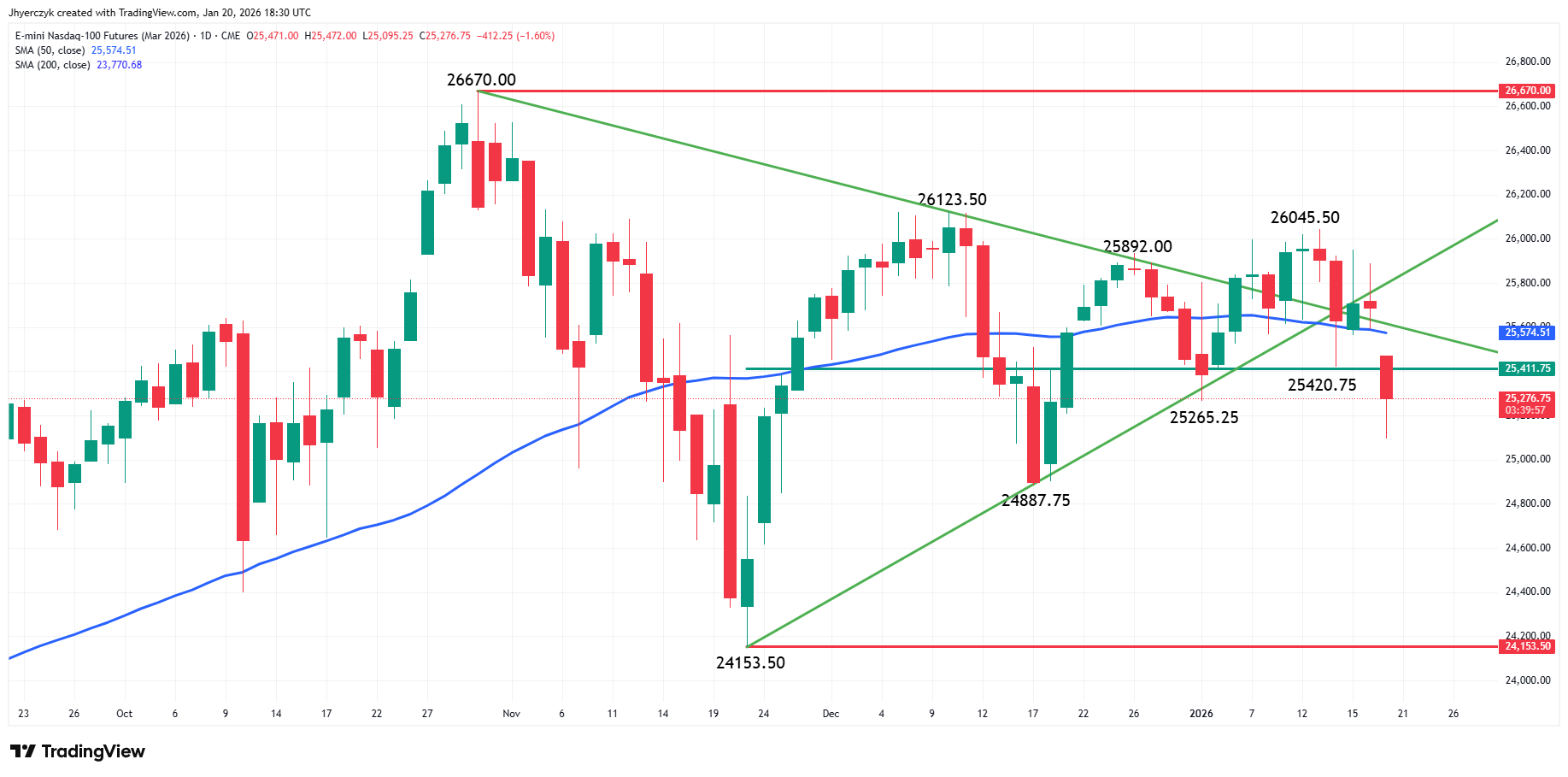
March E-mini Nasdaq-100 Index futures are in an even weaker position, in my opinion, having crossed to the weak side of both down and up trendlines at 25618.50 and 25804.50, respectively. Further weakness is being demonstrated by the breakdown under the 50-day moving average at 25574.74 and the intermediate 50% level at 25411.75. With the index trading near its intraday low at 25095.25, all of the previous prices mentioned are now resistance with the most important area, the price cluster at 25574.74 to 25618.50.
Bears Eye 24,887.75 Target as E-mini Nasdaq-100 Tests Intraday Lows
If the selling pressure resumes late in the session then we could be looking at a breakout under 25095.25 into the close with sellers setting their sights on the nearest swing bottom at 24887.75.
NASDAQ 100 Price Forecast
Every new NASDAQ 100 analysis as it publishes, today's technical signal and key levels, live price — on one page.
See all NASDAQ 100 forecastsLong Liquidation, Not Short-Selling, Drives Trump Tariff Selloff
The price action today suggests the weakness is being fueled by long liquidation rather than fresh short-selling. It’s merely a reaction to the new Trump tariff threats on members of NATO and the European Union (EU).
Fresh Short-Selling Could Emerge if Resistance Levels Hold
Now that we’ve had an intraday technical bounce in both the E-mini S&P 500 and E-mini Nasdaq-100 futures contracts, bearish traders will be looking for fresh entry points as long as Trump’s tariff threat remains active. This price action tends to attract short-sellers, who refrained from selling weakness on the opening. All bets will be off on a continuation of the sell-off if buyers can recover resistance since this will actually kill the downside momentum and hold prices in a directionless range.
VIX Hits Two-Month High as Fear Gauge Signals More Volatility Ahead
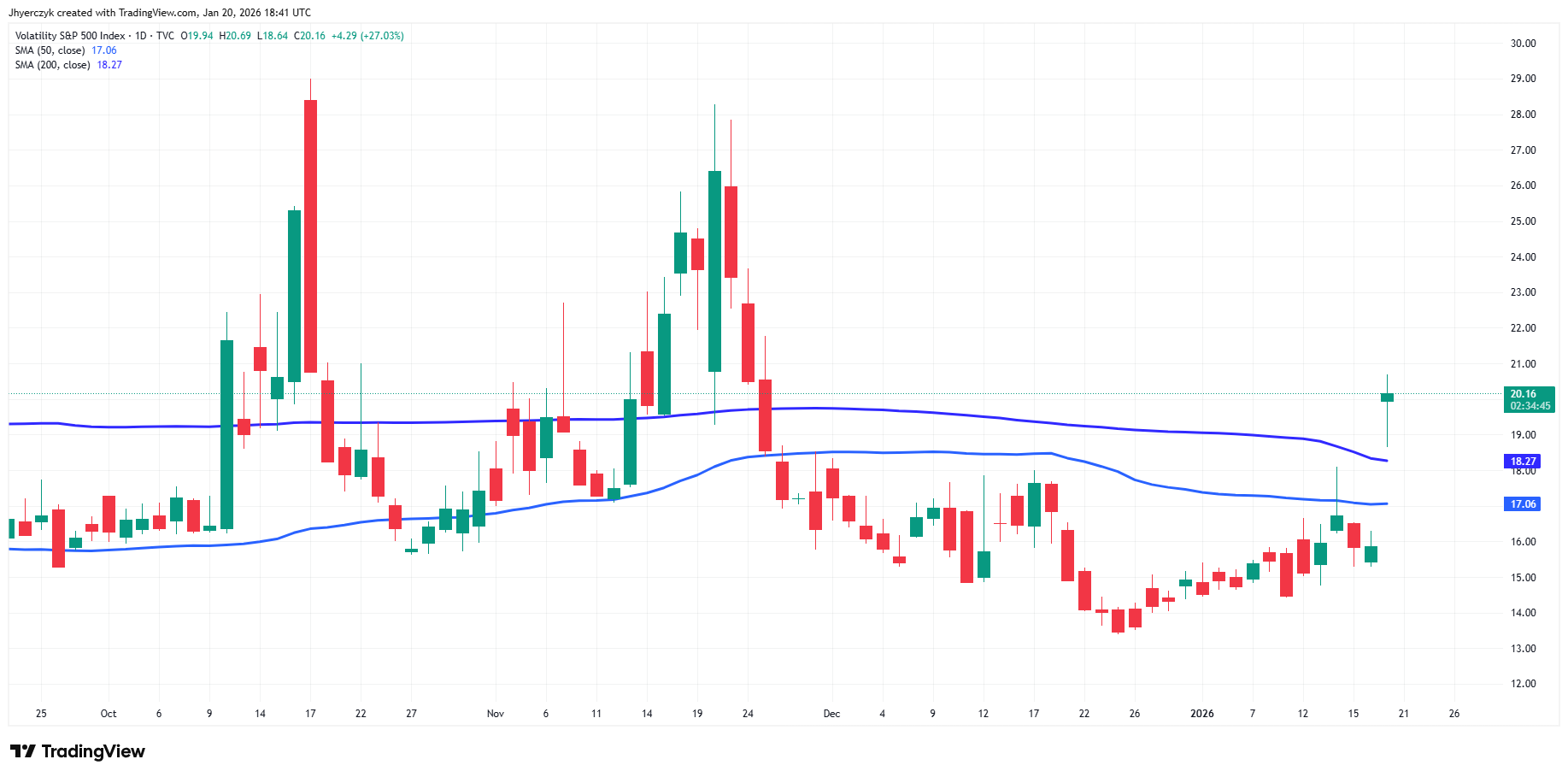
Into the close, traders will be monitoring the CBOE Volatility Index (VIX) to see if traders are still pricing in more selling pressure. Also known as Wall Street’s fear gauge, the VIX touched a two-month high at 19.02 points earlier in the day.
Netflix Earnings After Close Could Set Tone for Tech Sector
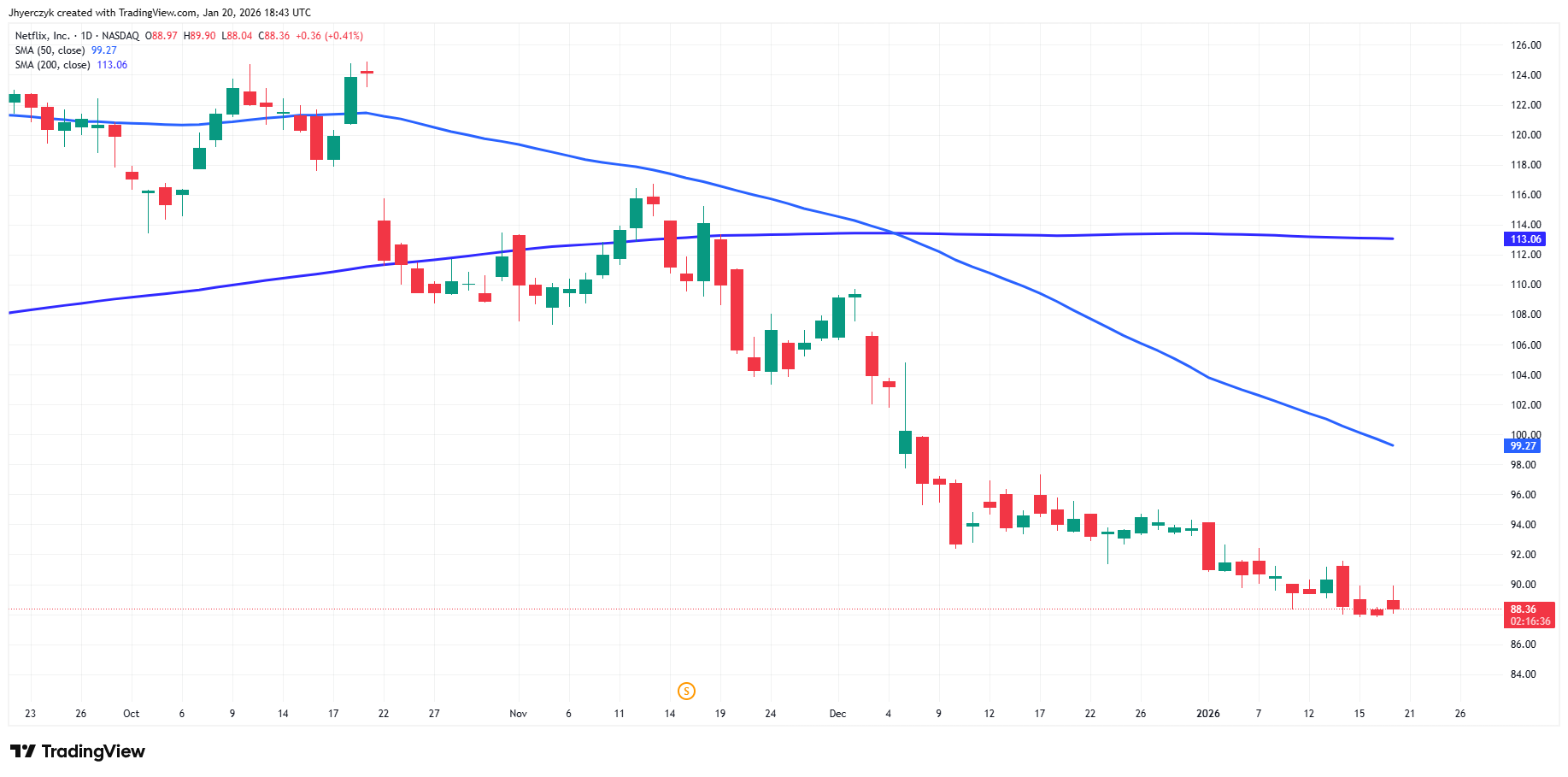
Traders will also be watching the price action in Netflix, which is scheduled to kick earnings season into a higher gear when the streaming giant reports fourth quarter earnings after the close. The company is the only stock of the ‘FAANG’ group to post a gain on Tuesday.
More Information in our Economic Calendar.