Warsh’s First Fed Decision Keeps Stocks on Hold
The S&P 500 is flat shortly after Wednesday’s open and the Nasdaq Composite is up slightly but the early gains are not sticking. Futures ticked higher overnight on semiconductor and technology names but the follow-through dried up fast. Nobody is positioning ahead of this afternoon’s Fed decision and Warsh’s first press conference as chairman. Rates stay at 3.50% to 3.75%, that is settled. What is not settled is how Warsh plans to run this central bank going forward and that is the only thing the market cares about today.
Daily S&P 500 Index (SPX) Technical Analysis
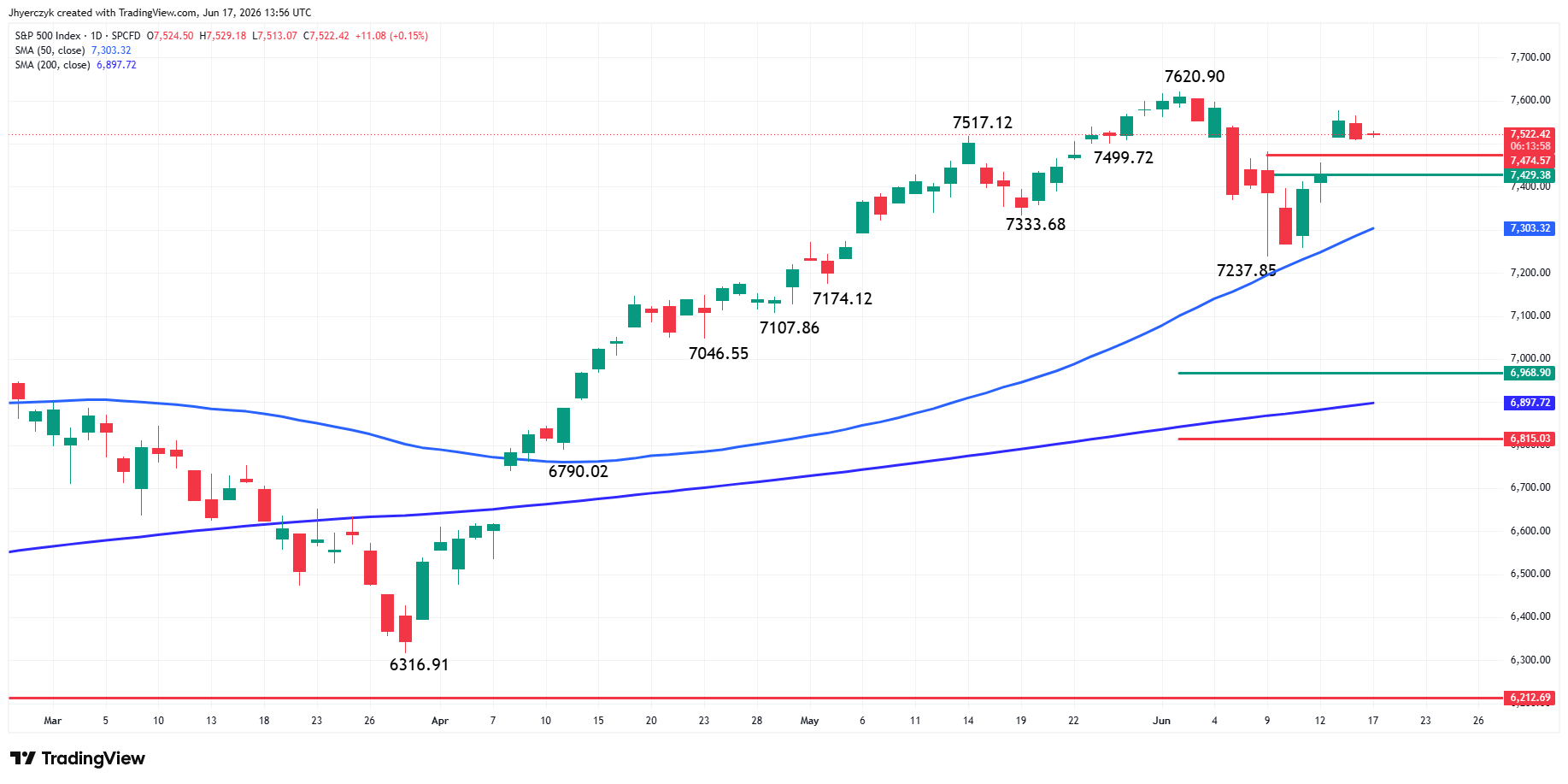
The benchmark S&P 500 index is relatively flat shortly after the opening. The key area investors are watching is the retracement zone at 7474.57 to 7429.38. Trader reaction to this area will set the tone after the Fed and into the close.
Holding above 7474.57 will indicate the presence of buyers. They are going to try to build the support base that launches a rally into a new high over 7620.90.
A failure to hold the 50% level at 7429.38 will signal the return of sellers. Not only will this form a secondary lower top, but it could also mean we’re heading back to a test of the 50-day moving average at 7303.03.
Daily Nasdaq Composite Index (IXIC) Technical Analysis
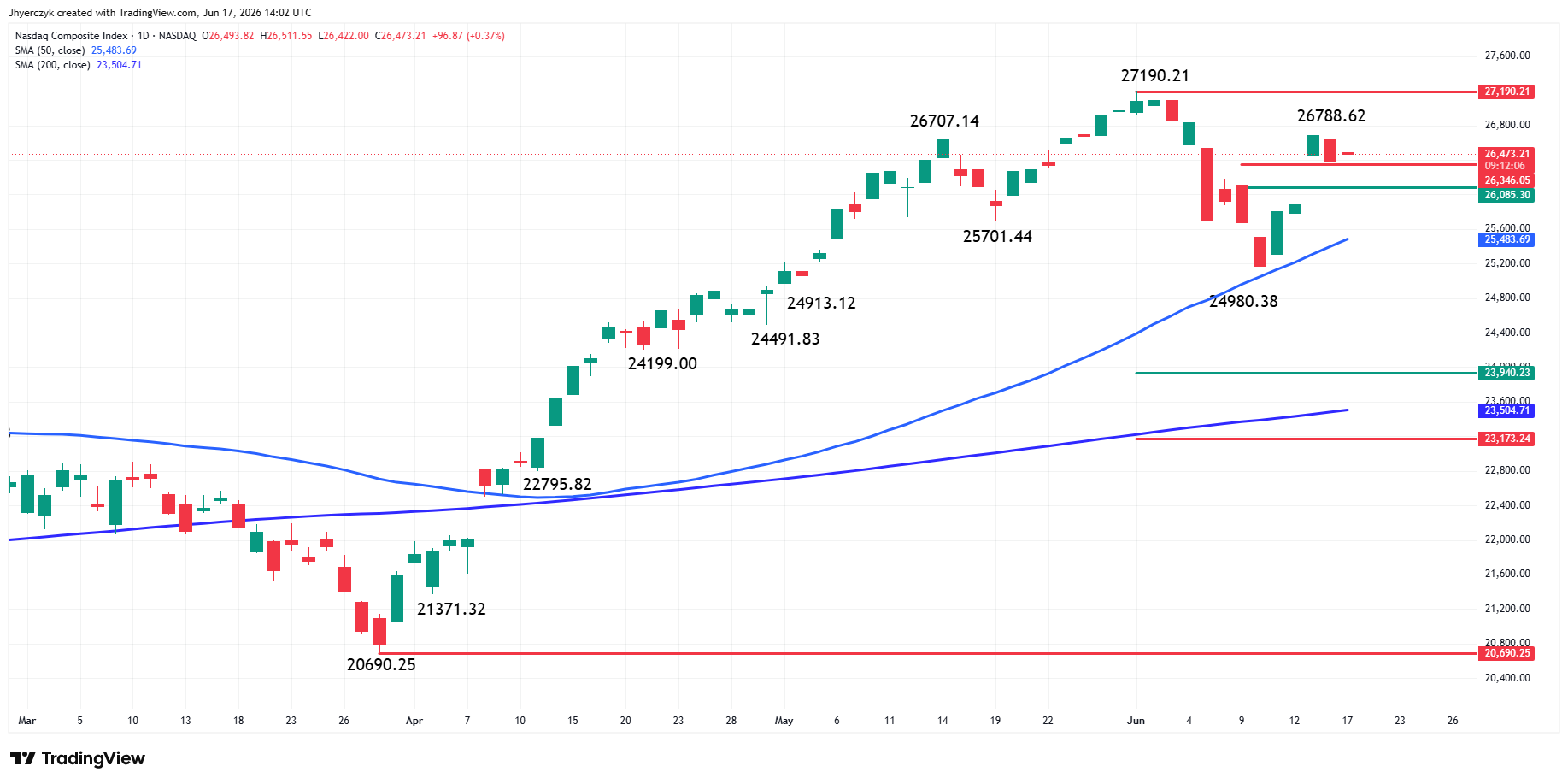
The Nasdaq Composite Index is up slightly on Wednesday, but struggling to hold its gains. Holding above the 61.8% level at 26346.06 will indicate buyers are defending against a breakdown, while trying to build a base that could fuel another rally into the record high at 27190.21.
NASDAQ 100 Price Forecast
Every new NASDAQ 100 analysis as it publishes, today's technical signal and key levels, live price — on one page.
See all NASDAQ 100 forecastsIf the 50% level at 26085.30 fails to provide support then prices could collapse into the 50-day moving average at 25483.53. This is the major indicator providing support and guidance since early April.
Warsh Could Scrap the Dot Plot and That Changes Everything
The rate decision is not the story Wednesday. Warsh has been skeptical of forward guidance since before he took the chair. During his confirmation he argued that signaling policy moves too far in advance locks policymakers into forecasts that turn out wrong. He watched the Fed call inflation transitory in 2021 and then spend the next two years chasing it with the most aggressive rate hikes in decades. That experience made his case for him.
If Warsh declines to submit a rate projection in the dot plot, the market is going to read that as a signal that the old framework is finished. Every meeting becomes a live meeting driven by whatever the data says that week. For traders used to front-running the dot plot, that is a completely different environment.
Inflation has cooled from the peak but it is still running above the Fed’s 2% target. Growth is holding without falling off a cliff. That combination gives Warsh room to sit and wait without committing to anything. The market wants to hear where he puts the emphasis. If he leans into inflation still being too sticky, growth stocks give back ground. If he sounds patient and lets the data lead, this rally has room to extend.
Chips and AI Kept Drawing Money Wednesday
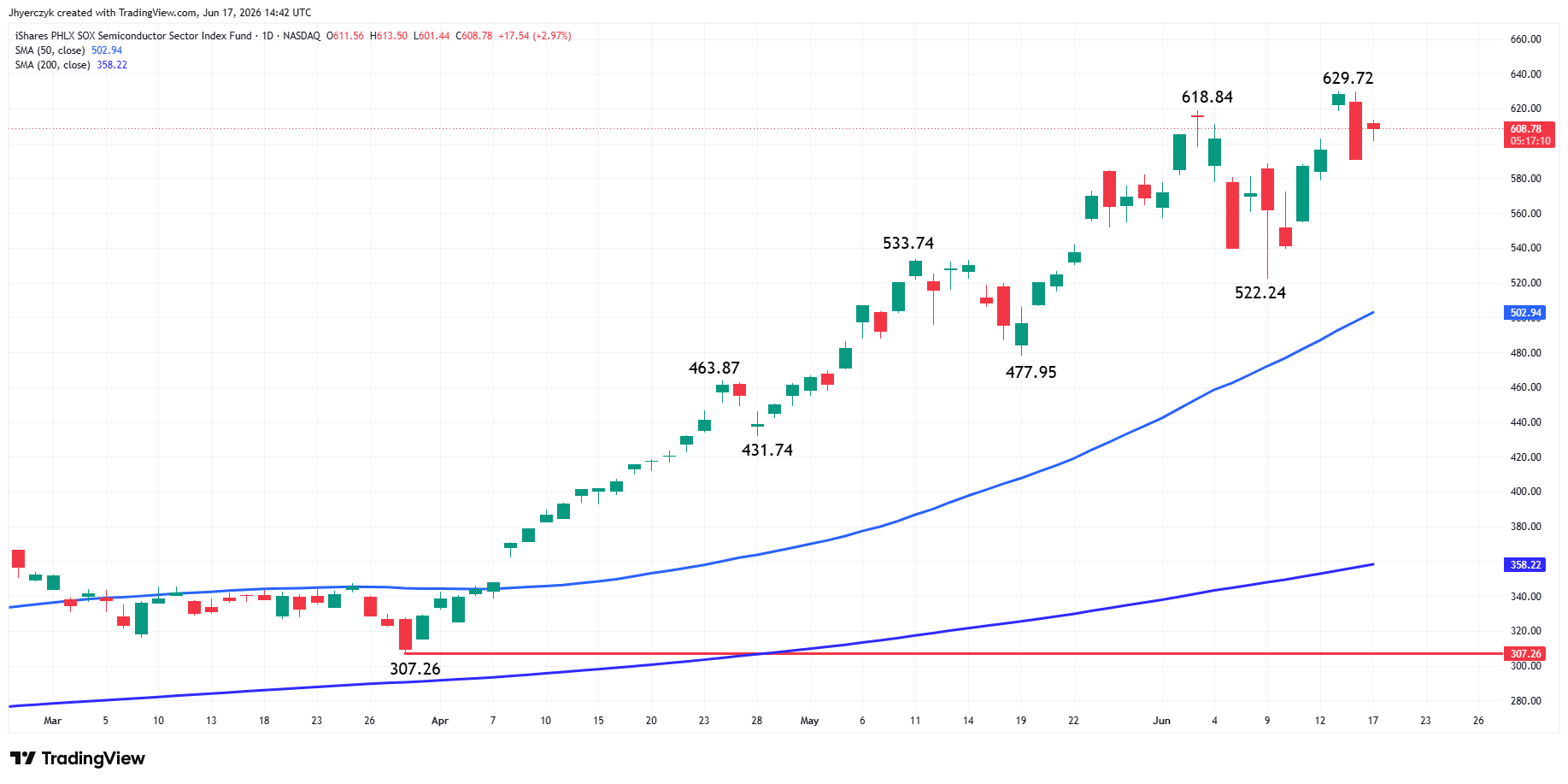
Semiconductor stocks rallied into the open and the buying is part of a bigger theme that has not slowed down. Intel started production on 18A-P, its most advanced manufacturing process. That is a real milestone in a turnaround story that has been promises and timelines for two years. If Intel can actually deliver on leading-edge manufacturing, it opens the door to foundry business that has been going to TSMC by default. The market noticed.
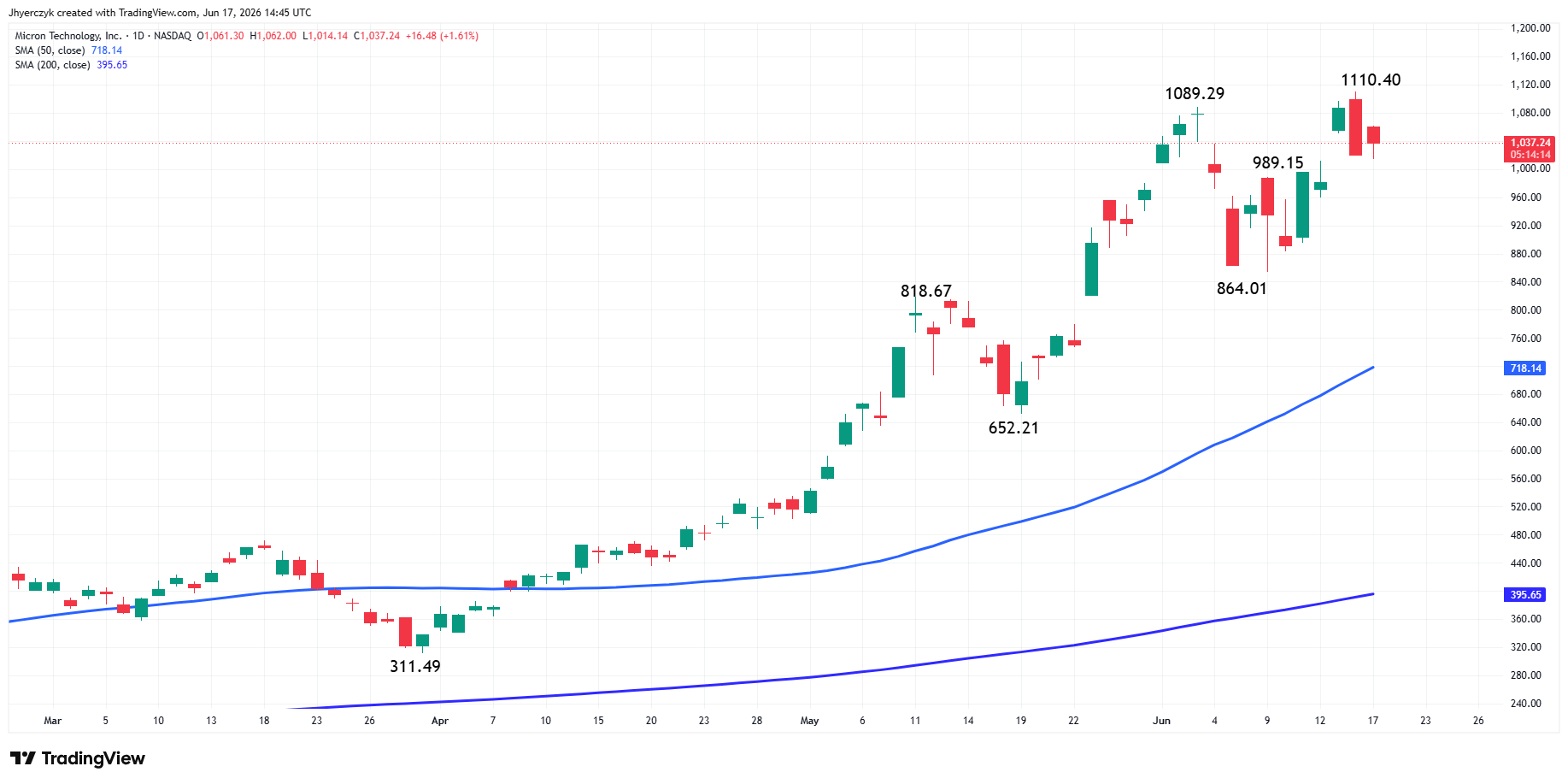
Micron got a price target raise from Deutsche Bank with a bullish rating maintained. The argument is that memory demand tied to AI applications is outpacing supply and pricing is firming. Analysts pointed to improving expectations and steady demand from AI customers as reasons the stock still has room to run.
SpaceX gained more than 4% Wednesday and the company’s market cap is sitting above Amazon’s now. The stock is up roughly 50% from the $135 IPO price and the buying has not paused since last Friday. AST SpaceMobile jumped after launching three more satellites into orbit, another step toward building out a space-based cellular broadband network. The money flowing into growth and AI-adjacent names is not showing any sign of drying up.
Stocks in the News
CarMax rose on stronger-than-expected earnings and revenue. Used vehicle demand is holding up even with elevated borrowing costs and that tells you the consumer is still spending where it counts.
La-Z-Boy posted one of the biggest gains of the session after reporting double-digit retail sales growth and earnings above expectations. A discretionary furniture name putting up those numbers in this rate environment is worth noting.
Lionsgate Studios fell after Netflix denied reports of interest in acquiring the company. That denial killed a premium that had been building in the stock. Oracle edged lower after disputing reports about cloud infrastructure negotiations with Microsoft. Jabil traded down despite beating earnings and raising guidance. When a stock sells off on a beat and raise, the real expectations were higher than the published consensus and the market is telling you it wanted more.
Crude oil moved modestly higher after President Trump indicated that Iran discussions were not yet finalized. Two sessions of 5% drops and now crude is bouncing on uncertainty about whether the deal actually closes. If the language keeps shifting, that oil premium starts coming back.
What to Watch
Warsh speaks this afternoon and every position in this market is sitting on his press conference. The S&P 500 is holding above the 7474.57 to 7429.38 retracement zone and buyers have been defending it. If Warsh sounds patient and data-driven without pushing a hawkish line on inflation, that support holds and 7620.90 is the next target. The Nasdaq needs to keep 26346.06 underneath it to stay in range of the all-time high at 27190.21.
The semiconductor trade has real momentum behind it and Intel’s 18A-P production gives the group a fundamental story beyond the AI spending cycle. SpaceX is trading on pure conviction at 50% above its IPO price and there is nothing in the tape right now that says it is done.
The bigger question is whether Warsh starts dismantling the dot plot. If he does, the market loses its favorite tool for front-running rate decisions and every meeting becomes a live event. That is a different trading environment. But it is not necessarily a bearish one. As long as buyers hold support on both indexes and the data cooperates, this market is set up to move higher out of the Fed.
More Information in our Economic Calendar.