



Weak Dollar Sparks Bitcoin Bounce, but Structural Resistance Looms
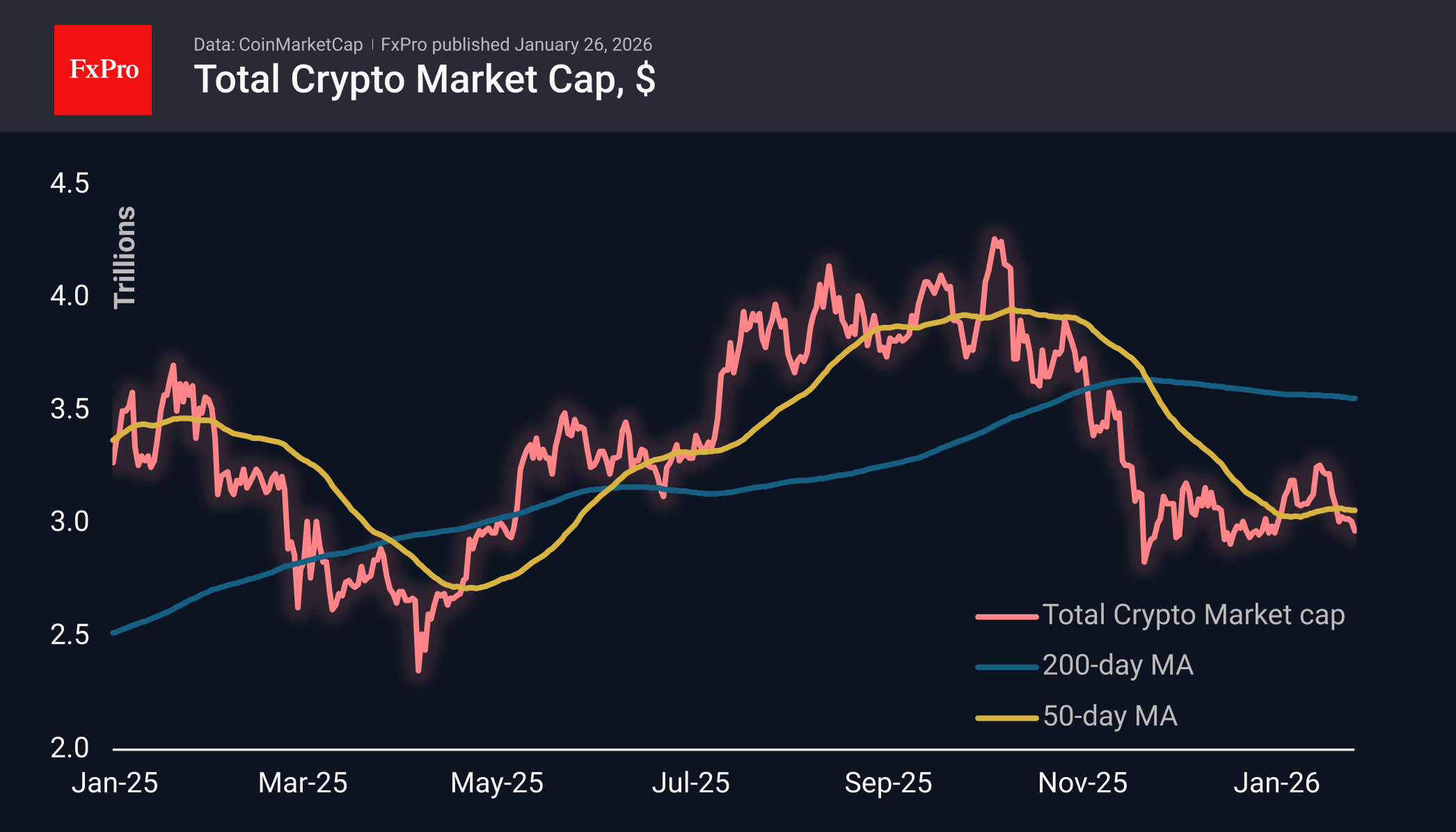
The crypto market cap has fallen by 5% over the past seven days. The decline resumed at the start of the new week, with total capitalisation falling to $2.9T amid slippage in an illiquid market. In recent hours, however, positive momentum has prevailed, bringing the market back to $2.97T due to the weakness of the US dollar and global purchases of risky assets. But even now, cryptocurrencies remain a lagging class of risk-sensitive assets, falling short of metals and the strongest global currencies.
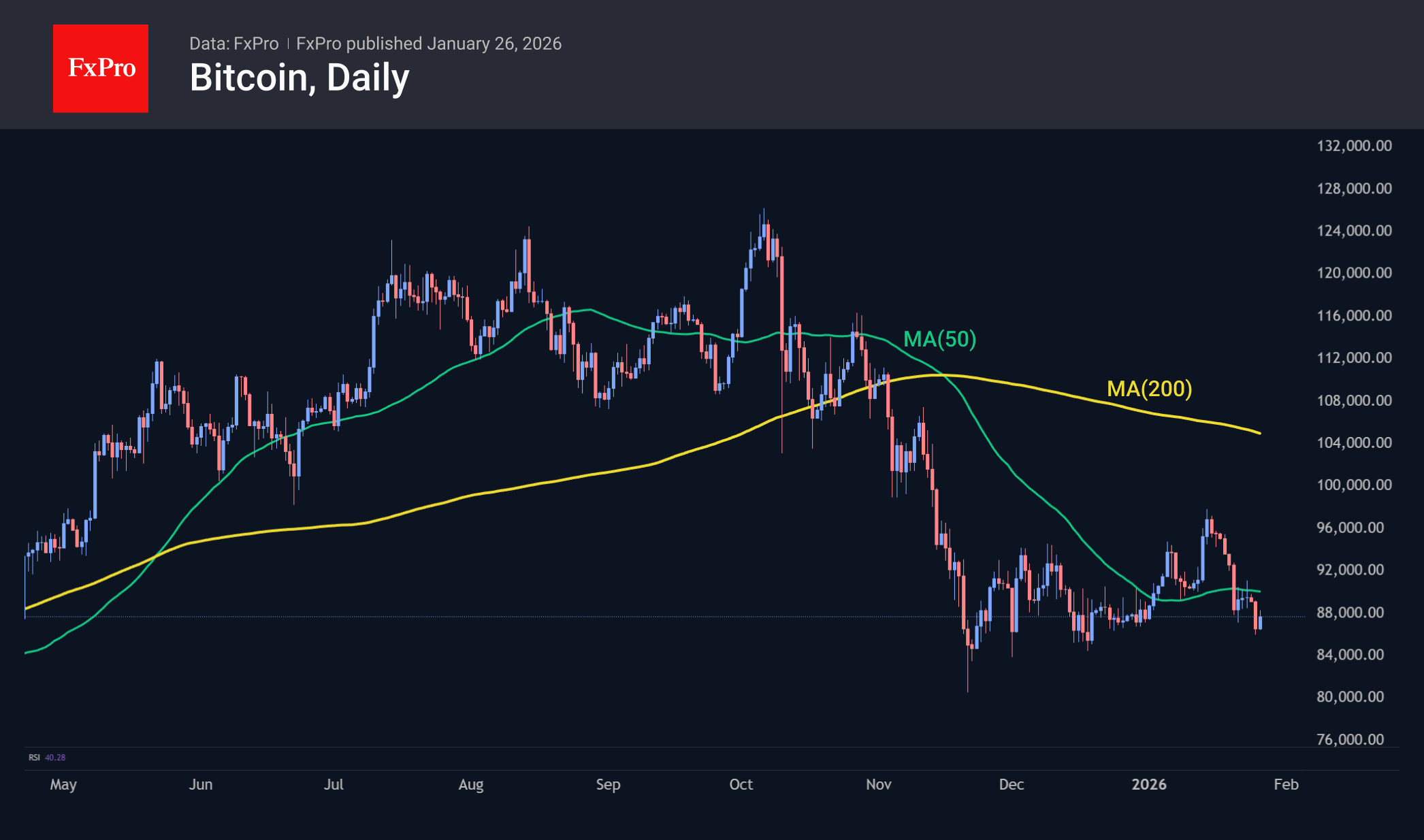
Bitcoin hit a low for the day near $86K, its lowest level since December. After that, the market received support from the weak dollar, which, like a tide, lifted all boats at once. The technical bearish picture remains relevant, despite the gains in recent hours. BTC remains below its key moving average lines and has not attempted to break through the support of the last two months.
Crypto News
Outflows from spot Bitcoin ETFs in the US over the past shortened week nearly offset the previous week’s inflows, reaching their highest level in almost 11 months. According to SoSoValue, net outflows from spot BTC ETFs amounted to $1.33 billion. Net weekly outflows from spot Ethereum ETFs in the US exceeded $611 million.
Bitcoin holders began to record net losses for the first time since October 2023, signalling the asset’s entry into an ‘early bear market.’ Bitcoin is now trading below the acquisition price of 75% of the total supply, signalling growing pressure from sellers, Glassnode notes.
The main reason for BTC’s weakness is large-scale sales by long-term holders, rather than concerns about quantum computing, according to Checkonchain.
Activity on the Ethereum mainnet has exceeded that of layer 2 (L2) solutions since the Fusaka upgrade. Token Terminal has called this trend a ‘return to the mainnet.’ At the same time, there has been an outflow of liquidity from ‘add-ons.’
The adoption of cryptocurrencies by banks, large corporations and investment companies is no longer an ‘optional or peripheral’ process, notes auditing firm PwC in its report on global cryptocurrency regulation for 2026. ‘Institutional participation has passed the point of no return.’
DAT companies accumulating cryptocurrencies on their balance sheets will face ‘severe consolidation’ in the coming year — only a few of the largest players with Bitcoin and Ethereum on their balance sheets will survive, warns Pantera Capital.
Bitcoin Price Forecast
Every new Bitcoin analysis as it publishes, today's technical signal and key levels, live price — on one page.
See all Bitcoin forecasts